Melegaro Alessia, Del Fava Emanuele, Poletti Piero, Merler Stefano, Nyamukapa Constance, Williams John, Gregson Simon, Manfredi Piero
Carlo F. Dondena Centre for Research on Social Dynamics and Public Policy, Bocconi University, Milano, Italy.
Department of Policy Analysis and Public Management, Bocconi University, Milano, Italy.
PLoS One. 2017 Jan 18;12(1):e0170459. doi: 10.1371/journal.pone.0170459. eCollection 2017.
Patterns of person-to-person contacts relevant for infectious diseases transmission are still poorly quantified in Sub-Saharan Africa (SSA), where socio-demographic structures and behavioral attitudes are expected to be different from those of more developed countries.
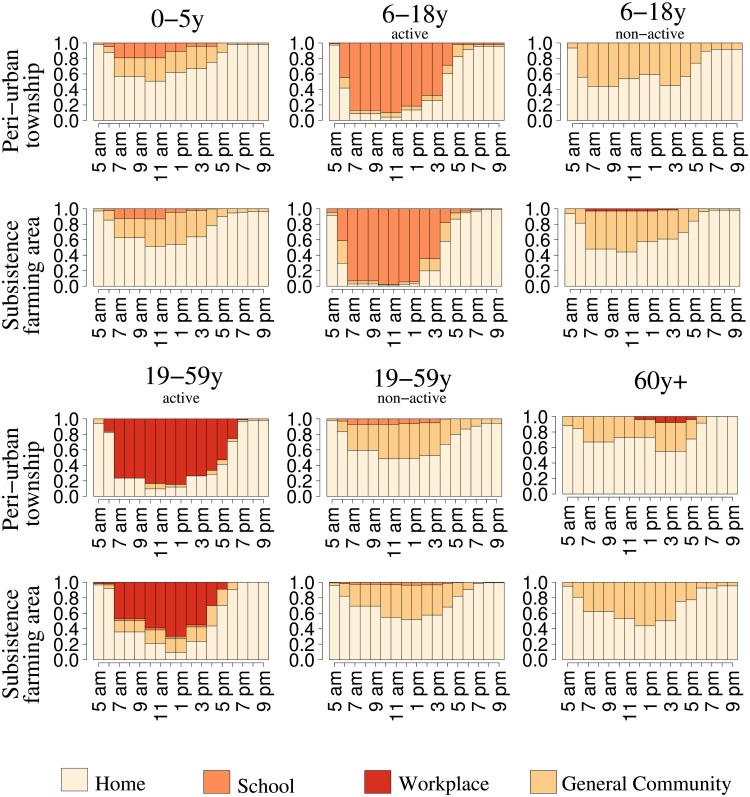
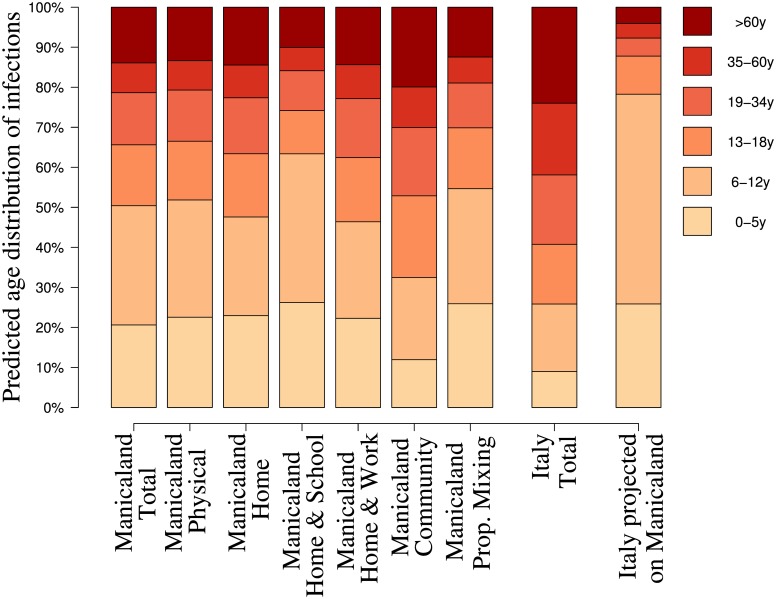
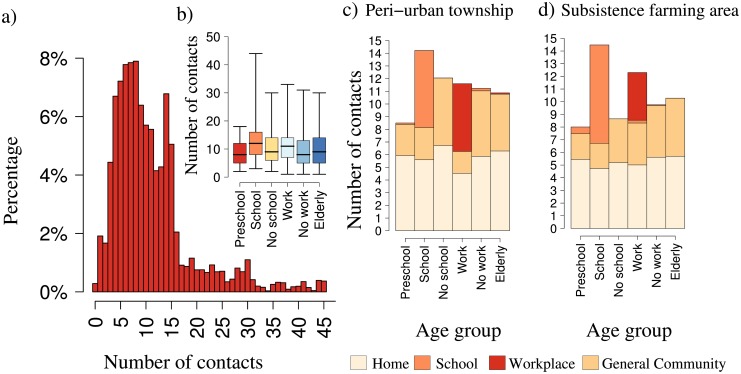
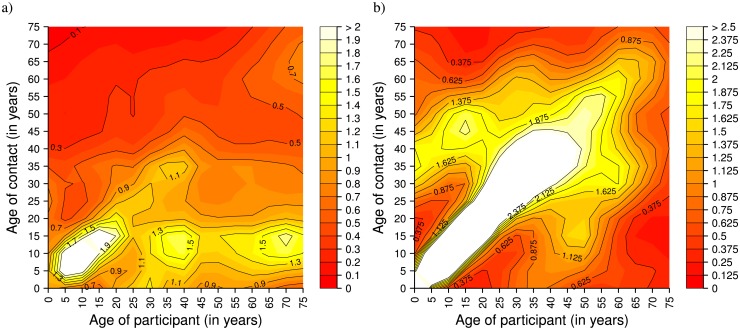
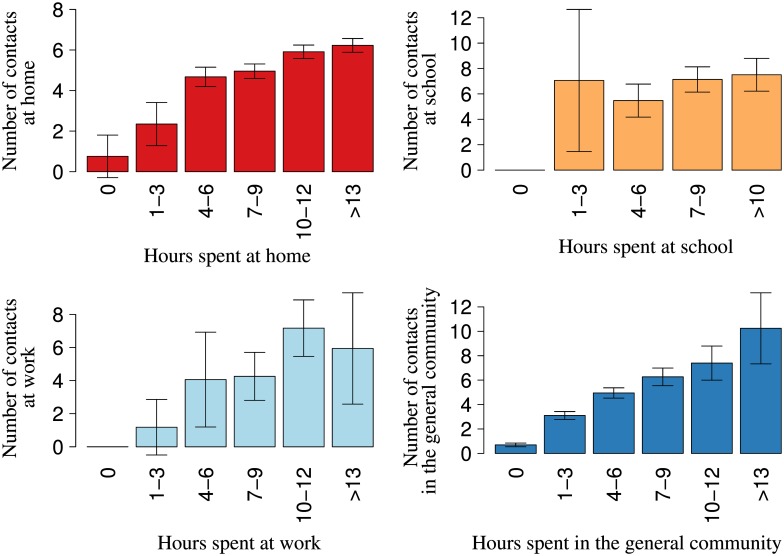
We conducted a diary-based survey on daily contacts and time-use of individuals of different ages in one rural and one peri-urban site of Manicaland, Zimbabwe. A total of 2,490 diaries were collected and used to derive age-structured contact matrices, to analyze time spent by individuals in different settings, and to identify the key determinants of individuals' mixing patterns. Overall 10.8 contacts per person/day were reported, with a significant difference between the peri-urban and the rural site (11.6 versus 10.2). A strong age-assortativeness characterized contacts of school-aged children, whereas the high proportion of extended families and the young population age-structure led to a significant intergenerational mixing at older ages. Individuals spent on average 67% of daytime at home, 2% at work, and 9% at school. Active participation in school and work resulted the key drivers of the number of contacts and, similarly, household size, class size, and time spent at work influenced the number of home, school, and work contacts, respectively. We found that the heterogeneous nature of home contacts is critical for an epidemic transmission chain. In particular, our results suggest that, during the initial phase of an epidemic, about 50% of infections are expected to occur among individuals younger than 12 years and less than 20% among individuals older than 35 years.
With the current work, we have gathered data and information on the ways through which individuals in SSA interact, and on the factors that mostly facilitate this interaction. Monitoring these processes is critical to realistically predict the effects of interventions on infectious diseases dynamics.
在撒哈拉以南非洲地区(SSA),与传染病传播相关的人际接触模式仍未得到充分量化,该地区的社会人口结构和行为态度预计与更发达国家不同。
我们在津巴布韦马尼卡兰的一个农村和一个城郊地区,针对不同年龄段个体的日常接触和时间利用情况进行了一项基于日记的调查。共收集了2490份日记,并用于推导年龄结构接触矩阵,分析个体在不同环境中花费的时间,以及确定个体混合模式的关键决定因素。总体而言,每人每天报告的接触次数为10.8次,城郊地区和农村地区之间存在显著差异(分别为11.6次和10.2次)。学龄儿童的接触具有很强的年龄同质性,而大家庭的高比例和年轻的人口年龄结构导致了老年人之间显著的代际混合。个体平均白天67%的时间在家,2%在工作,9%在学校。积极参与学校和工作是接触次数的关键驱动因素,同样,家庭规模、班级规模和工作时间分别影响家庭、学校和工作接触的次数。我们发现家庭接触的异质性对疫情传播链至关重要。特别是,我们的结果表明,在疫情初期,预计约50%的感染发生在12岁以下个体中,35岁以上个体中的感染率不到20%。
通过当前的工作,我们收集了关于SSA地区个体互动方式以及最能促进这种互动的因素的数据和信息。监测这些过程对于实际预测干预措施对传染病动态的影响至关重要。