Yang Xin, Huang Jilei, Liu Chuanhe, Chen Biao, Zhang Tong, Zhou Guohui
Guangdong Province Key Laboratory of Microbial Signals and Disease Control, College of Agriculture, South China Agricultural University Guangdong, China.
Instrumental Analysis and Research Center, South China Agricultural University Guangdong, China.
Front Microbiol. 2017 Jan 4;7:2140. doi: 10.3389/fmicb.2016.02140. eCollection 2016.
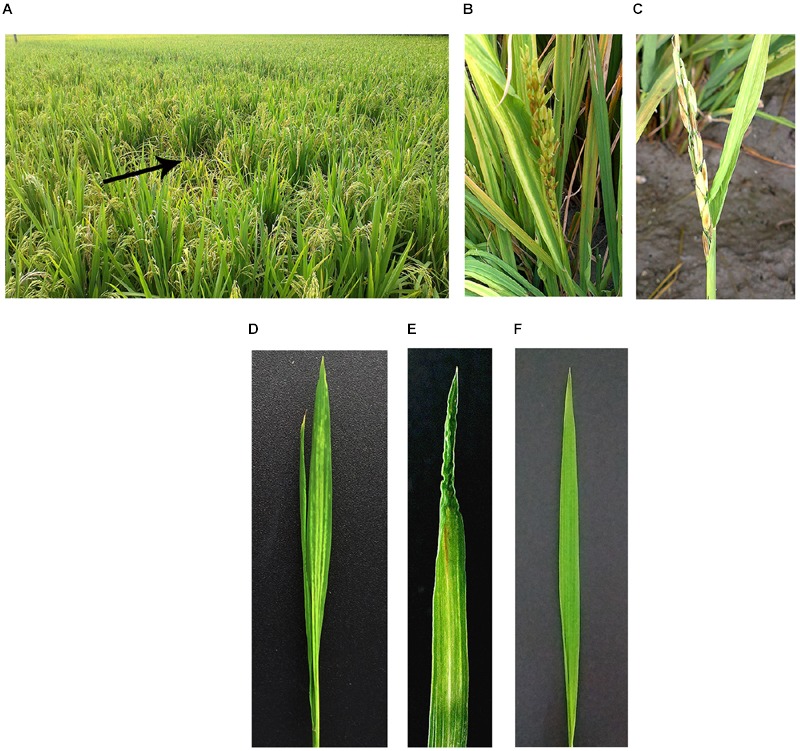
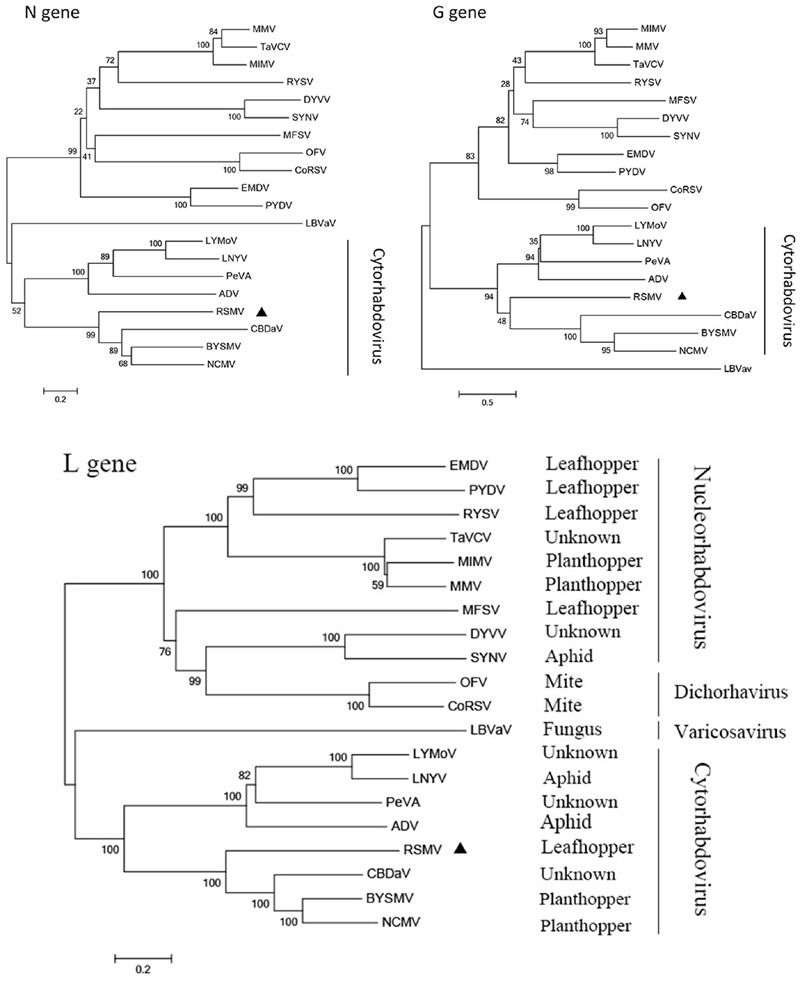
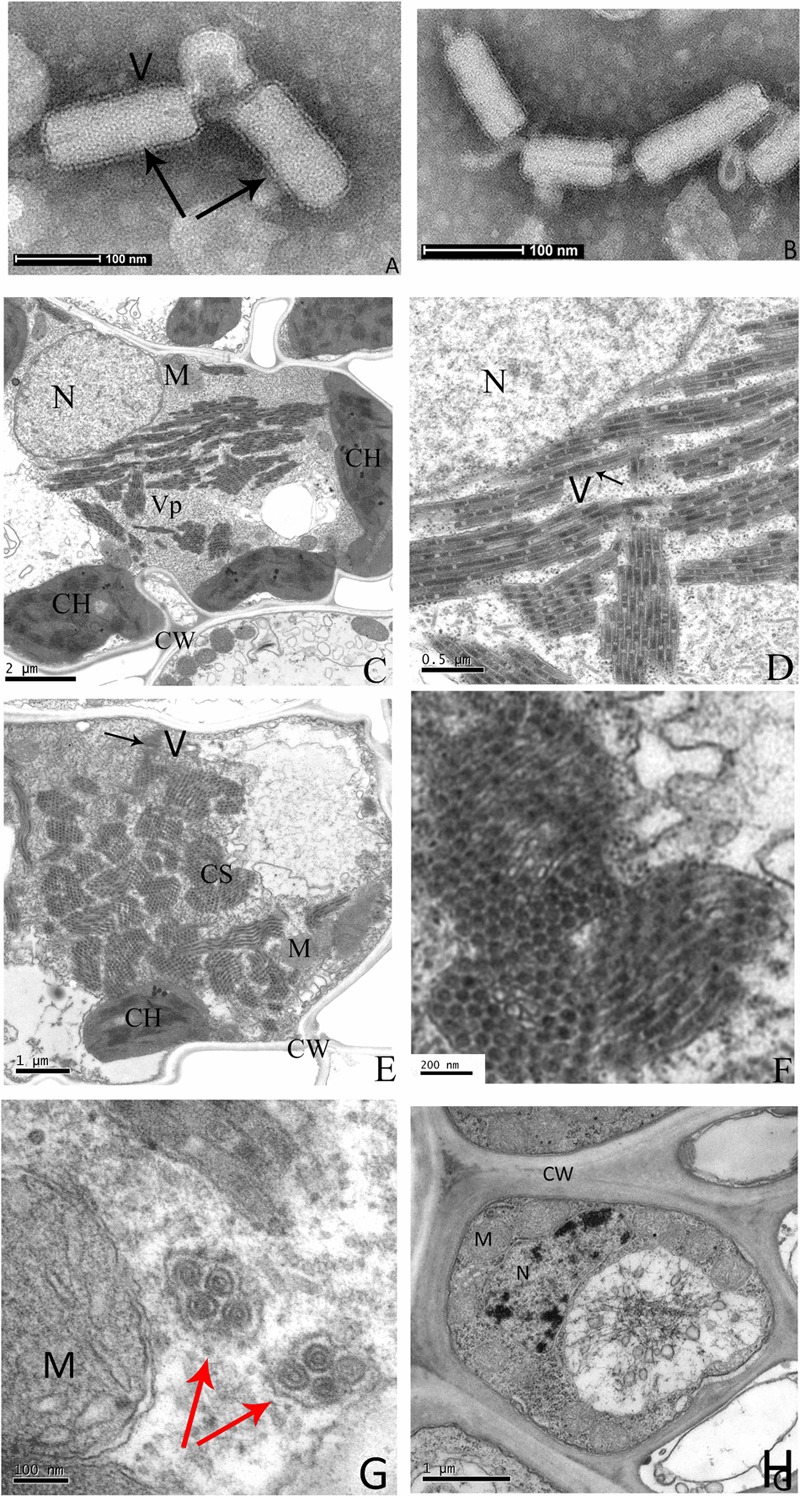
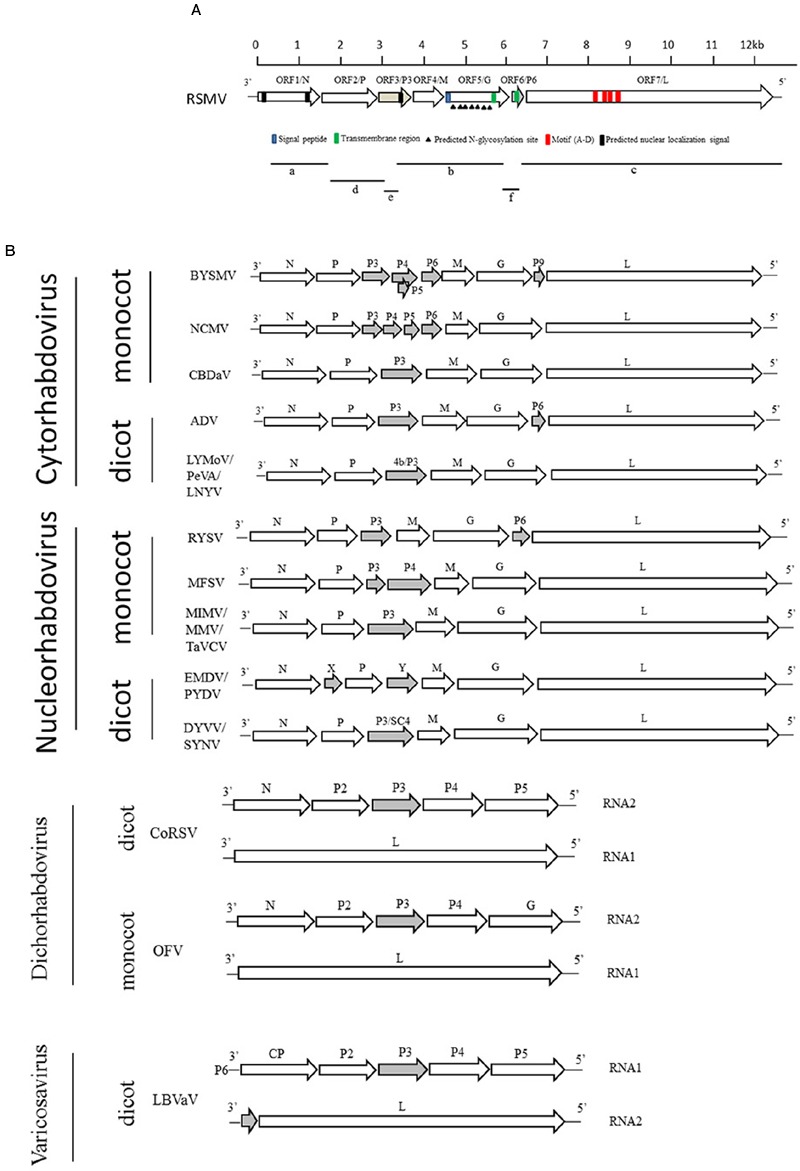
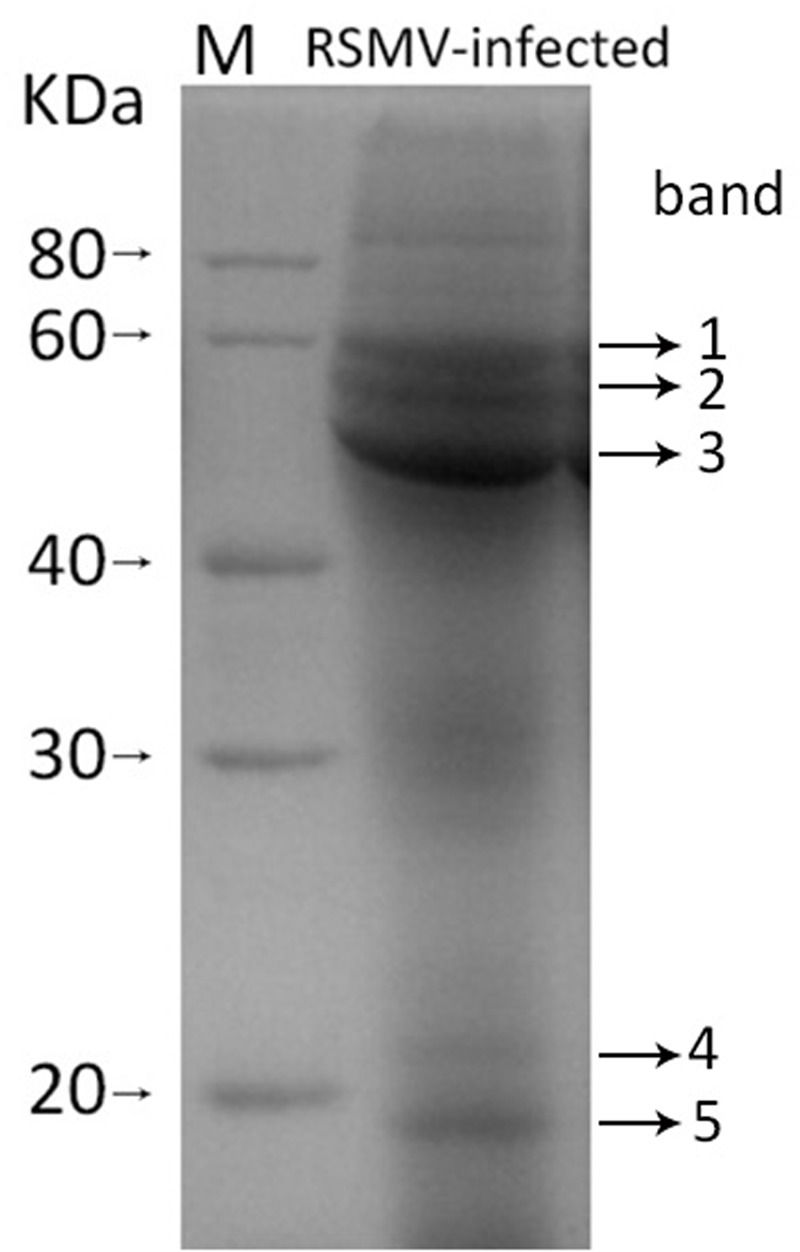
A new rice viral disease exhibiting distinct symptoms-yellow stripes, mosaic and twisted tips on leaves-was found in China. Electron microscopy of infected leaf cells revealed the presence of bacilliform virions and electron-translucent granular-fibrillar viroplasm in the cytoplasm. The enveloped viral particles were 300 to 375 nm long and 45 to 55 nm wide. The leafhopper was able to transmit the virus to rice seedlings, which subsequently exhibited symptoms similar to those observed in fields. The complete genome of the virus was obtained by small-RNA deep sequencing and reverse transcription-PCR product sequencing. The anti-genome contains seven open reading frames (ORFs). The deduced amino acids of ORF1, ORF5, and ORF7 are, respectively, homologous to the nucleocapsid protein (N), glycoprotein (G), and large polymerase protein (L) of known rhabdoviruses. The predicted product of ORF2 is identified as a phosphoprotein (P) based on its multiple potential phosphorylation sites and 12.6 to 21.0% amino acid (aa) identities with the P proteins of plant rhabdoviruses. The product of ORF4 is presumed to be the viral matrix (M) protein for it shares 10.3 to 14.3% aa identities with those of other rhabdoviruses. The above five products were confirmed as the viral structural proteins by SDS-PAGE and aa sequencing analyses of purified virus preparation. ORF3 and ORF6 are considered to encode two nonstructural proteins with unknown functions. Phylogenetic analysis based on protein N, G, and L amino acid sequences indicated that the isolated virus, which we have tentatively named Rice stripe mosaic virus (RSMV), is a new species in the genus . To our knowledge, RSMV is the only cytorhabdovirus naturally infecting rice and the first reported leafhopper-transmitted cytorhabdovirus. Our surveys of rice fields indicate that RSMV occurs frequently in Guangdong Province, China. Although the disease incidence is low at present, it might become serious with the vector insect population increasing.
在中国发现了一种新的水稻病毒病,其具有明显的症状——叶片出现黄色条纹、花叶和扭曲叶尖。对受感染叶片细胞进行电子显微镜观察,发现细胞质中存在杆状病毒粒子和电子透明的颗粒状纤维状病毒质。包膜病毒粒子长300至375纳米,宽45至55纳米。叶蝉能够将该病毒传播给水稻幼苗,这些幼苗随后表现出与田间观察到的症状相似的症状。通过小RNA深度测序和逆转录-聚合酶链反应产物测序获得了该病毒的完整基因组。反基因组包含七个开放阅读框(ORF)。ORF1、ORF5和ORF7推导的氨基酸分别与已知弹状病毒的核衣壳蛋白(N)、糖蛋白(G)和大聚合酶蛋白(L)同源。基于其多个潜在磷酸化位点以及与植物弹状病毒P蛋白12.6%至21.0%的氨基酸(aa)同一性,ORF2的预测产物被鉴定为磷蛋白(P)。ORF4的产物被推测为病毒基质(M)蛋白,因为它与其他弹状病毒的M蛋白具有10.3%至14.3%的aa同一性。通过对纯化病毒制剂的SDS-PAGE和aa测序分析,证实上述五种产物为病毒结构蛋白。ORF3和ORF6被认为编码两种功能未知的非结构蛋白。基于蛋白N、G和L氨基酸序列的系统发育分析表明,我们暂时命名为水稻条纹花叶病毒(RSMV)的分离病毒是该属中的一个新物种。据我们所知,RSMV是唯一自然感染水稻的细胞质弹状病毒,也是首次报道的由叶蝉传播的细胞质弹状病毒。我们对稻田的调查表明,RSMV在中国广东省频繁发生。尽管目前发病率较低,但随着媒介昆虫数量的增加,可能会变得严重。