Wageesha Nekadage Don Amal, Soysa Preethi, Atthanayake Keerthi, Choudhary Muhammad Iqbal, Ekanayake Mahinda
Department of Biochemistry and Chemistry, Faculty of Medicine, South Asian Institute of Technology and Medicine, Malabe, Sri Lanka ; Department of Biochemistry and Molecular Biology, Faculty of Medicine, University of Colombo, Colombo, Sri Lanka.
Department of Biochemistry and Molecular Biology, Faculty of Medicine, University of Colombo, Colombo, Sri Lanka.
Chem Cent J. 2017 Jan 3;11:2. doi: 10.1186/s13065-016-0234-4. eCollection 2017.
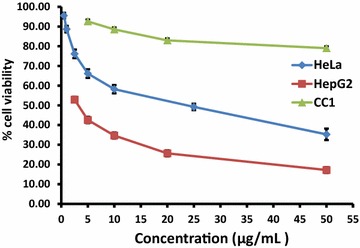
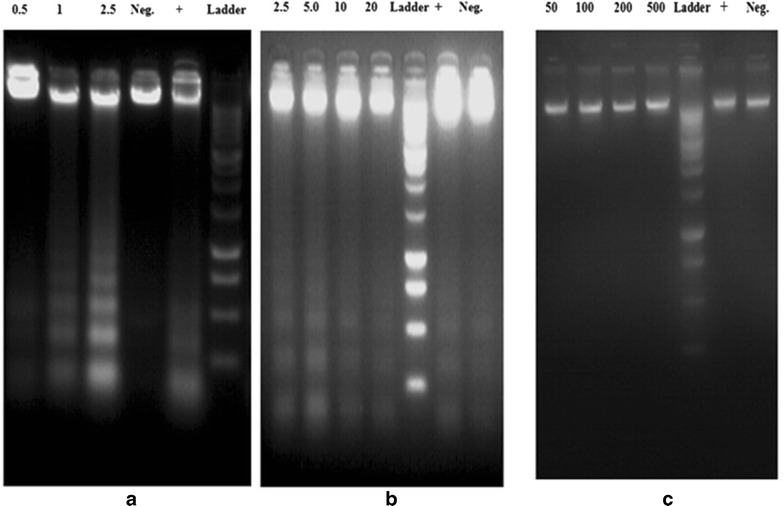
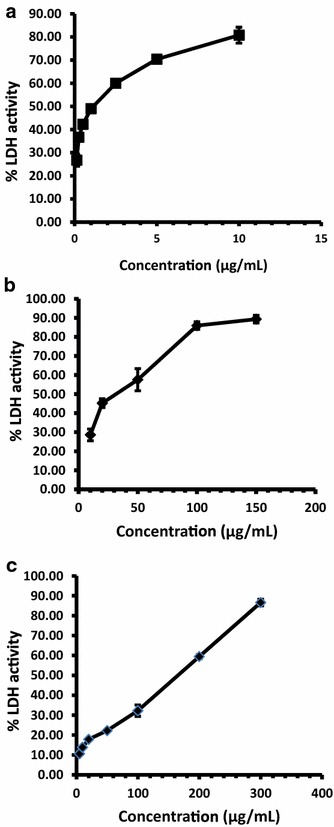
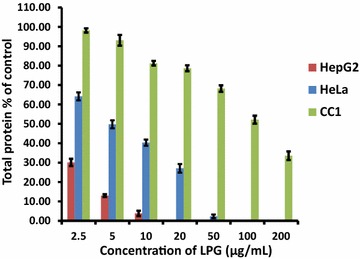
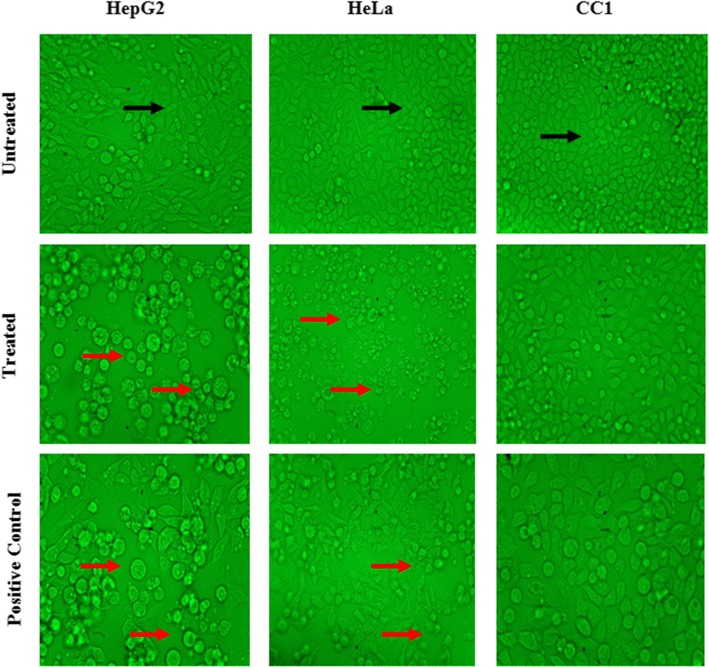
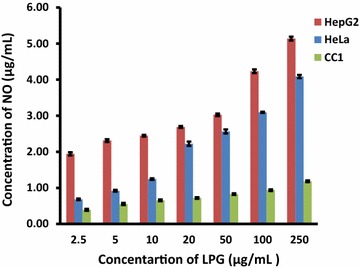
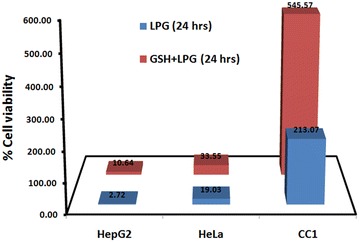
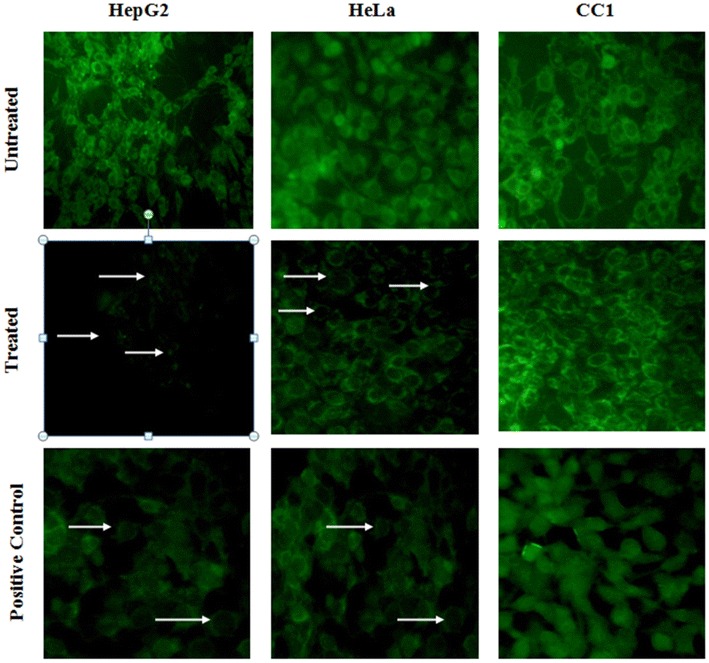
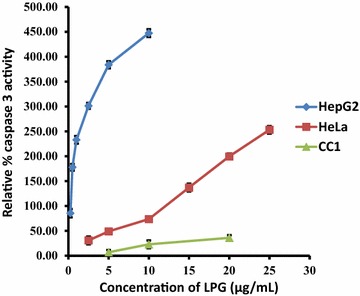
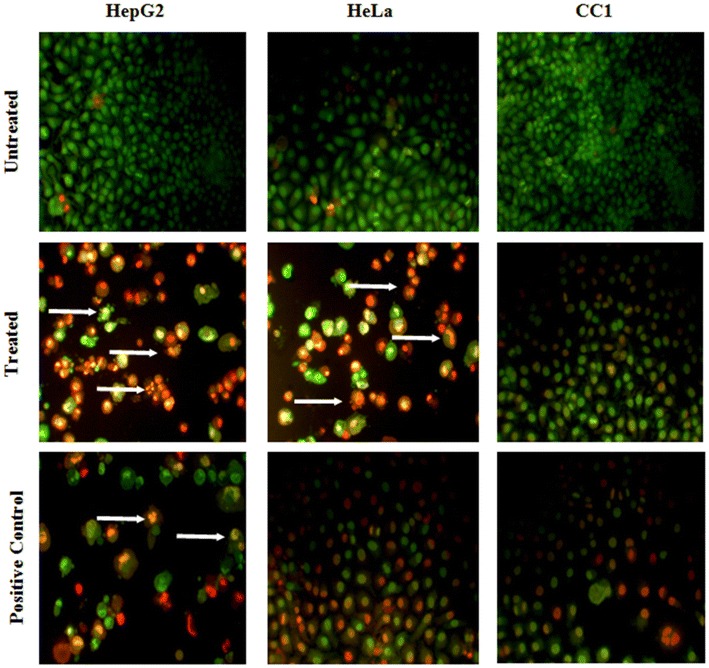
"Le Pana Guliya" (LPG) is a polyherbal formulation which is used to treat different types of cancers in traditional medicine. In this study we describe in vitro efficacy and mechanism of action of LPG on two cancer cell lines (HepG and HeLa) compared with a normal cell line CC1. The MTT, LDH assays and protein synthesis were used to study antiproliferative activity of LPG while NO synthesis and GSH content were assayed to determine the oxidative stress exerted by LPG. Rhodamine 123 staining, caspase 3 activity, DNA fragmentation and microscopic examination of cells stained with ethidium bromide/acridine orange were used to identify the apoptosis mechanisms associated with LPG. The LPG showed the most potent antiproliferative effect against the proliferation of HepG and HeLa cells with an EC value of 2.72 ± 1.36 and 19.03 ± 2.63 µg/mL for MTT assay after 24 h treatment respectively. In contrast, CC1 cells showed an EC value of 213.07 ± 7.71 µg/mL. Similar results were observed for LDH release. A dose dependent decrease in protein synthesis was shown in both cancer cell types compared to CC1 cells. The reduction of GSH content and elevation of cell survival with exogenous GSH prove that the LPG act via induction of oxidative stress. LPG also stimulates the production of NO and mediates oxidative stress. Rhodamine 123 assay shows the mitochondrial involvement in cell death by depletion of Δψ inducing downstream events in apoptosis. This results in increase in caspase-3 activity eventually DNA fragmentation and LPG induced apoptotic cell death. In conclusion the present study suggested that the LPG exerted an anticancer activity via oxidative stress dependent apoptosis. Therefore present study provides the scientific proof of the traditional knowledge in using LPG as an anticancer agent.
“勒帕纳古利亚”(LPG)是一种多草药配方,在传统医学中用于治疗不同类型的癌症。在本研究中,我们描述了LPG对两种癌细胞系(HepG和HeLa)的体外疗效及作用机制,并与正常细胞系CC1进行了比较。采用MTT法、乳酸脱氢酶(LDH)检测和蛋白质合成来研究LPG的抗增殖活性,同时检测一氧化氮(NO)合成和谷胱甘肽(GSH)含量以确定LPG施加的氧化应激。使用罗丹明123染色、半胱天冬酶3活性检测、DNA片段化分析以及用溴化乙锭/吖啶橙染色的细胞显微镜检查来确定与LPG相关的凋亡机制。LPG对HepG和HeLa细胞的增殖显示出最有效的抗增殖作用,在24小时处理后,MTT法检测的半数有效浓度(EC)值分别为2.72±1.36和19.03±2.63μg/mL。相比之下,CC1细胞的EC值为213.07±7.71μg/mL。LDH释放检测也观察到类似结果。与CC1细胞相比,两种癌细胞类型的蛋白质合成均呈现剂量依赖性下降。外源性GSH导致GSH含量降低和细胞存活率升高,证明LPG通过诱导氧化应激发挥作用。LPG还刺激NO的产生并介导氧化应激。罗丹明123检测显示线粒体参与细胞死亡,通过耗散线粒体膜电位(Δψ)诱导凋亡的下游事件。这导致半胱天冬酶-3活性增加,最终导致DNA片段化和LPG诱导的凋亡性细胞死亡。总之,本研究表明LPG通过氧化应激依赖性凋亡发挥抗癌活性。因此,本研究为将LPG用作抗癌剂的传统知识提供了科学依据。