Narayanan Nithya, Wang Zhihao, Li Ling, Yang Yanzhong
Department of Cancer Genetics and Epigenetics, Beckman Research Institute, City of Hope Cancer Center , Duarte, CA, USA.
Division of Hematopoietic Stem Cell and Leukemia Research, Department of Hematology and HCT, Beckman Research Institute, City of Hope Cancer Center , Duarte, CA, USA.
Cell Discov. 2017 Jan 3;3:16048. doi: 10.1038/celldisc.2016.48. eCollection 2017.
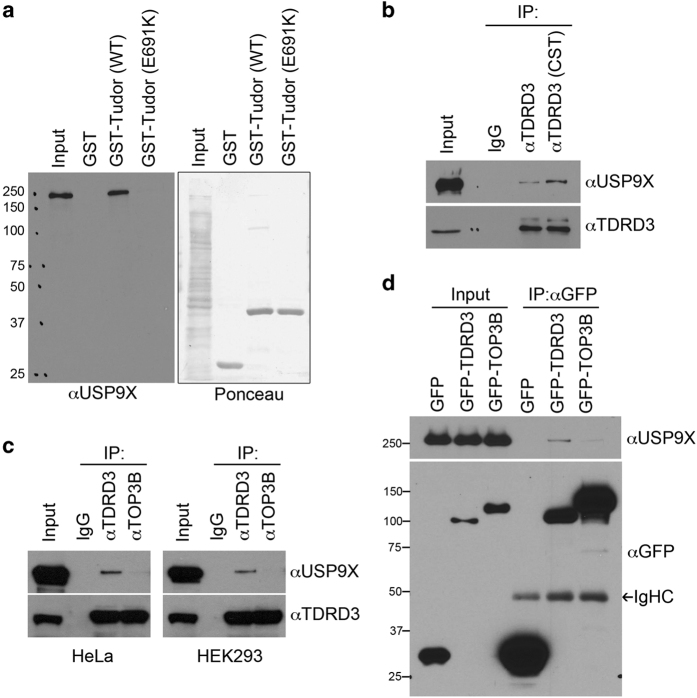
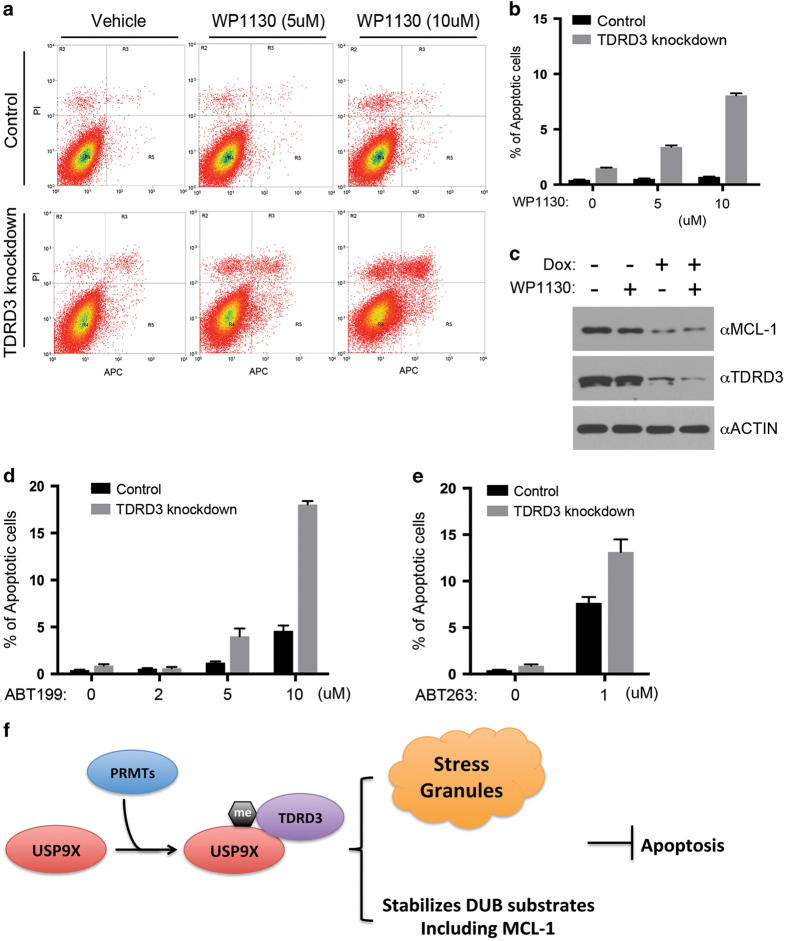
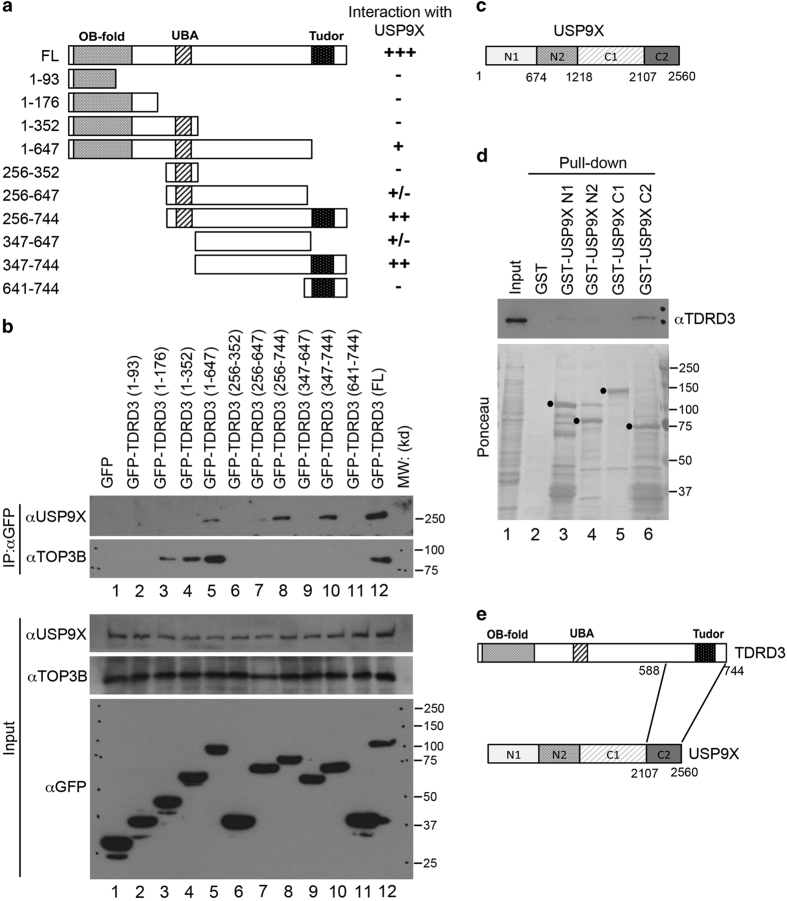
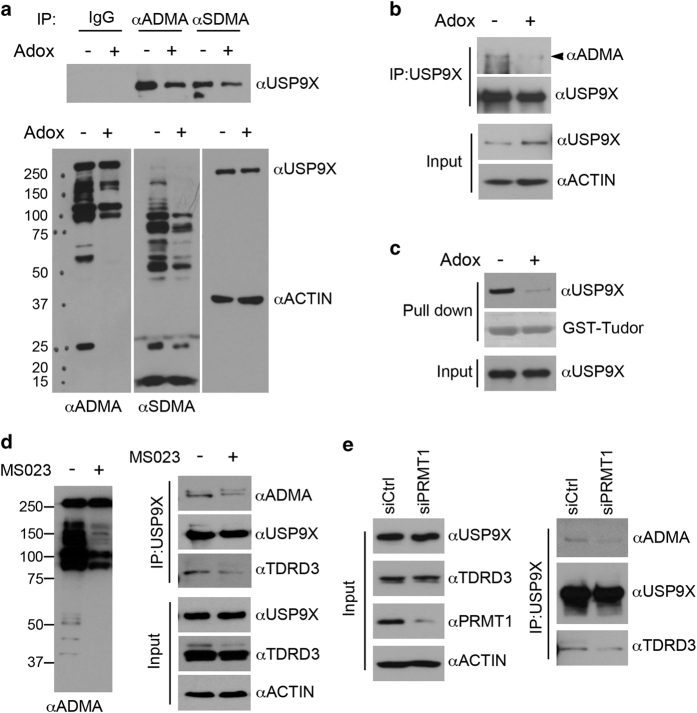
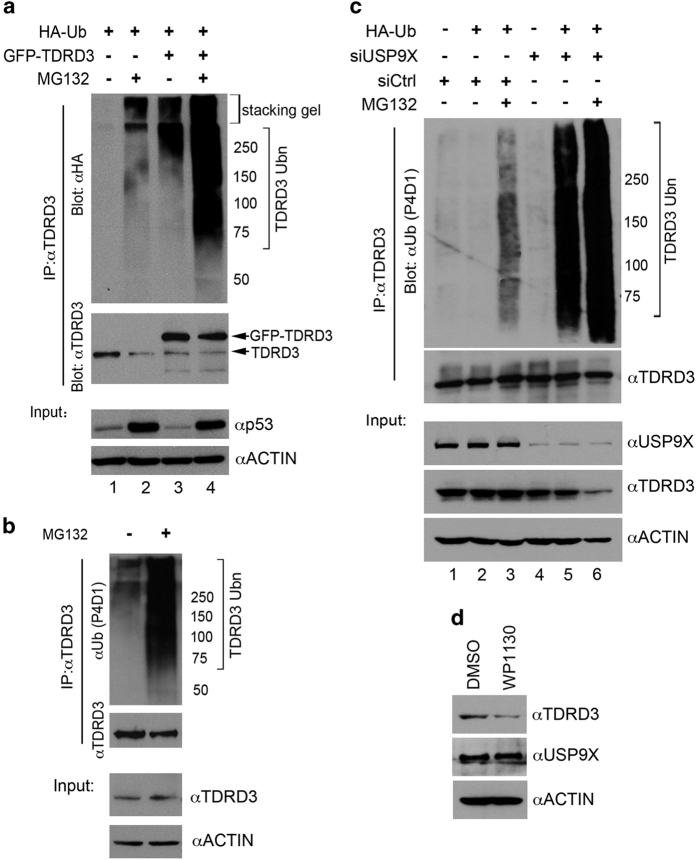
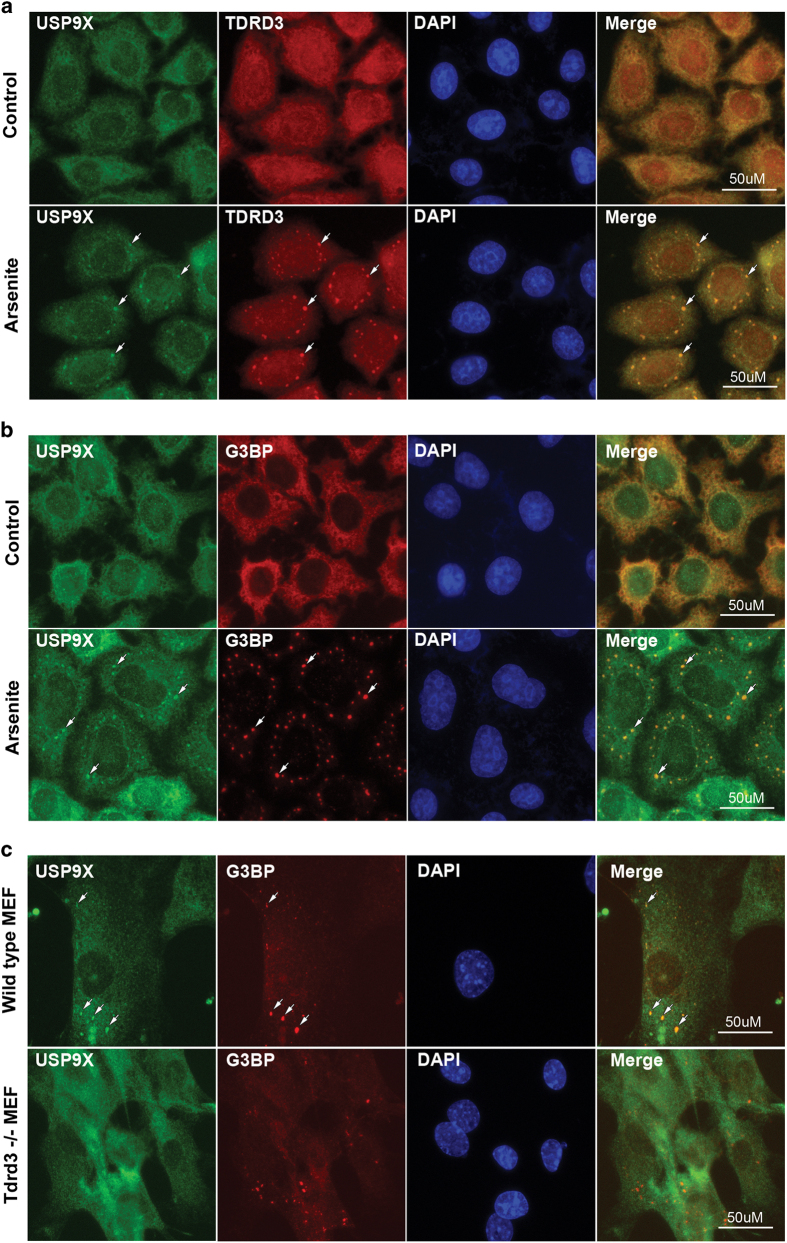
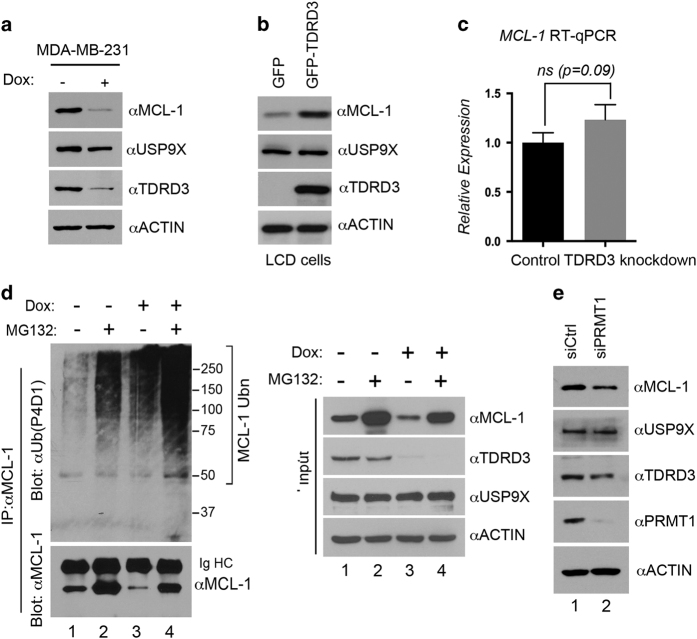
The Tudor domain-containing proteins are characterized by their specific interactions with methylated protein motifs, including methyl-arginines and methyl-lysines. The Tudor domain-containing protein 3 (TDRD3) is one of the major methyl-arginine effector molecules that recognizes methylated arginine residues on histones and the C-terminal domain of RNA polymerase II, and activates transcription. However, majority of the cellular TDRD3 localizes to the cytoplasm and its functions there are still elusive. Here, we have identified ubiquitin-specific protease 9 X-linked (USP9X) as a TDRD3-interacting protein by GST (glutathione -transferase) pull-down and co-immunoprecipitation. Detailed characterization suggests that the interaction between TDRD3 and USP9X is mediated through the Tudor domain of TDRD3 and the arginine methylation of USP9X. This interaction plays a critical role in TDRD3 protein stability, as knockdown of USP9X expression leads to increased TDRD3 ubiquitination. We also found that USP9X co-localizes with TDRD3 in cytoplasmic stress granules and this localization is diminished in Tdrd3-null mouse embryonic fibroblast cells, suggesting that TDRD3 is essential for USP9X stress granule localization. Furthermore, we found that one of the USP9X de-ubiquitination targets, myeloid cell leukemia protein 1, is regulated by TDRD3, indicating that TDRD3 potentially regulates USP9X de-ubiquitinase activity. Finally, we show that knockdown of TDRD3 expression sensitizes breast cancer cells to chemotherapeutic drug-induced apoptosis, likely due to its regulation of USP9X. This study provides a novel candidate strategy for targeting apoptosis pathways in cancer therapy.
含Tudor结构域的蛋白质的特点是能与甲基化的蛋白质基序发生特异性相互作用,包括甲基精氨酸和甲基赖氨酸。含Tudor结构域的蛋白质3(TDRD3)是主要的甲基精氨酸效应分子之一,它能识别组蛋白上的甲基化精氨酸残基以及RNA聚合酶II的C端结构域,并激活转录。然而,大多数细胞中的TDRD3定位于细胞质,其在细胞质中的功能仍不清楚。在这里,我们通过谷胱甘肽-S-转移酶(GST)下拉实验和免疫共沉淀法鉴定出泛素特异性蛋白酶9 X连锁型(USP9X)是一种与TDRD3相互作用的蛋白质。详细的特征分析表明,TDRD3与USP9X之间的相互作用是通过TDRD3的Tudor结构域和USP9X的精氨酸甲基化介导的。这种相互作用在TDRD3蛋白稳定性中起关键作用,因为敲低USP9X的表达会导致TDRD3泛素化增加。我们还发现USP9X与TDRD3在细胞质应激颗粒中共定位,而在Tdrd3基因敲除的小鼠胚胎成纤维细胞中这种定位会减少,这表明TDRD3对于USP9X在应激颗粒中的定位至关重要。此外,我们发现USP9X的去泛素化靶标之一,即髓系细胞白血病蛋白1,受TDRD3调控, 这表明TDRD3可能调节USP9X的去泛素酶活性。最后,我们表明敲低TDRD3的表达会使乳腺癌细胞对化疗药物诱导的凋亡敏感,这可能是由于它对USP9X的调控作用。这项研究为癌症治疗中靶向凋亡途径提供了一种新的候选策略。