Djerbal L, Lortat-Jacob H, Kwok Jcf
Institut de Biologie Structurale, University Grenoble Alpes, CNRS, CEA, F-38027, Grenoble, France.
School of Biomedical Sciences, Faculty of Biological Sciences, University of Leeds, Leeds, LS2 9JT, UK.
Glycoconj J. 2017 Jun;34(3):363-376. doi: 10.1007/s10719-017-9761-z. Epub 2017 Jan 18.
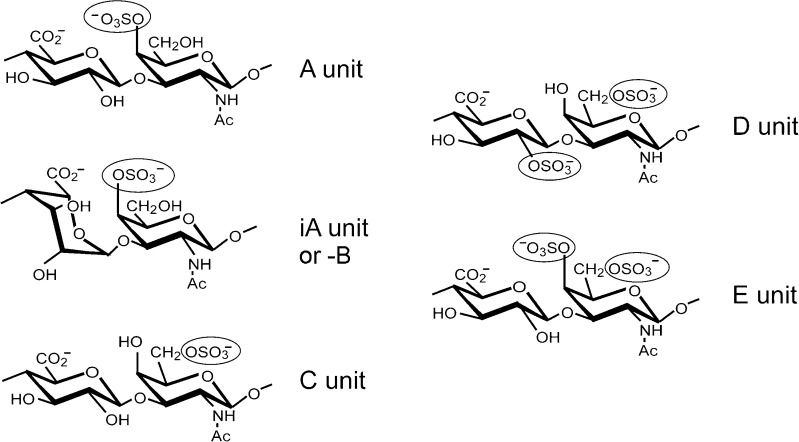
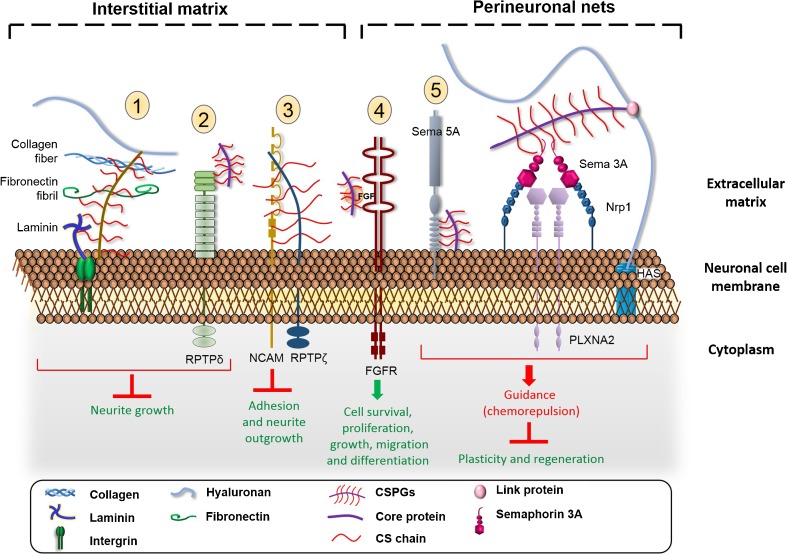
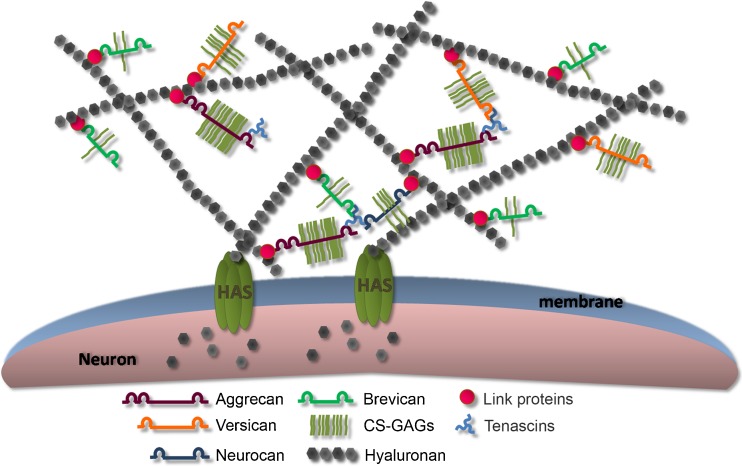
Chondroitin sulfate (CS) is the most abundant glycosaminoglycan (GAG) in the central nervous system (CNS) matrix. Its sulfation and epimerization patterns give rise to different forms of CS, which enables it to interact specifically and with a significant affinity with various signalling molecules in the matrix including growth factors, receptors and guidance molecules. These interactions control numerous biological and pathological processes, during development and in adulthood. In this review, we describe the specific interactions of different families of proteins involved in various physiological and cognitive mechanisms with CSs in CNS matrix. A better understanding of these interactions could promote a development of inhibitors to treat neurodegenerative diseases.
硫酸软骨素(CS)是中枢神经系统(CNS)基质中含量最丰富的糖胺聚糖(GAG)。其硫酸化和差向异构化模式产生了不同形式的CS,这使其能够与基质中的各种信号分子(包括生长因子、受体和导向分子)进行特异性且具有显著亲和力的相互作用。这些相互作用在发育过程和成年期控制着众多生物学和病理过程。在本综述中,我们描述了参与各种生理和认知机制的不同蛋白质家族与CNS基质中的CS的特异性相互作用。更好地理解这些相互作用可能会促进治疗神经退行性疾病的抑制剂的开发。