Department of Biomedical Engineering, Washington University in St. Louis, USA.
Lab Chip. 2017 Feb 14;17(4):681-690. doi: 10.1039/c6lc01401a.
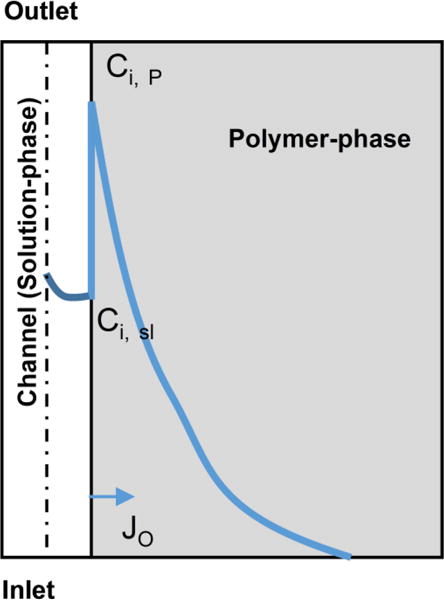
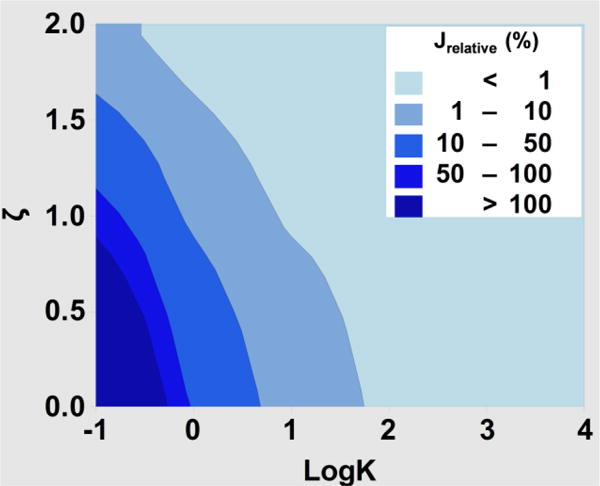
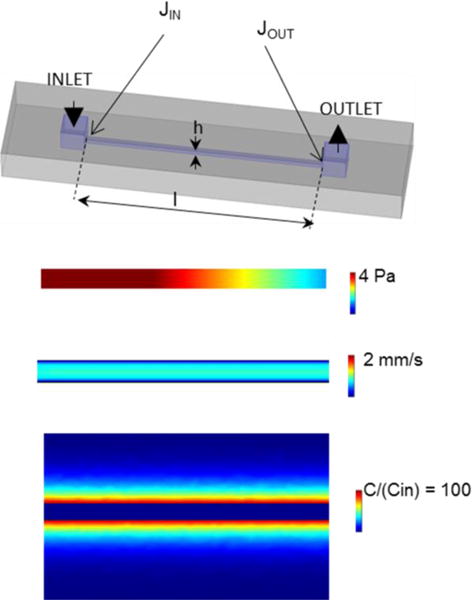
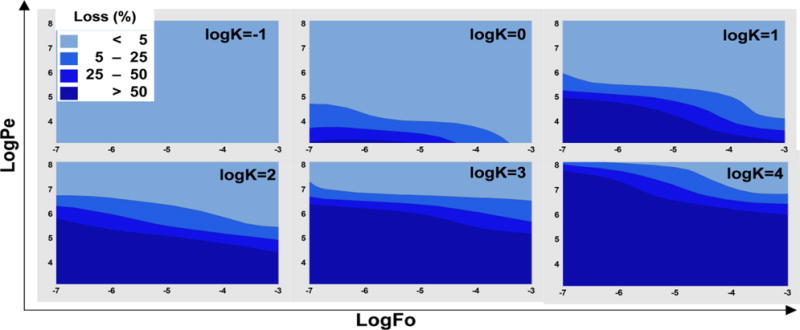
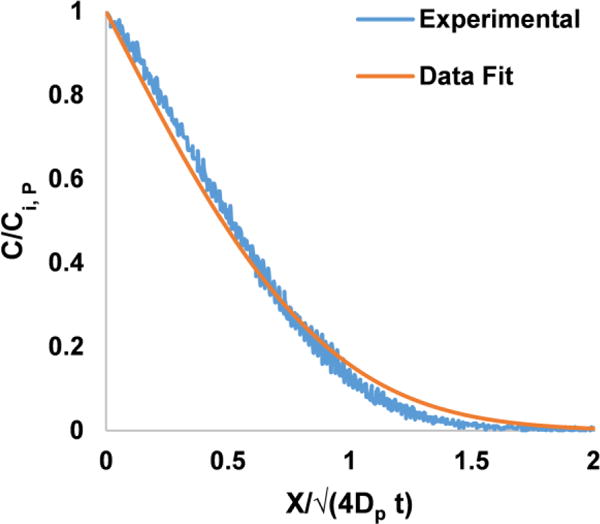
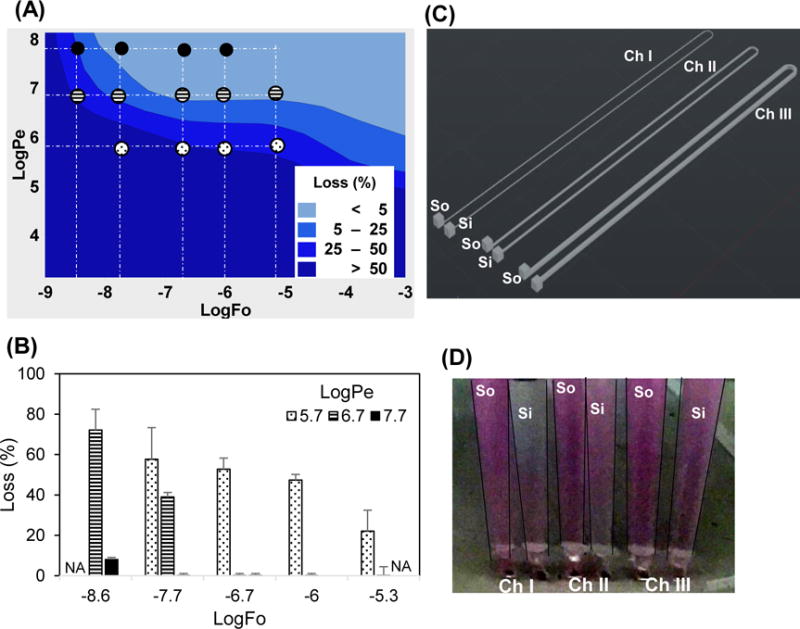
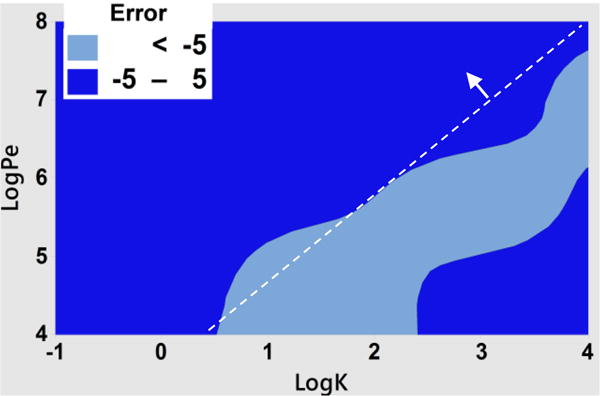
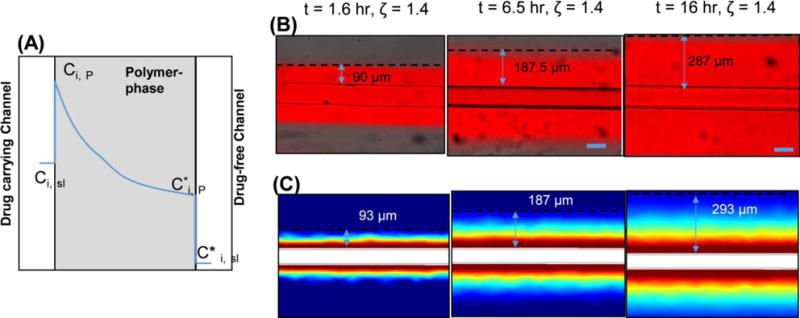
Biocompatible polymers, such as polydimethylsiloxane (PDMS), are the materials of choice for creating organ-on-a-chip microfluidic platforms. Desirable qualities include ease of fabrication, optical clarity, and hydrophobicity, the latter of which facilitates oxygen transport to encased cells. An emerging and important application of organ-on-a-chip technology is drug discovery; however, a potential issue for polymer-based microfluidic devices has been highlighted by recent studies with PDMS, which have demonstrated absorption (and thus loss) of hydrophobic drugs into PDMS under certain experimental conditions. Absorption of drug in the polymer can also lead to undesirable transfer of drug between adjacent microfluidic lines. Given the benefits of polymers, it is essential to develop a comprehensive understanding of drug absorption. In this study, we considered convection, dissolution, and diffusion of a drug within a polymer-based microfluidic device to characterize the dynamics of drug loss in a quantitative manner. We solved Fick's 2nd law of diffusion (unsteady diffusion-convection) by finite element analysis in COMSOL®, and experimentally validated the numerical model for loss of three hydrophobic molecules (rhodamine B, cyanine NHS ester, and paclitaxel) in PDMS. Drug loss, as well as the unintended mixing of drugs by adjacent microfluidic channels, depends strongly on platform design parameters, experimental conditions, and the physico-chemical properties of the drug, and can be captured in a simple quantitate relationship that employs four scalable dimensionless numbers. This simple quantitative framework can be used in the design of a wide range of polymer-based microfluidic devices to minimize the impact of drug absorption.
生物相容性聚合物,如聚二甲基硅氧烷(PDMS),是用于创建器官芯片微流控平台的首选材料。理想的特性包括易于制造、光学透明度和疏水性,后者有利于氧气向被包裹的细胞传输。器官芯片技术的一个新兴且重要的应用是药物发现;然而,最近对 PDMS 的研究突出了聚合物基微流控设备的一个潜在问题,即在某些实验条件下,PDMS 会吸收(因此损失)疏水性药物。聚合物中药物的吸收也会导致相邻微流道之间药物的不期望转移。鉴于聚合物的优势,必须全面了解药物吸收。在这项研究中,我们考虑了药物在聚合物基微流控装置中的对流、溶解和扩散,以定量方式表征药物损失的动力学。我们通过 COMSOL®中的有限元分析求解了菲克第二定律(非稳态扩散-对流),并实验验证了 PDMS 中三种疏水分子(若丹明 B、菁 NHS 酯和紫杉醇)损失的数值模型。药物损失以及相邻微流道之间药物的意外混合强烈依赖于平台设计参数、实验条件和药物的物理化学性质,并且可以通过采用四个可扩展无量纲数的简单定量关系来捕获。这种简单的定量框架可用于设计各种聚合物基微流控设备,以最大程度地减少药物吸收的影响。