Huang Yu-Wen Alvin, Zhou Bo, Wernig Marius, Südhof Thomas C
Department of Molecular and Cellular Physiology and Howard Hughes Medical Institute, Stanford University Medical School, Stanford, CA 94305, USA.
Department of Molecular and Cellular Physiology and Howard Hughes Medical Institute, Stanford University Medical School, Stanford, CA 94305, USA; Institute for Stem Cell Biology and Regenerative Medicine and Department of Pathology, Stanford University Medical School, Stanford, CA 94305, USA.
Cell. 2017 Jan 26;168(3):427-441.e21. doi: 10.1016/j.cell.2016.12.044. Epub 2017 Jan 19.
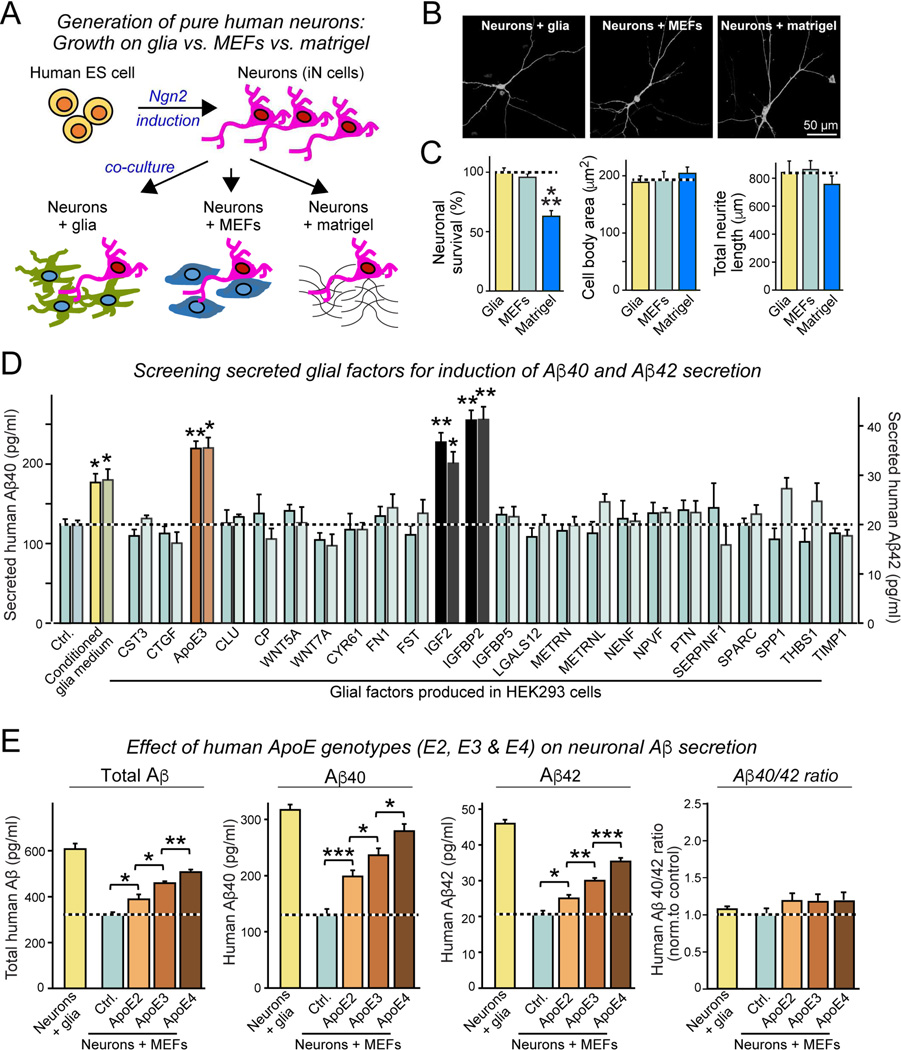
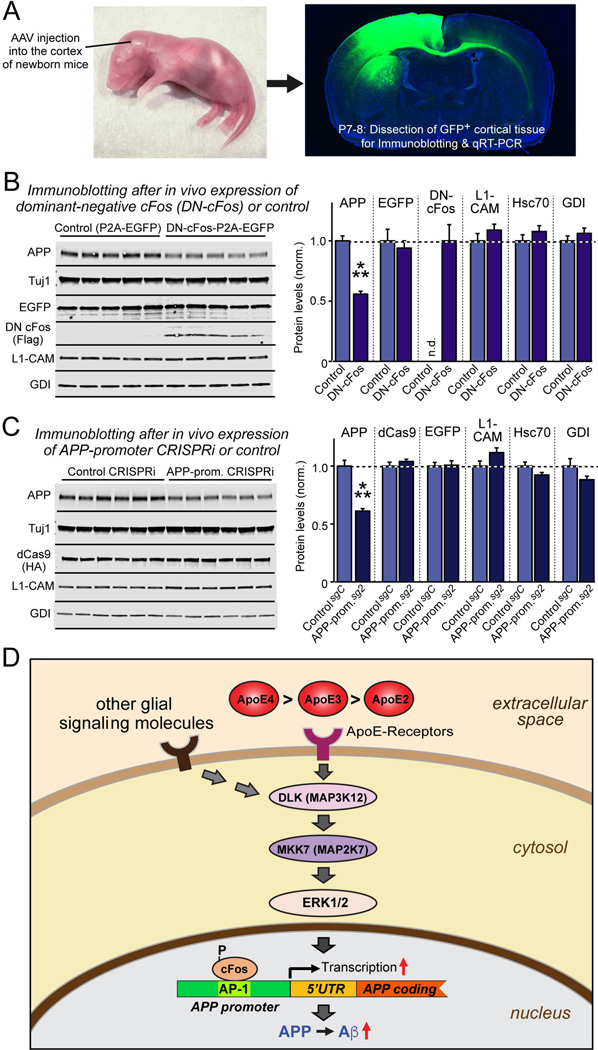
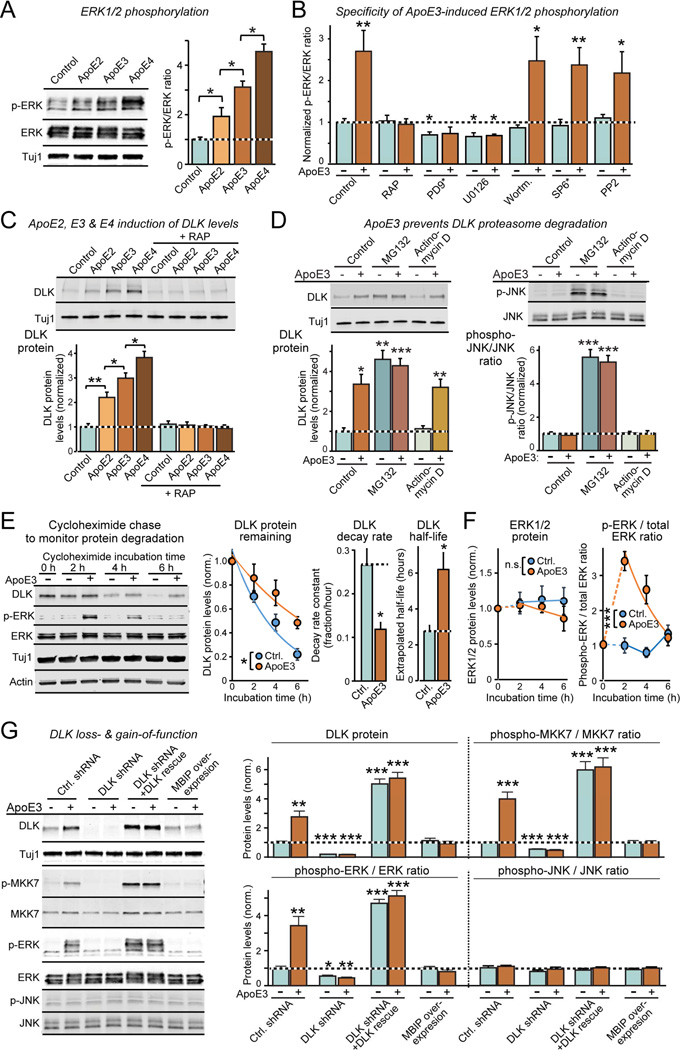
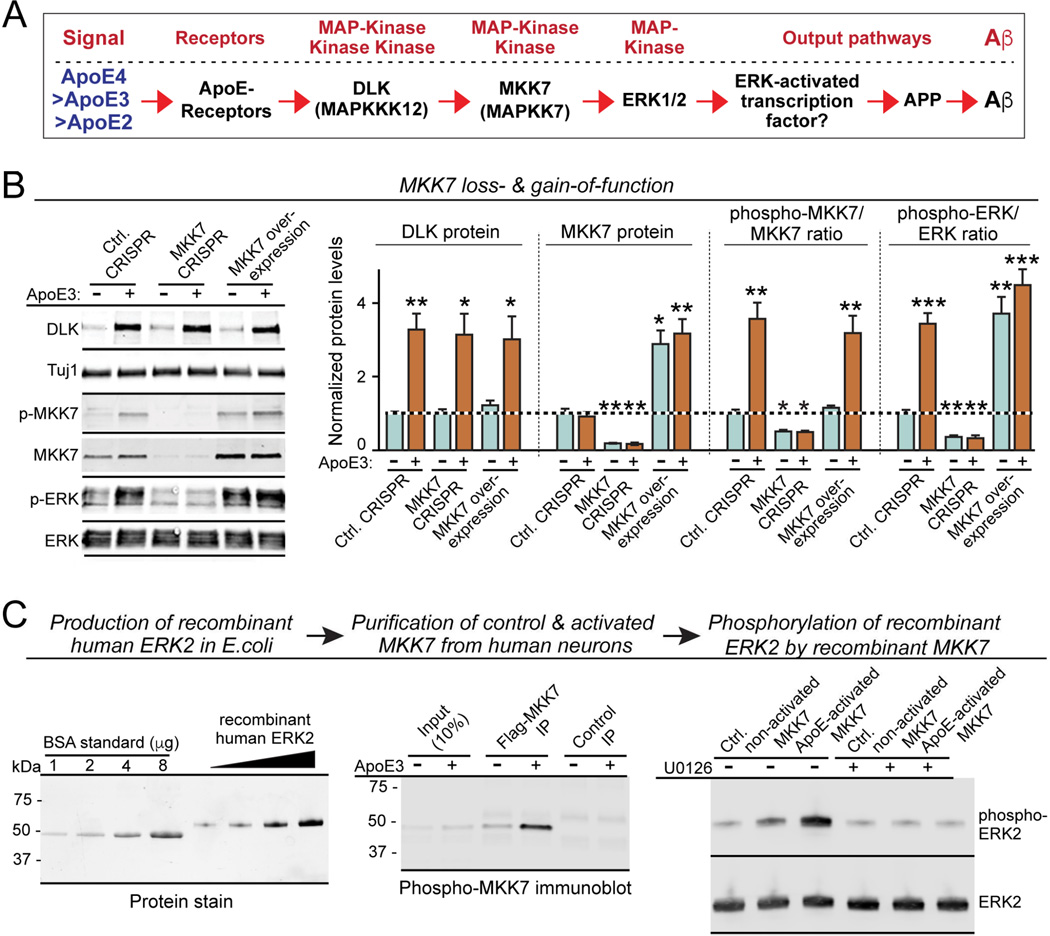
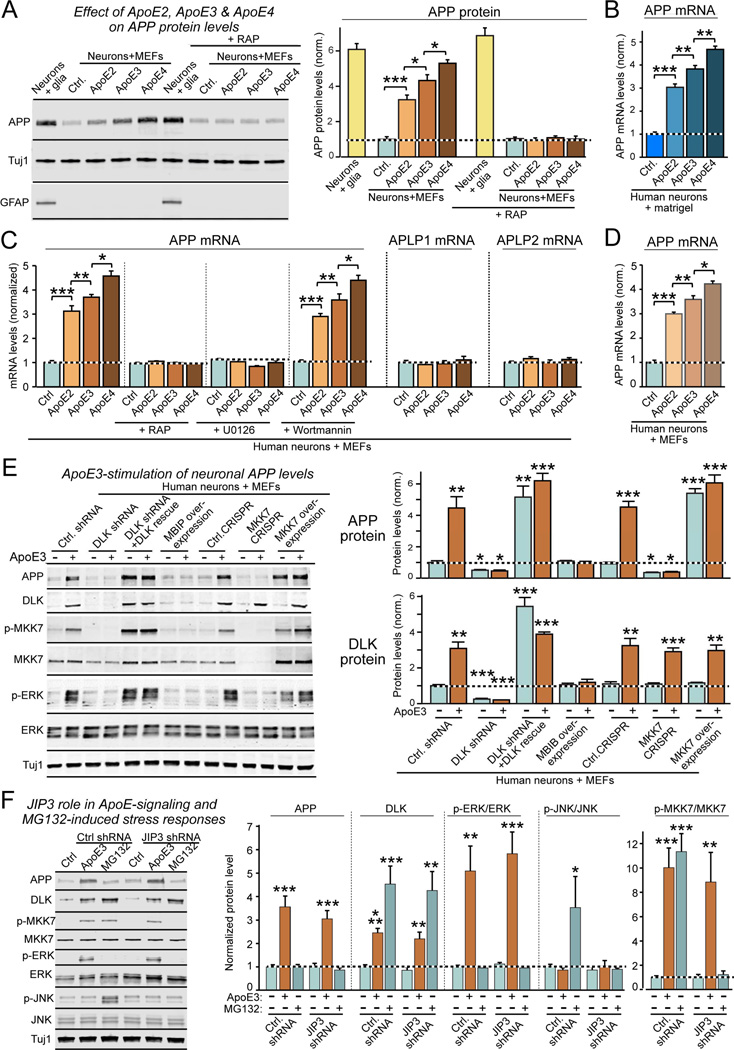
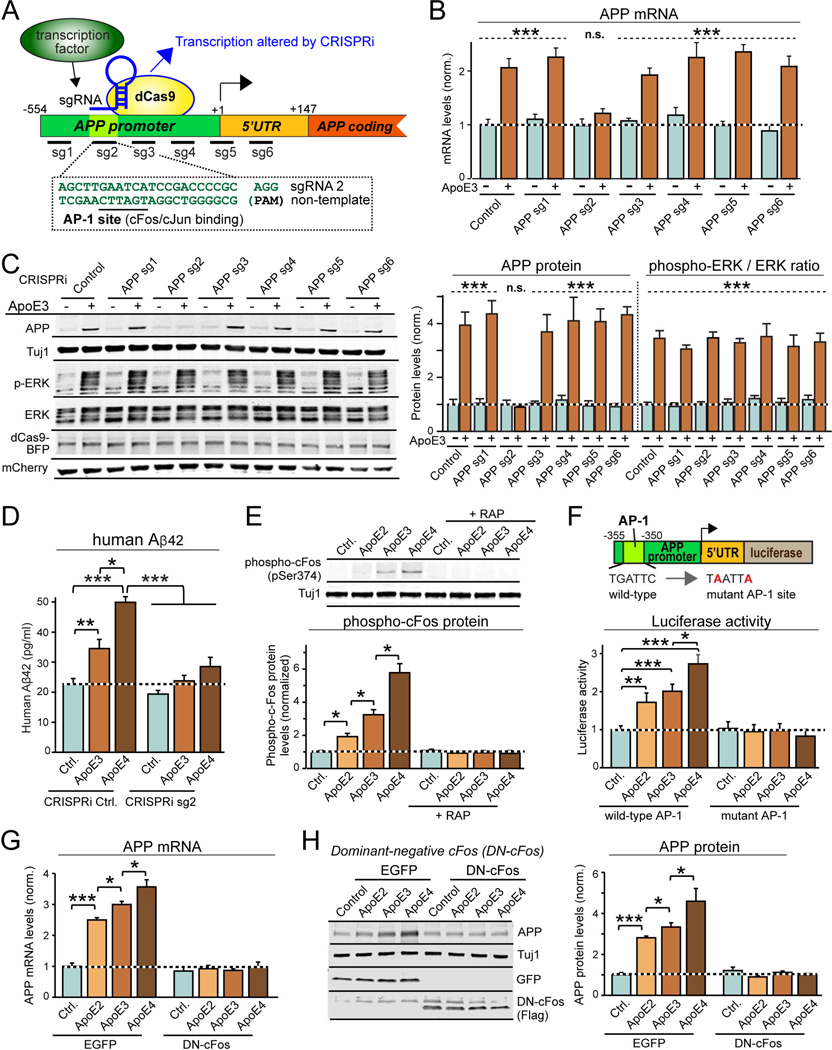
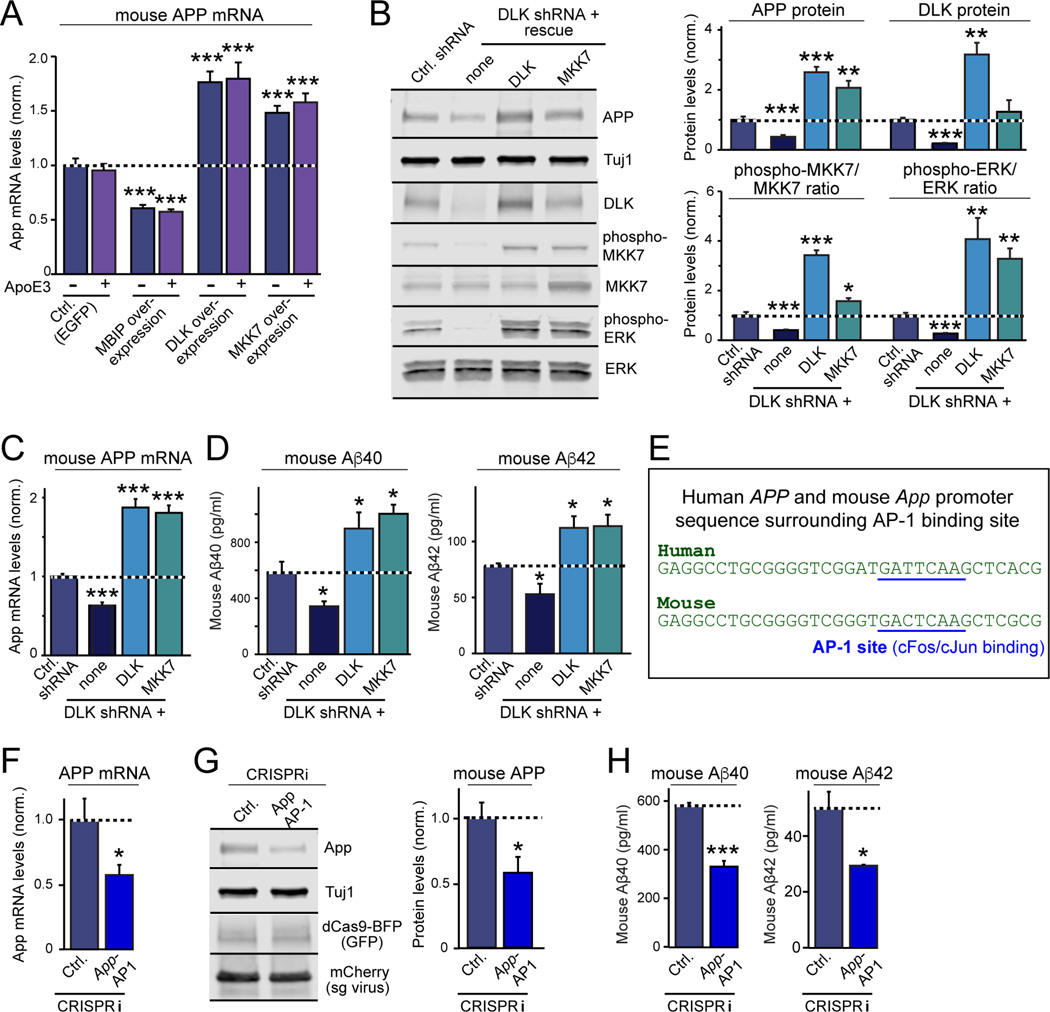
Human apolipoprotein E (ApoE) apolipoprotein is primarily expressed in three isoforms (ApoE2, ApoE3, and ApoE4) that differ only by two residues. ApoE4 constitutes the most important genetic risk factor for Alzheimer's disease (AD), ApoE3 is neutral, and ApoE2 is protective. How ApoE isoforms influence AD pathogenesis, however, remains unclear. Using ES-cell-derived human neurons, we show that ApoE secreted by glia stimulates neuronal Aβ production with an ApoE4 > ApoE3 > ApoE2 potency rank order. We demonstrate that ApoE binding to ApoE receptors activates dual leucine-zipper kinase (DLK), a MAP-kinase kinase kinase that then activates MKK7 and ERK1/2 MAP kinases. Activated ERK1/2 induces cFos phosphorylation, stimulating the transcription factor AP-1, which in turn enhances transcription of amyloid-β precursor protein (APP) and thereby increases amyloid-β levels. This molecular mechanism also regulates APP transcription in mice in vivo. Our data describe a novel signal transduction pathway in neurons whereby ApoE activates a non-canonical MAP kinase cascade that enhances APP transcription and amyloid-β synthesis.
人类载脂蛋白E(ApoE)主要以三种异构体(ApoE2、ApoE3和ApoE4)的形式表达,它们之间仅相差两个残基。ApoE4是阿尔茨海默病(AD)最重要的遗传风险因素,ApoE3是中性的,而ApoE2具有保护作用。然而,ApoE异构体如何影响AD发病机制仍不清楚。利用胚胎干细胞衍生的人类神经元,我们发现胶质细胞分泌的ApoE以ApoE4 > ApoE3 > ApoE2的效力等级顺序刺激神经元Aβ的产生。我们证明,ApoE与ApoE受体的结合激活了双亮氨酸拉链激酶(DLK),一种丝裂原活化蛋白激酶激酶激酶,其随后激活MKK7和ERK1/2丝裂原活化蛋白激酶。激活的ERK1/2诱导cFos磷酸化,刺激转录因子AP-1,进而增强淀粉样前体蛋白(APP)的转录,从而增加淀粉样β水平。这种分子机制在体内小鼠中也调节APP转录。我们的数据描述了神经元中一种新的信号转导途径,即ApoE激活一个非经典的丝裂原活化蛋白激酶级联反应,增强APP转录和淀粉样β合成。