Kaur Parwinder, Bayer Philipp E, Milec Zbyněk, Vrána Jan, Yuan Yuxuan, Appels Rudi, Edwards David, Batley Jacqueline, Nichols Phillip, Erskine William, Doležel Jaroslav
Centre for Plant Genetics and Breeding and Institute of Agriculture, The University of Western Australia, Crawley, WA, Australia.
School of Plant Biology and Institute of Agriculture, The University of Western Australia, Crawley, WA, Australia.
Plant Biotechnol J. 2017 Aug;15(8):1034-1046. doi: 10.1111/pbi.12697. Epub 2017 Mar 23.
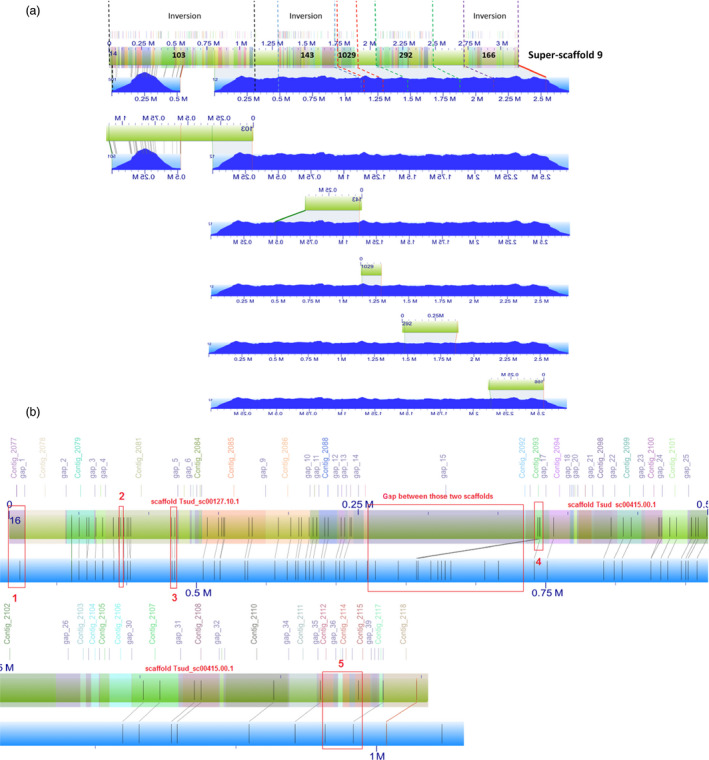
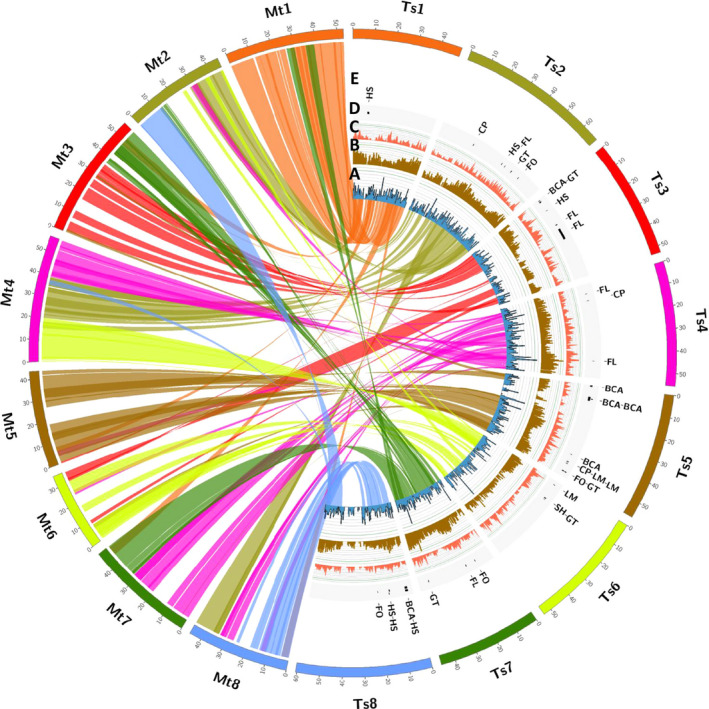
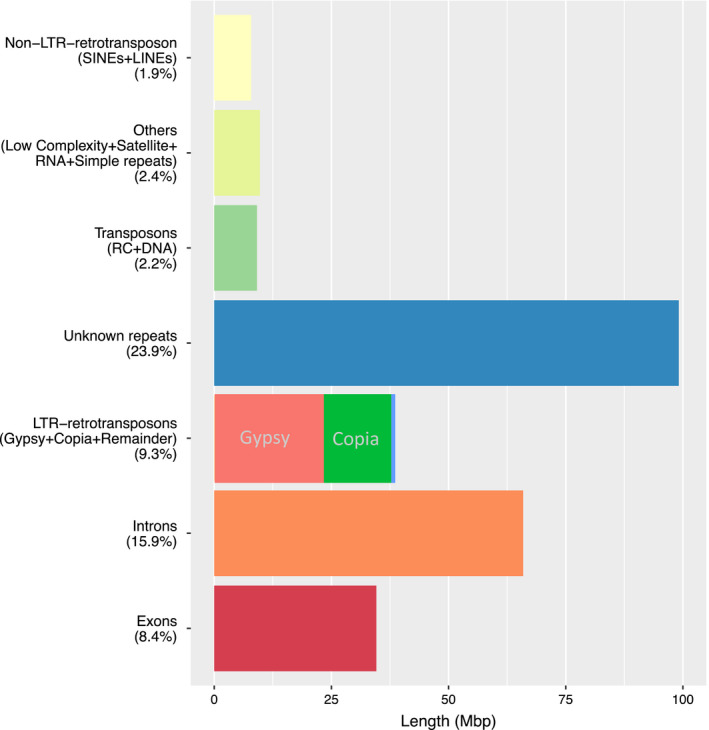
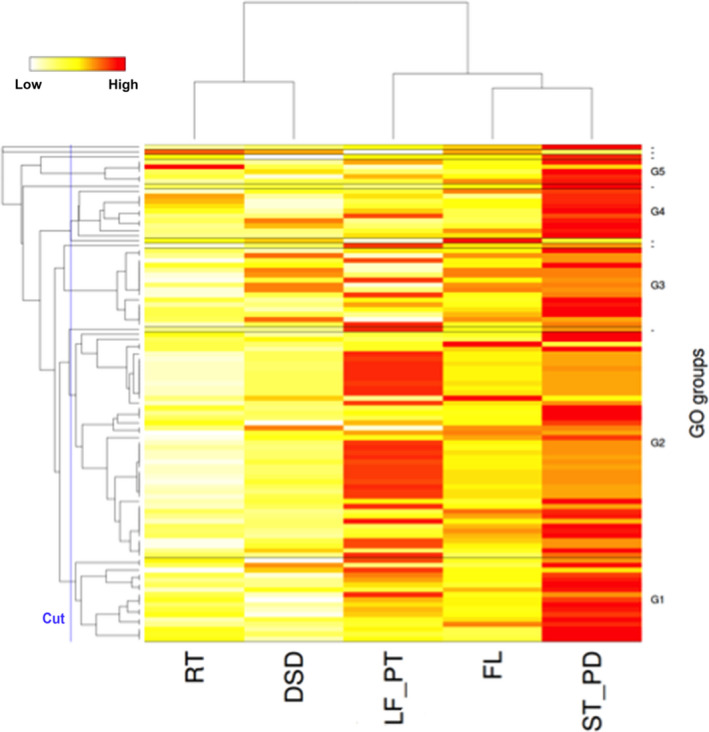
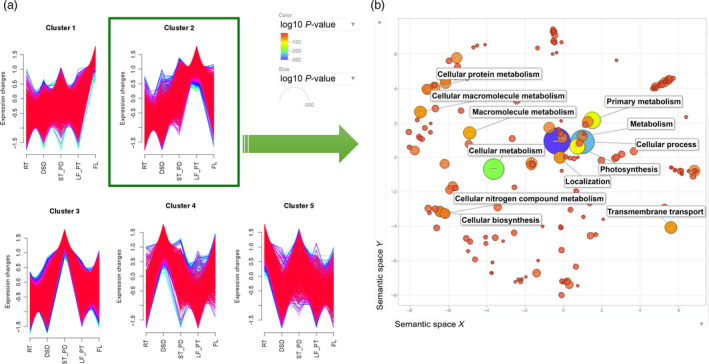
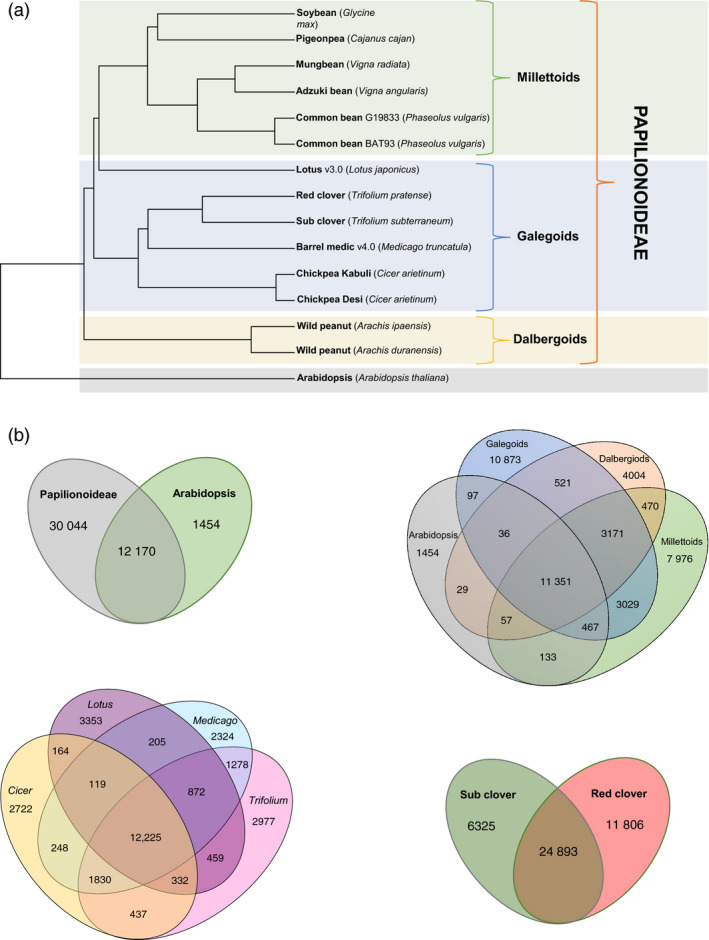
Subterranean clover is an important annual forage legume, whose diploidy and inbreeding nature make it an ideal model for genomic analysis in Trifolium. We reported a draft genome assembly of the subterranean clover TSUd_r1.1. Here we evaluate genome mapping on nanochannel arrays and generation of a transcriptome atlas across tissues to advance the assembly and gene annotation. Using a BioNano-based assembly spanning 512 Mb (93% genome coverage), we validated the draft assembly, anchored unplaced contigs and resolved misassemblies. Multiple contigs (264) from the draft assembly coalesced into 97 super-scaffolds (43% of genome). Sequences longer than >1 Mb increased from 40 to 189 Mb giving 1.4-fold increase in N50 with total genome in pseudomolecules improved from 73 to 80%. The advanced assembly was re-annotated using transcriptome atlas data to contain 31 272 protein-coding genes capturing >96% of the gene content. Functional characterization and GO enrichment confirmed gene expression for response to water deprivation, flavonoid biosynthesis and embryo development ending in seed dormancy, reflecting adaptation to the harsh Mediterranean environment. Comparative analyses across Papilionoideae identified 24 893 Trifolium-specific and 6325 subterranean-clover-specific genes that could be mined further for traits such as geocarpy and grazing tolerance. Eight key traits, including persistence, improved livestock health by isoflavonoid production in addition to important agro-morphological traits, were fine-mapped on the high-density SNP linkage map anchored to the assembly. This new genomic information is crucial to identify loci governing traits allowing marker-assisted breeding, comparative mapping and identification of tissue-specific gene promoters for biotechnological improvement of forage legumes.
地下三叶草是一种重要的一年生豆科牧草,其二倍体和自交特性使其成为三叶草属基因组分析的理想模型。我们报道了地下三叶草TSUd_r1.1的基因组组装草图。在此,我们评估了纳米通道阵列上的基因组图谱绘制以及跨组织转录组图谱的生成,以推进组装和基因注释工作。利用基于BioNano的跨越512 Mb(93%基因组覆盖率)的组装,我们验证了草图组装,锚定了未定位的重叠群并解决了错误组装问题。草图组装中的多个重叠群(264个)合并为97个超级支架(占基因组的43%)。长度大于1 Mb的序列从40 Mb增加到189 Mb,N50增加了1.4倍,假分子中的总基因组从73%提高到80%。利用转录组图谱数据对改进后的组装进行重新注释,包含31272个蛋白质编码基因,捕获了超过96%的基因内容。功能表征和基因本体富集证实了与缺水响应、类黄酮生物合成以及以种子休眠结束的胚胎发育相关的基因表达,反映了对地中海恶劣环境的适应性。对蝶形花亚科的比较分析确定了24893个三叶草属特异性基因和6325个地下三叶草特异性基因,这些基因可进一步挖掘地果形成和耐放牧等性状。包括持久性、除重要农艺形态性状外通过异黄酮生产改善家畜健康等八个关键性状,在锚定到该组装的高密度单核苷酸多态性(SNP)连锁图谱上进行了精细定位。这一新的基因组信息对于鉴定控制性状的基因座至关重要,有助于进行标记辅助育种、比较作图以及鉴定组织特异性基因启动子,以实现豆科牧草的生物技术改良。