Haile Yohannes, Deng Xiaodan, Ortiz-Sandoval Carolina, Tahbaz Nasser, Janowicz Aleksandra, Lu Jian-Qiang, Kerr Bradley J, Gutowski Nicholas J, Holley Janet E, Eggleton Paul, Giuliani Fabrizio, Simmen Thomas
Department of Cell Biology, University of Alberta, Edmonton, Canada.
Present address: Alberta Diabetes Institute, University of Alberta, Edmonton, Canada.
J Neuroinflammation. 2017 Jan 23;14(1):19. doi: 10.1186/s12974-016-0788-z.
Endoplasmic reticulum (ER) stress is a hallmark of neurodegenerative diseases such as multiple sclerosis (MS). However, this physiological mechanism has multiple manifestations that range from impaired clearance of unfolded proteins to altered mitochondrial dynamics and apoptosis. While connections between the triggering of the unfolded protein response (UPR) and downstream mitochondrial dysfunction are poorly understood, the membranous contacts between the ER and mitochondria, called the mitochondria-associated membrane (MAM), could provide a functional link between these two mechanisms. Therefore, we investigated whether the guanosine triphosphatase (GTPase) Rab32, a known regulator of the MAM, mitochondrial dynamics, and apoptosis, could be associated with ER stress as well as mitochondrial dysfunction.
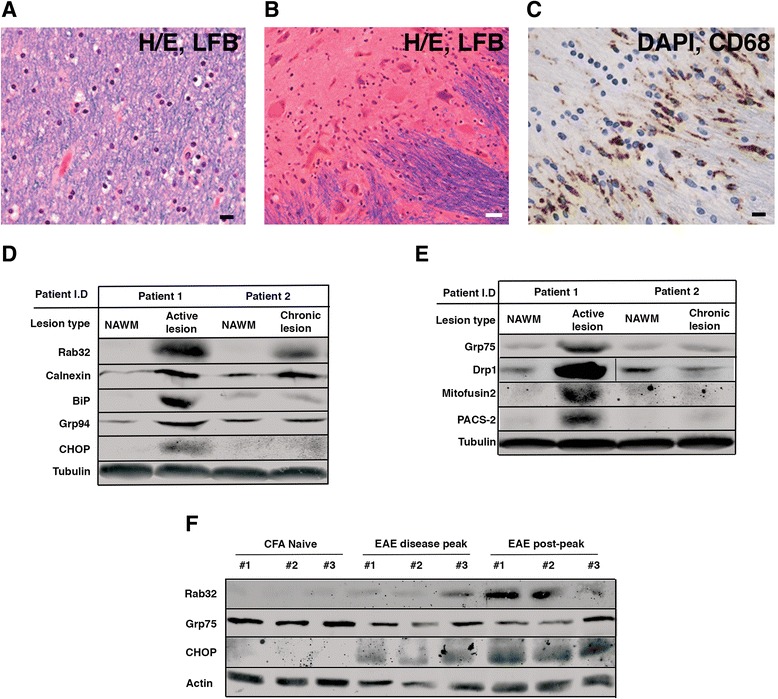
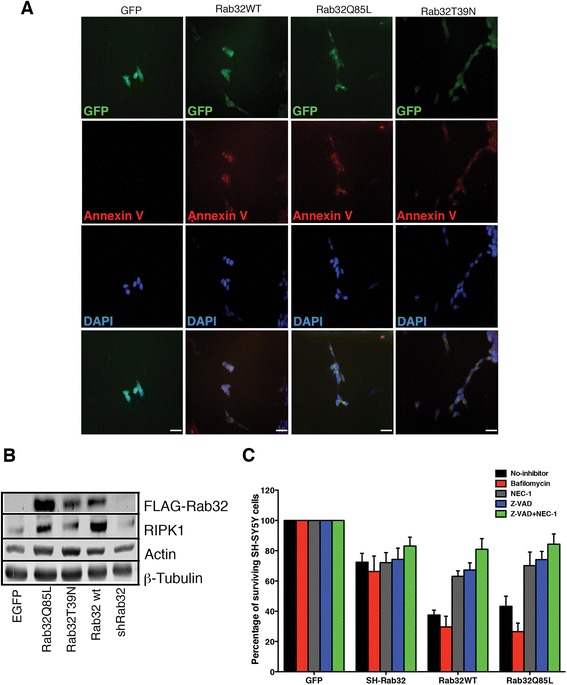
We assessed Rab32 expression in MS patient and experimental autoimmune encephalomyelitis (EAE) tissue, via observation of mitochondria in primary neurons and via monitoring of survival of neuronal cells upon increased Rab32 expression.
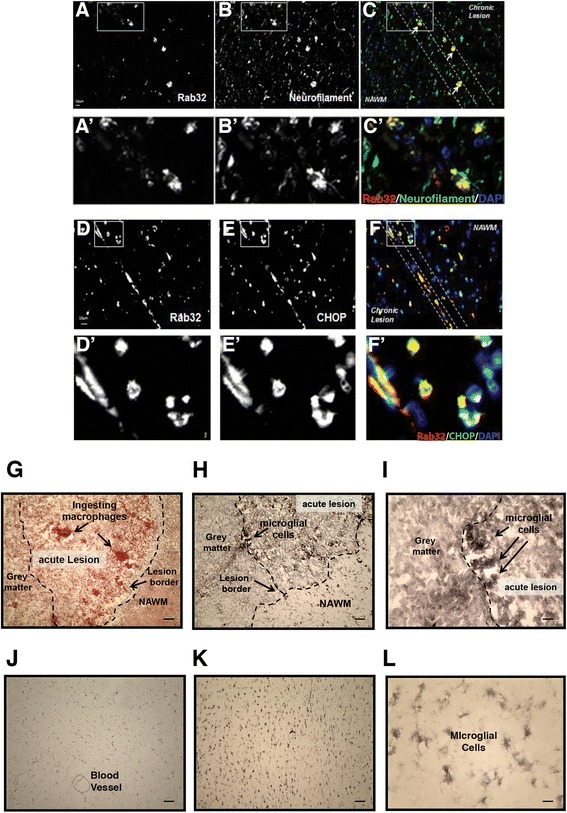
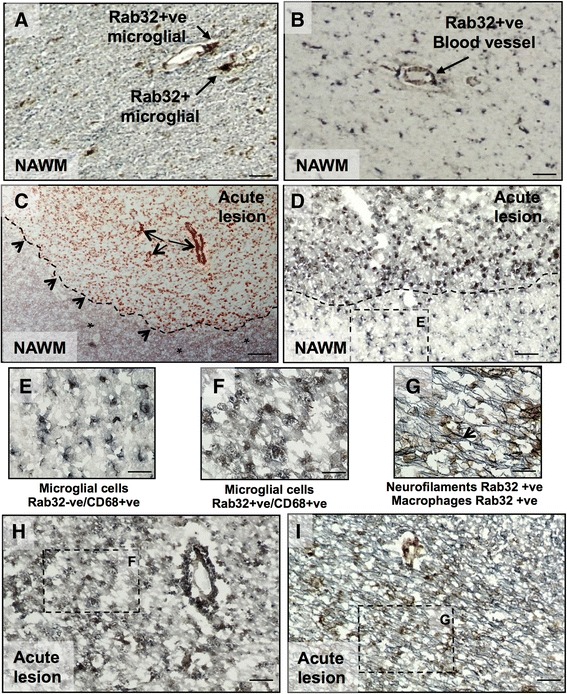
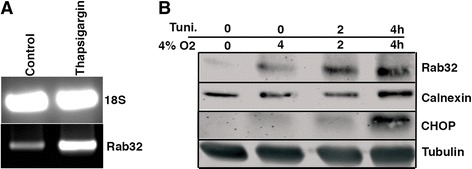
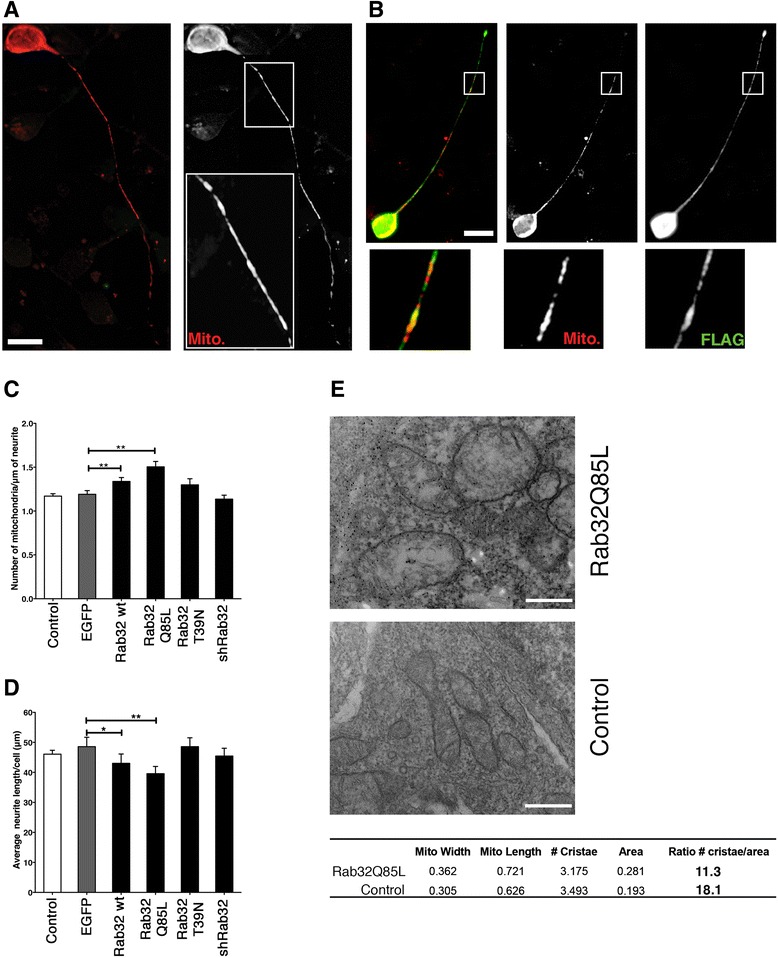
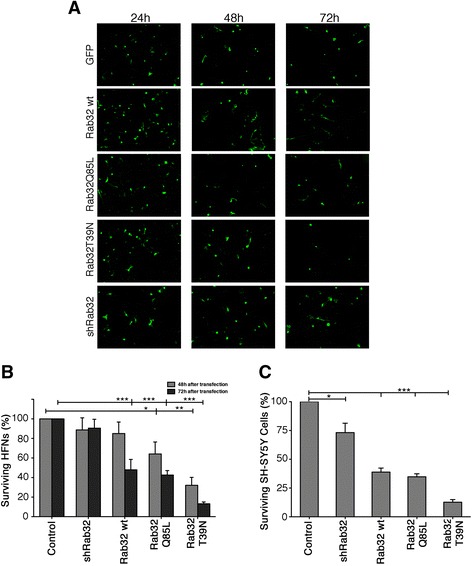
We found that the induction of Rab32 and other MAM proteins correlates with ER stress proteins in MS brain, as well as in EAE, and occurs in multiple central nervous system (CNS) cell types. We identify Rab32, known to increase in response to acute brain inflammation, as a novel unfolded protein response (UPR) target. High Rab32 expression shortens neurite length, alters mitochondria morphology, and accelerates apoptosis/necroptosis of human primary neurons and cell lines.
ER stress is strongly associated with Rab32 upregulation in the progression of MS, leading to mitochondrial dysfunction and neuronal death.
内质网(ER)应激是诸如多发性硬化症(MS)等神经退行性疾病的一个标志。然而,这种生理机制有多种表现,从未折叠蛋白清除受损到线粒体动力学改变和细胞凋亡。虽然未折叠蛋白反应(UPR)的触发与下游线粒体功能障碍之间的联系尚不清楚,但内质网与线粒体之间的膜性接触,即线粒体相关膜(MAM),可能在这两种机制之间提供功能联系。因此,我们研究了鸟苷三磷酸酶(GTPase)Rab32,一种已知的MAM、线粒体动力学和细胞凋亡的调节因子,是否也与内质网应激以及线粒体功能障碍有关。
我们通过观察原代神经元中的线粒体以及监测Rab32表达增加后神经元细胞的存活情况,评估了Rab32在MS患者和实验性自身免疫性脑脊髓炎(EAE)组织中的表达。
我们发现,Rab32和其他MAM蛋白的诱导与MS脑以及EAE中的内质网应激蛋白相关,并且发生在多种中枢神经系统(CNS)细胞类型中。我们确定已知在急性脑炎症反应中增加的Rab32是一种新的未折叠蛋白反应(UPR)靶点。高Rab32表达会缩短神经突长度,改变线粒体形态,并加速人原代神经元和细胞系的凋亡/坏死性凋亡。
在内质网应激在MS进展过程中与Rab32上调密切相关,导致线粒体功能障碍和神经元死亡。