Department of Physics, University of Houston, 4800 Calhoun Road, Houston, Texas 77204, USA.
Department of Earth and Atmospheric Sciences, University of Houston, Houston, Texas 77204, USA.
Nat Commun. 2017 Jan 24;8:14367. doi: 10.1038/ncomms14367.
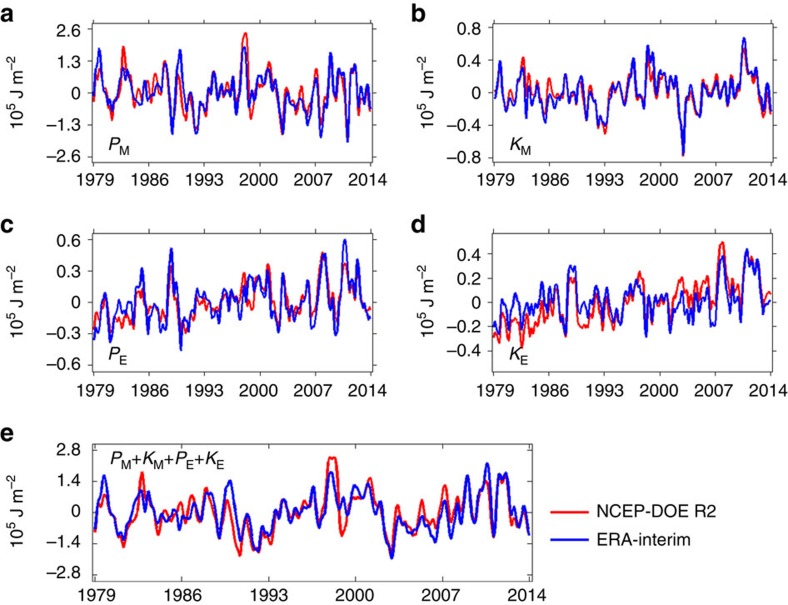
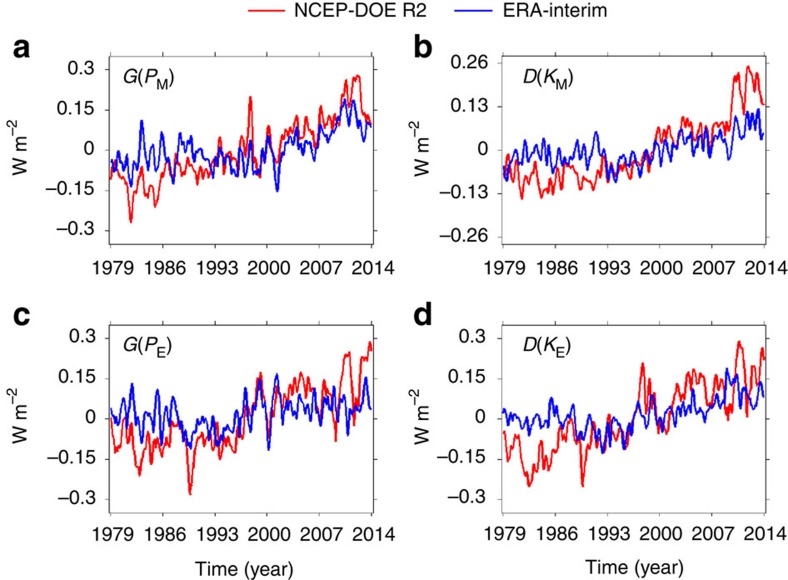
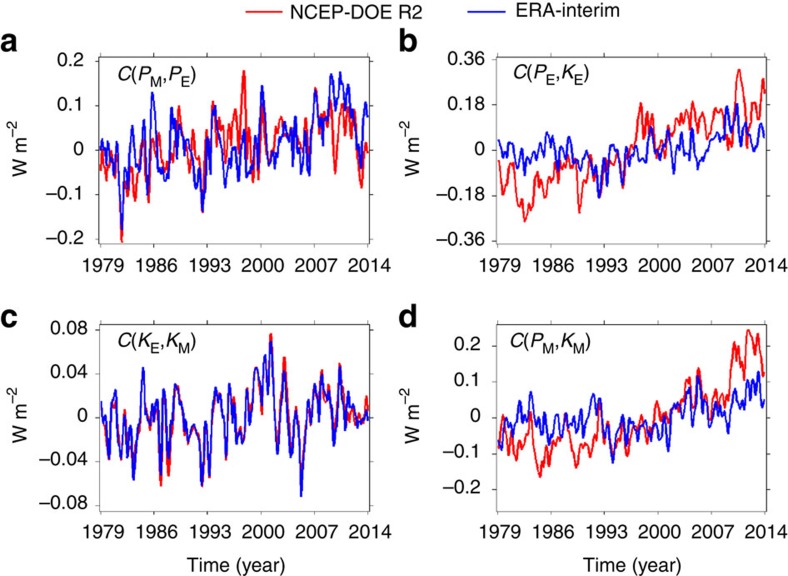
The Lorenz energy cycle is widely used to investigate atmospheres and climates on planets. However, the long-term temporal variations of such an energy cycle have not yet been explored. Here we use three independent meteorological data sets from the modern satellite era, to examine the temporal characteristics of the Lorenz energy cycle of Earth's global atmosphere in response to climate change. The total mechanical energy of the global atmosphere basically remains constant with time, but the global-average eddy energies show significant positive trends. The spatial investigations suggest that these positive trends are concentrated in the Southern Hemisphere. Significant positive trends are also found in the conversion, generation and dissipation rates of energies. The positive trends in the dissipation rates of kinetic energies suggest that the efficiency of the global atmosphere as a heat engine increased during the modern satellite era.
洛伦兹能量循环被广泛应用于研究行星的大气和气候。然而,这种能量循环的长期时间变化尚未得到探索。在这里,我们使用现代卫星时代的三个独立气象数据集,研究地球全球大气的洛伦兹能量循环对气候变化的时间特征。全球大气的总机械能基本随时间保持不变,但全球平均涡旋能量显示出显著的正趋势。空间研究表明,这些正趋势集中在南半球。在能量的转换、产生和耗散率中也发现了显著的正趋势。动能耗散率的正趋势表明,在现代卫星时代,全球大气作为热机的效率提高了。