Gratkowski Maciej, Storzer Lena, Butz Markus, Schnitzler Alfons, Saupe Dietmar, Dalal Sarang S
Department of Computer and Information Science, University of Konstanz Konstanz, Germany.
Institute of Clinical Neuroscience and Medical Psychology, Medical Faculty, Heinrich Heine University Düsseldorf Düsseldorf, Germany.
Front Hum Neurosci. 2017 Jan 10;10:685. doi: 10.3389/fnhum.2016.00685. eCollection 2016.
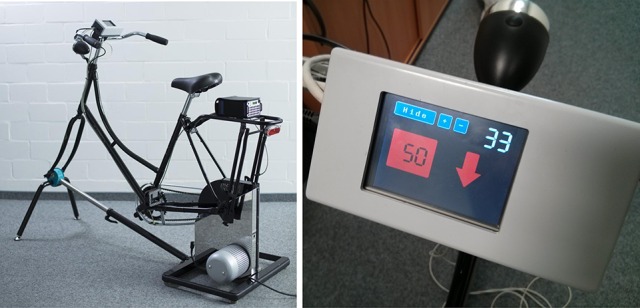
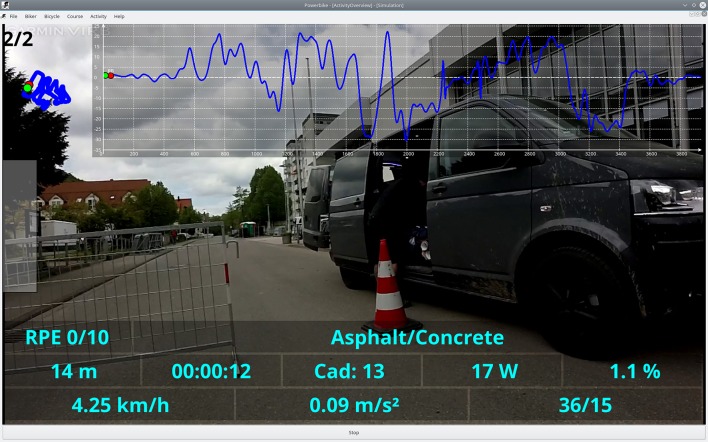
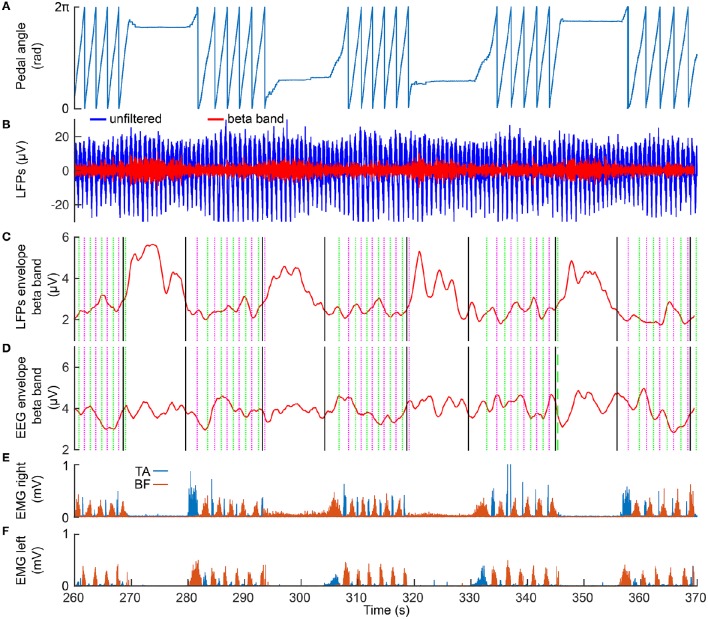
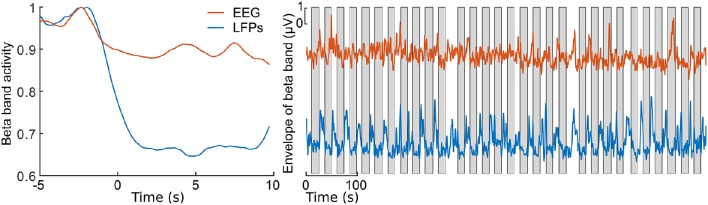
Recently, it has been demonstrated that bicycling ability remains surprisingly preserved in Parkinson's disease (PD) patients who suffer from freezing of gait. Cycling has been also proposed as a therapeutic means of treating PD symptoms, with some preliminary success. The neural mechanisms behind these phenomena are however not yet understood. One of the reasons is that the investigations of neuronal activity during pedaling have been up to now limited to PET and fMRI studies, which restrict the temporal resolution of analysis, and to scalp EEG focused on cortical activation. However, deeper brain structures like the basal ganglia are also associated with control of voluntary motor movements like cycling and are affected by PD. Deep brain stimulation (DBS) electrodes implanted for therapy in PD patients provide rare and unique access to directly record basal ganglia activity with a very high temporal resolution. In this paper we present an experimental setup allowing combined investigation of basal ganglia local field potentials (LFPs) and scalp EEG underlying bicycling in PD patients. The main part of the setup is a bike simulator consisting of a classic Dutch-style bicycle frame mounted on a commercially available ergometer. The pedal resistance is controllable in real-time by custom software and the pedal position is continuously tracked by custom Arduino-based electronics using optical and magnetic sensors. A portable bioamplifier records the pedal position signal, the angle of the knee, and the foot pressure together with EEG, EMG, and basal ganglia LFPs. A handlebar-mounted display provides additional information for patients riding the bike simulator, including the current and target pedaling rate. In order to demonstrate the utility of the setup, example data from pilot recordings are shown. The presented experimental setup provides means to directly record basal ganglia activity not only during cycling but also during other movement tasks in patients who have undergone DBS treatment. Thus, it can facilitate studies comparing bicycling and walking, to elucidate why PD patients often retain the ability to bicycle despite severe freezing of gait. Moreover it can help clarifying the mechanism through which cycling may have therapeutic benefits.
最近有研究表明,患有步态冻结的帕金森病(PD)患者的骑行能力仍能令人惊讶地保持。骑行也被提议作为治疗PD症状的一种手段,并取得了一些初步成功。然而,这些现象背后的神经机制尚未被理解。原因之一是,迄今为止,对蹬踏过程中神经元活动的研究仅限于PET和fMRI研究,这限制了分析的时间分辨率,以及专注于皮层激活的头皮脑电图。然而,像基底神经节这样更深层次的脑结构也与骑行等自主运动的控制有关,并且会受到PD的影响。为PD患者治疗而植入的深部脑刺激(DBS)电极提供了罕见且独特的机会,可以以非常高的时间分辨率直接记录基底神经节的活动。在本文中,我们展示了一种实验装置,可用于联合研究PD患者骑行时的基底神经节局部场电位(LFP)和头皮脑电图。该装置的主要部分是一个自行车模拟器,它由安装在商用测力计上的经典荷兰式自行车车架组成。踏板阻力可通过定制软件实时控制,踏板位置由基于Arduino的定制电子设备使用光学和磁传感器连续跟踪。一个便携式生物放大器记录踏板位置信号、膝盖角度、足部压力以及脑电图、肌电图和基底神经节LFP。安装在车把上的显示器为骑行自行车模拟器的患者提供额外信息,包括当前和目标蹬踏速率。为了证明该装置的实用性,展示了试点记录的示例数据。所展示的实验装置不仅提供了在骑行过程中,还能在接受DBS治疗的患者进行其他运动任务时直接记录基底神经节活动的方法。因此,它有助于比较骑行和步行的研究,以阐明为什么PD患者尽管步态严重冻结但仍经常保留骑行能力。此外,它有助于阐明骑行可能具有治疗益处的机制。