Studwell Anna J, Hines Ellen, Elliott Meredith L, Howar Julie, Holzman Barbara, Nur Nadav, Jahncke Jaime
Romberg Tiburon Center for Environmental Studies, San Francisco State University, Tiburon, CA, United States of America.
Department of Geography and Environment, San Francisco State University, San Francisco, CA, United States of America.
PLoS One. 2017 Jan 25;12(1):e0169517. doi: 10.1371/journal.pone.0169517. eCollection 2017.
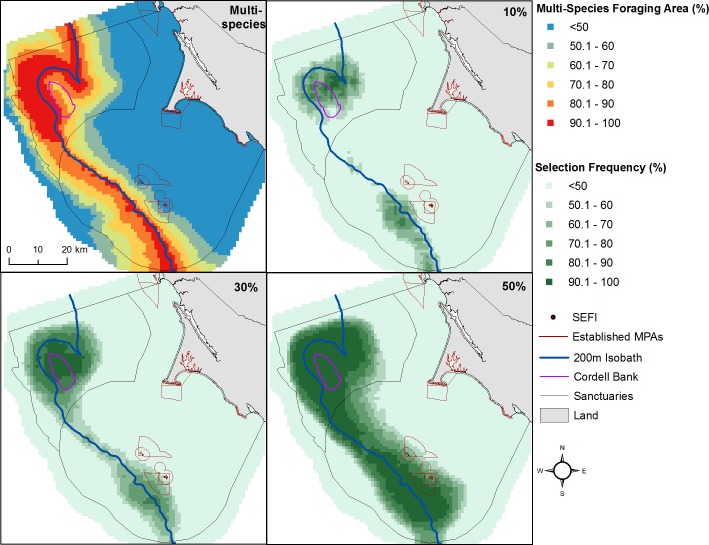
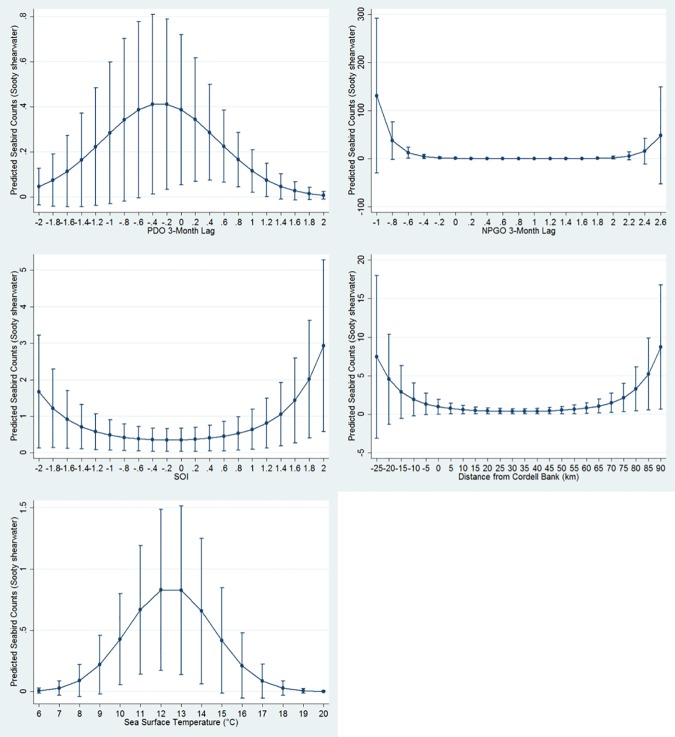
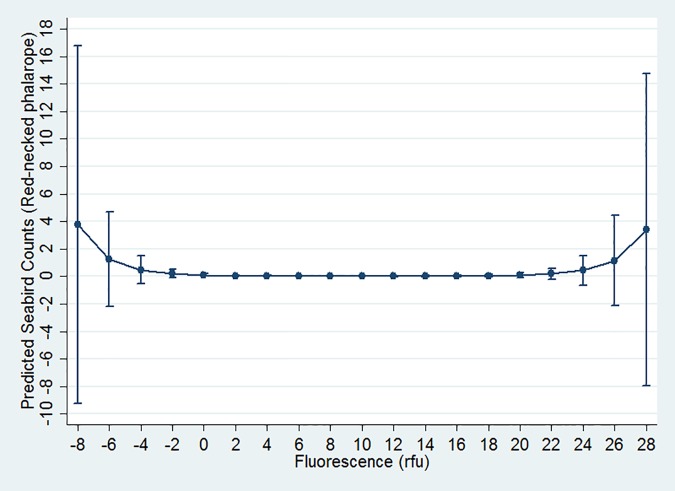
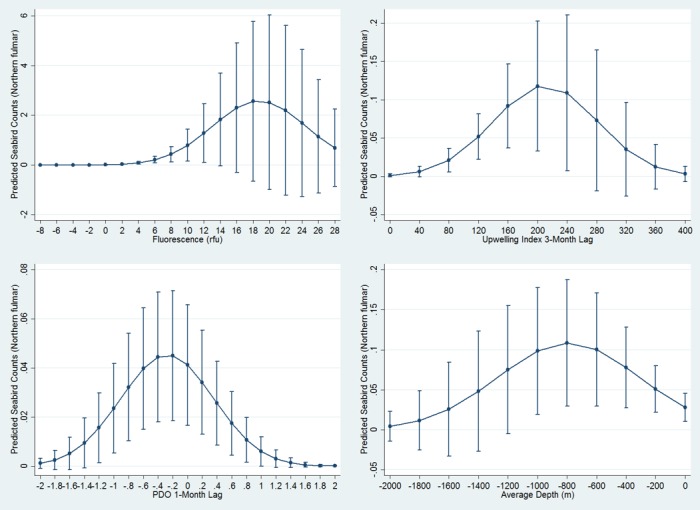
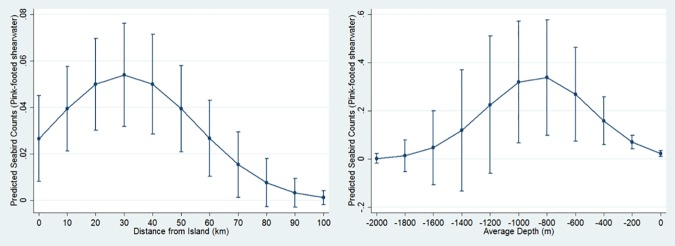
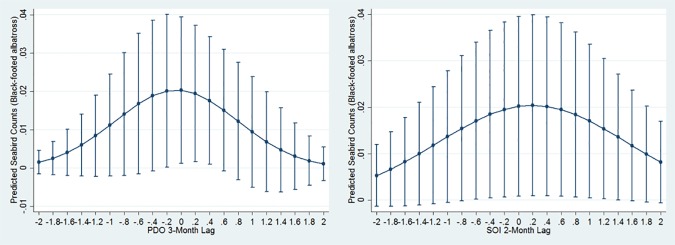
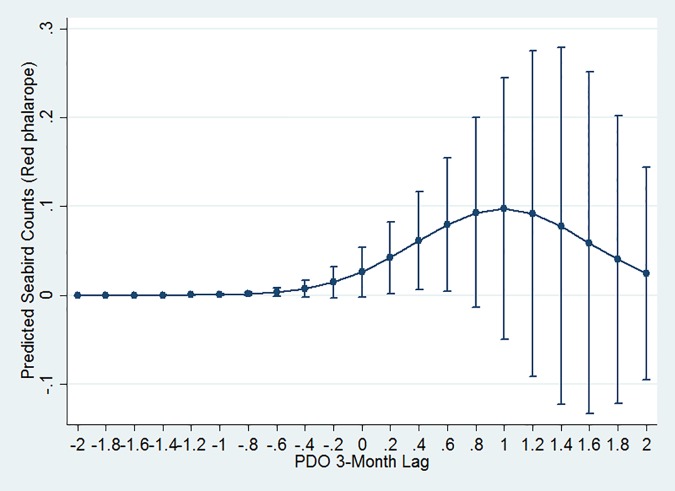
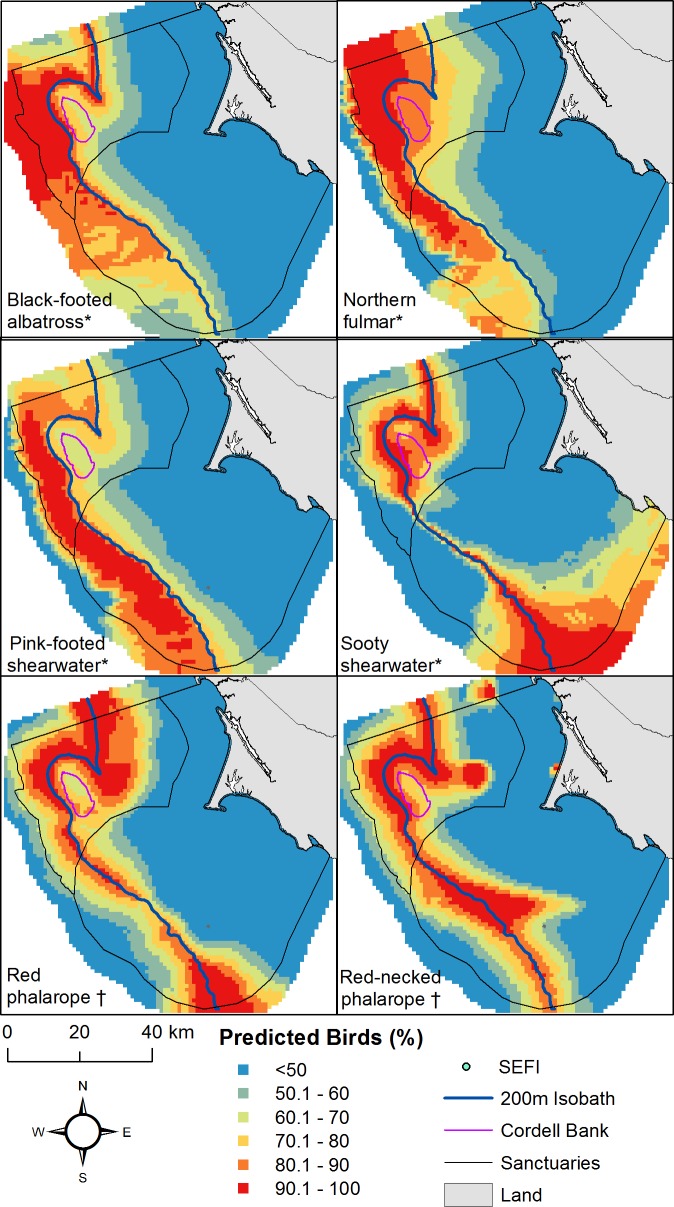
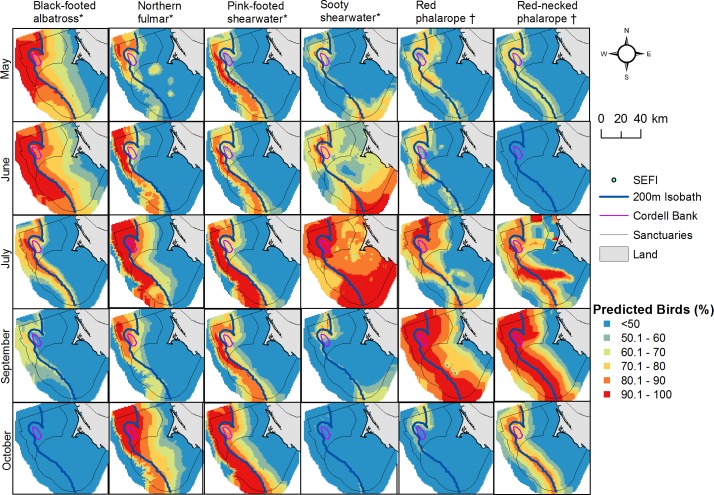
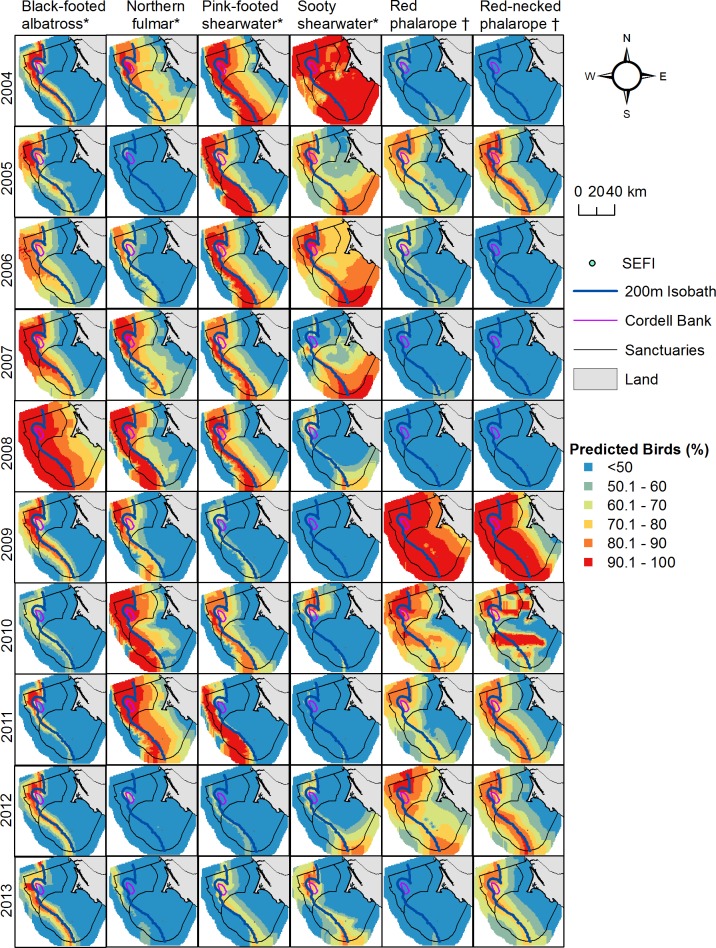
Seabird aggregations at sea have been shown to be associated with concentrations of prey. Previous research identified Central California as a highly used foraging area for seabirds, with locally breeding seabirds foraging close to their colonies on Southeast Farallon Island. Herein, we focus on nonresident (i.e. non-locally breeding) seabird species off of Central California. We hypothesized that high-use foraging areas for nonresident seabirds would be influenced by oceanographic and bathymetric factors and that spatial and temporal distributions would be similar within planktivorous and generalist foraging guilds but would differ between them. With data collected by the Applied California Current Ecosystem Studies (ACCESS) partnership during cruises between April and October from 2004-2013, we developed generalized linear models to identify high-use foraging areas for each of six nonresident seabird species. The four generalist species are Phoebastria nigripes (black-footed albatross), Ardenna griseus (sooty shearwater), Ardenna creatopus (pink-footed shearwater), and Fulmarus glacialis (northern fulmar). The two planktivorous species are Phalaropus lobatus (red-necked phalarope) and Phalaropus fulicarius (red phalarope). Sea surface temperature was significant for generalist species and sea surface salinity was important for planktivorous species. The distance to the 200-m isobath was significant in five of six models, Pacific Decadal Oscillation with a 3-month lag in four models, and sea surface fluorescence, the distance to Cordell Bank, and depth in three models. We did not find statistically significant differences between distributions of individual seabird species within a foraging guild or between guilds, with the exception of the sooty shearwater. Model results for a multi-use seabird foraging area highlighted the continental shelf break, particularly within the vicinity of Cordell Bank, as the highest use areas as did Marxan prioritization. Our research methods can be implemented elsewhere to identify critical habitat that needs protection as human development pressures continue to expand to the ocean.
海上的海鸟聚集区已被证明与猎物的集中分布有关。先前的研究表明,加利福尼亚中部是海鸟高度频繁使用的觅食区,当地繁殖的海鸟在东南法拉隆岛附近的殖民地附近觅食。在此,我们关注加利福尼亚中部以外的非本地(即非本地繁殖)海鸟物种。我们假设,非本地海鸟的高使用觅食区会受到海洋学和测深因素的影响,并且浮游生物食性和杂食性觅食群体内的空间和时间分布会相似,但它们之间会有所不同。利用应用加利福尼亚洋流生态系统研究(ACCESS)合作伙伴在2004年至2013年4月至10月巡航期间收集的数据,我们开发了广义线性模型,以确定六种非本地海鸟物种各自的高使用觅食区。四种杂食性物种是黑脚信天翁(Phoebastria nigripes)、乌黑鹱(Ardenna griseus)、粉脚鹱(Ardenna creatopus)和暴雪鹱(Fulmarus glacialis)。两种浮游生物食性物种是红颈瓣蹼鹬(Phalaropus lobatus)和红腹瓣蹼鹬(Phalaropus fulicarius)。海面温度对杂食性物种具有显著影响,海面盐度对浮游生物食性物种很重要。在六个模型中的五个中,到200米等深线的距离具有显著影响,在四个模型中,3个月滞后的太平洋年代际振荡具有显著影响,在三个模型中,海面荧光、到科德尔海岸的距离和深度具有显著影响。除了乌黑鹱之外,我们没有发现觅食群体内或群体之间单个海鸟物种分布的统计学显著差异。一个多用途海鸟觅食区的模型结果突出了大陆架断裂带,特别是在科德尔海岸附近,是最高使用区域,马克思an优先排序也是如此。随着人类发展压力不断向海洋扩展,我们的研究方法可在其他地方实施,以确定需要保护的关键栖息地。