Iida Hiroya, Kaibori Masaki, Matsui Kosuke, Ishizaki Morihiko, Kon Masanori
Department of Surgery, Kansai Medical University, Osaka 573-1010, Japan.
Mol Clin Oncol. 2017 Jan;6(1):29-38. doi: 10.3892/mco.2016.1079. Epub 2016 Nov 11.
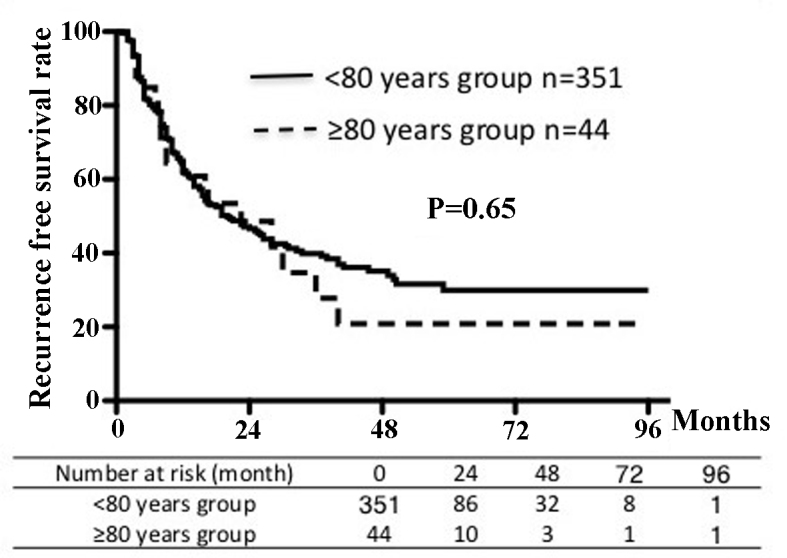
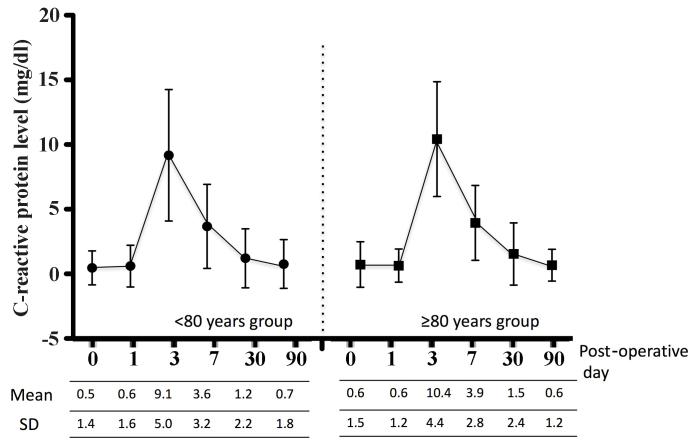
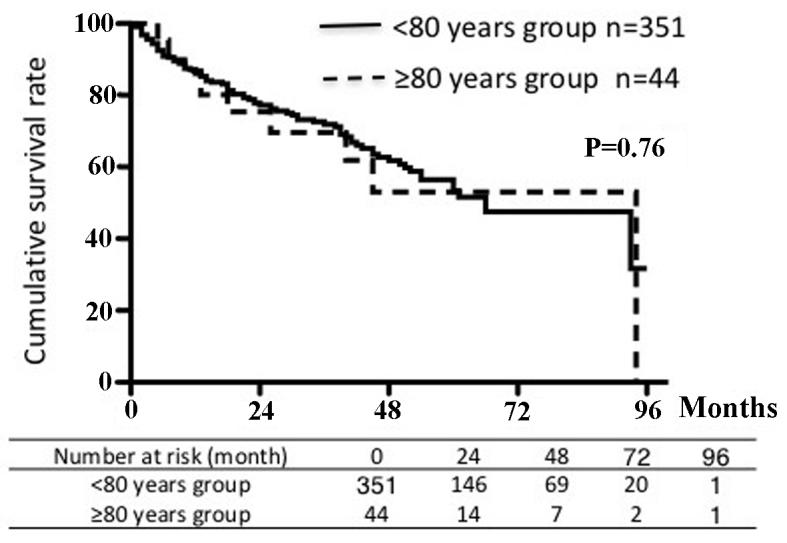
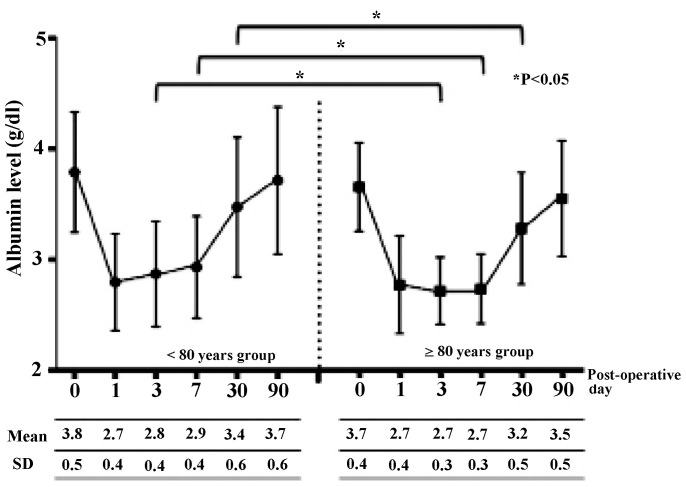
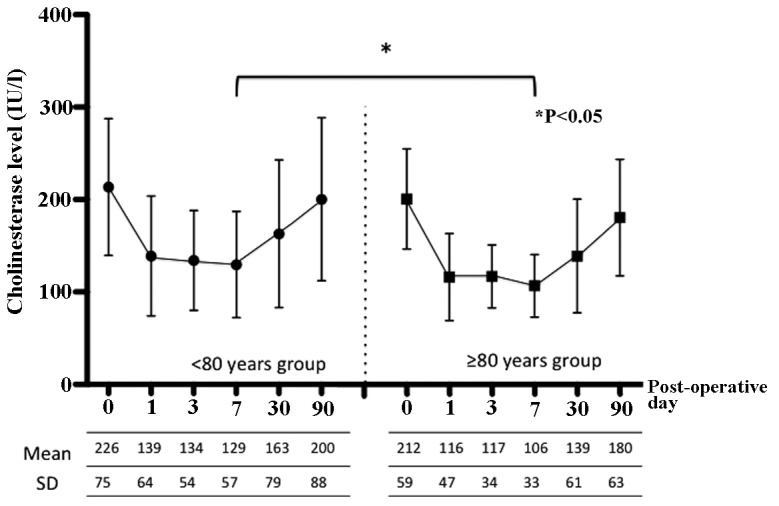
The aim of the present study was to evaluate the clinicopathological features, benefits and problems associated with hepatic resection of hepatocellular carcinoma in patients aged ≥80 years. Between 2006 and 2013, hepatic resection was performed in 395 hepatocellular carcinoma patients, including 351 patients aged <80 years and 44 patients aged ≥80 years. Clinicopathological examination revealed that the tumor size was significantly larger among patients of ≥80 years of age. However, recurrence-free and cumulative survival rates were similar between the two age groups. The occurrence of post-operative complications was an independent risk factor for survival among patients ≥80 years of age. In addition, the albumin level was identified as a risk factor for post-operative complications. The post-operative transition towards an improvement in the albumin level in the ≥80 years group was significantly lower compared with the <80 years group. It was revealed that hepatic resection was feasible for elderly patients. However, the post-operative improvement in the albumin levels was less marked among patients ≥80 years of age, and lower albumin levels were associated with post-operative complications and prognosis. Therefore, elderly patients undergoing hepatic resection should receive peri-operative management including special nutrition.
本研究的目的是评估年龄≥80岁的肝细胞癌患者肝切除的临床病理特征、益处及相关问题。2006年至2013年期间,对395例肝细胞癌患者实施了肝切除术,其中包括351例年龄<80岁的患者和44例年龄≥80岁的患者。临床病理检查显示,≥80岁患者的肿瘤尺寸明显更大。然而,两个年龄组的无复发生存率和累积生存率相似。术后并发症的发生是≥80岁患者生存的独立危险因素。此外,白蛋白水平被确定为术后并发症的一个危险因素。与<80岁组相比,≥80岁组术后白蛋白水平改善的转变明显更低。结果显示肝切除术对老年患者是可行的。然而,≥80岁患者术后白蛋白水平的改善不太明显,较低的白蛋白水平与术后并发症及预后相关。因此,接受肝切除术的老年患者应接受包括特殊营养在内的围手术期管理。