Zhang H, Sternberger N H, Rubinstein L J, Herman M M, Binder L I, Sternberger L A
Department of Neurology, University of Maryland School of Medicine, Baltimore 21201.
Proc Natl Acad Sci U S A. 1989 Oct;86(20):8045-9. doi: 10.1073/pnas.86.20.8045.
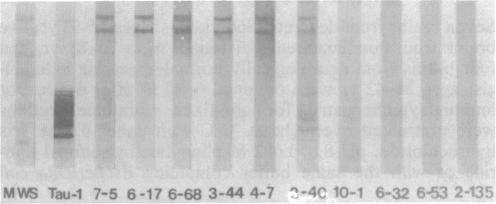
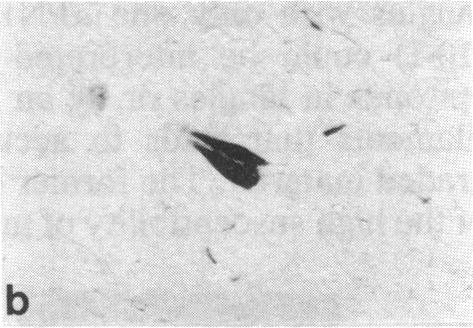
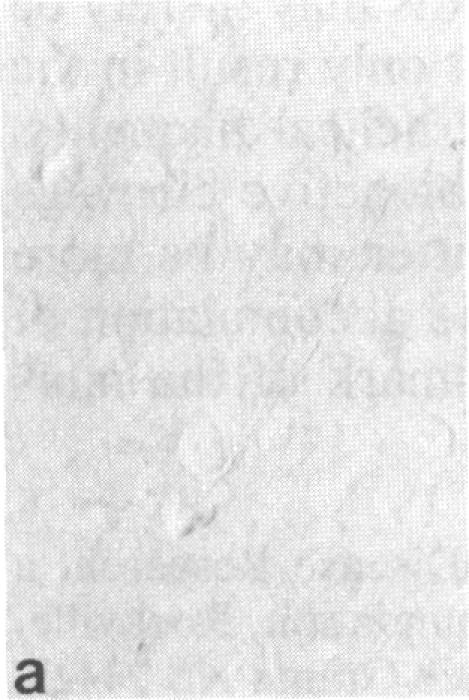
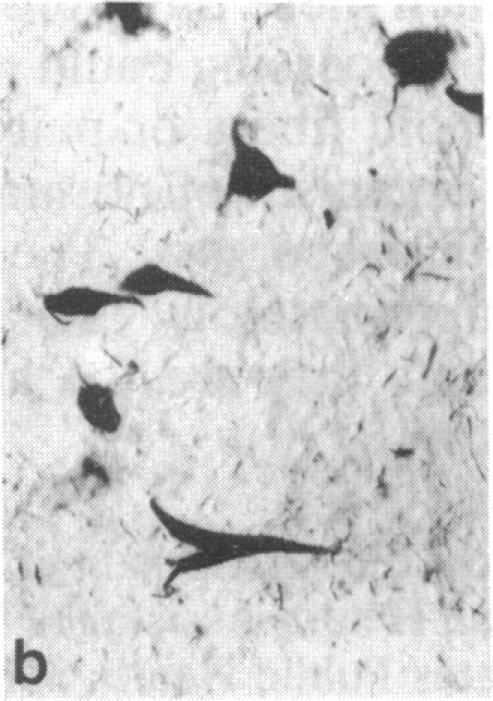
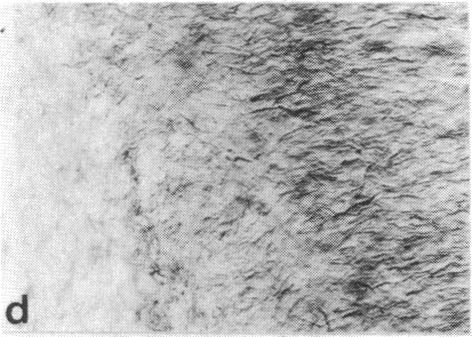
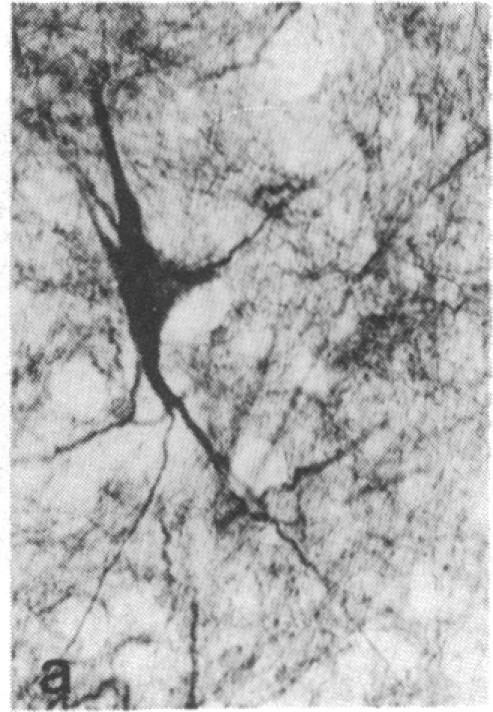
Cerebrovascular amyloid is the main constituent of the perivascular and neuritic plaques typical of Alzheimer disease, whereas neurofilaments and microtubule-associated tau protein have been considered primary contributors to the formation of the characteristic Alzheimer tangles. Plaques and tangles and their constituents have at times been ascribed a role in pathogenesis of the disease. Normally, neurofilaments become phosphorylated only upon axonal entry. In many neurologic disorders, neurofilament phosphorylation, as detected by any of the available monoclonal antibodies (mAbs) to neurofilament phosphorylated epitopes is shifted from an axonal to a cell-body location. An exception is provided by Alzheimer disease, where tangles (which are neuronal cell-body-derived structures) exhibit only one phosphorylated epitope. However, the very presence of neurofilaments in tangles and plaques has been questioned because of a reported cross-reaction of mAbs to phosphorylated neurofilaments with tau protein. On reinvestigating this cross-reactivity we found that four of five mAbs to phosphorylated neurofilaments and four of five mAbs to nonphosphorylated neurofilaments failed to react with tau protein. A fifth mAb (07-5) to phosphorylated neurofilament cross-reacted with partially denatured tau protein at an affinity 1/1700th of that for denatured neurofilaments; nondenatured tau protein in tissue sections did not cross-react. A fifth mAb (02-40) to nonphosphorylated neurofilament also cross-reacted weakly. In Alzheimer disease normal-appearing axons were revealed with all the mAbs to phosphorylated neurofilaments, but tangles were revealed with only one of them (mAb 07-5). mAb to tau protein did not stain or did so indistinctly. Four of five mAbs to nonphosphorylated neurofilaments failed to reveal axons. Upon dephosphorylation of tissue, staining by mAbs to phosphorylated neurofilaments disappeared, and axons were revealed with the mAb to tau protein and all mAbs to the nonphosphorylated neurofilaments. Tangles became stained with tau mAb and one mAb to the nonphosphorylated neurofilaments (mAb 10-1). Quantitative evaluation of immunocytochemical staining intensities and immunoblot cross-reactivity showed that neurofilaments are, indeed, constituents of tangles--apparently exceeding the concentration of tau protein 17-fold. Contribution of both conformation and primary structure to IgG specificity may explain the lack of any cross-reaction of mAbs to neurofilaments with tau protein in intact tissue and the appearance of cross-reaction in immunoblots where conformation specificity may be largely lost. The present data extend earlier findings of abnormal processing of neurofilaments and tau protein in Alzheimer disease and, together with reported abnormal processing of cerebrovascular amyloid beta-protein, suggest that inhibition of the processing of multiple proteins is basic to the pathogenesis of Alzheimer disease, whereas formation of plaques and tangles could be merely the most striking histologic result.
脑血管淀粉样蛋白是阿尔茨海默病典型的血管周围和神经炎性斑块的主要成分,而神经丝和微管相关的tau蛋白被认为是阿尔茨海默病特征性缠结形成的主要因素。斑块和缠结及其成分有时被认为在该疾病的发病机制中起作用。正常情况下,神经丝仅在轴突进入时才会发生磷酸化。在许多神经系统疾病中,通过任何一种针对神经丝磷酸化表位的单克隆抗体(mAb)检测到的神经丝磷酸化,从轴突位置转移到了细胞体位置。阿尔茨海默病是个例外,在该病中,缠结(源自神经元细胞体的结构)仅显示一个磷酸化表位。然而,由于有报道称针对磷酸化神经丝的mAb与tau蛋白存在交叉反应,因此缠结和斑块中神经丝的实际存在受到了质疑。在重新研究这种交叉反应性时,我们发现,针对磷酸化神经丝的五种mAb中的四种以及针对非磷酸化神经丝的五种mAb中的四种,均未与tau蛋白发生反应。针对磷酸化神经丝的第五种mAb(07-5)与部分变性的tau蛋白发生了交叉反应,其亲和力仅为对变性神经丝亲和力的1/1700;组织切片中的非变性tau蛋白未发生交叉反应。针对非磷酸化神经丝的第五种mAb(02-40)也有微弱的交叉反应。在阿尔茨海默病中,所有针对磷酸化神经丝的mAb都能显示外观正常的轴突,但只有其中一种(mAb 07-5)能显示缠结。针对tau蛋白的mAb未染色或染色不清晰。针对非磷酸化神经丝的五种mAb中的四种未能显示轴突。组织去磷酸化后,针对磷酸化神经丝的mAb的染色消失,针对tau蛋白的mAb以及所有针对非磷酸化神经丝的mAb都能显示轴突。缠结被tau蛋白mAb和一种针对非磷酸化神经丝的mAb(mAb 10-1)染色。免疫细胞化学染色强度和免疫印迹交叉反应性的定量评估表明,神经丝确实是缠结的成分,其浓度显然比tau蛋白高出17倍。构象和一级结构对IgG特异性的影响,可能解释了在完整组织中针对神经丝的mAb与tau蛋白没有任何交叉反应,而在免疫印迹中出现交叉反应的原因,因为在免疫印迹中构象特异性可能大部分丧失。目前的数据扩展了早期关于阿尔茨海默病中神经丝和tau蛋白异常加工的发现,并且与报道的脑血管淀粉样β蛋白的异常加工一起表明,多种蛋白质加工的抑制是阿尔茨海默病发病机制的基础,而斑块和缠结的形成可能仅仅是最显著的组织学结果。