Li Su-Liang, Ye Yun, Yuan Xiao-Hua
Department of Laboratory Medicine, The First Affiliated Hospital of Xi'an Medical University, Xi'an, Shaanxi, China.
Department of Blood Transfusion, The First Affiliated Hospital of Xi'an Medical University, Xi'an, Shaanxi, China.
PLoS One. 2017 Jan 30;12(1):e0171081. doi: 10.1371/journal.pone.0171081. eCollection 2017.
A number of studies have investigated the effect of perioperative blood transfusion (PBT) for patients after radical prostatectomy (RP), with some reporting conflicting results. A systematic review of the literature and a meta-analysis were conducted to explore the association between PBT (autologous or allogeneic) and biochemical recurrence-free survival (BRFS), overall survival (OS) and cancer-specific survival (CSS) in patients undergoing RP.
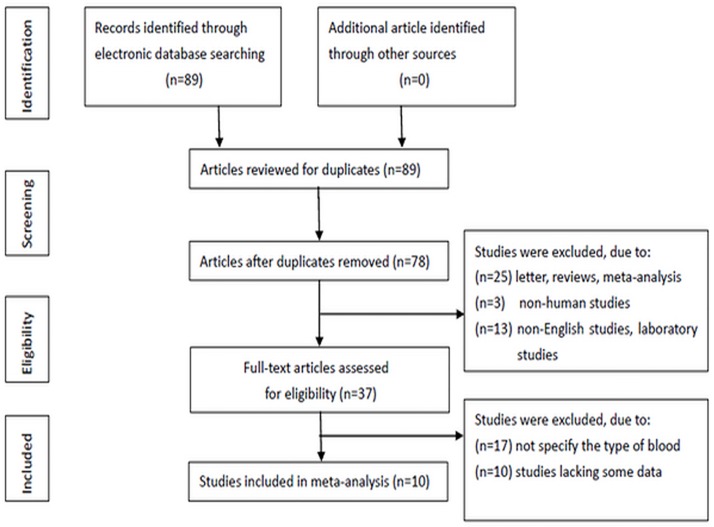
The PubMed, Medline, Cochrane Library, and Embase databases were searched for published controlled clinical studies on perioperative allogeneic or autologous blood transfusion (BT) and patient survival after RP. STATA software version 12.0 was used for data analysis. We used hazard ratios (HRs) and 95% confidence intervals (CIs) to test the correlation between BT and patient survival after RP.
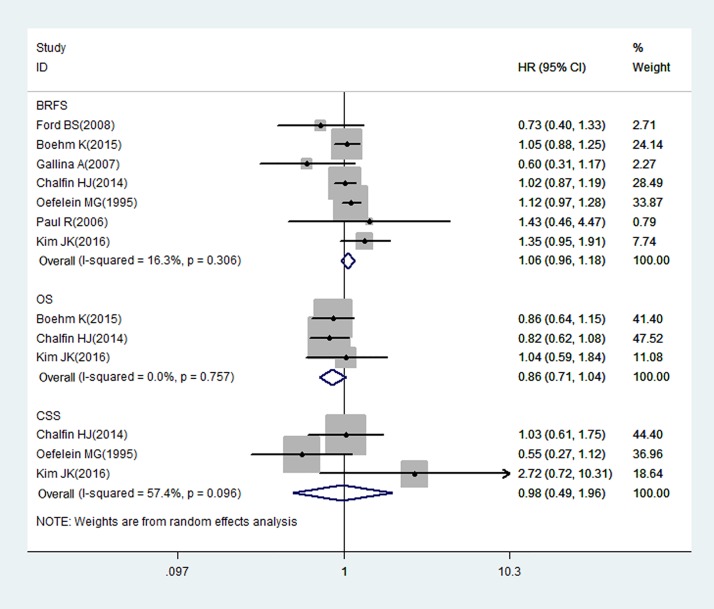
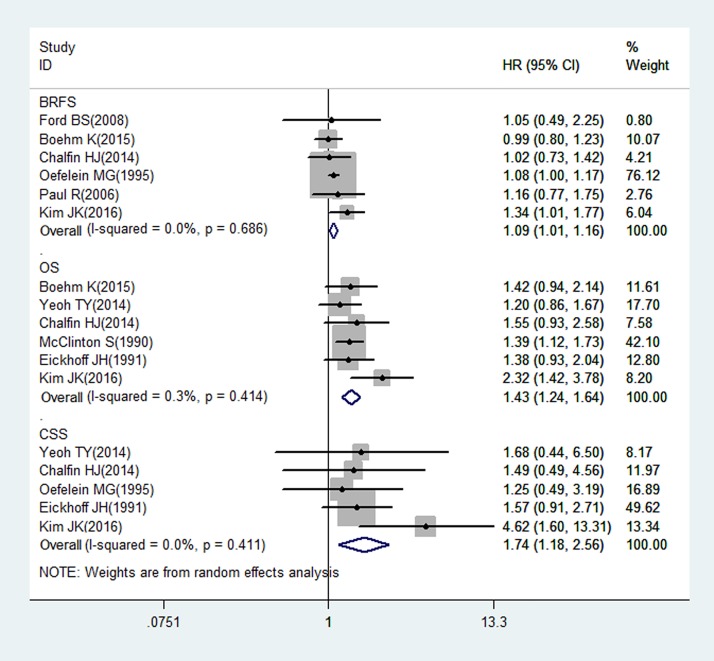
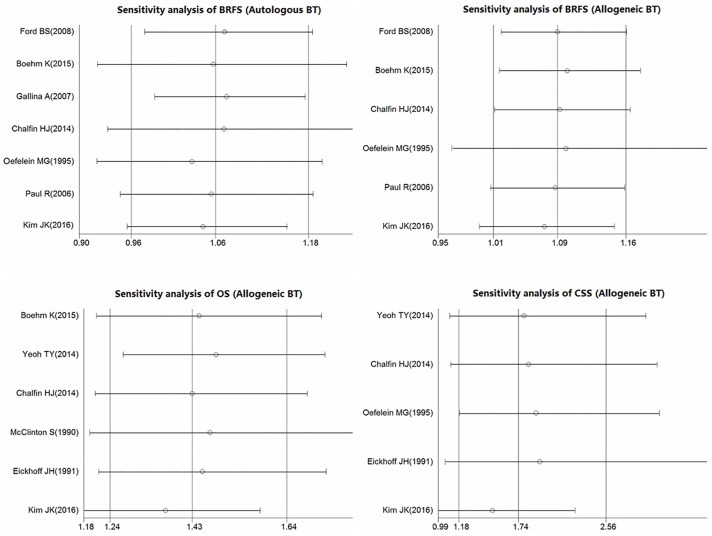
Data from a total of 26,698 patients in ten published studies were included in the meta-analysis. The meta-analysis results showed that autologous BT was not associated with BRFS (HR: 1.06; 95% CI: 0.96-1.18; Z = 1.17; P = 0.24), OS (HR: 0.86; 95% CI: 0.71-1.04; Z = 1.58; P = 0.11), or CSS (HR: 0.98; 95% CI: 0.49-1.96; Z = 0.05; P = 0.96). Allogeneic BT exhibited a significant association with worse BRFS (HR: 1.09; 95% CI: 1.01-1.16; Z = 2.37; P = 0.02), OS (HR: 1.43; 95% CI: 1.24-1.64; Z = 4.95; P<0.01) and CSS (HR: 1.74; 95% CI: 1.18-2.56; Z = 2.81; P = 0.005).
Our data showed an association between allogeneic BT and reduced BRFS, OS and CSS in patients after RP. These findings indicate that perioperative blood conservation strategies are important for decreasing the allogeneic BT rate.
多项研究探讨了围手术期输血(PBT)对前列腺癌根治术(RP)患者的影响,部分研究结果相互矛盾。我们进行了一项文献系统综述和荟萃分析,以探讨PBT(自体或异体)与RP患者生化无复发生存率(BRFS)、总生存率(OS)和癌症特异性生存率(CSS)之间的关联。
检索PubMed、Medline、Cochrane图书馆和Embase数据库,查找已发表的关于围手术期异体或自体输血(BT)与RP后患者生存情况的对照临床研究。使用STATA软件12.0版进行数据分析。我们用风险比(HRs)和95%置信区间(CIs)来检验BT与RP后患者生存之间的相关性。
荟萃分析纳入了10项已发表研究中总共26,698例患者的数据。荟萃分析结果显示,自体BT与BRFS(HR:1.06;95%CI:0.96 - 1.18;Z = 1.17;P = 0.24)、OS(HR:0.86;95%CI:0.71 - 1.04;Z = 1.58;P = 0.11)或CSS(HR:0.98;95%CI:0.49 - 1.96;Z = 0.05;P = 0.96)均无关联。异体BT与较差的BRFS(HR:1.09;95%CI:1.01 - 1.16;Z = 2.37;P = 0.02)、OS(HR:1.43;95%CI:1.24 - 1.64;Z = 4.95;P<0.01)和CSS(HR:1.74;95%CI:1.18 - 2.56;Z = 2.81;P = 0.005)显著相关。
我们的数据显示,异体BT与RP后患者的BRFS、OS和CSS降低有关。这些发现表明围手术期血液保护策略对于降低异体BT率很重要。