Han Kyung Ream, Chae Yun Jeong, Lee Jung Dong, Kim Chan
Kichan Pain Clinic, Suwon, Korea.
Anesthesiology and Pain medicine, Ajou University Hospital, Suwon Korea.
Int J Med Sci. 2017 Jan 1;14(1):29-36. doi: 10.7150/ijms.16964. eCollection 2017.
Trigeminal nerve block (Tnb) with alcohol for trigeminal neuralgia (TN) may not be used widely as a percutaneous procedure for medically intractable TN in recent clinical work, because it has been considered having a limited duration of pain relief, a decrease in success rate and increase in complications on repeated blocks.
To evaluate the clinical outcome of the Tnb with alcohol in the treatment of medically intractable TN.
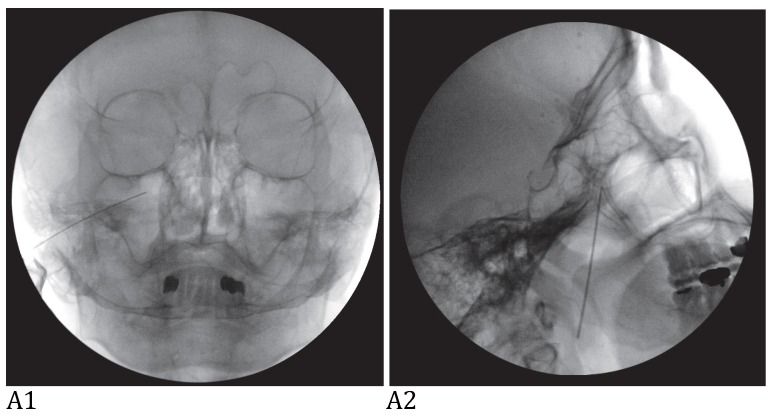
Six hundred thirty-two patients were diagnosed with TN between March 2000 and February 2010. Four hundred sixty-five out of 632 underwent Tnb with alcohol under a fluoroscope. Pain relief duration were analyzed and compared in the individual branch blocks. Outcomes were compared between patients with and without a previous Tnb with alcohol.
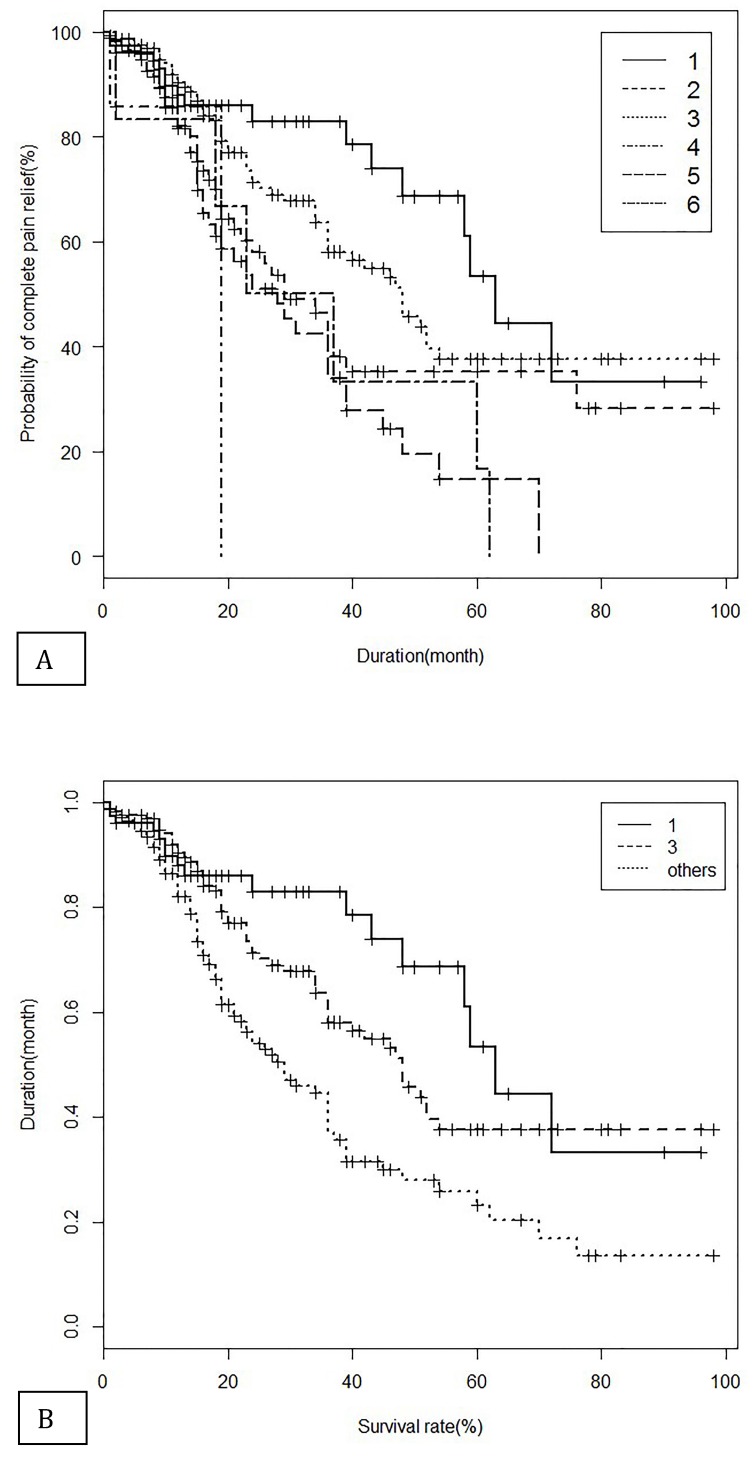
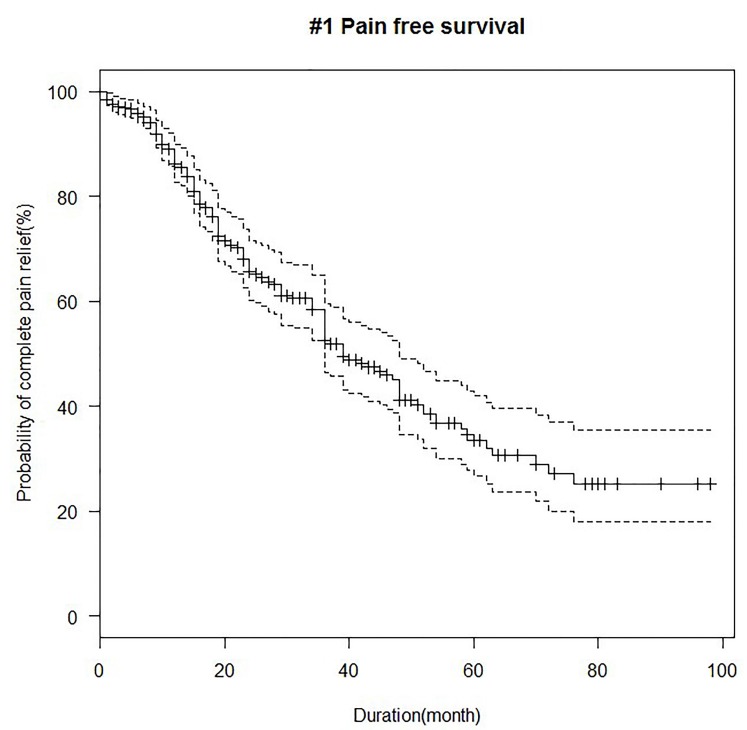
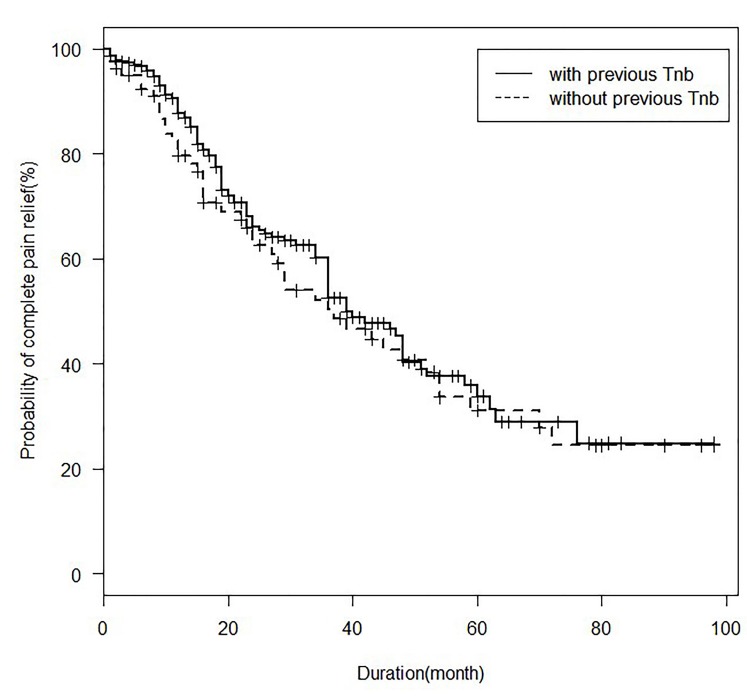
Tnb with alcohol were performed in a total 710 (1-465, 2-155, 3-55, 4-23, 5-8, 6-4) cases for a series of consecutive 465 patients during the study period. Forty hundred sixty two out of the 465 patients experienced immediate complete pain relief (99%) at the first Tnb. Of the 465 patients, 218 patients (46.9%) did not require any further treatment after the first Tnb with alcohol during an entire study period. One hundred fifty nine (34.2 %) out of the 465 patients experienced recurring pain after the first block, among whom 155 patients received subsequent blocks, and the remaining 4 patients decided to take medication. According to the Kaplan-Meier analysis, the probabilities of remaining pain relief for 1, 2, 3, and 5 years after the procedures were 86.2%, 65.5%, 52.5%, and 33.4%, respectively. There was no significant difference in the probability of pain relief duration between patients with and without previous Tnb with alcohol. Median (95% CI) pain relief durations of the first and repeated blocks were 39 (36-51) and 37 (28-54) months, respectively. There was no significant difference in occurrence of complications between patients with and without previous Tnb with alcohol ( <0.076). All the complications recovered spontaneously within 6 months. There was no mortality related to the procedure.
Tnb with alcohol for the pain management of TN can provide considerably long lasting pain relief. Repeated Tnb with alcohol has pain relief duration as long as the first block, and seems to produce less complication as well. Tnb with alcohol is a valuable treatment modality of TN as a percutaneous procedure.
在近期的临床工作中,用于治疗三叉神经痛(TN)的酒精三叉神经阻滞(Tnb)作为一种经皮手术,可能未被广泛应用于药物治疗无效的TN,因为人们认为其疼痛缓解持续时间有限,重复阻滞时成功率降低且并发症增加。
评估酒精Tnb治疗药物治疗无效的TN的临床疗效。
2000年3月至2010年2月期间,632例患者被诊断为TN。632例中的465例在荧光镜引导下接受了酒精Tnb。分析并比较各个分支阻滞的疼痛缓解持续时间。比较曾接受过酒精Tnb和未接受过酒精Tnb的患者的治疗结果。
在研究期间,对465例连续患者共进行了710次酒精Tnb(第1支1 - 465例,第2支155例,第3支55例,第4支23例,第5支8例,第6支4例)。465例患者中有462例(99%)在首次Tnb后立即实现了完全疼痛缓解。在465例患者中,218例(46.9%)在整个研究期间首次酒精Tnb后无需任何进一步治疗。465例患者中有159例(34.2%)在首次阻滞术后出现复发性疼痛,其中155例接受了后续阻滞,其余4例决定采用药物治疗。根据Kaplan - Meier分析,术后1年、2年、3年和5年仍保持疼痛缓解的概率分别为86.2%、65.5%、52.5%和33.4%。曾接受过酒精Tnb和未接受过酒精Tnb的患者在疼痛缓解持续时间概率上无显著差异。首次和重复阻滞的疼痛缓解持续时间中位数(95%CI)分别为39(36 - 51)个月和37(28 - 54)个月。曾接受过酒精Tnb和未接受过酒精Tnb的患者在并发症发生率上无显著差异(<0.076)。所有并发症均在6个月内自行恢复。该手术无相关死亡病例。
酒精Tnb用于TN的疼痛管理可提供相当持久的疼痛缓解。重复酒精Tnb的疼痛缓解持续时间与首次阻滞相同,且似乎并发症也更少。酒精Tnb作为一种经皮手术,是TN的一种有价值的治疗方式。