Catholic Precision Medicine Research Center, College of Medicine, The Catholic University of Korea, 222, Banpo-daero, Seocho-gu, Seoul, 06591, Republic of Korea.
Department of Pharmacology, College of Korean Medicine, Sangji University, Gangwon-do 220-702, Republic of Korea.
Sci Rep. 2017 Jan 31;7:41721. doi: 10.1038/srep41721.
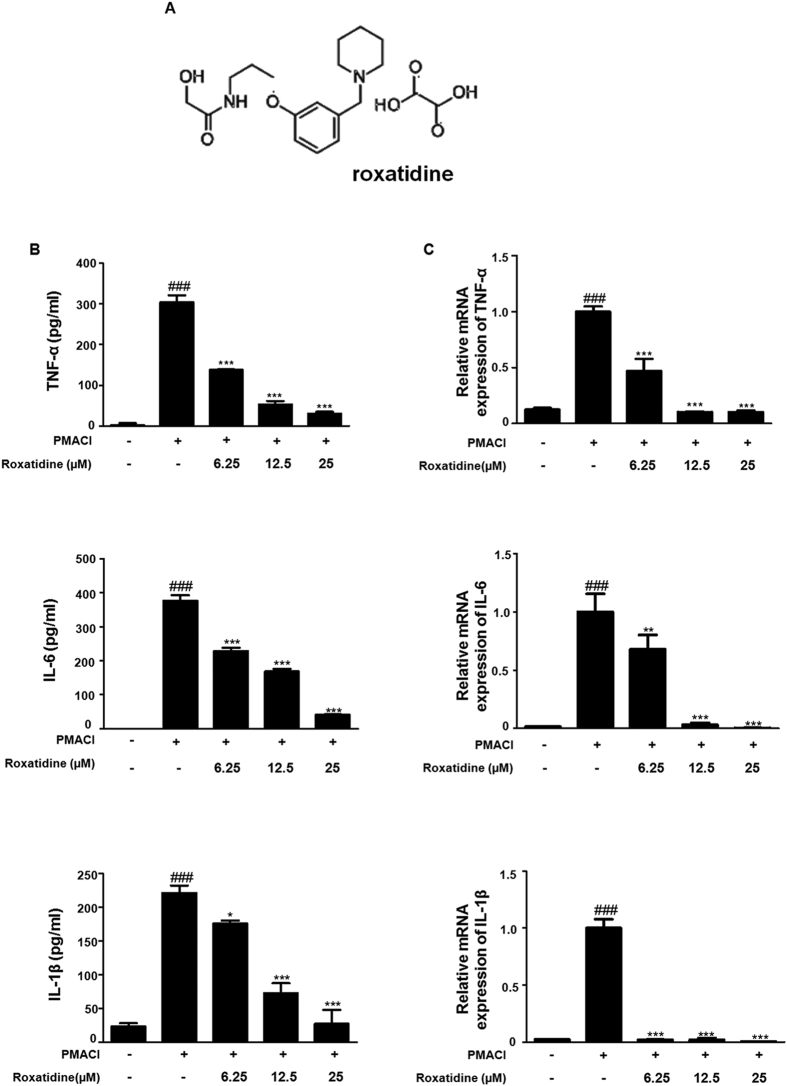
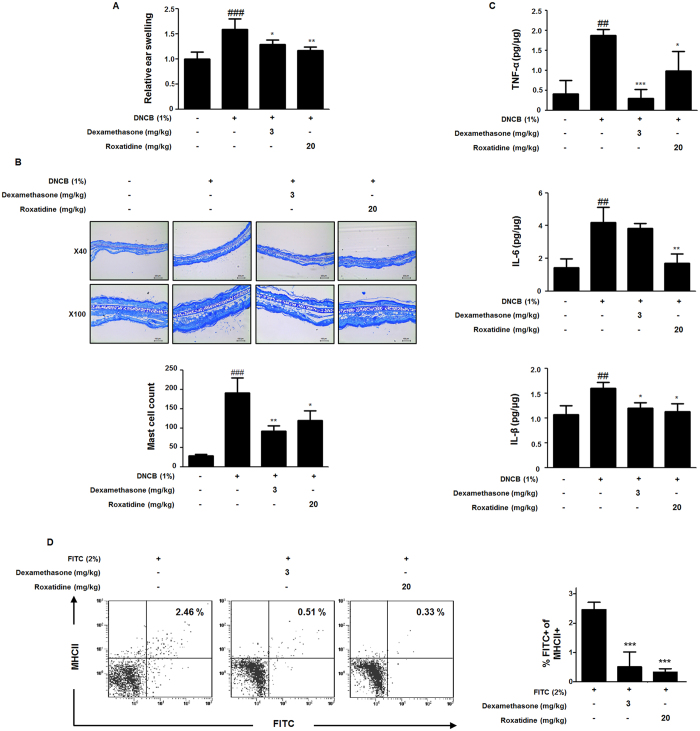
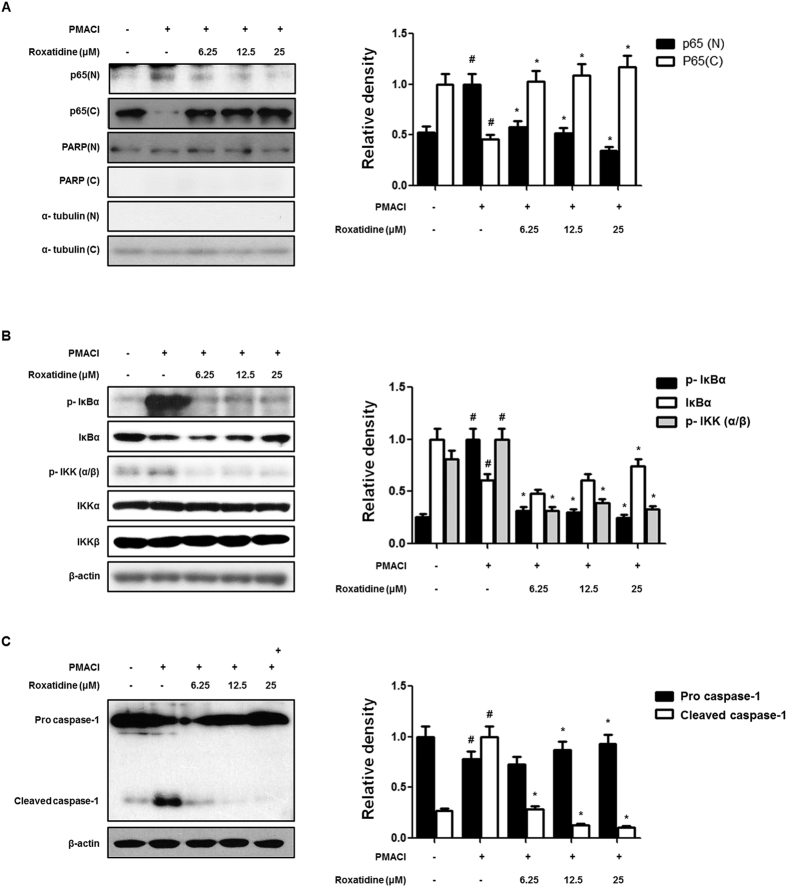
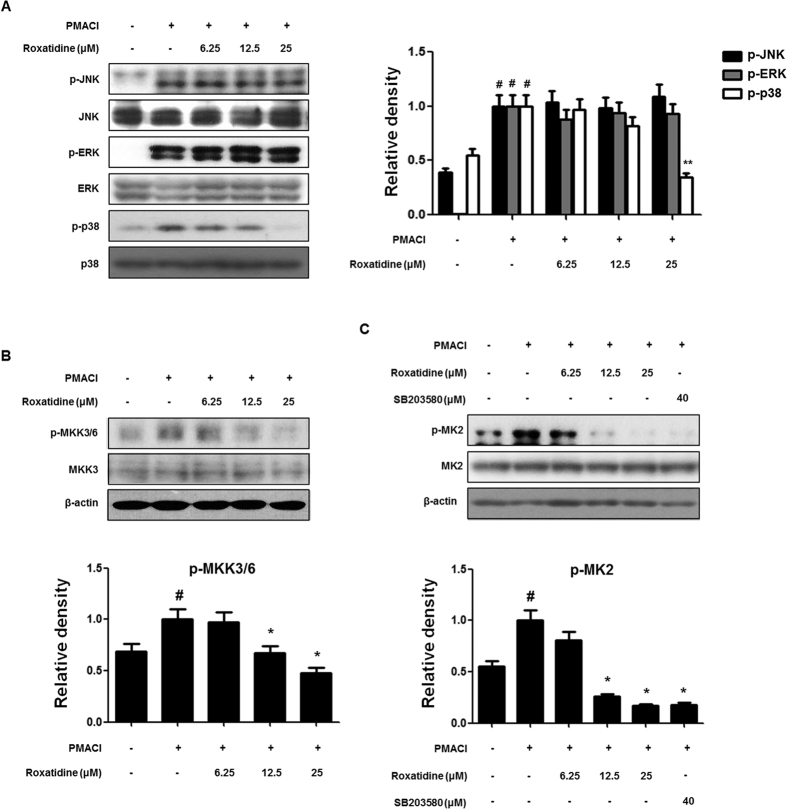
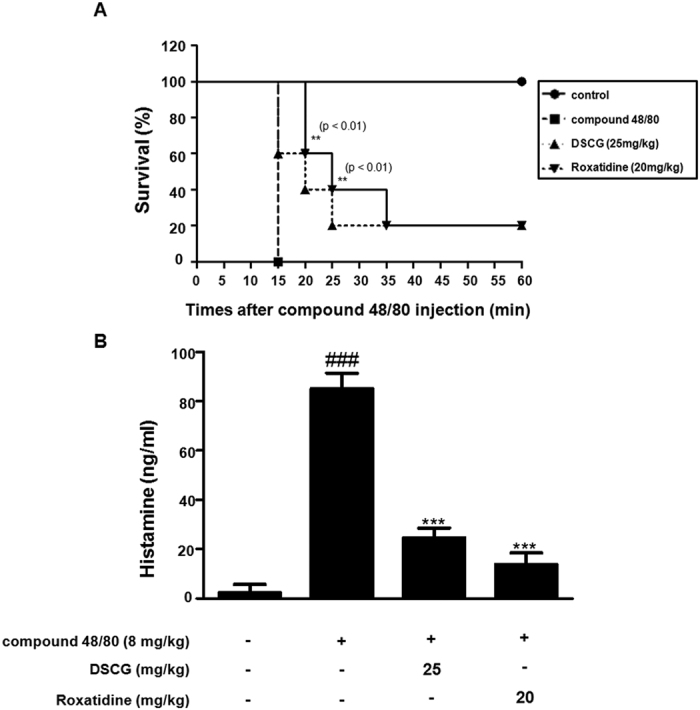
Roxatidine is an active metabolite of roxatidine acetate hydrochloride which is a histamine H-receptor antagonist that is used to treat gastric and duodenal ulcers. In this study, we investigated the anti-allergic inflammatory effects and the underlying molecular mechanism of roxatidine in phorbol 12-myristate 13-acetate and calcium ionophore (PMACI)-stimulated human mast cells-1 (HMC-1), compound 48/80-induced anaphylactic animal model and chemical allergen-induced contact hypersensitivity (CHS) models. Roxatidine suppressed the mRNA and protein expression of inflammatory cytokines such as TNF-α, IL-6, and IL-1β in PMACI-stimulated HMC-1 and compound 48/80-induced anaphylactic mice. In addition, roxatidine attenuated PMACI-induced nuclear translocation of NF-κB and the phosphorylation of MKK3/6 and MK2, which are both involved in the p38 MAPK pathway. Furthermore, we observed that roxatidine suppressed the activation of caspase-1, an IL-1β converting enzyme, in PMACI-stimulated HMC-1 and compound 48/80-induced anaphylactic mice. In CHS model, roxatidine significantly reduced ear swelling, increased number of mast cells, production levels of cytokines and migration of dendritic cells. Our findings provide evidence that the anti-allergic inflammatory properties of roxatidine are mediated by the inhibition of NF-κB and caspase-1 activation, p38 MAPK pathway and mast cell-derived cytokine production. Taken together, the in vitro and in vivo anti-allergic inflammatory effects suggest a possible therapeutic application of roxatidine in allergic inflammatory diseases.
罗沙替丁是罗沙替丁乙酸盐盐酸盐的活性代谢物,是一种组胺 H 受体拮抗剂,用于治疗胃溃疡和十二指肠溃疡。在这项研究中,我们研究了罗沙替丁在佛波醇 12-肉豆蔻酸 13-乙酸酯和钙离子载体(PMACI)刺激的人肥大细胞-1(HMC-1)、化合物 48/80 诱导的过敏动物模型和化学变应原诱导的接触性超敏反应(CHS)模型中的抗过敏炎症作用及其潜在的分子机制。罗沙替丁抑制了 PMACI 刺激的 HMC-1 和化合物 48/80 诱导的过敏小鼠中 TNF-α、IL-6 和 IL-1β 等炎症细胞因子的 mRNA 和蛋白表达。此外,罗沙替丁减弱了 PMACI 诱导的 NF-κB 核转位以及丝裂原激活蛋白激酶(MAPK)通路中的 MKK3/6 和 MK2 的磷酸化。此外,我们观察到罗沙替丁抑制了 PMACI 刺激的 HMC-1 和化合物 48/80 诱导的过敏小鼠中半胱天冬酶-1(IL-1β 转化酶)的激活。在 CHS 模型中,罗沙替丁显著减少了耳肿胀,增加了肥大细胞的数量、细胞因子的产生水平和树突状细胞的迁移。我们的研究结果提供了证据表明,罗沙替丁的抗过敏炎症特性是通过抑制 NF-κB 和半胱天冬酶-1 的激活、p38 MAPK 通路和肥大细胞来源的细胞因子产生来介导的。总之,体外和体内的抗过敏炎症作用表明罗沙替丁在过敏性炎症疾病中的治疗应用具有一定的可行性。