College of Horticulture, China Agricultural University, Beijing, China.
Department of Cellular &Structural Biology, The UT Health Science Center, San Antonio, TX, USA.
Sci Rep. 2017 Feb 1;7:41236. doi: 10.1038/srep41236.
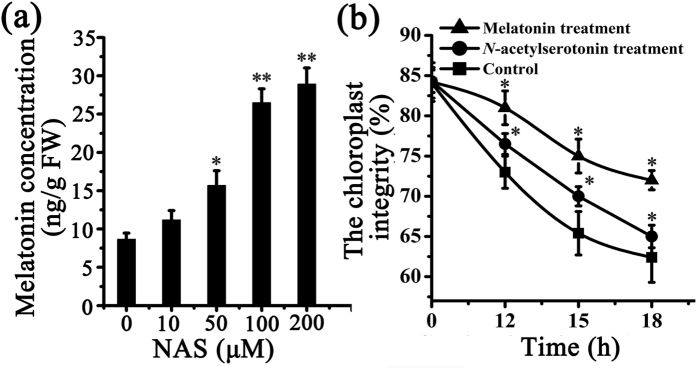
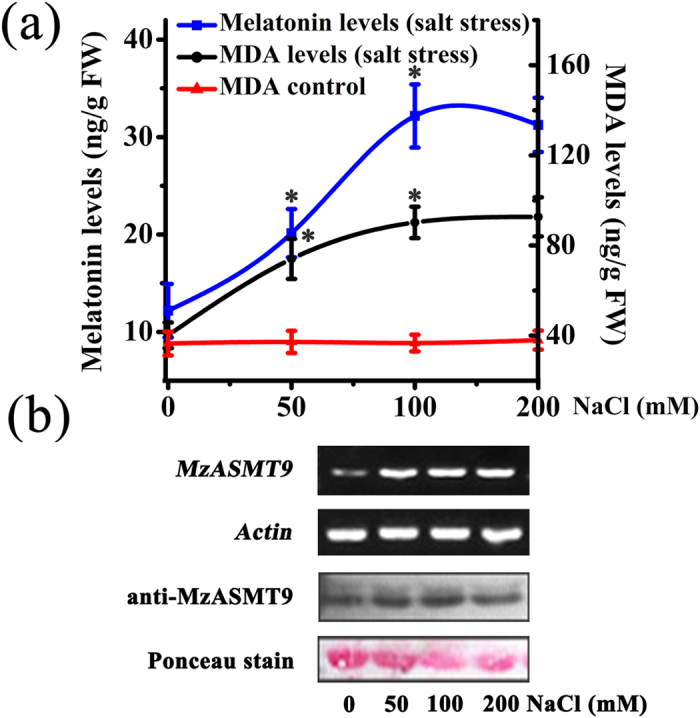
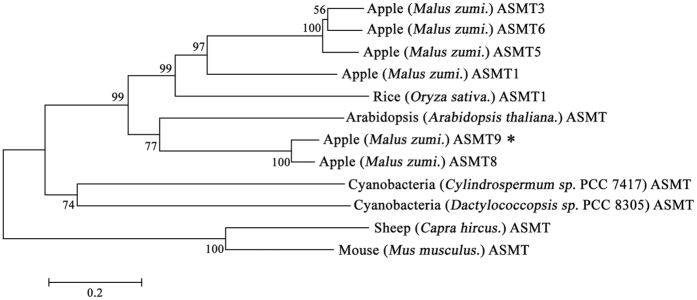
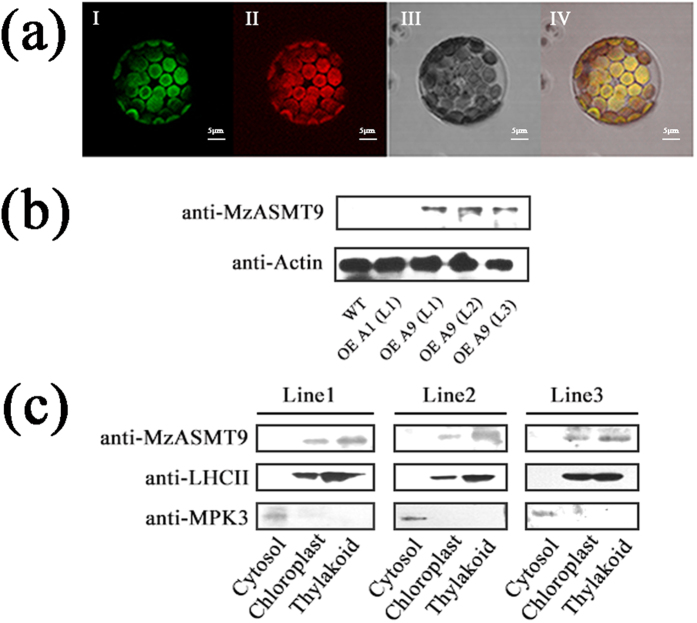
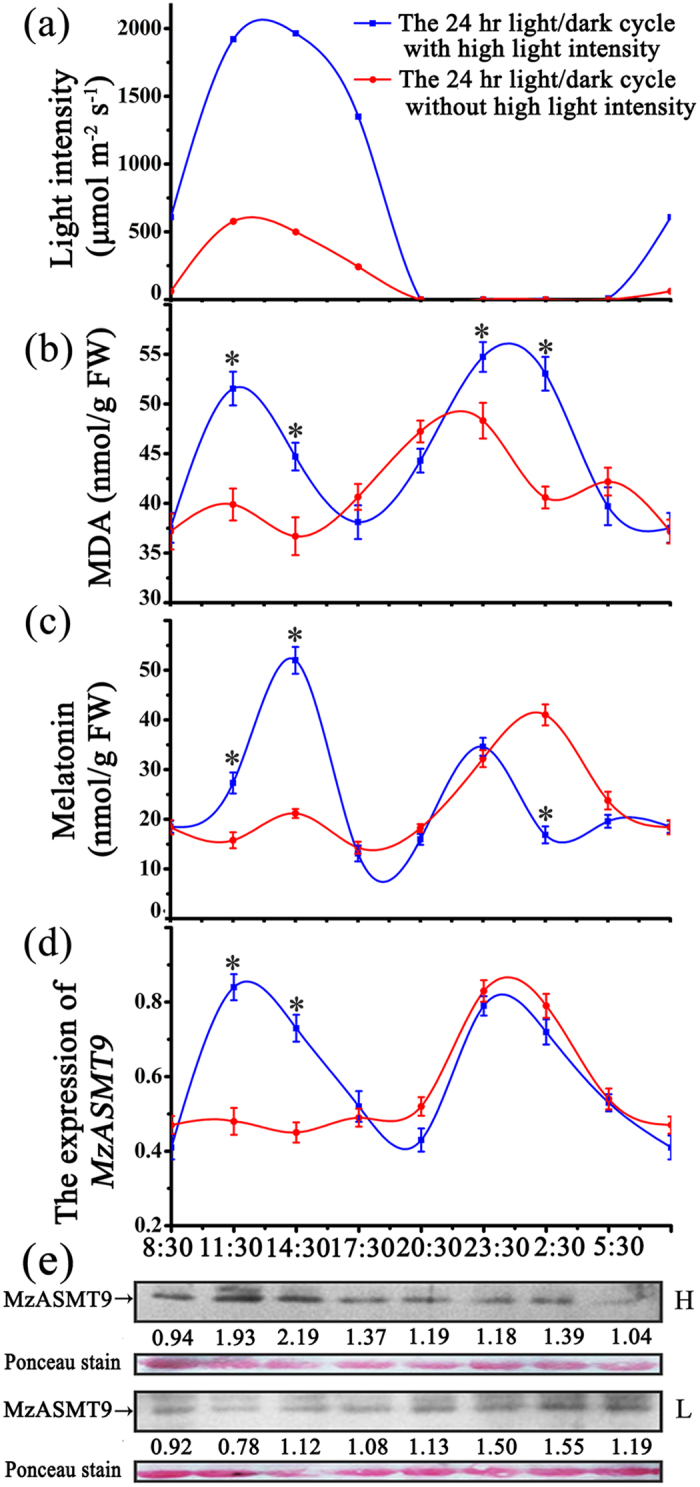
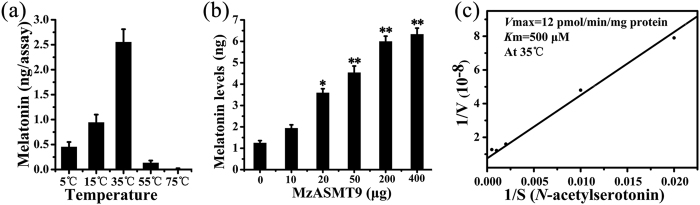
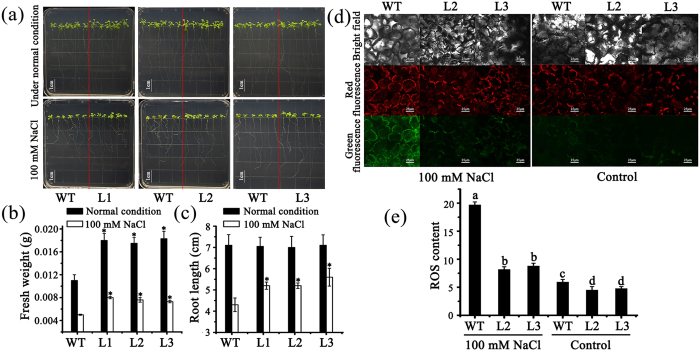
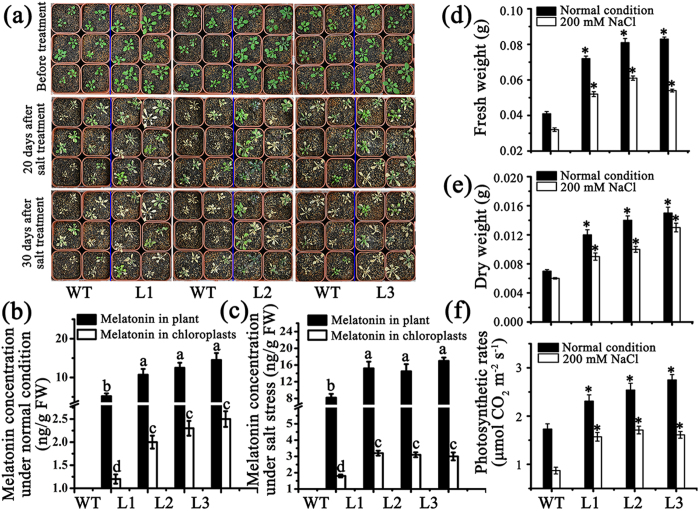
Within the chloroplasts reactive oxygen species (ROS) are generated during photosynthesis and stressful conditions. Excessive ROS damages chloroplasts and reduces photosynthesis if not properly detoxified. In this current study, we document that chloroplasts produce melatonin, a recently-discovered plant antioxidant molecule. When N-acetylserotonin, a substrate for melatonin synthesis, was fed to purified chloroplasts, they produced melatonin in a dose-response manner. To further confirm this function of chloroplasts, the terminal enzyme for melatonin synthesis, N-acetylserotonin-O-methyltransferase (ASMT), was cloned from apple rootstock, Malus zumi. The in vivo fluorescence observations and Western blots confirmed MzASMT9 was localized in the chloroplasts. A study of enzyme kinetics revealed that the K and V of the purified recombinant MzASMT9 protein for melatonin synthesis were 500 μM and 12 pmol/min·mg protein, respectively. Arabidopsis ectopically-expressing MzASMT9 possessed improved melatonin level. Importantly, the MzASMT9 gene was found to be upregulated by high light intensity and salt stress. Increased melatonin due to the highly-expressed MzASMT9 resulted in Arabidopsis lines with enhanced salt tolerance than wild type plants, as indicated by reduced ROS, lowered lipid peroxidation and enhanced photosynthesis. These findings have agricultural applications for the genetic enhancement of melatonin-enriched plants for increasing crop production under a variety of unfavorable environmental conditions.
在叶绿体中,活性氧(ROS)在光合作用和应激条件下产生。如果不能正确解毒,过量的 ROS 会损害叶绿体并降低光合作用。在本研究中,我们记录到叶绿体产生褪黑素,这是一种新发现的植物抗氧化分子。当将 N-乙酰血清素(褪黑素合成的底物)喂给纯化的叶绿体时,它们以剂量反应的方式产生褪黑素。为了进一步证实叶绿体的这一功能,从苹果砧木 Malus zumi 中克隆了褪黑素合成的末端酶 N-乙酰血清素-O-甲基转移酶(ASMT)。体内荧光观察和 Western blot 证实 MzASMT9 定位于叶绿体中。酶动力学研究表明,纯化的重组 MzASMT9 蛋白合成褪黑素的 K 和 V 分别为 500 μM 和 12 pmol/min·mg 蛋白。拟南芥中外源表达 MzASMT9 可提高褪黑素水平。重要的是,发现 MzASMT9 基因受高光强和盐胁迫上调。由于高表达的 MzASMT9 导致褪黑素增加,使拟南芥系具有比野生型植物更强的耐盐性,表现为 ROS 降低、脂质过氧化降低和光合作用增强。这些发现具有农业应用价值,可通过遗传增强富含褪黑素的植物,在各种不利的环境条件下提高作物产量。