Clinical Research Division, Seattle, Washington 98109, USA.
Institute of Experimental and Clinical Pharmacology, Medical University of Graz, Universitaetsplatz 4, Graz 8010, Austria.
Nat Commun. 2017 Feb 1;8:14381. doi: 10.1038/ncomms14381.
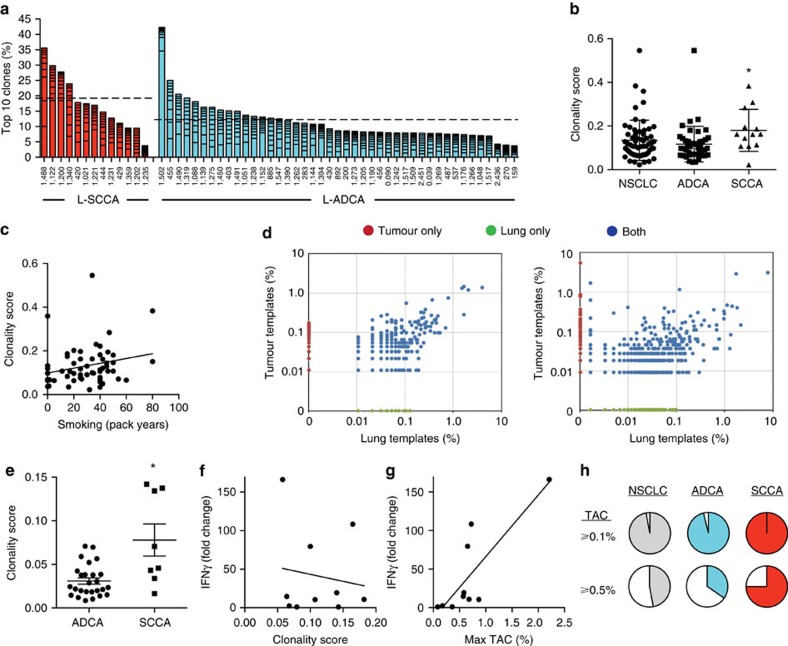
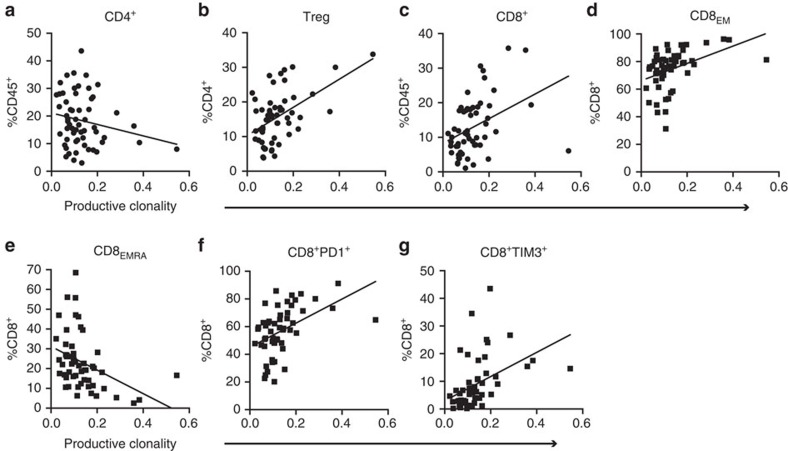
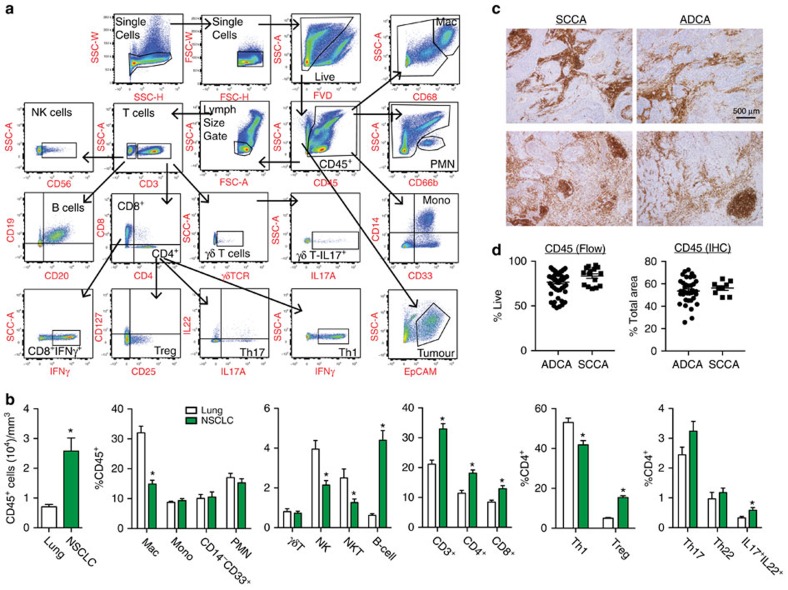
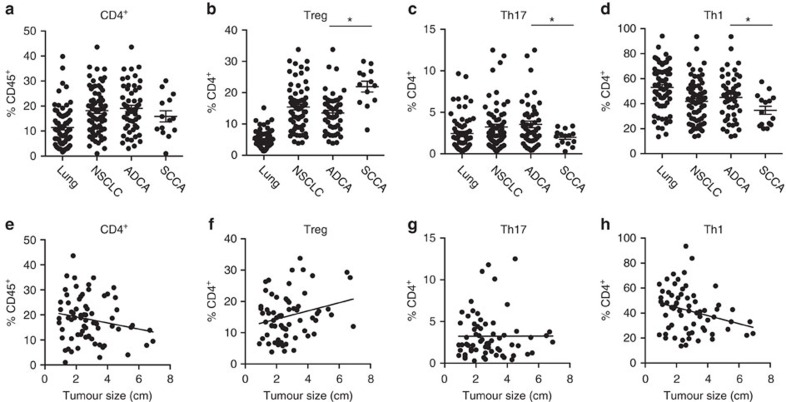
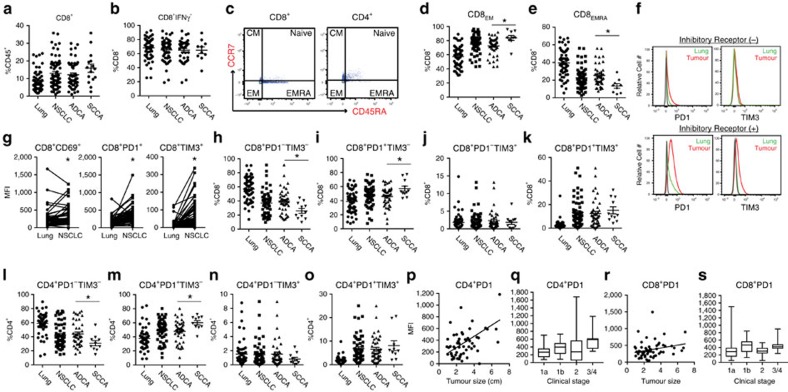
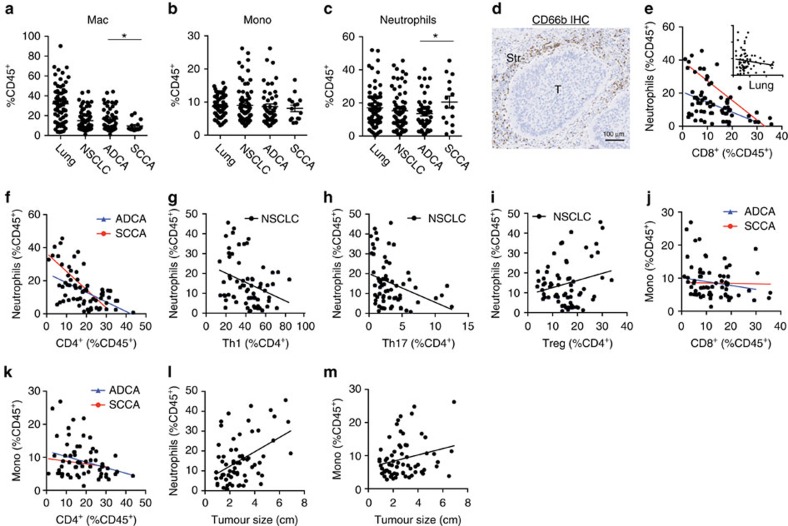
The response rate to immune checkpoint inhibitor therapy for non-small-cell lung cancer (NSCLC) is just 20%. To improve this figure, several early phase clinical trials combining novel immunotherapeutics with immune checkpoint blockade have been initiated. Unfortunately, these trials have been designed without a strong foundational knowledge of the immune landscape present in NSCLC. Here, we use a flow cytometry panel capable of measuring 51 immune cell populations to comprehensively identify the immune cell composition and function in NSCLC. The results show that the immune cell composition is fundamentally different in lung adenocarcinoma as compared with lung squamous cell carcinoma, and that neutrophils are the most prevalent immune cell type. Using T-cell receptor-β sequencing and tumour reactivity assays, we predict that tumour reactive T cells are frequently present in NSCLC. These results should help to guide the design of clinical trials and the direction of future research in this area.
免疫检查点抑制剂治疗非小细胞肺癌(NSCLC)的应答率仅为 20%。为了提高这一数字,已经启动了几项早期临床试验,将新型免疫疗法与免疫检查点阻断相结合。不幸的是,这些试验的设计缺乏对 NSCLC 中存在的免疫景观的坚实基础知识。在这里,我们使用能够测量 51 种免疫细胞群的流式细胞术面板,全面鉴定 NSCLC 中的免疫细胞组成和功能。结果表明,与肺鳞癌相比,肺腺癌的免疫细胞组成有根本的不同,中性粒细胞是最常见的免疫细胞类型。通过 T 细胞受体-β测序和肿瘤反应性测定,我们预测肿瘤反应性 T 细胞在 NSCLC 中经常存在。这些结果应该有助于指导临床试验的设计和这一领域未来研究的方向。