Tumor Immunology Lab, Department of Pathology, Rikshospitalet, Oslo University Hospital and University of Oslo, Oslo, Norway.
Department of Cardiothoracic Surgery, Ullevål Hospital, Oslo University Hospital, Oslo, Norway.
Front Immunol. 2019 Feb 1;9:3101. doi: 10.3389/fimmu.2018.03101. eCollection 2018.
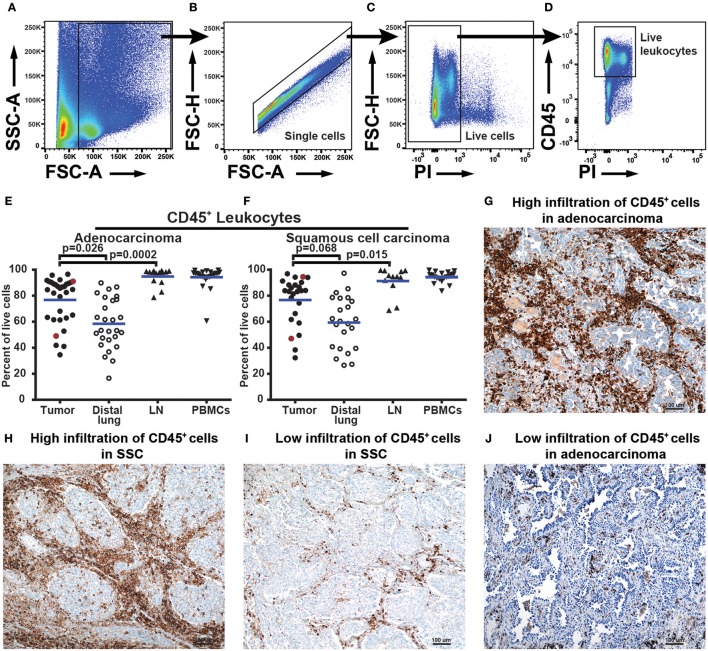
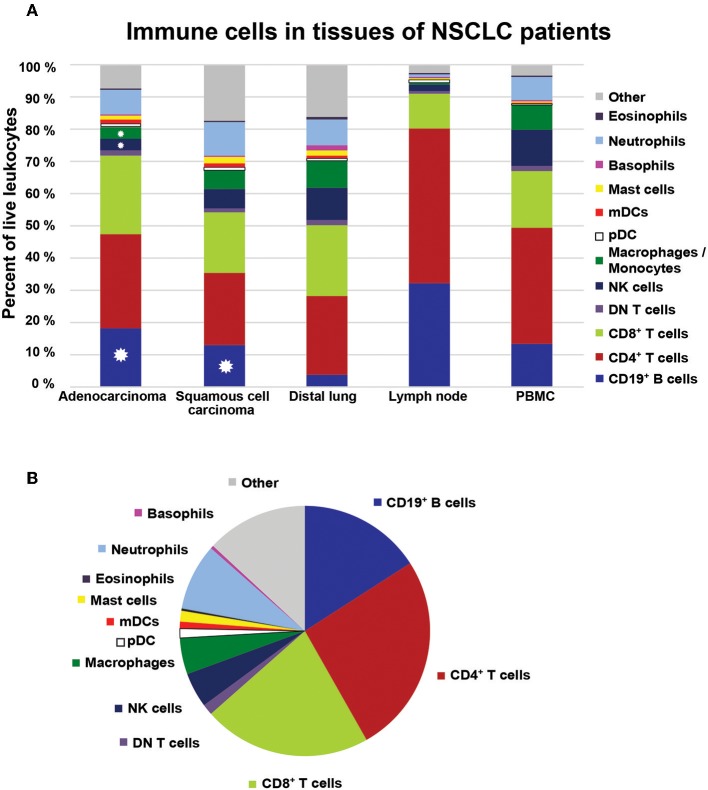
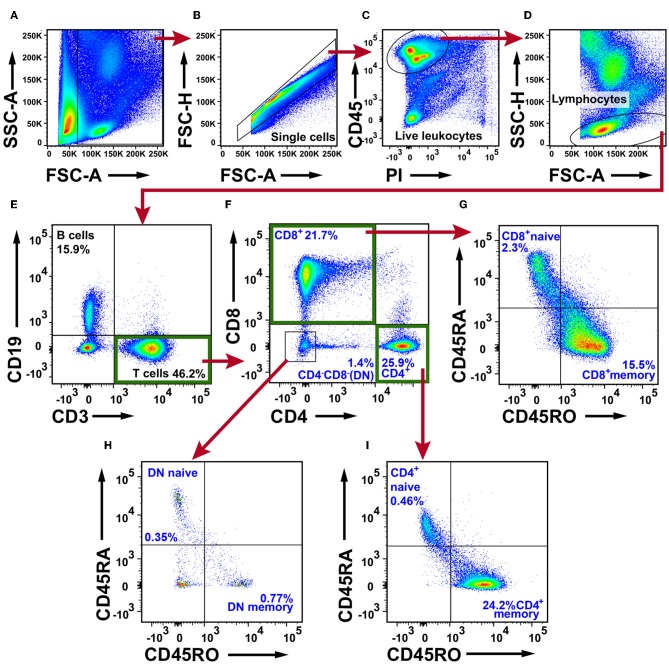
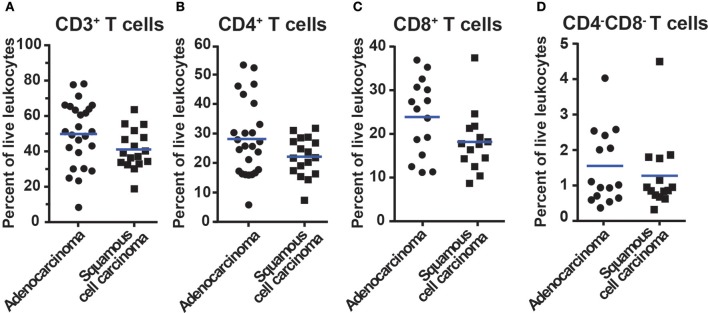
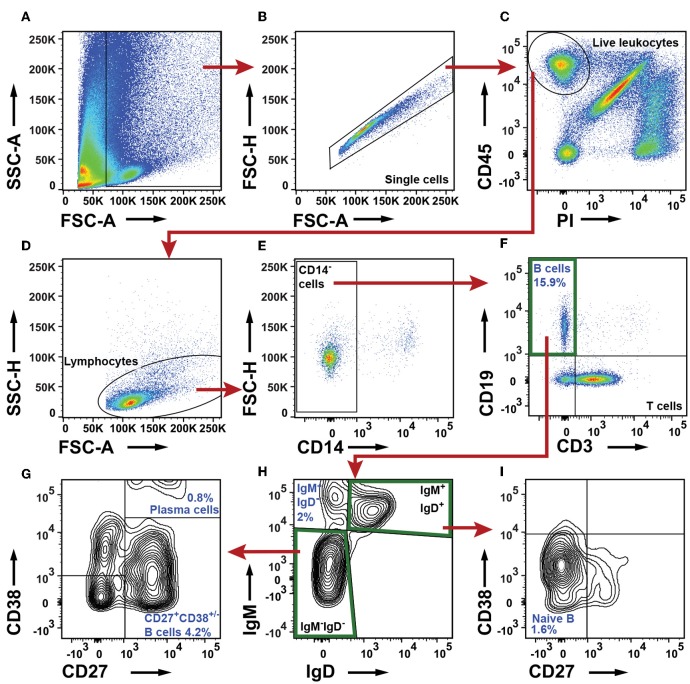
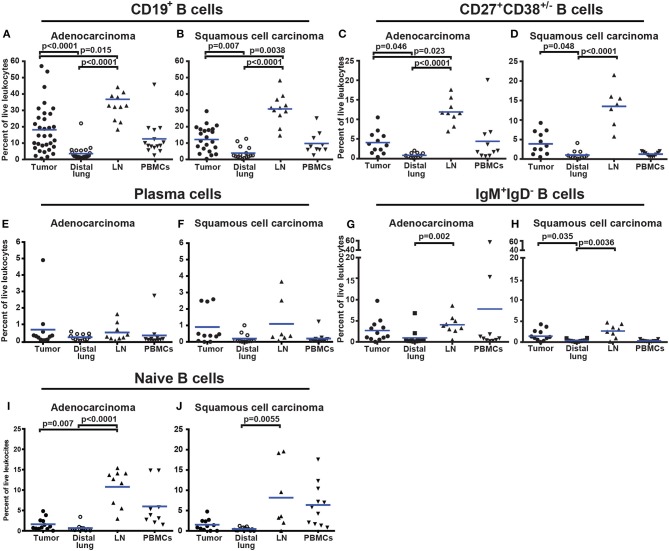
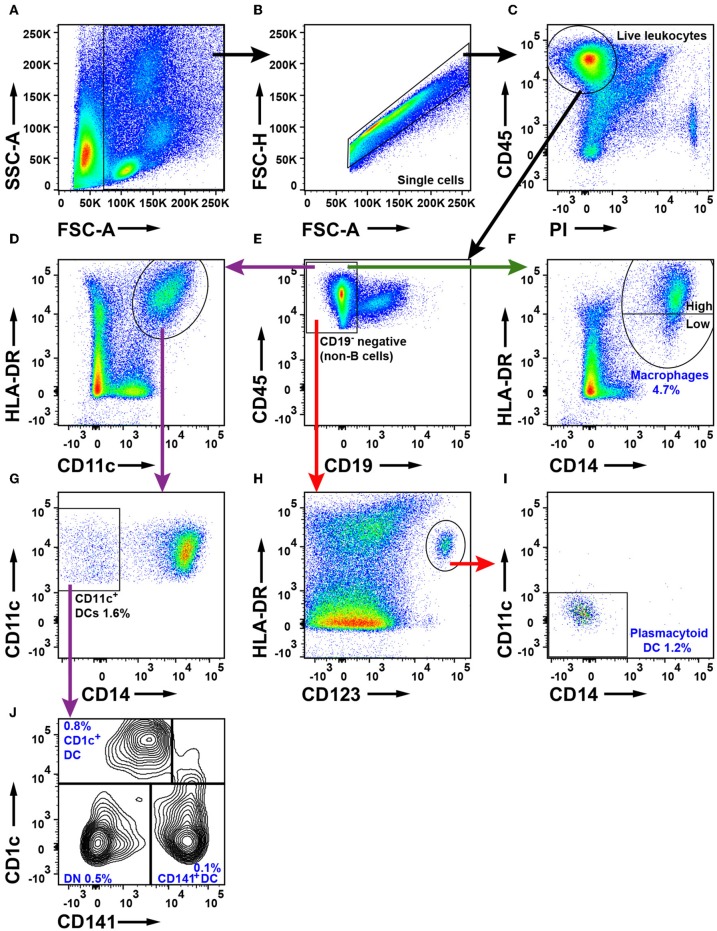
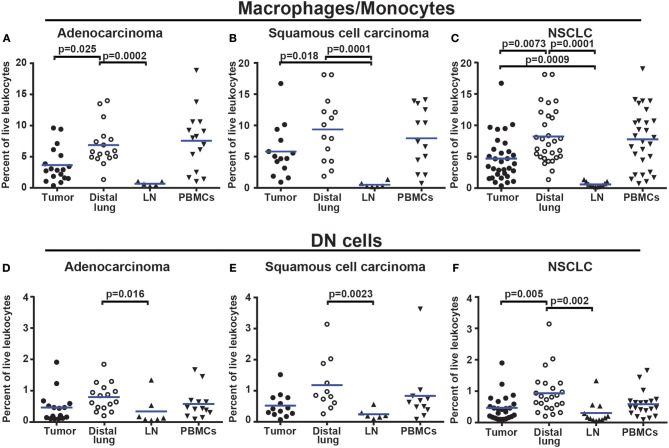
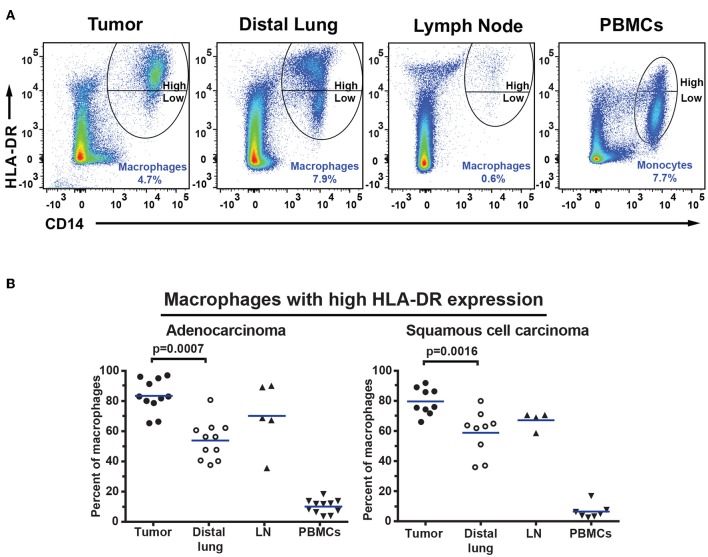
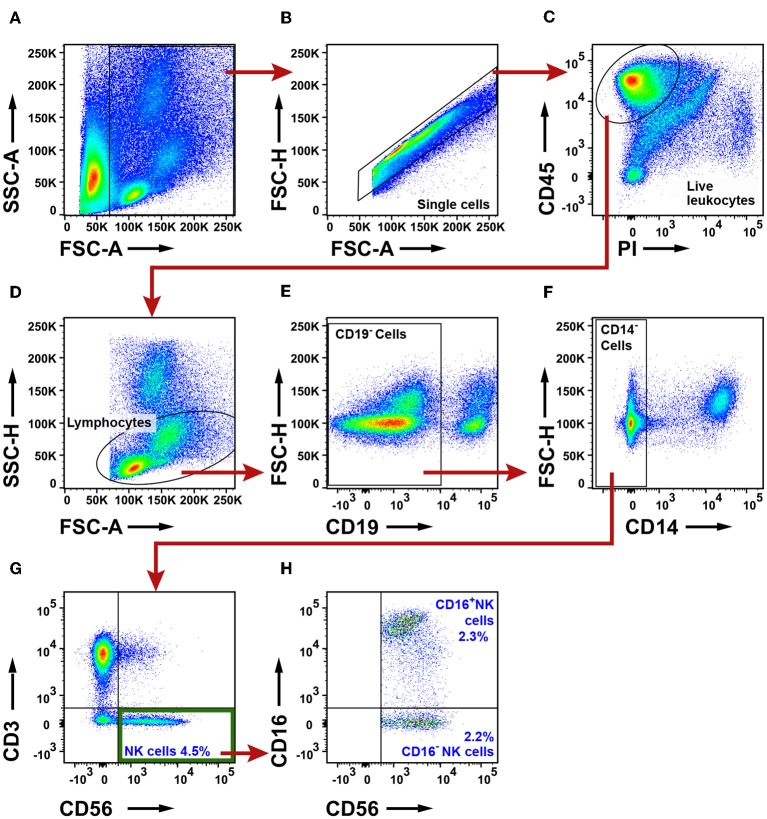
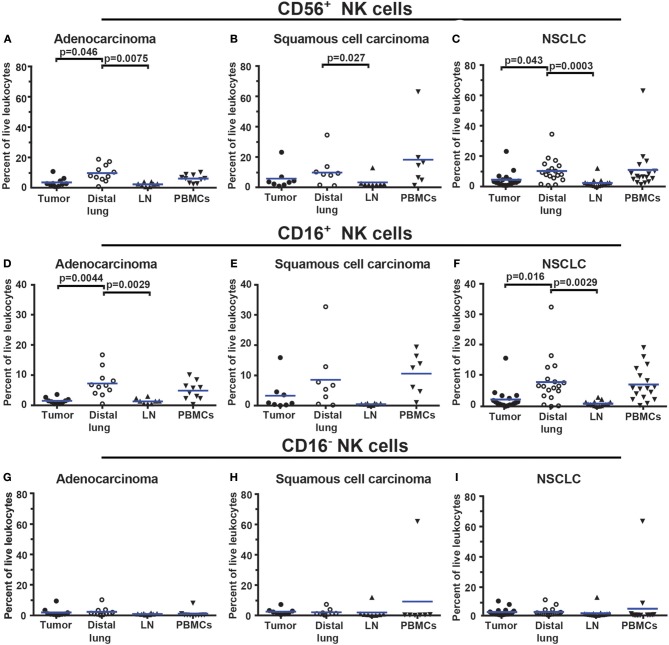
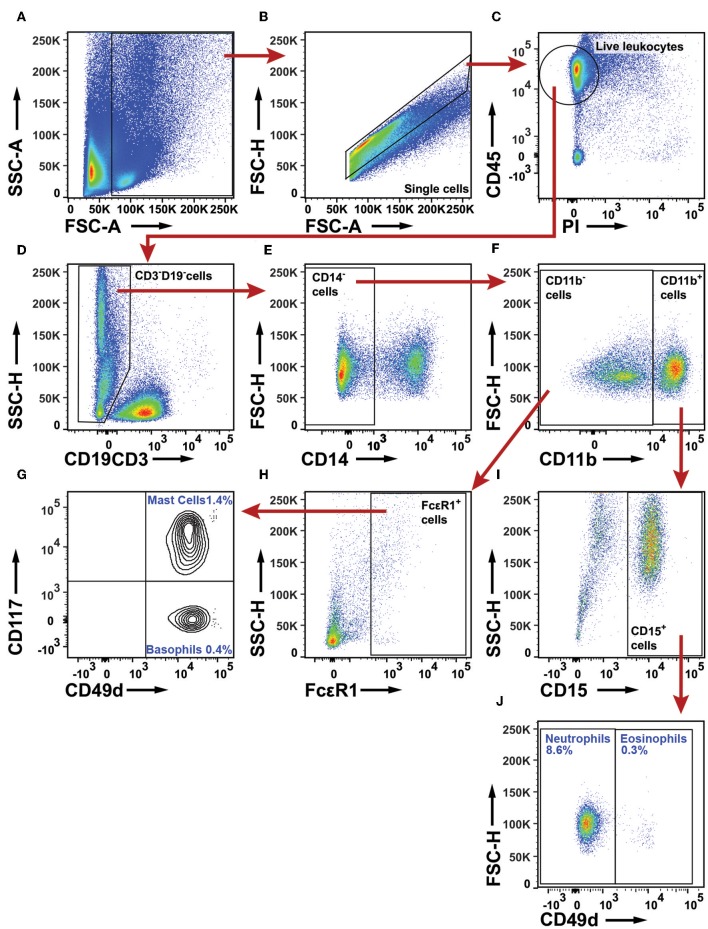
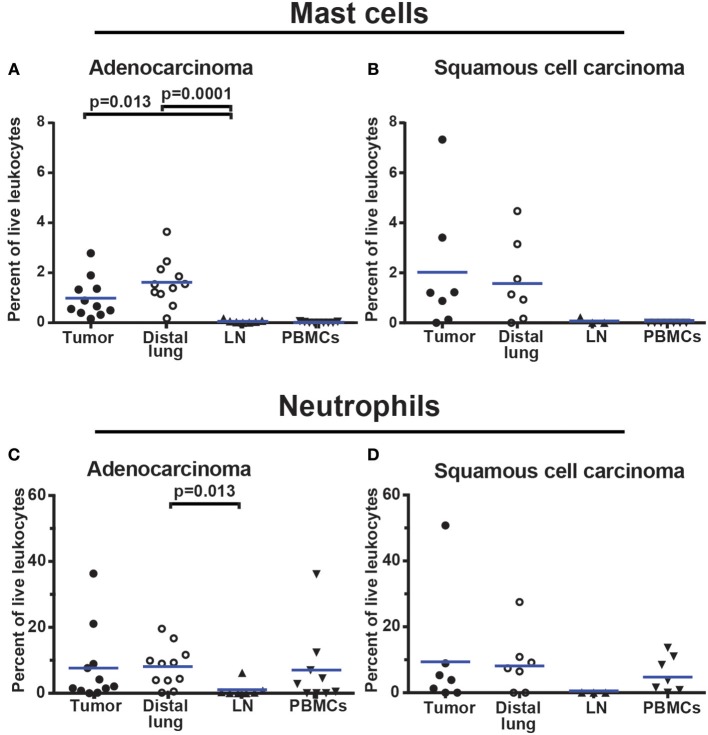
Non-small cell lung cancer (NSCLC) is the leading cause of cancer-related death in the world. Immunological analysis of the tumor microenvironment (immunoscore) shows great promise for improved prognosis and prediction of response to immunotherapy. However, the exact immune cell composition in NSCLC remains unclear. Here, we used flow cytometry to characterize the immune infiltrate in NSCLC tumors, non-cancerous lung tissue, regional lymph node, and blood. The cellular identity of >95% of all CD45 immune cells was determined. Thirteen distinct immune cell types were identified in NSCLC tumors. T cells dominated the lung cancer landscape (on average 47% of all CD45 immune cells). CD4 T cells were the most abundant T cell population (26%), closely followed by CD8 T cells (22%). Double negative CD4CD8 T cells represented a small fraction (1.4%). CD19 B cells were the second most common immune cell type in NSCLC tumors (16%), and four different B cell sub-populations were identified. Macrophages and natural killer (NK) cells composed 4.7 and 4.5% of the immune cell infiltrate, respectively. Three types of dendritic cells (DCs) were identified (plasmacytoid DCs, CD1c DCs, and CD141 DCs) which together represented 2.1% of all immune cells. Among granulocytes, neutrophils were frequent (8.6%) with a high patient-to-patient variability, while mast cells (1.4%), basophils (0.4%), and eosinophils (0.3%) were less common. Across the cohort of patients, only B cells showed a significantly higher representation in NSCLC tumors compared to the distal lung. In contrast, the percentages of macrophages and NK cells were lower in tumors than in non-cancerous lung tissue. Furthermore, the fraction of macrophages with high HLA-DR expression levels was higher in NSCLC tumors relative to distal lung tissue. To make the method readily accessible, antibody panels and flow cytometry gating strategy used to identify the various immune cells are described in detail. This work should represent a useful resource for the immunomonitoring of patients with NSCLC.
非小细胞肺癌(NSCLC)是全球癌症相关死亡的主要原因。肿瘤微环境的免疫分析(免疫评分)显示出改善预后和预测免疫治疗反应的巨大前景。然而,NSCLC 的确切免疫细胞组成仍不清楚。在这里,我们使用流式细胞术对 NSCLC 肿瘤、非癌性肺组织、区域淋巴结和血液中的免疫浸润进行了特征分析。确定了>95%的所有 CD45 免疫细胞的细胞身份。在 NSCLC 肿瘤中鉴定出 13 种不同的免疫细胞类型。T 细胞主导肺癌景观(平均占所有 CD45 免疫细胞的 47%)。CD4 T 细胞是最丰富的 T 细胞群体(26%),紧随其后的是 CD8 T 细胞(22%)。双阴性 CD4CD8 T 细胞占很小的比例(1.4%)。CD19 B 细胞是 NSCLC 肿瘤中第二常见的免疫细胞类型(16%),并鉴定出了 4 种不同的 B 细胞亚群。巨噬细胞和自然杀伤(NK)细胞分别占免疫细胞浸润的 4.7%和 4.5%。鉴定出 3 种类型的树突状细胞(DCs)(浆细胞样 DCs、CD1c DCs 和 CD141 DCs),它们共同占所有免疫细胞的 2.1%。在粒细胞中,中性粒细胞频繁出现(8.6%),患者间差异很大,而肥大细胞(1.4%)、嗜碱性粒细胞(0.4%)和嗜酸性粒细胞(0.3%)则较少见。在整个患者队列中,只有 B 细胞在 NSCLC 肿瘤中的表现明显高于远端肺。相比之下,肿瘤中的巨噬细胞和 NK 细胞百分比低于非癌性肺组织。此外,高 HLA-DR 表达水平的巨噬细胞在 NSCLC 肿瘤中的比例高于远端肺组织。为了使该方法易于获得,详细描述了用于鉴定各种免疫细胞的抗体面板和流式细胞术门控策略。这项工作应该为 NSCLC 患者的免疫监测提供有用的资源。