Center for BioMicrosystems, Brain Science Institute, Korea Institute of Science and Technology (KIST), Seoul 02792, Korea.
Center for Neuroscience, Brain Science Institute, Korea Institute of Science and Technology (KIST), Seoul 02792, Korea.
Nat Commun. 2017 Feb 1;8:14346. doi: 10.1038/ncomms14346.
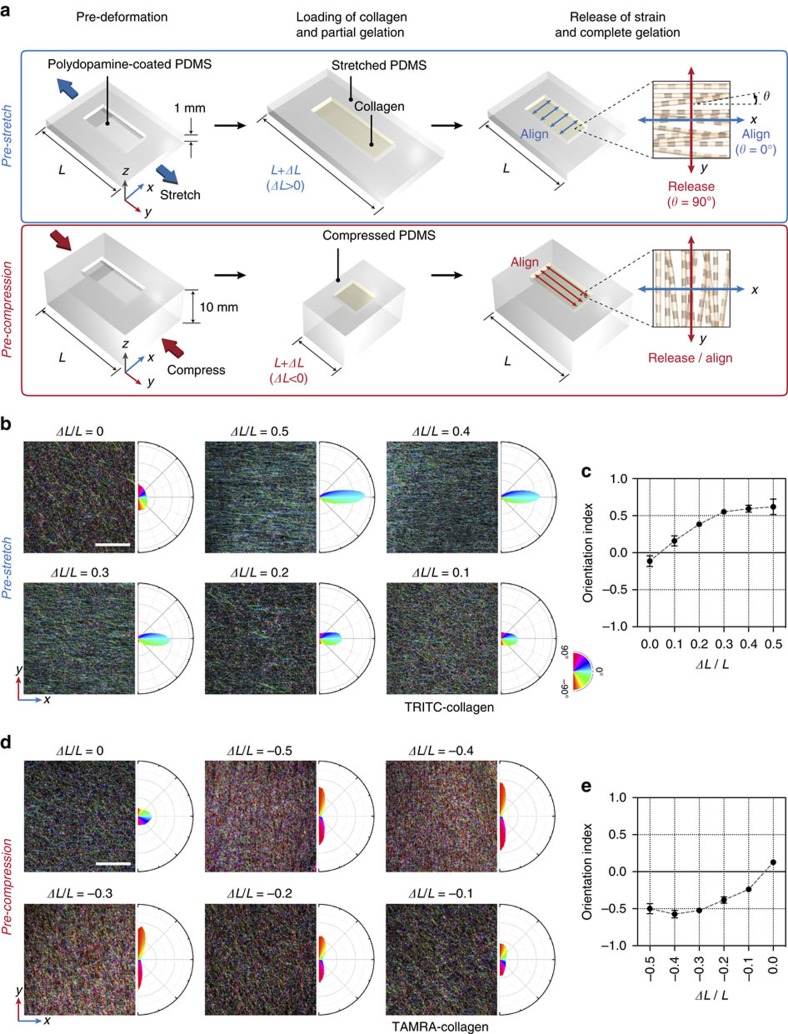
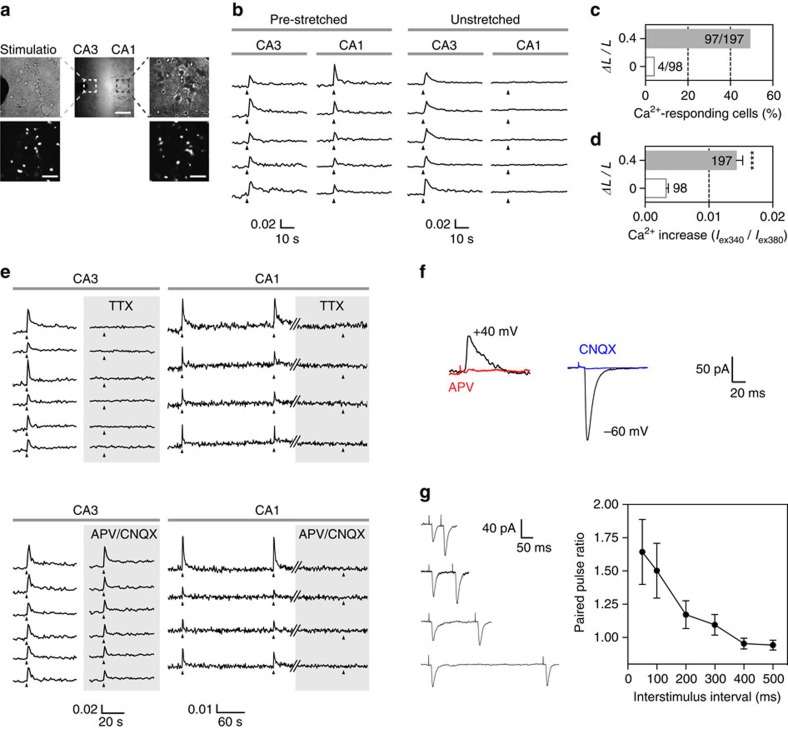
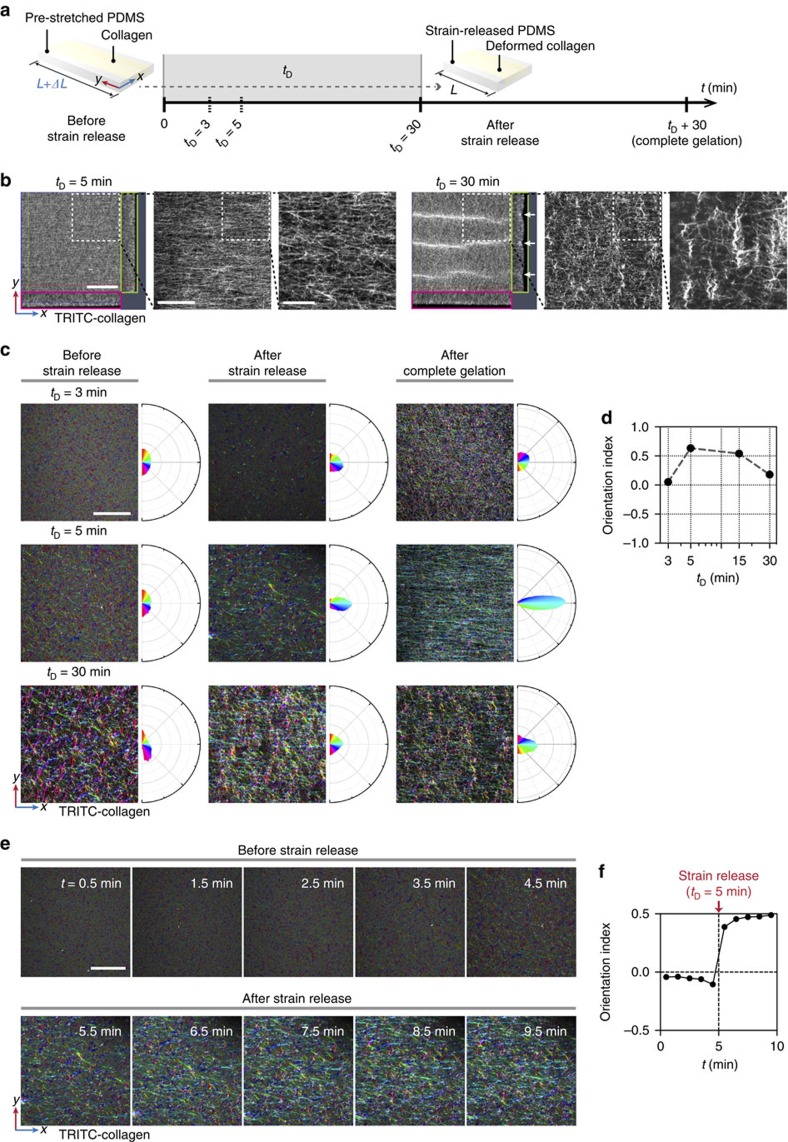
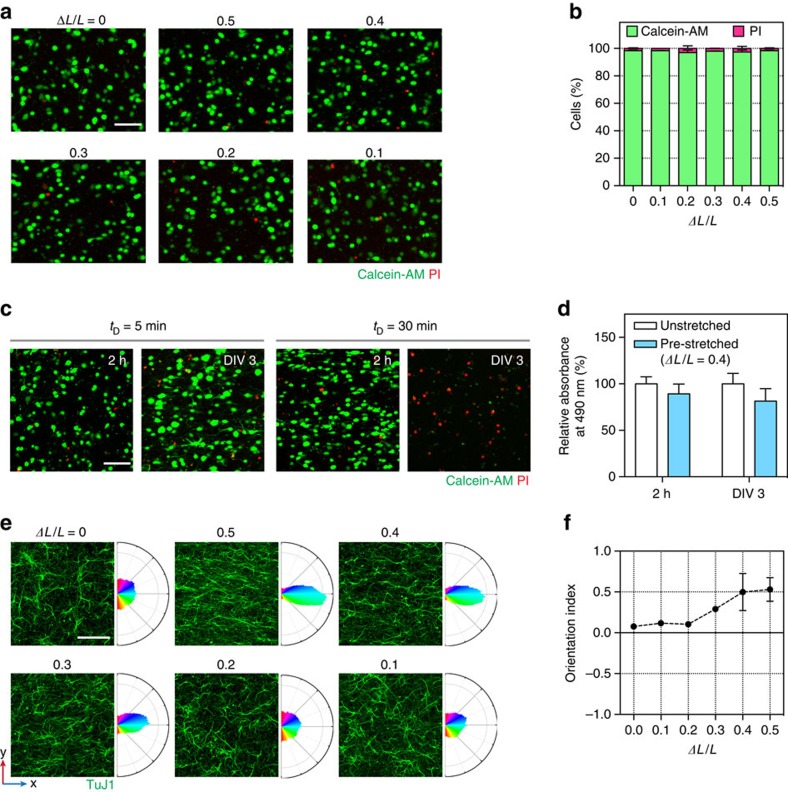
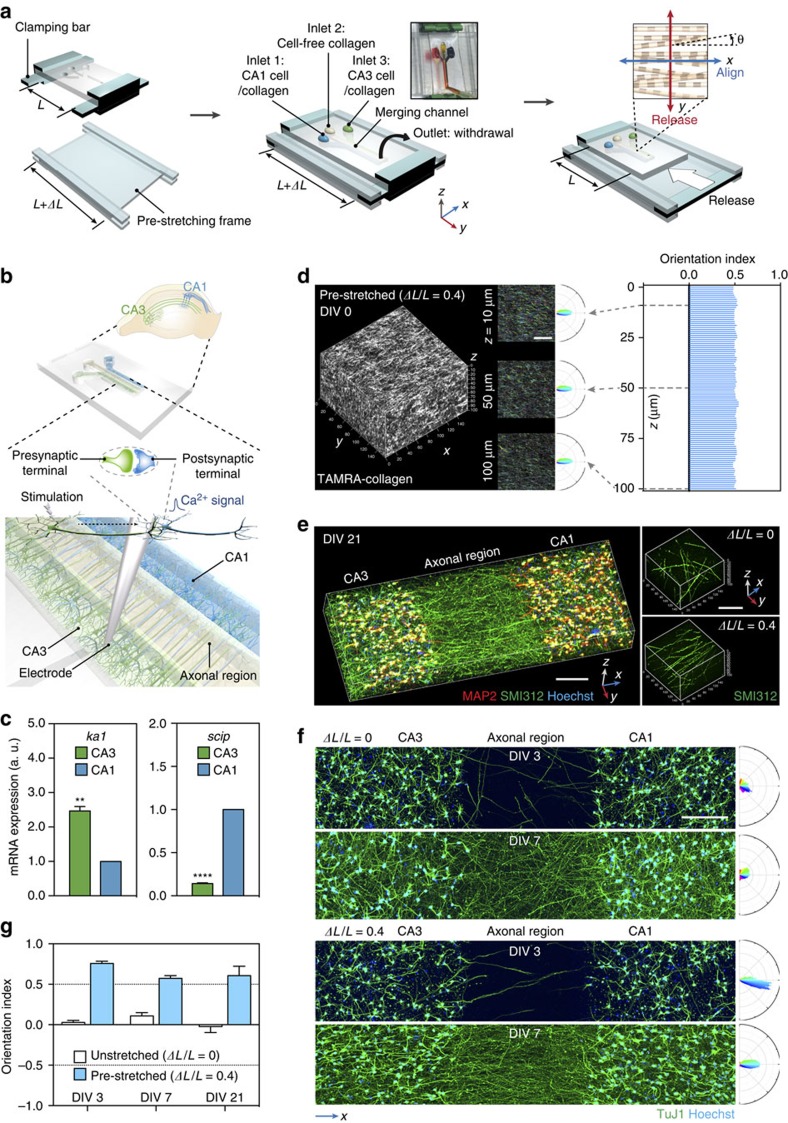
In native tissues, cellular and acellular components are anisotropically organized and often aligned in specific directions, providing structural and mechanical properties for actuating biological functions. Thus, engineering alignment not only allows for emulation of native tissue structures but might also enable implementation of specific functionalities. However, achieving desired alignment is challenging, especially in three-dimensional constructs. By exploiting the elastomeric property of polydimethylsiloxane and fibrillogenesis kinetics of collagen, here we introduce a simple yet effective method to assemble and align fibrous structures in a multi-modular three-dimensional conglomerate. Applying this method, we have reconstructed the CA3-CA1 hippocampal neural circuit three-dimensionally in a monolithic gel, in which CA3 neurons extend parallel axons to and synapse with CA1 neurons. Furthermore, we show that alignment of the fibrous scaffold facilitates the establishment of functional connectivity. This method can be applied for reconstructing other neural circuits or tissue units where anisotropic organization in a multi-modular structure is desired.
在天然组织中,细胞和无细胞成分呈各向异性排列,通常沿特定方向排列,为生物功能的启动提供结构和机械性能。因此,工程化排列不仅可以模拟天然组织的结构,还可以实现特定功能。然而,实现所需的排列是具有挑战性的,特别是在三维结构中。通过利用聚二甲基硅氧烷的弹性特性和胶原的原纤维形成动力学,我们在这里介绍了一种简单而有效的方法,可在多模块三维聚集体中组装和排列纤维结构。通过应用该方法,我们在一个整体凝胶中重建了 CA3-CA1 海马神经回路的三维结构,其中 CA3 神经元平行延伸轴突并与 CA1 神经元形成突触。此外,我们还表明纤维支架的排列有利于功能性连接的建立。该方法可用于重建其他神经回路或组织单元,在这些结构中需要多模块结构的各向异性组织。