Boldizsár Dóra, Soós István, Whyte Ian, Hamar Pál
University of Physical Education, Hungary.
University of Sunderland, UK.
J Hum Kinet. 2016 Jul 2;51:243-252. doi: 10.1515/hukin-2015-0188. eCollection 2016 Jun 1.
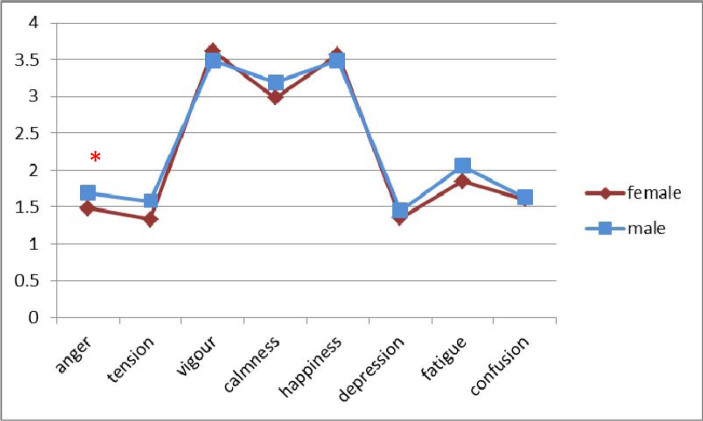
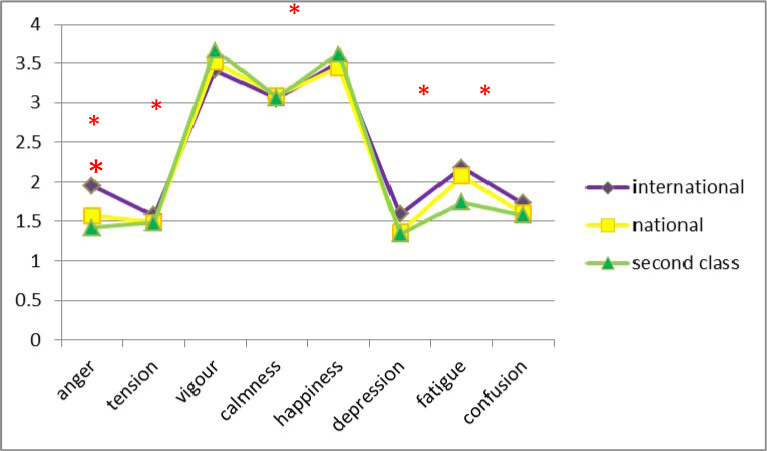
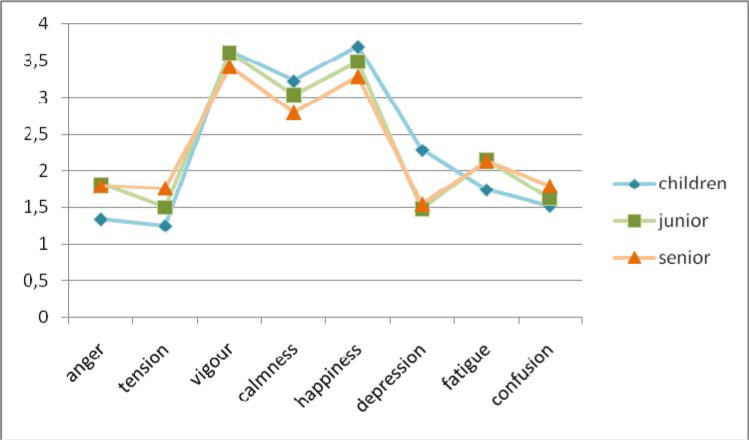
This study investigated the relationship between pre-competition mood state factors in gymnastics by gender, age and a national ranking. Participant-gymnasts (total n=116, male n=49, female n=67) completed a Brunel Mood Scale (BRUMS) one day prior to their main competition of the year. Information was also gathered from gymnasts of gender, age and a national ranking. Consistent with theoretical predictions, results confirmed that a number of pre-competition mood states differed by age with both juniors and seniors having a higher level of anger than children (p<.05 respectively). Also, seniors demonstrated higher tension than children (p<.001). However, only anger showed significant differences by gender with male gymnasts demonstrating higher levels of anger than female gymnasts (p<.05), and with international gymnasts registering higher levels of anger compared with second class gymnasts (p<.05). Authors suggest that future research should investigate relationships between the pre-competition mood in other gymnastics-related disciplines and sports, as well as competitive performances.
本研究按性别、年龄和全国排名调查了体操项目赛前情绪状态因素之间的关系。参与研究的体操运动员(共116人,男性49人,女性67人)在其当年主要比赛前一天完成了布鲁内尔情绪量表(BRUMS)。还收集了体操运动员的性别、年龄和全国排名信息。与理论预测一致,结果证实,一些赛前情绪状态因年龄而异,青少年和成年运动员的愤怒水平均高于儿童(p值分别<.05)。此外,成年运动员的紧张程度高于儿童(p<.001)。然而,只有愤怒在性别上存在显著差异,男性体操运动员的愤怒水平高于女性体操运动员(p<.05),国际级体操运动员的愤怒水平高于二级体操运动员(p<.05)。作者建议,未来的研究应调查其他体操相关学科和运动项目中赛前情绪与竞技表现之间的关系。