National Engineering Research Centre of Light Alloy Net Forming and State Key Laboratory of Metal Matrix Composite, Shanghai Jiao Tong University, Shanghai 200240, China.
School of Pharmacy, Shanghai Jiao Tong University, Shanghai 200240, China.
Sci Rep. 2017 Feb 2;7:41796. doi: 10.1038/srep41796.
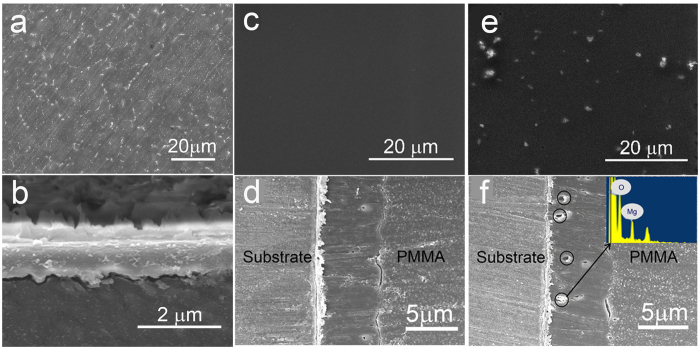
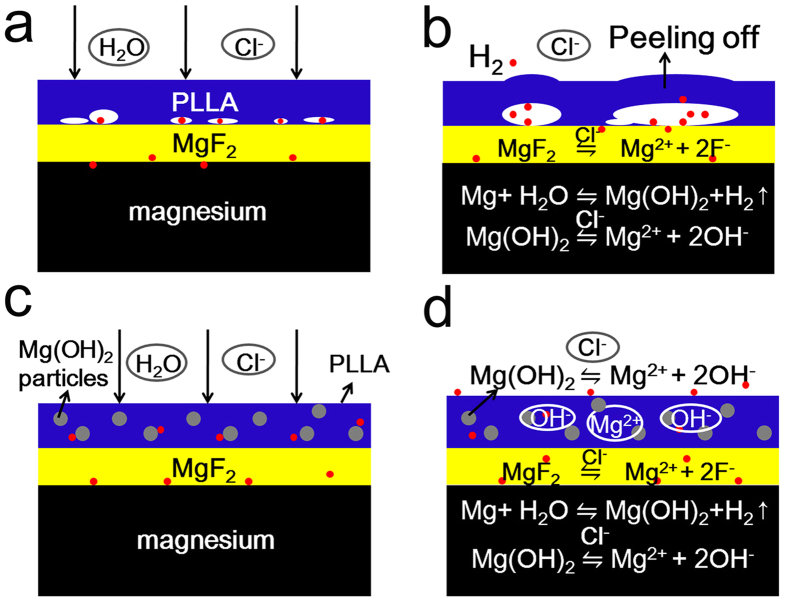
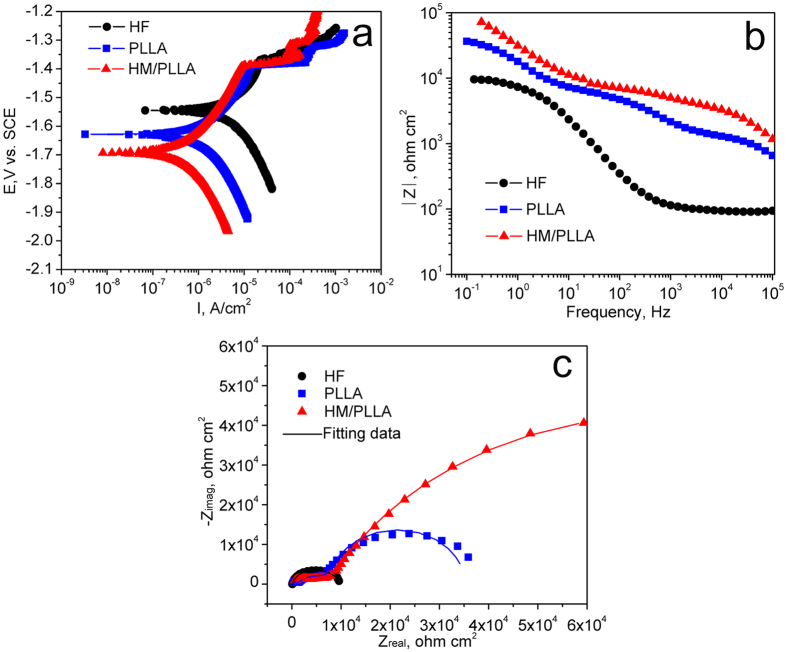
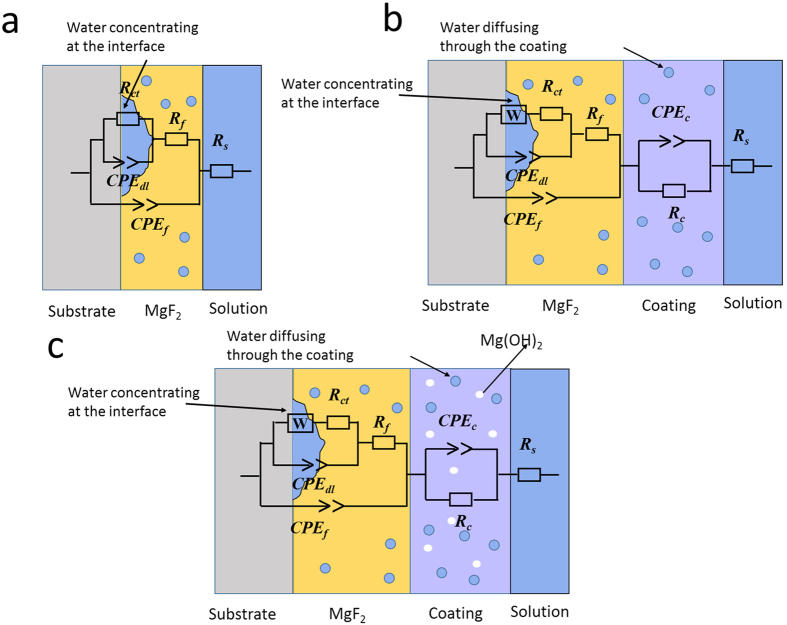
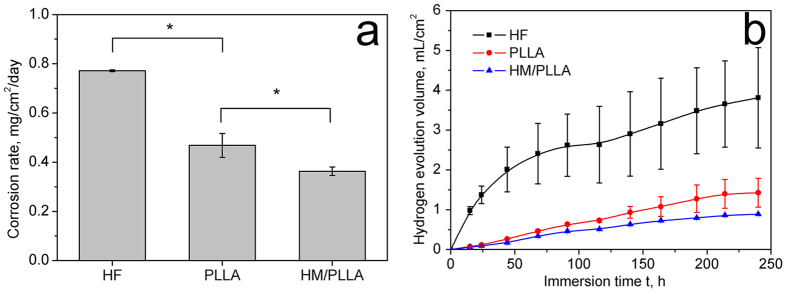
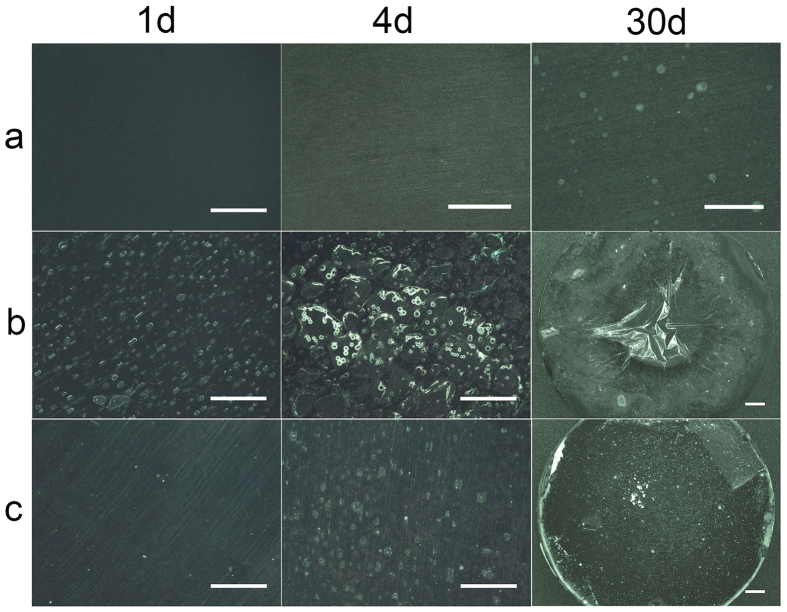
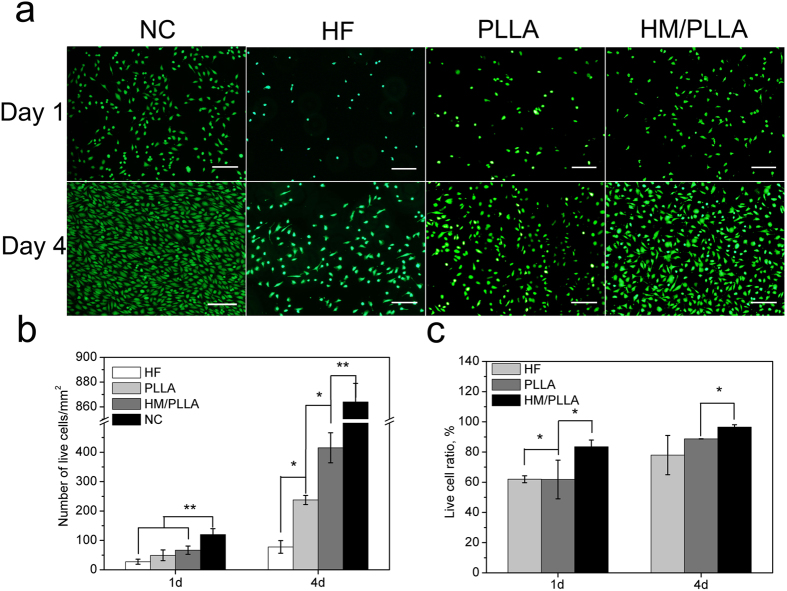
A strategy of suppressing the fast degradation behaviour of Mg-based biomaterials by the introduction of one of Mg degradation products Mg(OH) was proposed according to the following degradation mechanism, Mg + 2HO ⇋ Mg(OH) + H↑. Specifically, Mg(OH) submicron particles were mixed into poly (L-lactic acid) (PLLA) to synthesize a composite coating onto hydrofluoric acid-pretreated Mg-Nd-Zn-Zr alloy. The in vitro degradation investigations showed that the addition of Mg(OH) particles not only slowed down the corrosion of Mg matrix, but also retarded the formation of gas pockets underneath the polymer coating. Correspondingly, cytocompatibility results exhibited significant improvement of proliferation of endothelial cells, and further insights was gained into the mechanisms how the introduction of Mg(OH) particles into PLLA coating affected the magnesium alloy degradation and cytocompatibility. The present study provided a promising surface modification strategy to tailor the degradation behaviour of Mg-based biomaterials.
根据以下降解机制,提出了通过引入镁降解产物之一 Mg(OH) 来抑制镁基生物材料快速降解行为的策略,Mg + 2HO ⇋ Mg(OH) + H↑。具体而言,将 Mg(OH) 亚微米颗粒混入聚 (L-乳酸) (PLLA) 中,在氢氟酸预处理的 Mg-Nd-Zn-Zr 合金上合成复合涂层。体外降解研究表明,添加 Mg(OH) 颗粒不仅减缓了镁基体的腐蚀,而且延缓了聚合物涂层下气体口袋的形成。相应地,细胞相容性结果显示内皮细胞增殖显著改善,进一步深入了解了将 Mg(OH) 颗粒引入 PLLA 涂层中如何影响镁合金降解和细胞相容性的机制。本研究为定制镁基生物材料的降解行为提供了一种有前途的表面改性策略。