Zhang Qi, Gao Bin, Chang Yu
School of Life Science and BioEngineering, Beijing University of Technology, Beijing, 100124, People's Republic of China.
Biomed Eng Online. 2016 Dec 28;15(Suppl 2):163. doi: 10.1186/s12938-016-0252-4.
Left ventricular assist device (LVAD) has become an alternative treatment for end-stage heart failure patients. Series type of LVAD, as a novel LVAD, has attracted more and more attention. The hemodynamic effects of series type LVAD on aortic blood pattern are considered as its important characteristics; however, the precise mechanism of it is still unclear.
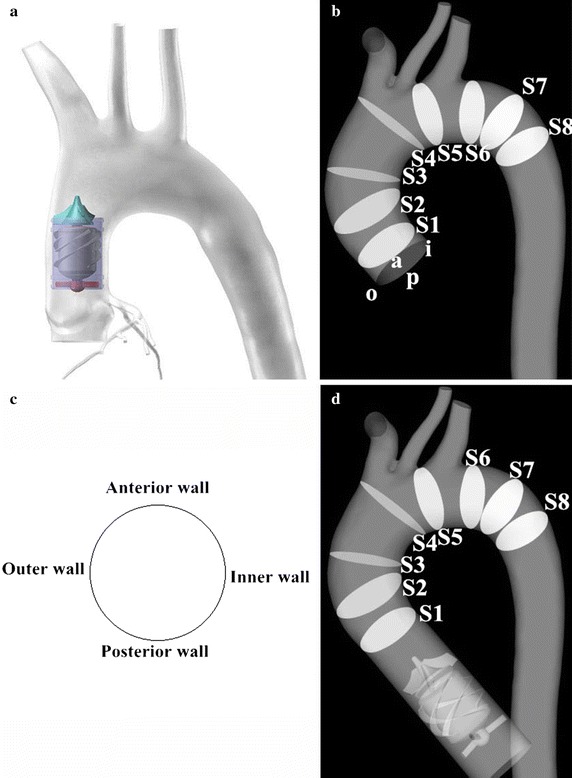
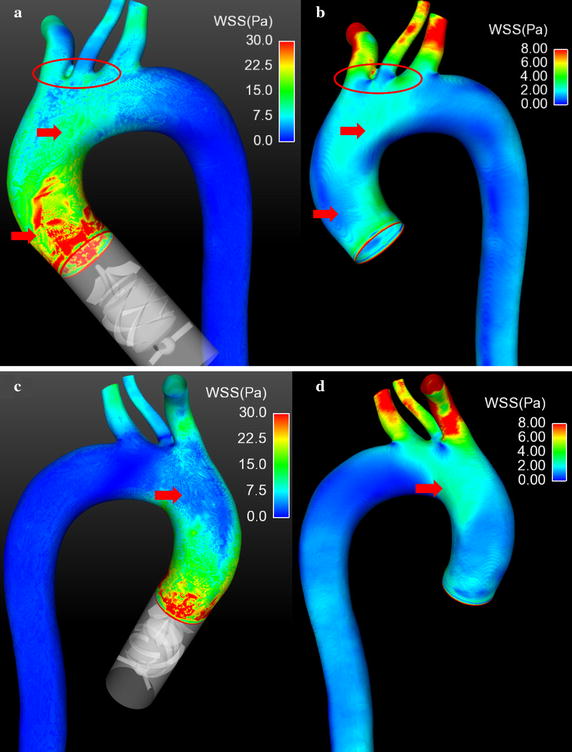
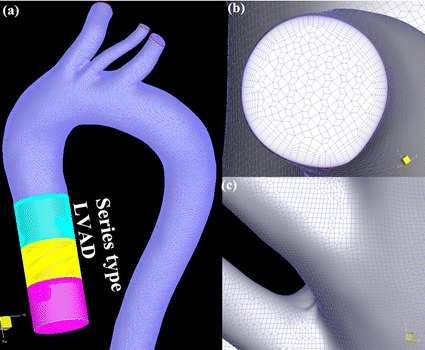
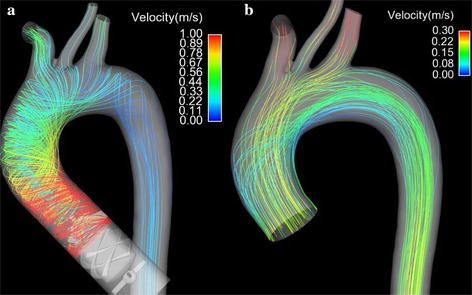
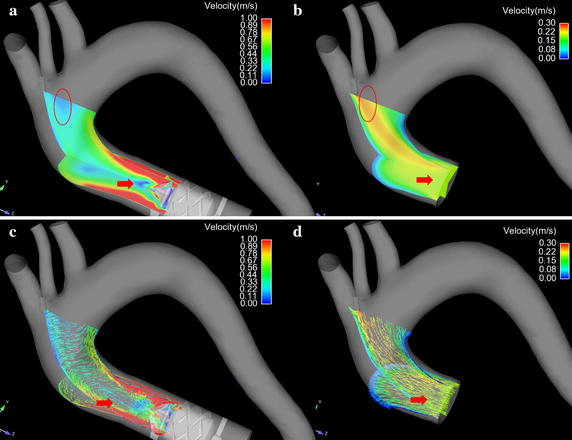
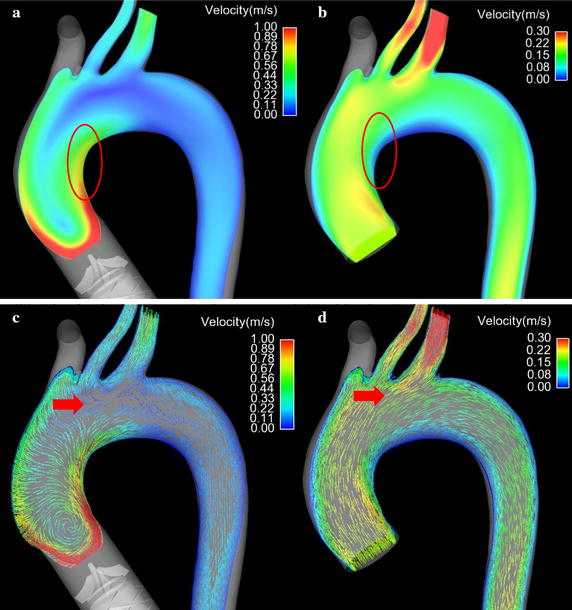
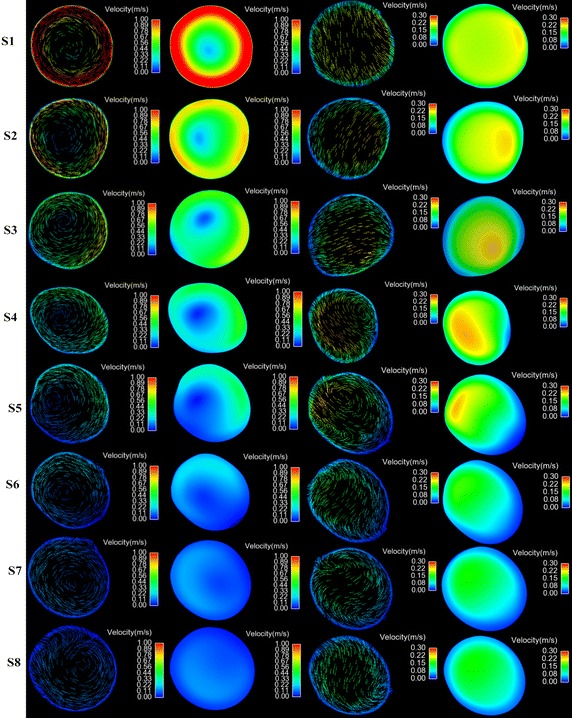
To clarify the hemodynamic effects of series type LVAD on aortic blood flow pattern, a comparative study on the aortic blood flow pattern and hemodynamic states were carried out numerically for two cases, including series type LVAD support and normal condition. The steady-state computational fluid dynamic (CFD) approach was employed. The blood flow streamline, blood velocity vector and distribution of wall shear stress (WSS) were calculated to evaluate the differences of hemodynamic effects between both conditions.
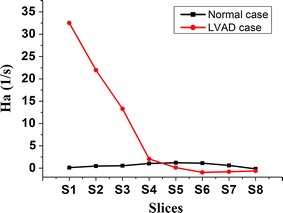
The results demonstrated that the aortic flow pattern under series type LVAD showed significant different from that of normal condition. The strength of aortic swirling flow was significantly enhanced by the series type LVAD support. Meanwhile, the rotating direction of swirling flow under LVAD support was also dominated by the rotating direction of series type LVAD. Moreover, the blood velocity and WSS under LVAD support were also significantly enhanced, compared with that under normal condition.
The hemodynamic states, including the aortic swirling flow characteristic, was significantly dominated by LVAD support. Present investigation could provide not only a useful information on the vascular complications caused by LVAD support, but also provide a useful guide for optimal the structure of the series type LVAD.
左心室辅助装置(LVAD)已成为终末期心力衰竭患者的一种替代治疗方法。串联式LVAD作为一种新型LVAD,越来越受到关注。串联式LVAD对主动脉血流模式的血流动力学效应被认为是其重要特征;然而,其确切机制仍不清楚。
为阐明串联式LVAD对主动脉血流模式的血流动力学效应,对串联式LVAD支持和正常状态两种情况的主动脉血流模式和血流动力学状态进行了数值对比研究。采用稳态计算流体动力学(CFD)方法。计算血流流线、血流速度矢量和壁面切应力(WSS)分布,以评估两种状态下血流动力学效应的差异。
结果表明,串联式LVAD支持下的主动脉血流模式与正常状态有显著差异。串联式LVAD支持显著增强了主动脉旋流的强度。同时,LVAD支持下旋流的旋转方向也由串联式LVAD的旋转方向主导。此外,与正常状态相比,LVAD支持下的血流速度和WSS也显著增强。
包括主动脉旋流特征在内的血流动力学状态显著受LVAD支持的影响。本研究不仅可为LVAD支持引起的血管并发症提供有用信息,还可为优化串联式LVAD的结构提供有用指导。