Department of Radiology, Guangdong General Hospital, Guangdong Academy of Medical Sciences, No. 106, Zhong Shan Er Lu, Guangzhou, 510080, Guangdong, China.
School of Medicine, South China University of Technology, Guangzhou, 510006, Guangdong, China.
Biomed Eng Online. 2018 May 2;17(1):53. doi: 10.1186/s12938-018-0485-5.
Hemodynamic information including peak systolic pressure (PSP) and peak systolic velocity (PSV) carry an important role in evaluation and diagnosis of congenital heart disease (CHD). Since MDCTA cannot evaluate hemodynamic information directly, the aim of this study is to provide a noninvasive method based on a computational fluid dynamics (CFD) model, derived from multi-detector computed tomography angiography (MDCTA) raw data, to analyze the aortic hemodynamics in infants with CHD, and validate these results against echocardiography and cardiac catheter measurements.
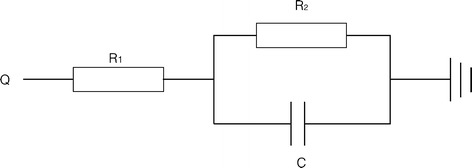
This study included 25 patients (17 males, and 8 females; a median age of 2 years, range: 4 months-4 years) with CHD. All patients underwent both transthoracic echocardiography (TTE) and MDCTA within 2 weeks prior to cardiac catheterization. CFD models were created from MDCTA raw data. Boundary conditions were confirmed by lumped parameter model and transthoracic echocardiography (TTE). Peak systolic velocity derived from CFD models (PSV) was compared to TTE measurements (PSV), while the peak systolic pressure derived from CFD (PSP) was compared to catheterization (PSP). Regions with low and high peak systolic wall shear stress (PSWSS) were also evaluated.
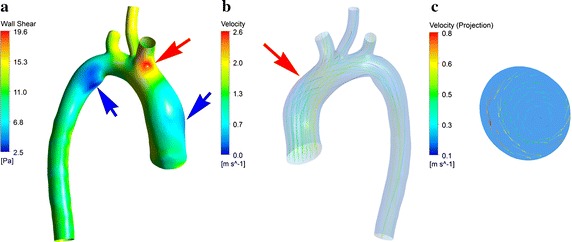
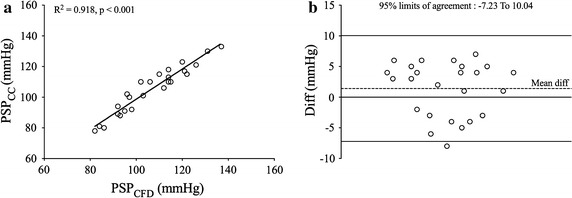
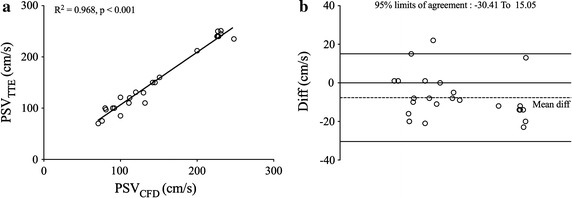
PSV and PSP showed good agreements between PSV (r = 0.968, p < 0.001; mean bias = - 7.68 cm/s) and PSP (r = 0.918, p < 0.001; mean bias = 1.405 mmHg). Regions with low and high PSWSS) can also be visualized. Skewing of velocity or helical blood flow was also observed at aortic arch in patients.
Our result demonstrated that CFD scheme based on MDCTA raw data is an accurate and convenient method in obtaining the velocity and pressure from aorta and displaying the distribution of PSWSS and flow pattern of aorta. The preliminary results from our study demonstrate the capability in combining clinical imaging data and novel CFD tools in infants with CHD and provide a noninvasive approach for diagnose of CHD such as coarctation of aorta in future.
包括收缩期峰值压力(PSP)和收缩期峰值速度(PSV)在内的血流动力学信息在先天性心脏病(CHD)的评估和诊断中具有重要作用。由于 MDCTA 不能直接评估血流动力学信息,因此本研究的目的是提供一种基于计算流体动力学(CFD)模型的非侵入性方法,该模型源自多探测器 CT 血管造影(MDCTA)原始数据,以分析 CHD 婴儿的主动脉血流动力学,并将这些结果与超声心动图和心导管测量值进行验证。
本研究纳入了 25 例 CHD 患儿(男 17 例,女 8 例;中位年龄 2 岁,范围:4 个月-4 岁)。所有患者在心导管检查前 2 周内均接受了经胸超声心动图(TTE)和 MDCTA 检查。从 MDCTA 原始数据中创建 CFD 模型。通过集中参数模型和经胸超声心动图(TTE)来确认边界条件。从 CFD 模型得出的收缩期峰值速度(PSV)与 TTE 测量值(PSV)进行比较,而从 CFD 得出的收缩期峰值压力(PSP)与心导管测量值(PSP)进行比较。还评估了收缩期峰值壁切应力(PSWSS)低值和高值区域。
PSV 和 PSP 在 PSV(r=0.968,p<0.001;平均偏差=-7.68 cm/s)和 PSP(r=0.918,p<0.001;平均偏差=1.405 mmHg)之间具有良好的一致性。还可以可视化低 PSWSS 和高 PSWSS 区域。在主动脉弓处也观察到速度或螺旋血流的偏斜。
我们的结果表明,基于 MDCTA 原始数据的 CFD 方案是一种准确、便捷的方法,可从主动脉获得速度和压力,并显示 PSWSS 分布和主动脉血流模式。本研究的初步结果表明,该方法能够将临床成像数据与新型 CFD 工具相结合,应用于 CHD 患儿,并为未来的主动脉缩窄等 CHD 的诊断提供一种非侵入性方法。