Department of Cardiology/Internal Medicine, Heart Center, University of Leipzig, Germany.
LIFE - Leipzig Research Center for Civilization Diseases, University of Leipzig, Germany.
Sci Rep. 2017 Feb 3;7:41705. doi: 10.1038/srep41705.
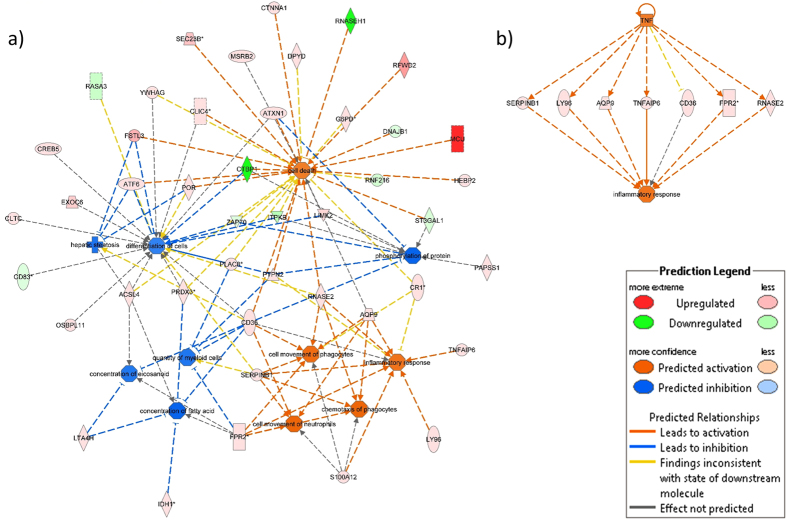
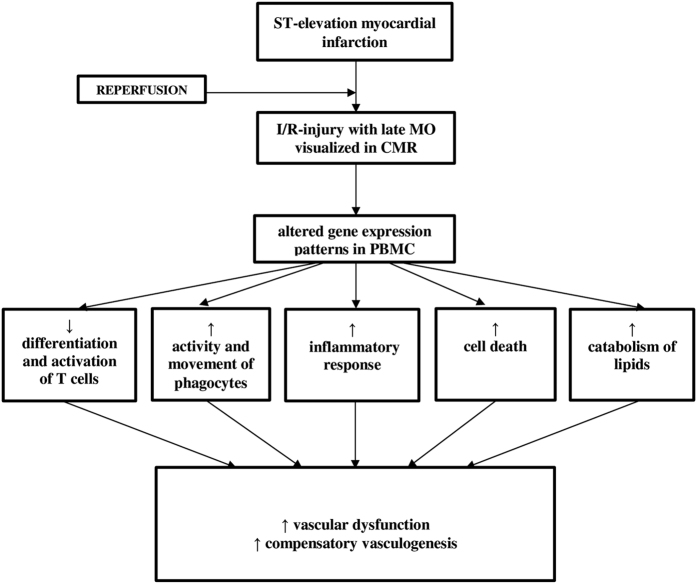
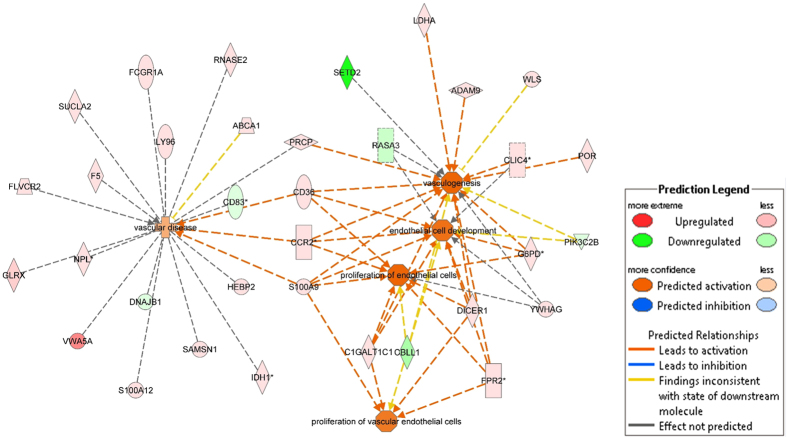
Prognostic relevant pathways of leukocyte involvement in human myocardial ischemic-reperfusion injury are largely unknown. We enrolled 136 patients with ST-elevation myocardial infarction (STEMI) after primary angioplasty within 12 h after onset of symptoms. Following reperfusion, whole blood was collected within a median time interval of 20 h (interquartile range: 15-25 h) for genome-wide gene expression analysis. Subsequent CMR scans were performed using a standard protocol to determine infarct size (IS), area at risk (AAR), myocardial salvage index (MSI) and the extent of late microvascular obstruction (lateMO). We found 398 genes associated with lateMO and two genes with IS. Neither AAR, nor MSI showed significant correlations with gene expression. Genes correlating with lateMO were strongly related to several canonical pathways, including positive regulation of T-cell activation (p = 3.44 × 10), and regulation of inflammatory response (p = 1.86 × 10). Network analysis of multiple gene expression alterations associated with larger lateMO identified the following functional consequences: facilitated utilisation and decreased concentration of free fatty acid, repressed cell differentiation, enhanced phagocyte movement, increased cell death, vascular disease and compensatory vasculogenesis. In conclusion, the extent of lateMO after acute, reperfused STEMI correlated with altered activation of multiple genes related to fatty acid utilisation, lymphocyte differentiation, phagocyte mobilisation, cell survival, and vascular dysfunction.
白细胞参与人类心肌缺血再灌注损伤的预后相关途径在很大程度上尚不清楚。我们招募了 136 名在症状发作后 12 小时内接受直接经皮冠状动脉介入治疗的 ST 段抬高型心肌梗死(STEMI)患者。再灌注后,在中位数时间间隔 20 小时(四分位距:15-25 小时)内采集全血进行全基因组基因表达分析。随后使用标准方案进行 CMR 扫描,以确定梗死面积(IS)、危险区(AAR)、心肌挽救指数(MSI)和晚期微血管阻塞(lateMO)的程度。我们发现了 398 个与 lateMO 相关的基因和 2 个与 IS 相关的基因。AAR 和 MSI 均与基因表达无显著相关性。与 lateMO 相关的基因与几个经典途径密切相关,包括 T 细胞激活的正调控(p=3.44×10)和炎症反应的调节(p=1.86×10)。与较大的 lateMO 相关的多个基因表达改变的网络分析确定了以下功能后果:促进游离脂肪酸的利用和减少浓度,抑制细胞分化,增强吞噬细胞运动,增加细胞死亡,血管疾病和代偿性血管生成。总之,急性再灌注后 STEMI 患者的 lateMO 程度与与脂肪酸利用、淋巴细胞分化、吞噬细胞动员、细胞存活和血管功能障碍相关的多个基因的激活改变相关。