Huang Nan, Wang Weiwei, Yao Yanlai, Zhu Fengxiang, Wang Weiping, Chang Xiaojuan
The College of Life Sciences, Northwest University, Xi'an, Shaanxi, China.
Key Laboratory of Resource Biology and Biotechnology in Western China, College of Life Sciences, Northwest University, Ministry of Education, Xi'an, Shaanxi, China.
PLoS One. 2017 Feb 6;12(2):e0171490. doi: 10.1371/journal.pone.0171490. eCollection 2017.
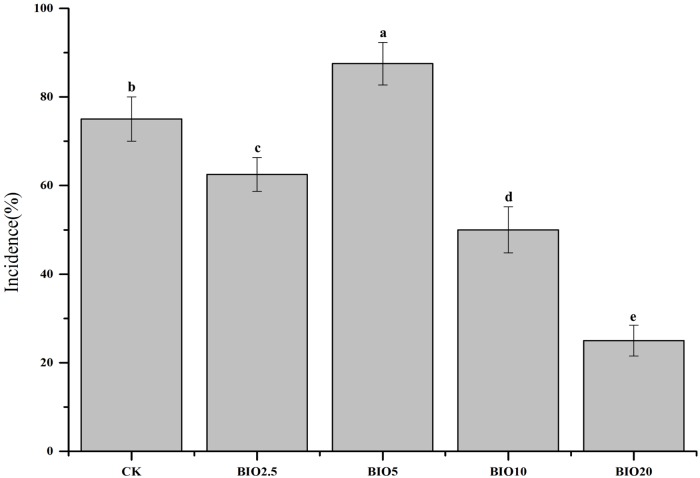
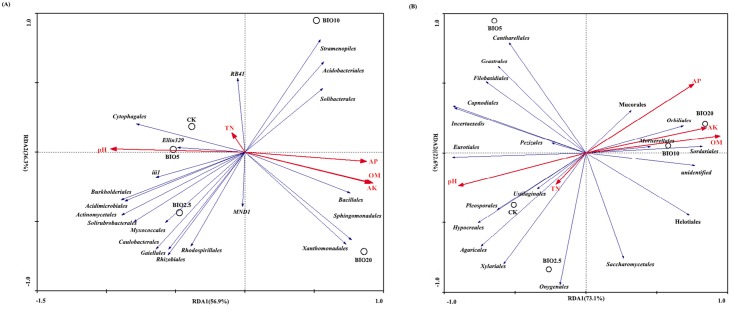
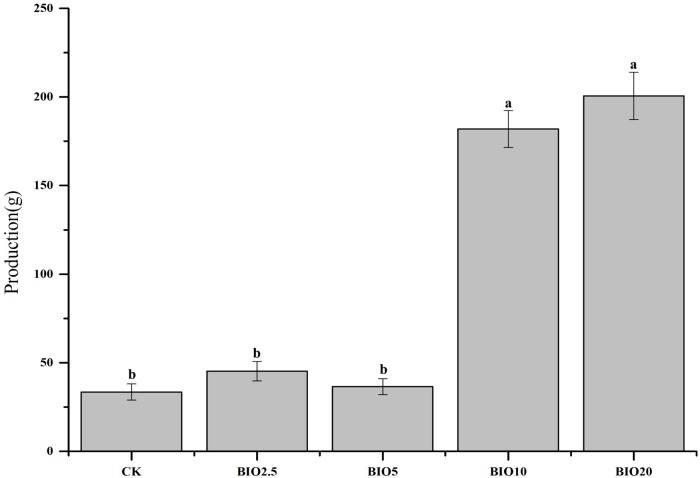
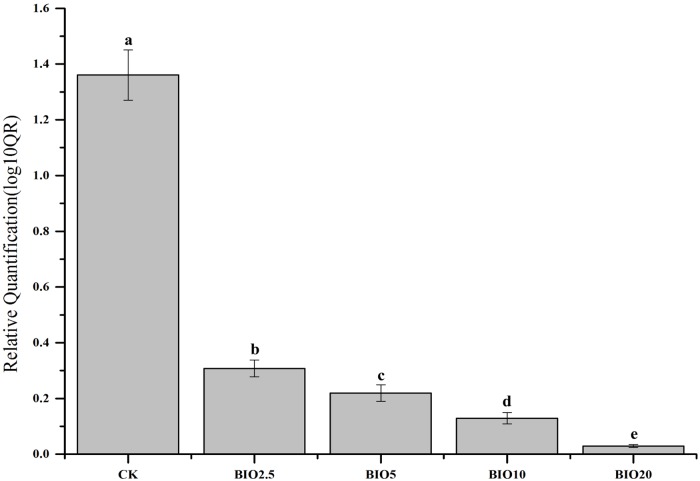
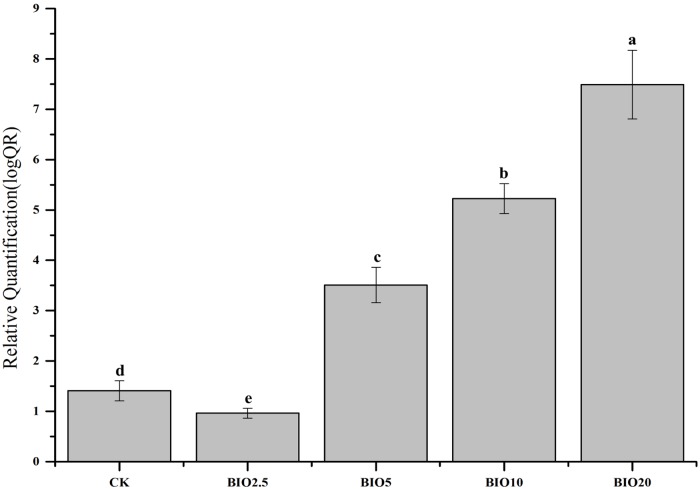
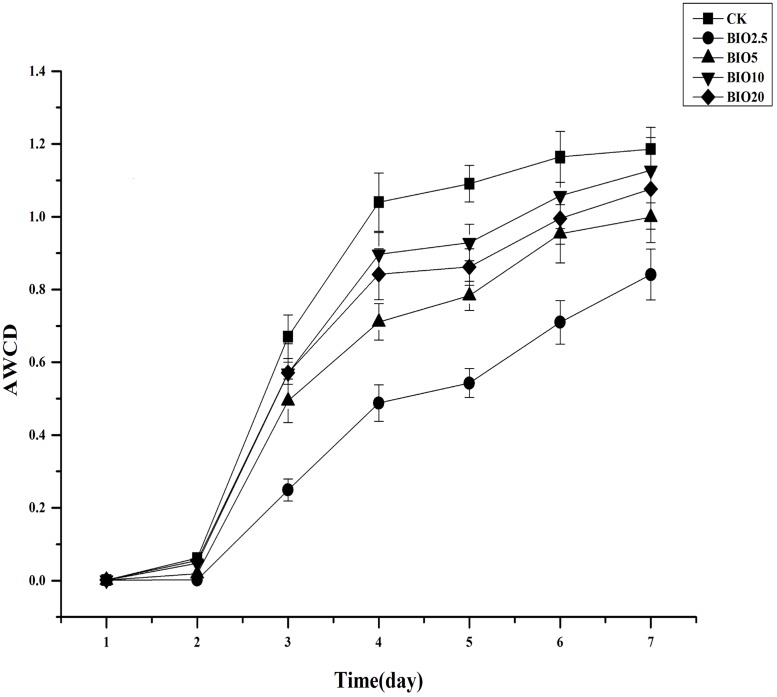
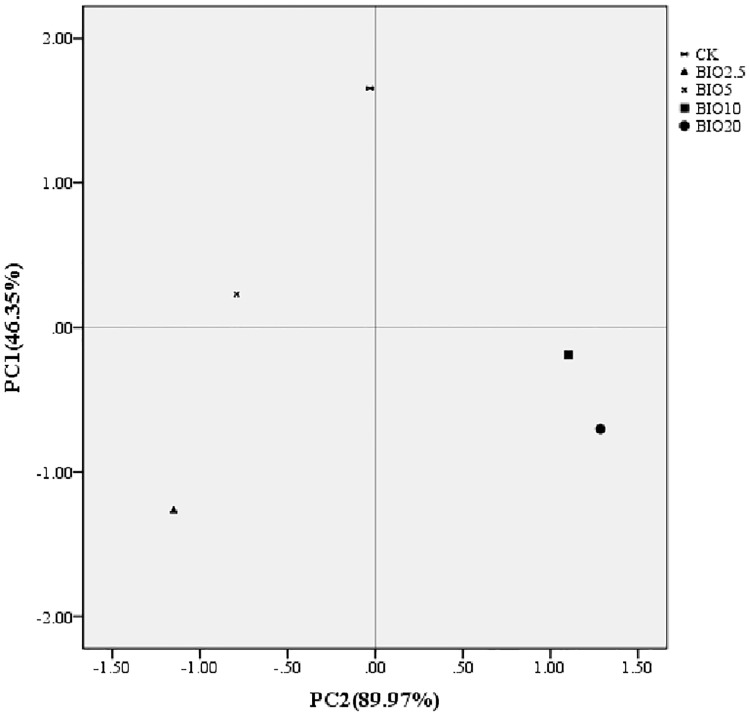
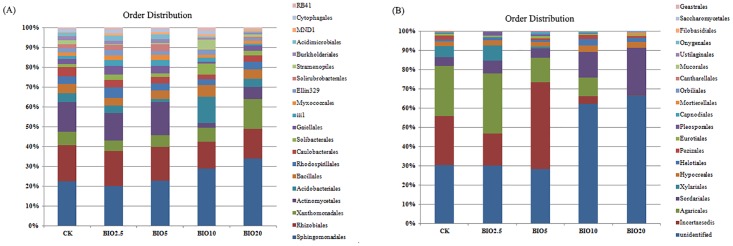
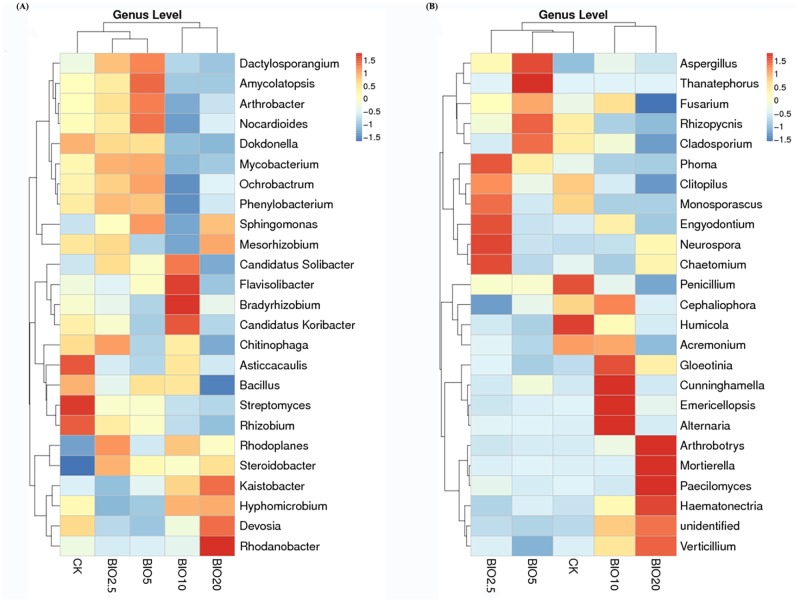
Fusarium wilt is one of the main diseases of cucumber, and bio-organic fertilizer has been used to control Fusarium wilt. In this study, a pot experiment was conducted to evaluate the effects of bio-organic fertilizer applied at four levels on the suppression of Fusarium wilt disease in cucumber, the soil physico-chemical properties and the microbial communities. In comparison with the control (CK), low concentrations of bio-organic fertilizer (BIO2.5 and BIO5) did not effectively reduce the disease incidence and had little effect on soil microorganisms. High concentrations of bio-organic fertilizer (BIO10 and BIO20) significantly reduced the disease incidence by 33.3%-66.7% and the production was significantly improved by 83.8%-100.3%. The soil population of F. oxysporum f. sp. cucumerinum was significantly lower in bio-organic fertilizer treatments, especially in BIO10 and BIO20. The microorganism activity increased with the bio-organic fertilizer concentration. High-throughput sequencing demonstrated that, at the order level, Sphingomonadales, Bacillales, Solibacterales and Xylariales were significantly abundant in BIO10 and BIO20 soils. At the genus level, the abundance and composition of bacterial and fungal communities in BIO10 and BIO20 were similar, illustrating that high concentrations of bio-organic fertilizer activated diverse groups of microorganisms. Redundancy analysis (RDA) showed that Xanthomonadales, Sphingomonadales, Bacillales, Orbiliales, Sordariales, and Mucorales occurred predominantly in the BIO10 and BIO20. These microorganisms were related to the organic matter, available potassium and available phosphorus contents. In conclusion, a high concentration of bio-organic fertilizer application suppressed the Fusarium wilt disease and increased cucumber production after continuous cropping might through improving soil chemical condition and manipulating the composition of soil microbial community.
枯萎病是黄瓜的主要病害之一,生物有机肥已被用于防治枯萎病。本研究通过盆栽试验,评估了四个施用量水平的生物有机肥对黄瓜枯萎病的抑制效果、土壤理化性质及微生物群落的影响。与对照(CK)相比,低浓度生物有机肥(BIO2.5和BIO5)未能有效降低发病率,对土壤微生物影响较小。高浓度生物有机肥(BIO10和BIO20)显著降低发病率33.3%-66.7%,产量显著提高83.8%-100.3%。生物有机肥处理的土壤中尖孢镰刀菌黄瓜专化型数量显著降低,尤其是BIO10和BIO20处理。微生物活性随生物有机肥浓度增加而增强。高通量测序表明,在目水平上,鞘脂单胞菌目、芽孢杆菌目、栖热放线菌目和炭角菌目在BIO10和BIO20土壤中显著富集。在属水平上,BIO10和BIO20中细菌和真菌群落的丰度和组成相似,表明高浓度生物有机肥激活了多种微生物类群。冗余分析(RDA)表明,黄单胞菌目、鞘脂单胞菌目、芽孢杆菌目、圆盘菌目、粪壳菌目和毛霉目主要出现在BIO10和BIO20中。这些微生物与土壤有机质、速效钾和速效磷含量有关。总之,高浓度生物有机肥的施用可能通过改善土壤化学条件和调控土壤微生物群落组成,抑制了连作后黄瓜的枯萎病并提高了产量。