Sun Xianghui, Zhang Lei
Tianjin Key Laboratory of Artificial Cell, Artificial Cell Engineering Technology Research Center of Public Health Ministry, Department of Stomatology, Tianjin Third Central Hospital, Tianjin 300170, P.R. China
Tianjin Key Laboratory of Artificial Cell, Artificial Cell Engineering Technology Research Center of Public Health Ministry, Department of Clinical Laboratory, Tianjin Third Central Hospital, Tianjin 300170, P.R. China.
Biosci Rep. 2017 Jun 8;37(3). doi: 10.1042/BSR20160404. Print 2017 Jun 30.
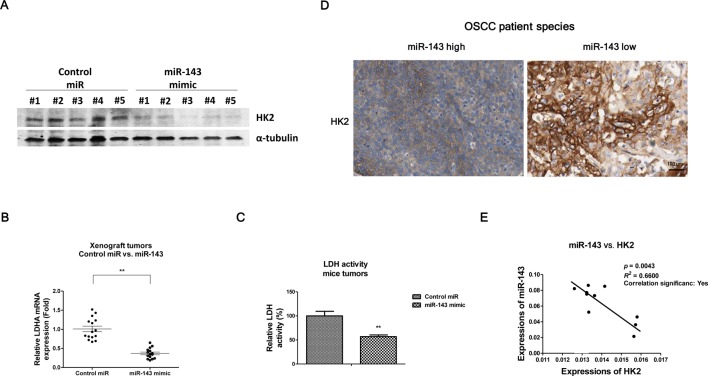
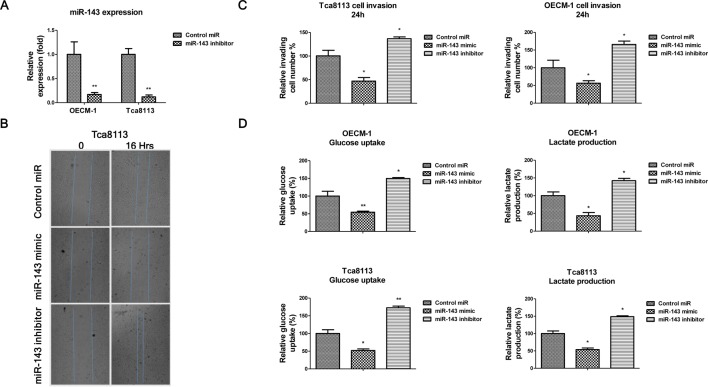
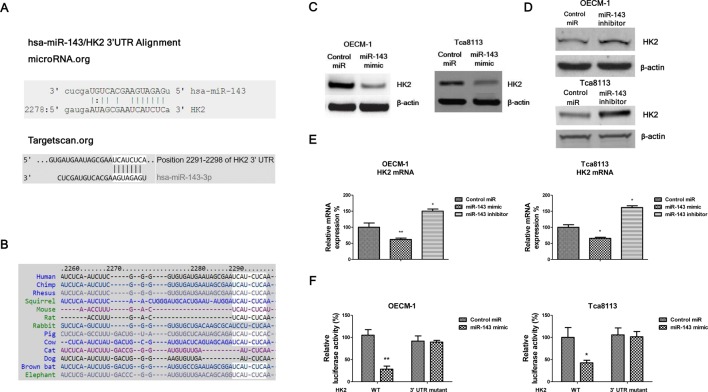
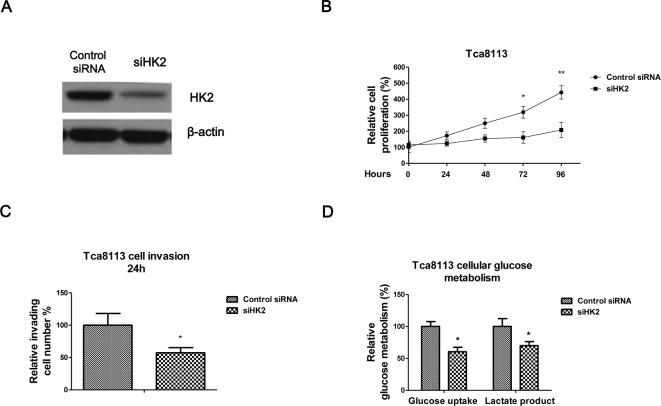
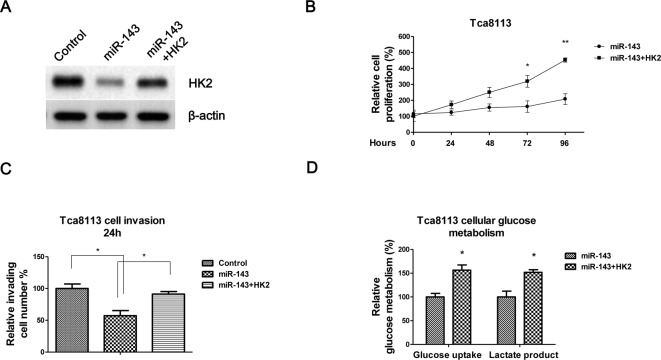
miRNAs are non-coding RNAs that have functions to regulate gene expression and play essential roles in a variety of biological processes of cancers. In the present study, we report acts as a tumor suppressor in human oral squamous cell carcinoma (OSCC). The expressions of are down-regulated in both OSCC cell lines and patient samples compared with normal adjacent tissues. We found overexpression of in oral cancer cell lines suppresses cell migration, cellular glucose metabolism and proliferation. Moreover, overexpression of promoted apoptosis and significantly caused cell cycle arrest at G stage. The colony formation of oral cancer cells was also suppressed by We identified hexokinase 2 (HK2) as a direct target of in oral cancer cells. Our data show that complementary pairs to the 3'-UTR of HK2 in oral cancer cells, leading to the inhibition of glycolysis and Moreover, knockdown of HK2 by siRNA in oral cancer cells inhibited glucose metabolism, proliferation and migration. Recovery of glucose metabolism by overexpression of HK2 in overexpressing cells restores the cell migration and proliferation, suggesting that the -mediated cancer suppression is through the direct inhibition of HK2. In summary, the present studies highlight as a tumor suppressor in OSCC by the suppression of cell migration, glucose metabolism and proliferation through directly targeting HK2, rendering a therapeutic strategy for the treatment of clinical OSCC patients.
微小RNA(miRNAs)是一类非编码RNA,具有调控基因表达的功能,在癌症的多种生物学过程中发挥着重要作用。在本研究中,我们报道[具体内容缺失]在人类口腔鳞状细胞癌(OSCC)中作为一种肿瘤抑制因子发挥作用。与相邻正常组织相比,[具体内容缺失]在OSCC细胞系和患者样本中的表达均下调。我们发现,在口腔癌细胞系中过表达[具体内容缺失]可抑制细胞迁移、细胞葡萄糖代谢和增殖。此外,过表达[具体内容缺失]可促进细胞凋亡,并显著导致细胞周期停滞在G期。口腔癌细胞的集落形成也受到[具体内容缺失]的抑制。我们确定己糖激酶2(HK2)是口腔癌细胞中[具体内容缺失]的直接靶点。我们的数据表明,[具体内容缺失]在口腔癌细胞中与HK2的3'-非翻译区(3'-UTR)互补配对,从而导致糖酵解的抑制[具体内容缺失]。此外,在口腔癌细胞中通过小干扰RNA(siRNA)敲低HK2可抑制葡萄糖代谢、增殖和迁移。在过表达[具体内容缺失]的细胞中通过过表达HK2恢复葡萄糖代谢可恢复细胞迁移和增殖,这表明[具体内容缺失]介导的癌症抑制作用是通过直接抑制HK2实现的。总之,本研究强调[具体内容缺失]通过直接靶向HK2抑制细胞迁移、葡萄糖代谢和增殖,从而在OSCC中作为一种肿瘤抑制因子,为临床OSCC患者的治疗提供了一种治疗策略。