Wangpraseurt Daniel, Holm Jacob B, Larkum Anthony W D, Pernice Mathieu, Ralph Peter J, Suggett David J, Kühl Michael
Marine Biological Section, Department of Biology, University of CopenhagenHelsingør, Denmark; Climate Change Cluster, Department of Environmental Sciences, University of Sydney, SydneyNSW, Australia.
Marine Biological Section, Department of Biology, University of Copenhagen Helsingør, Denmark.
Front Microbiol. 2017 Jan 24;8:59. doi: 10.3389/fmicb.2017.00059. eCollection 2017.
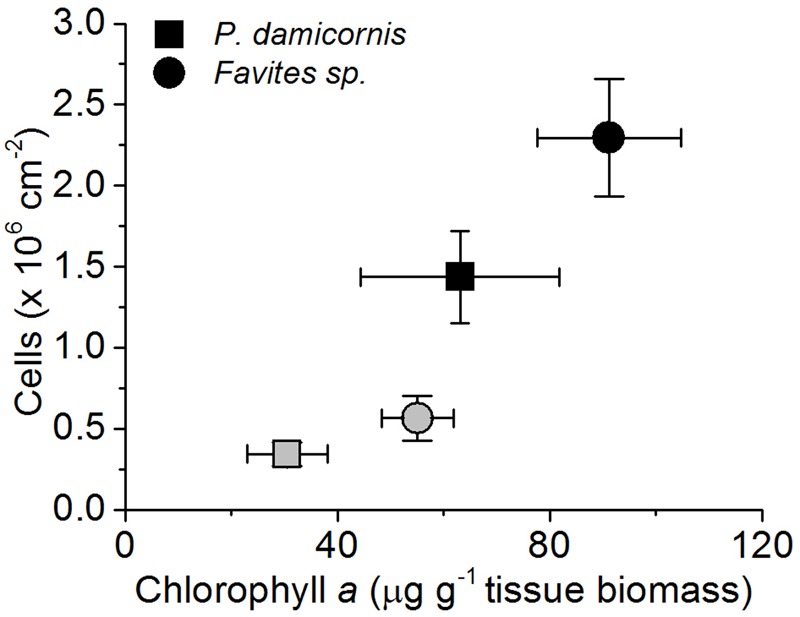
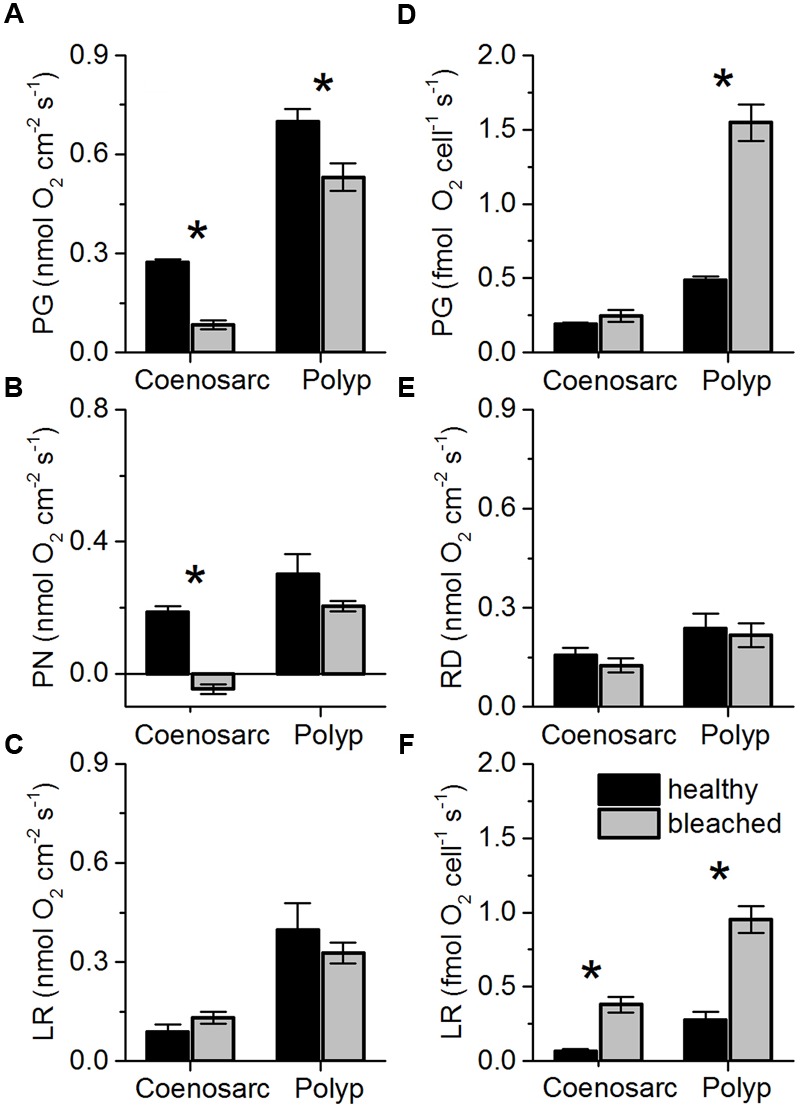
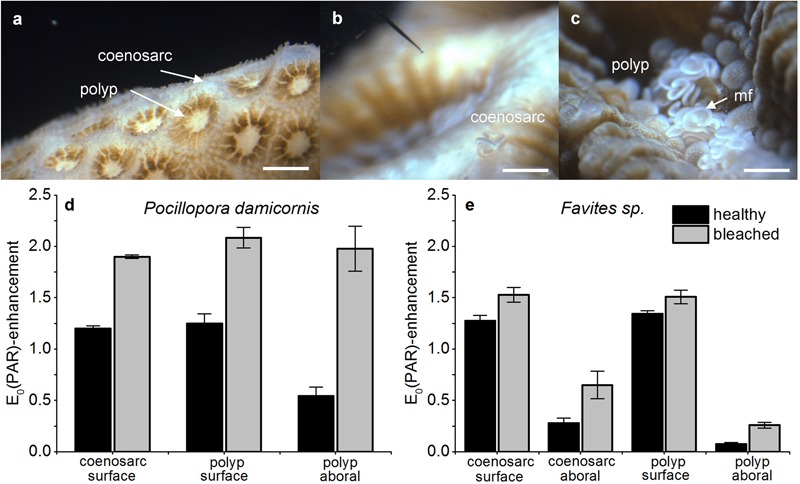
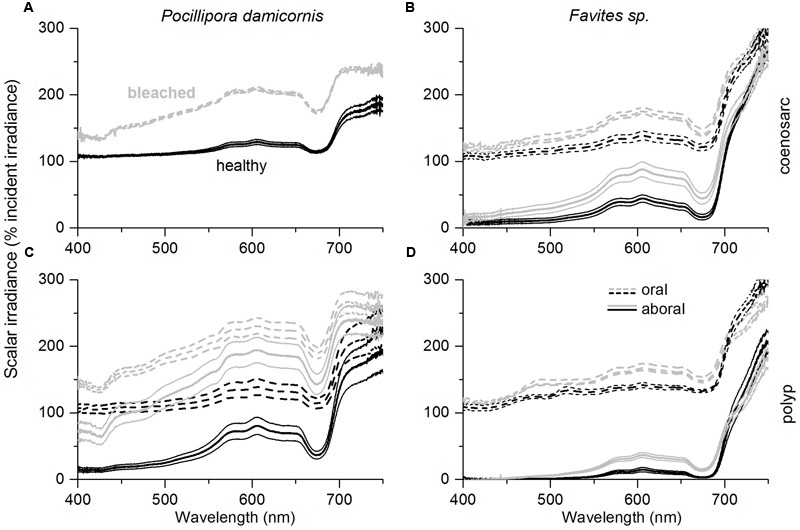
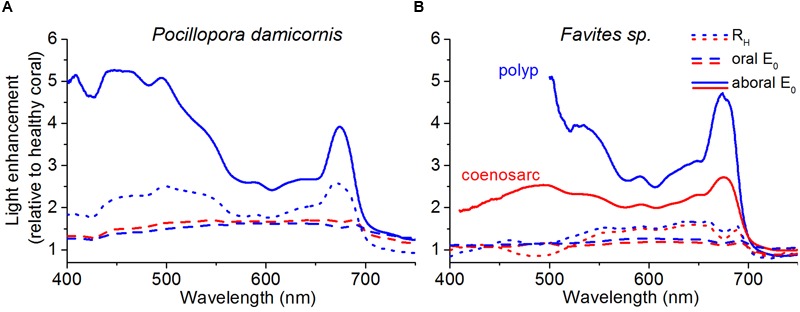
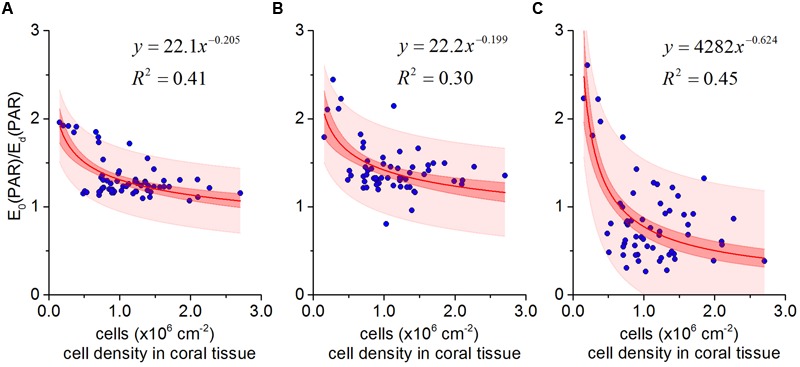
Climate change-related coral bleaching, i.e., the visible loss of zooxanthellae from the coral host, is increasing in frequency and extent and presents a major threat to coral reefs globally. Coral bleaching has been proposed to involve accelerating light stress of their microalgal endosymbionts via a positive feedback loop of photodamage, symbiont expulsion and excess light exposure. To test this hypothesis, we used light and O microsensors to characterize light exposure and photosynthesis of during a thermal stress experiment. We created tissue areas with different densities of cells in order to understand the optical properties and light microenvironment of corals during bleaching. Our results showed that in bleached corals, light exposure was up to fivefold enhanced relative to healthy corals, and the relationship between symbiont loss and light enhancement was well-described by a power-law function. Cell-specific rates of gross photosynthesis and light respiration were enhanced in bleached compared to healthy corals, while areal rates of net photosynthesis decreased. light exposure in sp. revealed the presence of low light microniches in bleached coral tissues, suggesting that light scattering in thick coral tissues can enable photoprotection of cryptic symbionts. Our study provides evidence for the acceleration of light exposure during coral bleaching but this optical feedback mechanism differs between coral hosts. Enhanced photosynthesis in relation to accelerating light exposure shows that coral microscale optics exerts a key role on coral photophysiology and the subsequent degree of radiative stress during coral bleaching.
与气候变化相关的珊瑚白化,即珊瑚宿主中虫黄藻明显丧失,其发生频率和范围正在增加,对全球珊瑚礁构成重大威胁。有人提出,珊瑚白化涉及通过光损伤、共生体排出和过度光照的正反馈回路加速其微藻内共生体的光胁迫。为了验证这一假设,我们在热应激实验中使用光和氧微传感器来表征光照和光合作用情况。我们创建了具有不同虫黄藻细胞密度的组织区域,以便了解珊瑚白化过程中的光学特性和光微环境。我们的结果表明,在白化的鹿角珊瑚中,光照相对于健康珊瑚提高了五倍,共生体丧失与光照增强之间的关系可以用幂律函数很好地描述。与健康珊瑚相比,白化鹿角珊瑚中虫黄藻细胞的总光合作用和光呼吸的细胞特异性速率有所提高,而净光合作用的面积速率则下降。鹿角珊瑚属物种的光照情况表明,白化珊瑚组织中存在低光微生境,这表明厚珊瑚组织中的光散射能够对隐蔽的共生体起到光保护作用。我们的研究为珊瑚白化期间光照加速提供了证据,但这种光学反馈机制在不同珊瑚宿主之间存在差异。与光照加速相关的光合作用增强表明,珊瑚的微观光学对珊瑚光生理学以及珊瑚白化期间随后的辐射胁迫程度起着关键作用。