An Dahee, Kim Hyojin, Ju Seulgi, Go Young Sam, Kim Hyun Uk, Suh Mi Chung
Department of Bioenergy Science and Technology, Chonnam National University Gwangju, South Korea.
Department of Bioindustry and Bioresource Engineering, Plant Engineering Research Institute, Sejong University Seoul, South Korea.
Front Plant Sci. 2017 Jan 24;8:34. doi: 10.3389/fpls.2017.00034. eCollection 2017.
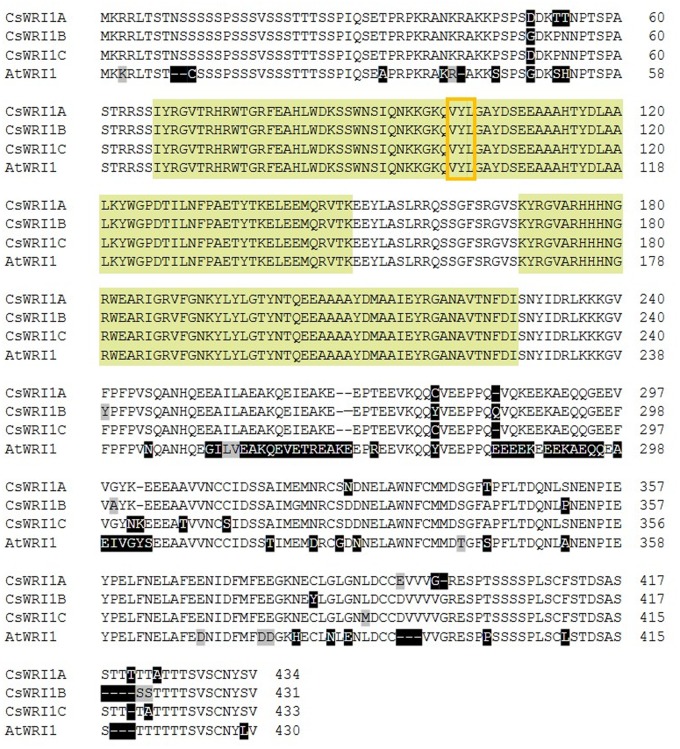
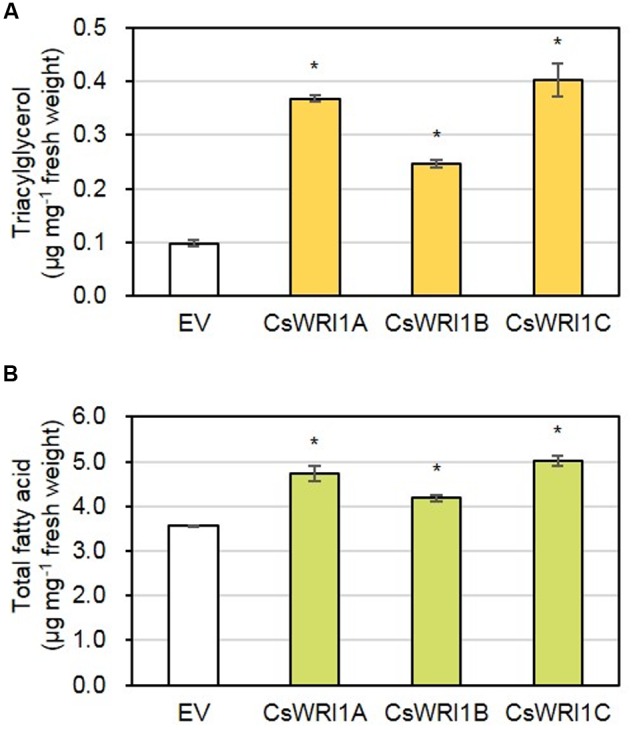
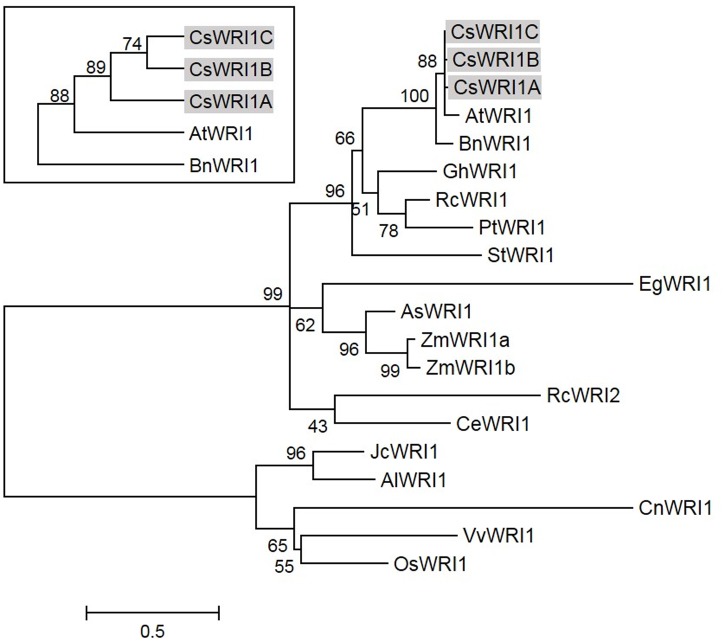
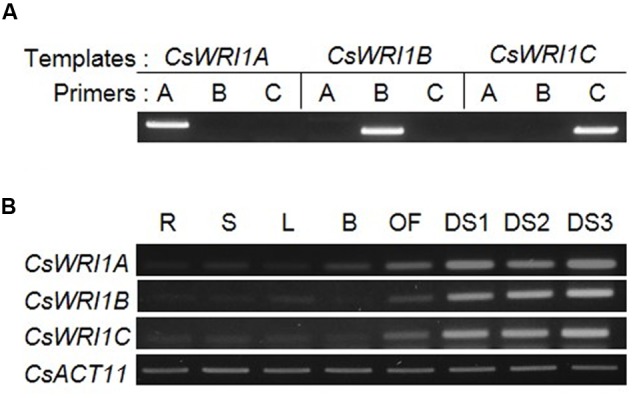
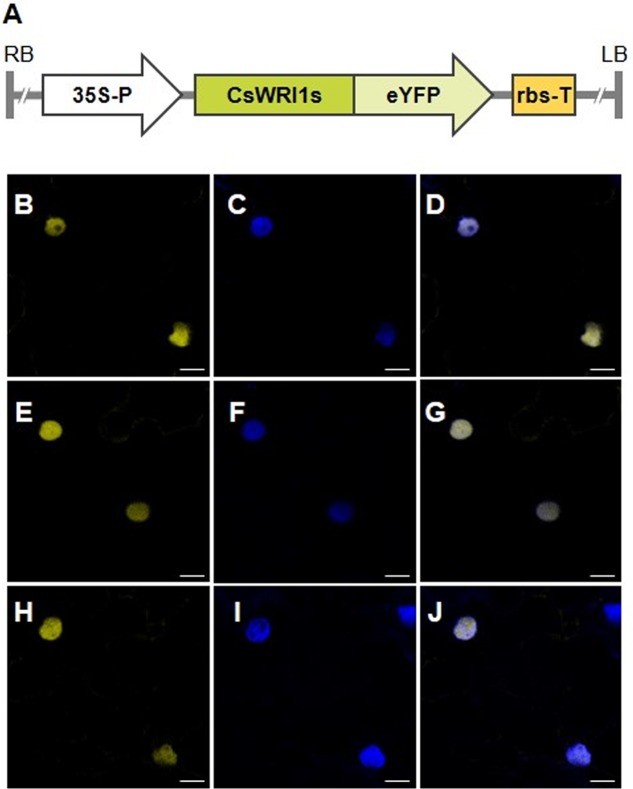
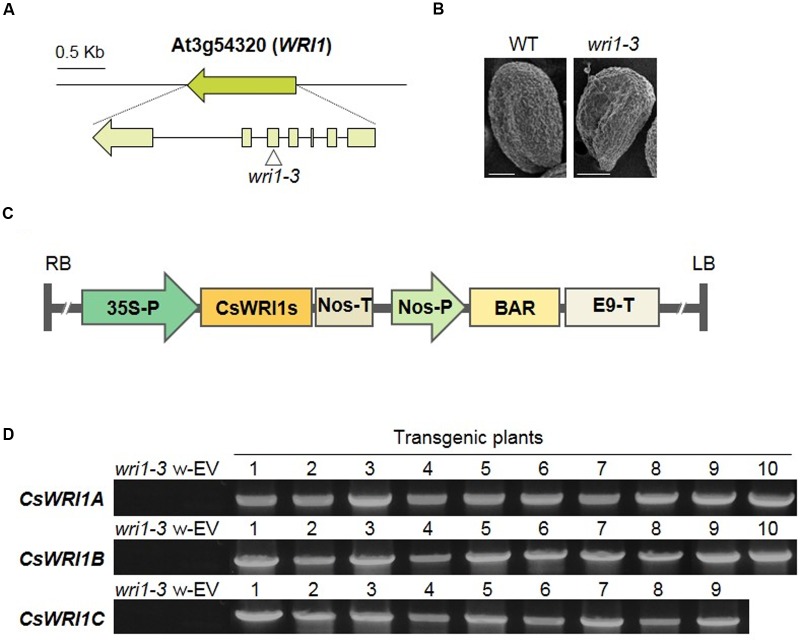
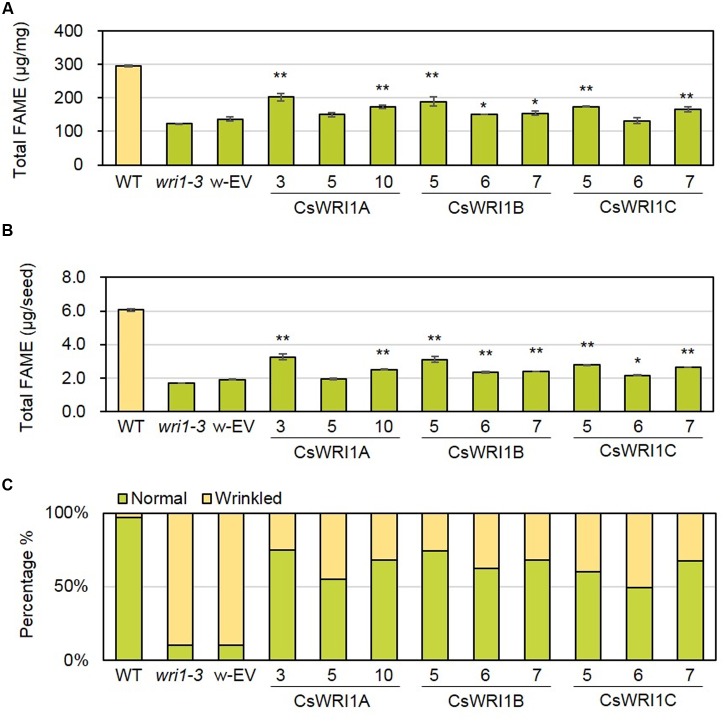
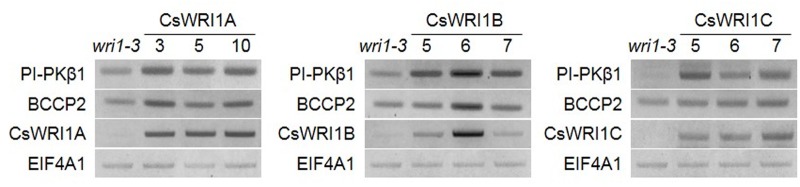
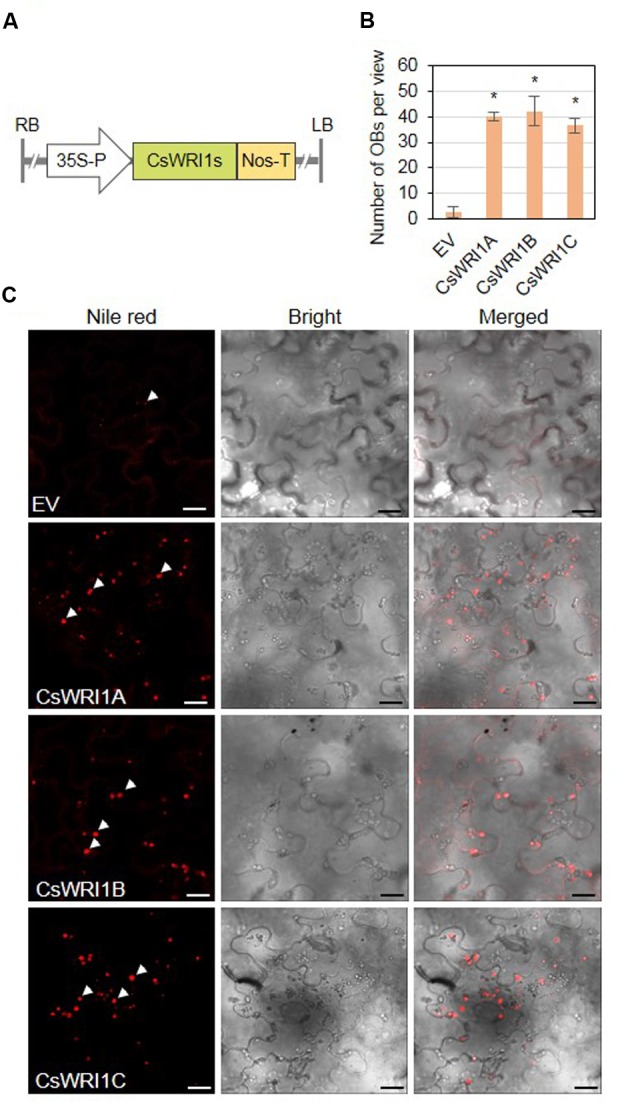
Triacylglycerol (TAG) is an energy-rich reserve in plant seeds that is composed of glycerol esters with three fatty acids. Since TAG can be used as a feedstock for the production of biofuels and bio-chemicals, producing TAGs in vegetative tissue is an alternative way of meeting the increasing demand for its usage. The () gene is a well-established key transcriptional regulator involved in the upregulation of fatty acid biosynthesis in developing seeds. WRI1s from and several other crops have been previously employed for increasing TAGs in seed and vegetative tissues. In the present study, we first identified three functional genes (, and ) from the oil crop and tested their ability to induce TAG synthesis in leaves. The amino acid sequences of exhibited more than 90% identity with those of . The transcript levels of the three genes showed higher expression levels in developing seeds than in vegetative and floral tissues. When the , or was introduced into loss-of-function mutant, the fatty acid content was restored to near wild-type levels and percentages of the wrinkled seeds were remarkably reduced in the transgenic lines relative to mutant line. In addition, the fluorescent signals of the enhanced yellow fluorescent protein (eYFP) fused to the genes were observed in the nuclei of leaf epidermal cells. Nile red staining indicated that the transient expression of , or caused an enhanced accumulation of oil bodies in leaves. The levels of TAGs was higher by approximately 2.5- to 4.0-fold in fresh leaves expressing genes than in the control leaves. These results suggest that the three WRI1s can be used as key transcriptional regulators to increase fatty acids in biomass.
三酰甘油(TAG)是植物种子中富含能量的储备物质,由甘油与三种脂肪酸形成的酯组成。由于TAG可用作生物燃料和生物化学品生产的原料,在营养组织中生产TAG是满足其日益增长的使用需求的一种替代方法。()基因是一个公认的关键转录调节因子,参与发育种子中脂肪酸生物合成的上调。来自和其他几种作物的WRI1s先前已被用于增加种子和营养组织中的TAG。在本研究中,我们首先从油料作物中鉴定出三个功能基因(、和),并测试了它们在叶片中诱导TAG合成的能力。的氨基酸序列与的氨基酸序列具有超过90%的同一性。这三个基因的转录水平在发育种子中的表达水平高于营养组织和花组织。当将、或导入功能丧失突变体时,转基因系中的脂肪酸含量恢复到接近野生型水平,且皱缩种子的百分比相对于突变体系显著降低。此外,在叶片表皮细胞核中观察到与基因融合的增强型黄色荧光蛋白(eYFP)的荧光信号。尼罗红染色表明,、或的瞬时表达导致叶片中油体的积累增加。在表达基因的新鲜叶片中,TAG的水平比对照叶片高约2.5至4.0倍。这些结果表明,这三个WRI1s可作为关键转录调节因子来增加生物量中的脂肪酸。