Xu Jie, Wang Qi, Freeling Micheal, Zhang Xuecai, Xu Yunbi, Mao Yan, Tang Xin, Wu Fengkai, Lan Hai, Cao Moju, Rong Tingzhao, Lisch Damon, Lu Yanli
Maize Research Institute, Sichuan Agricultural University, Wenjiang 611130, Sichuan, China.
Key Laboratory of Biology and Genetic Improvement of Maize in Southwest Region, Ministry of Agriculture, China.
Nucleic Acids Res. 2017 May 19;45(9):5126-5141. doi: 10.1093/nar/gkx085.
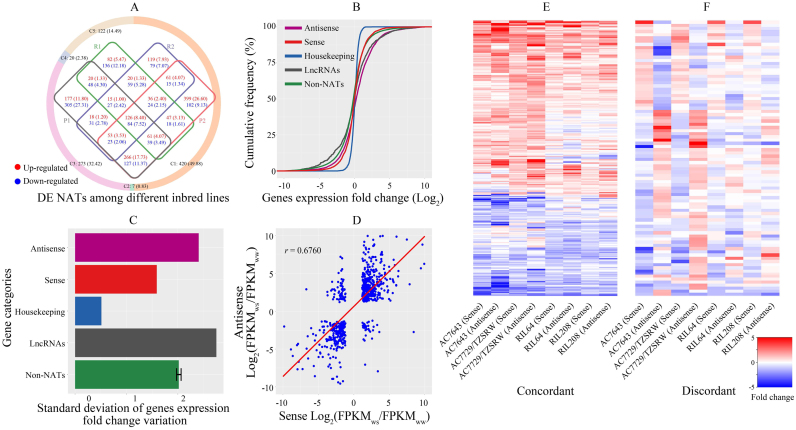
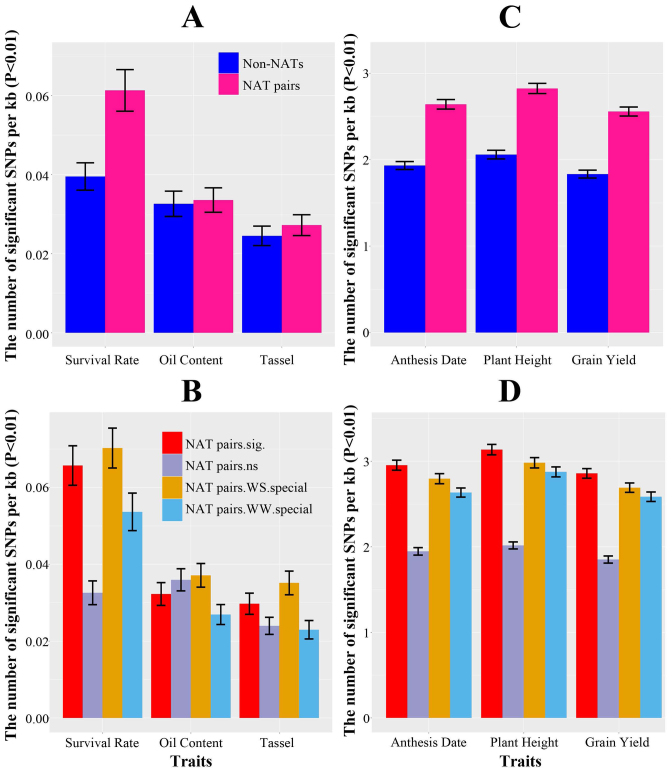
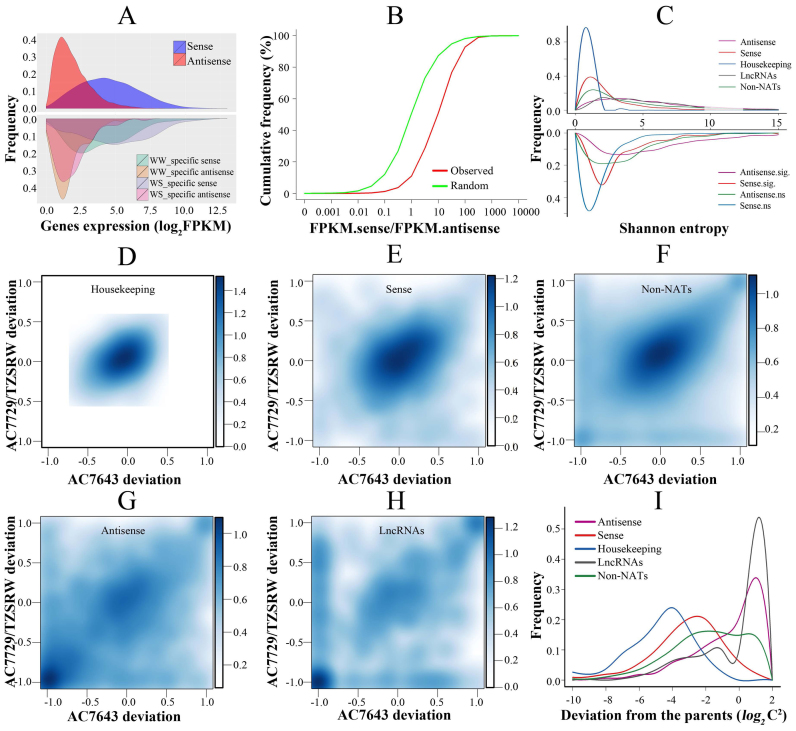
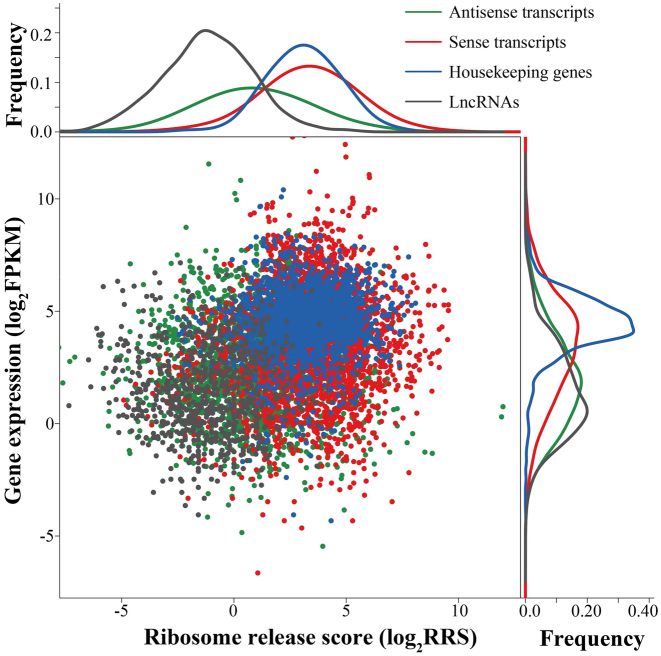
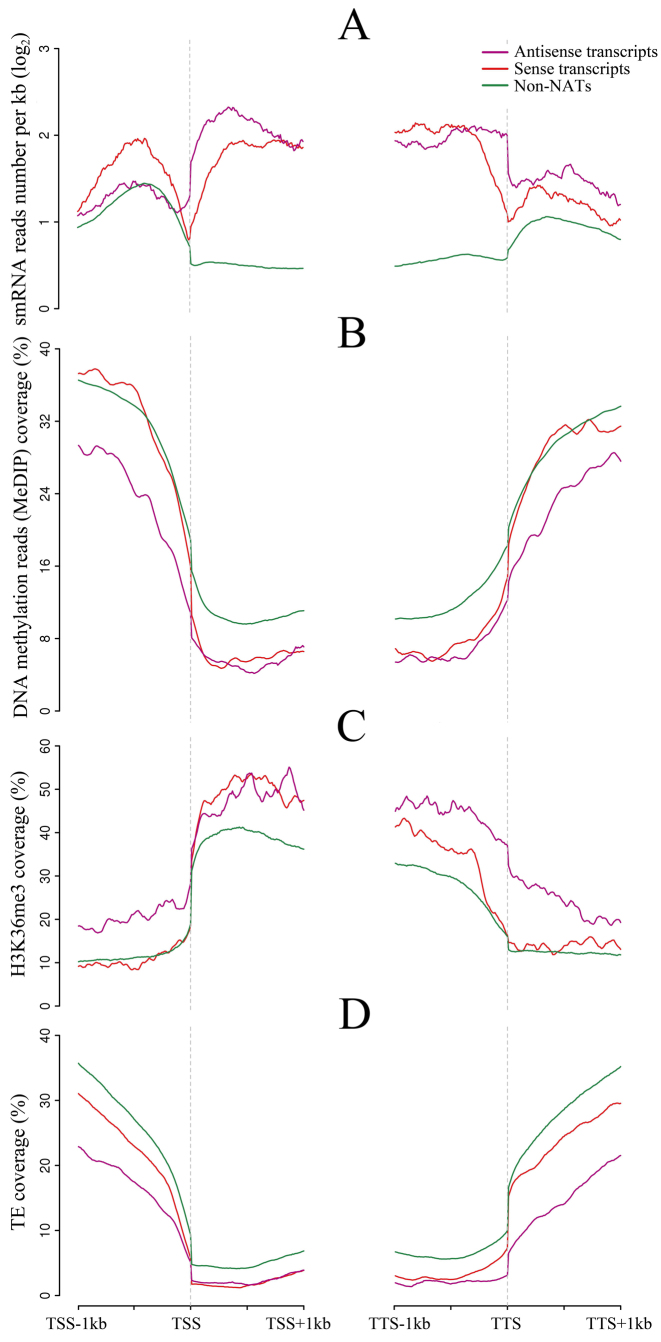
Natural antisense transcripts (NATs) are a prominent and complex class of regulatory RNAs. Using strand-specific RNA sequencing, we identified 1769 sense and antisense transcript pairs (NAT pairs) in two maize inbreds with different sensitivity to drought, as well as in two derivative recombination inbred lines (RILs). A significantly higher proportion of NATs relative to non-NATs are specifically expressed under water stress (WS). Surprisingly, expression of sense and antisense transcripts produced by NAT pairs is significantly correlated, particularly under WS. We found an unexpected large proportion of NATs with protein coding potential, as estimated by ribosome release scores. Small RNAs significantly accumulate within NAT pairs, with 21 nt smRNA particularly enriched in overlapping regions of these pairs of genes. The abundance of these smRNAs is significantly altered in the leafbladeless1 mutant, suggesting that these genes may be regulated by the tasiRNA pathway. Further, NATs are significantly hypomethylated and include fewer transposable element sequences relative to non-NAT genes. NAT gene regions also exhibit higher levels of H3K36me3, H3K9ac, and H3K4me3, but lower levels of H3K27me3, indicating that NAT gene pairs generally exhibit an open chromatin configuration. Finally, NAT pairs in 368 diverse maize inbreds and 19 segregating populations were specifically enriched for polymorphisms associated with drought tolerance. Taken together, the data highlight the potential impact of that small RNAs and histone modifications have in regulation of NAT expression, and the significance of NATs in response to WS.
天然反义转录本(NATs)是一类重要且复杂的调控RNA。利用链特异性RNA测序技术,我们在两个对干旱敏感程度不同的玉米自交系以及两个衍生重组自交系(RILs)中鉴定出了1769个正义与反义转录本对(NAT对)。相对于非NATs,在水分胁迫(WS)条件下特异性表达的NATs比例显著更高。令人惊讶的是,NAT对产生的正义和反义转录本的表达显著相关,尤其是在WS条件下。根据核糖体释放分数估计,我们发现有出乎意料的很大比例的NATs具有蛋白质编码潜力。小RNA在NAT对中显著积累,其中21 nt的小干扰RNA(smRNA)在这些基因对的重叠区域尤其富集。这些smRNA的丰度在无叶舌1突变体中显著改变,表明这些基因可能受反式作用小干扰RNA(tasiRNA)途径调控。此外,相对于非NAT基因,NATs显著低甲基化且包含的转座元件序列更少。NAT基因区域还表现出更高水平的组蛋白H3K36me3、H3K9ac和H3K4me3,但H3K27me3水平较低,这表明NAT基因对通常呈现开放的染色质构型。最后,在368个不同的玉米自交系和19个分离群体中的NAT对特别富集与耐旱性相关的多态性。综上所述,这些数据突出了小RNA和组蛋白修饰对NAT表达调控的潜在影响,以及NATs在响应WS中的重要性。