Wang Jun, Zhang Yu, Xu Qiping, Qiu Jinhua, Zheng Honghua, Ye Xiang, Xue Yuhua, Yin Yongmei, Zhang Zhou, Liu Ying, Hao Yanling, Wei Qiang, Wang Wei, Mori Kazuyasu, Izumo Shuji, Kubota Ryuji, Shao Yiming, Xing Hui Qin
Fujian Provincial Key Laboratory of Neurodegenerative Disease and Aging Research, Institute of Neuroscience, Department of Pathology, Basic Medicine, Medical College, Xiamen University, Xiamen, Fujian 361102, China.
School of Pharmaceutical Sciences at Xiamen University, Xiamen, Fujian 361102, China.
Oncotarget. 2017 Mar 14;8(11):18082-18094. doi: 10.18632/oncotarget.14993.
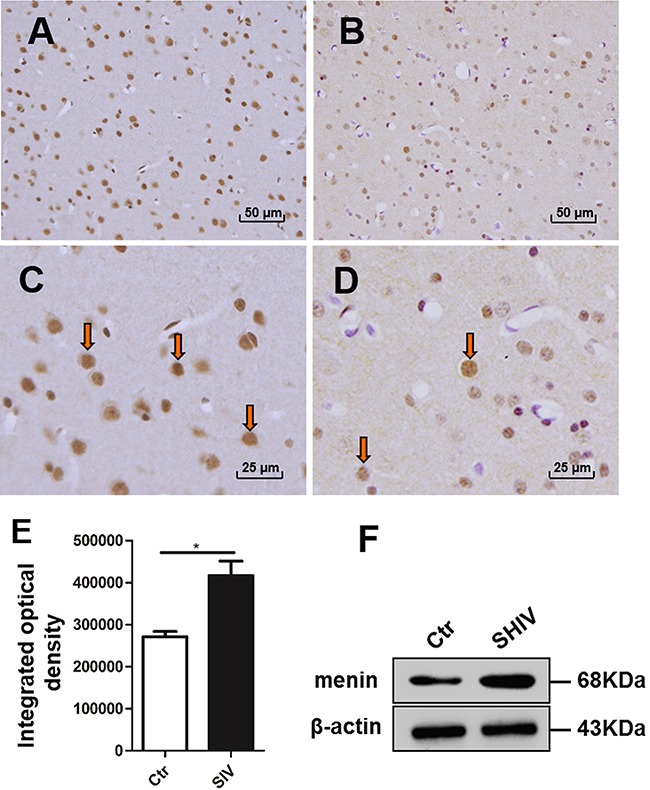
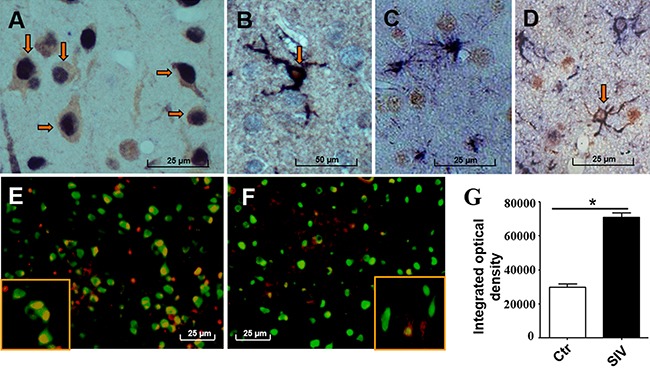
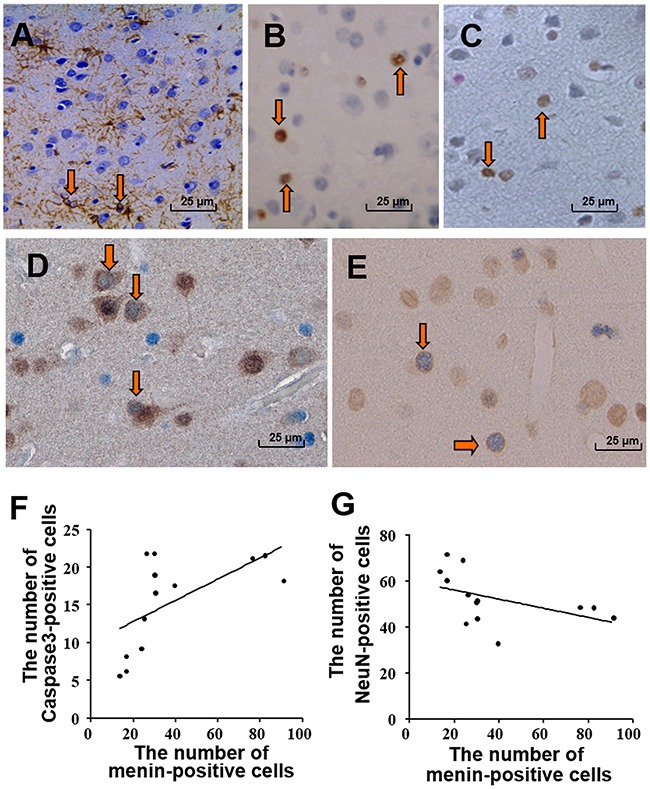
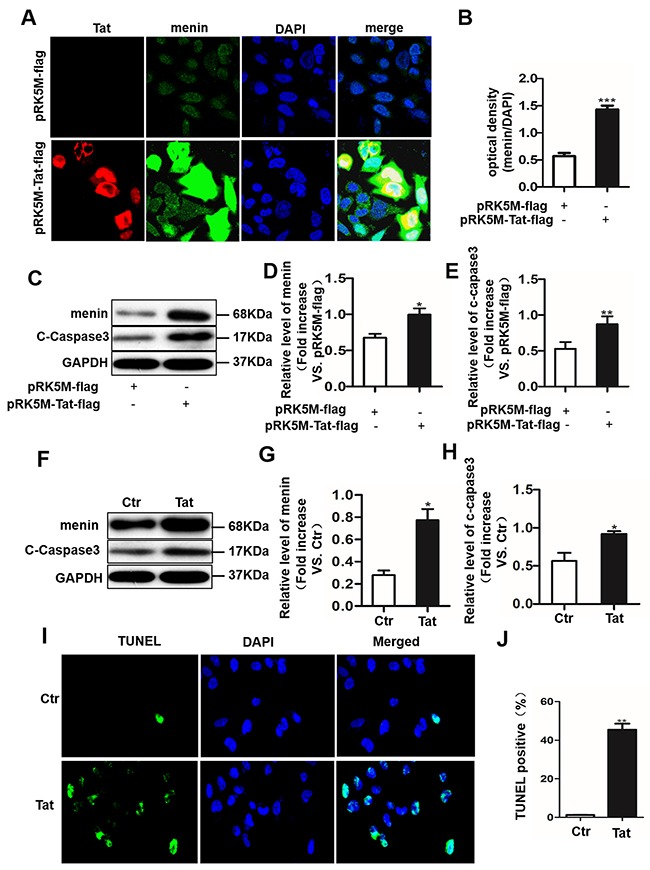
The molecular mechanisms involved in human immunodeficiency virus (HIV)-associated neurocognitive disorder (HAND) remain poorly understood. It has been recently reported that HIV-1 Tat transactivation requires menin, suggesting that menin may be involved in HAND pathogenesis. But the role of menin is not clear. Here, we found that protein level of menin was increased in simian-human immunodeficiency chimeric virus (SHIV)-SF162.P4 and simian immunodeficiency virus (SIV) sm543-3-infected rhesus macaques compared with the controls by immunohistochemistry (IHC) and western blot. Menin mainly expressed in the frontal cortex neurons of the brain, more importantly, the number of menin-staining cells was positively correlated with cleaved-caspase-3-positive cells while it was negatively correlated with a neuron-specific nuclear protein NeuN-positive cells, suggesting that expression of menin may induce neuronal apoptosis. Further studies showed that menin level was significantly increased during Tat-induced apoptosis, while downregulation of menin by pll3.7-MEN1-shRNA attenuated the Tat-induced cleavage of caspase-3 and caspase-8 in SY5Y cells and primary neuron cultures. Together, our findings reveal a pro-apoptotic role of menin in the brains of the SIV-infected macaques and the cultured neurons, indicating that targeting menin may be potential to block the HIV-1 Tat induced neuronal damage in HAND.
人类免疫缺陷病毒(HIV)相关神经认知障碍(HAND)所涉及的分子机制仍知之甚少。最近有报道称,HIV-1反式激活因子Tat的反式激活需要menin,这表明menin可能参与HAND的发病机制。但menin的作用尚不清楚。在此,我们通过免疫组织化学(IHC)和蛋白质印迹法发现,与对照组相比,猿猴-人类免疫缺陷嵌合病毒(SHIV)-SF162.P4和猿猴免疫缺陷病毒(SIV)sm543-3感染的恒河猴中menin的蛋白水平升高。Menin主要在大脑额叶皮质神经元中表达,更重要的是,menin染色细胞的数量与裂解的半胱天冬酶-3阳性细胞呈正相关,而与神经元特异性核蛋白NeuN阳性细胞呈负相关,这表明menin的表达可能诱导神经元凋亡。进一步研究表明,在Tat诱导的凋亡过程中menin水平显著升高,而通过pll3.7-MEN1-shRNA下调menin可减弱Tat诱导的SY5Y细胞和原代神经元培养物中半胱天冬酶-3和半胱天冬酶-8的裂解。总之,我们的研究结果揭示了menin在SIV感染的猕猴大脑和培养的神经元中的促凋亡作用,表明靶向menin可能有潜力阻断HIV-1 Tat诱导的HAND中的神经元损伤。