Liu Biying, Zhang Haili, Tan Xiao, Yang Daqian, Lv Zhanjun, Jiang Huijie, Lu Jingjing, Baiyun Ruiqi, Zhang Zhigang
College of Veterinary Medicine, Northeast Agricultural University, Harbin 150030, China.
Oncotarget. 2017 Jun 27;8(26):42226-42237. doi: 10.18632/oncotarget.15033.
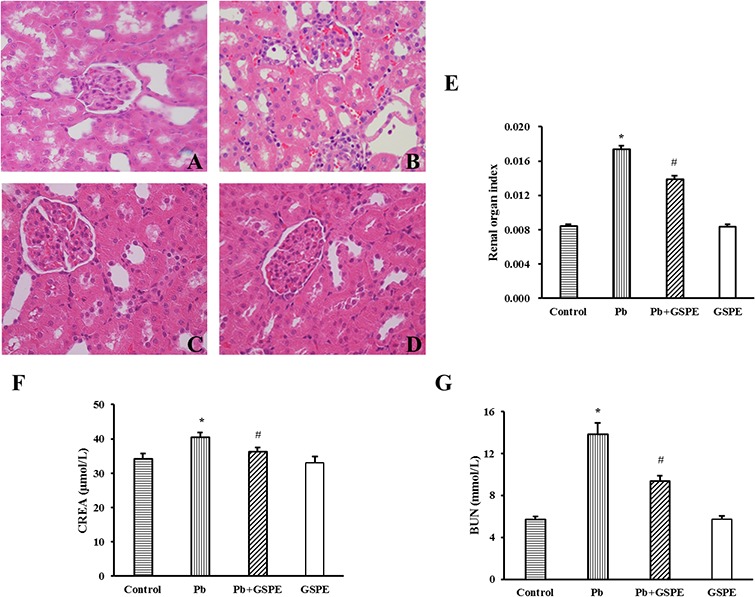
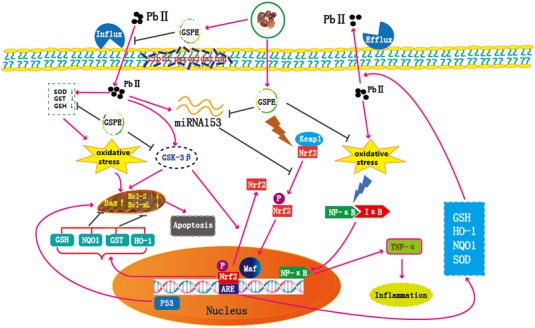
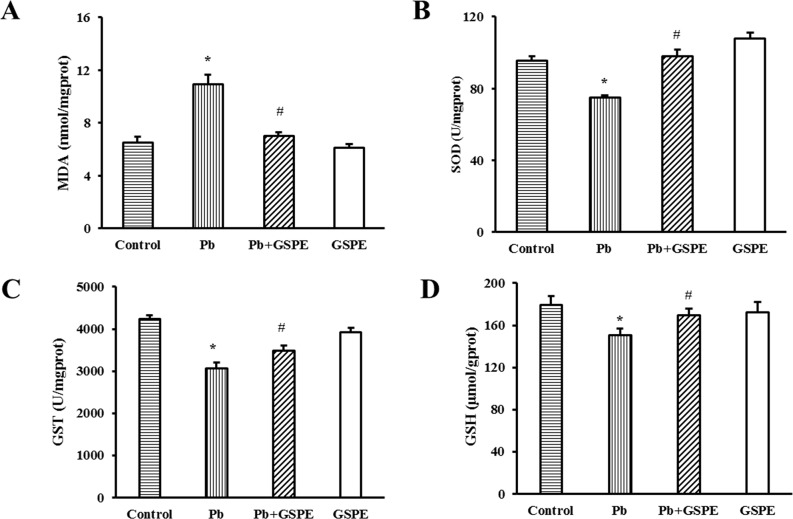
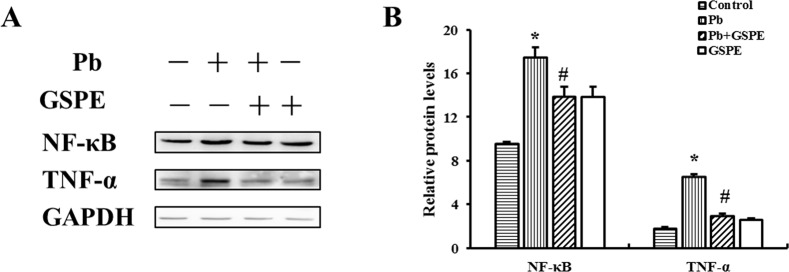
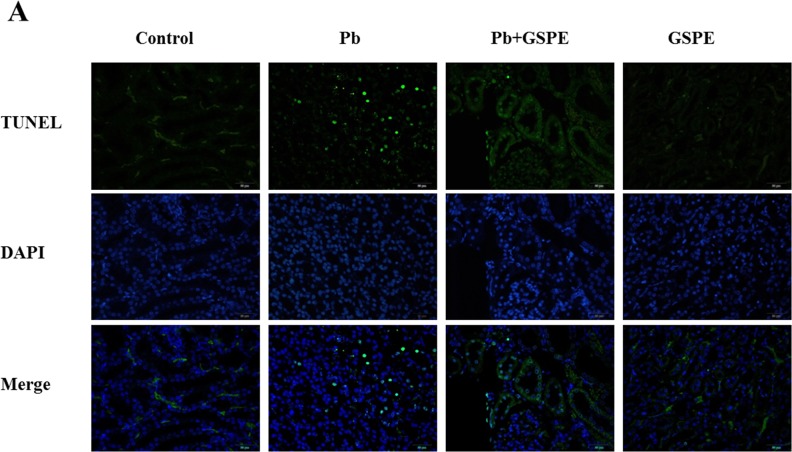
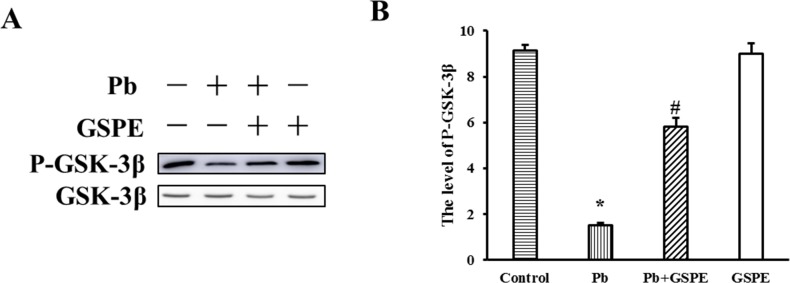
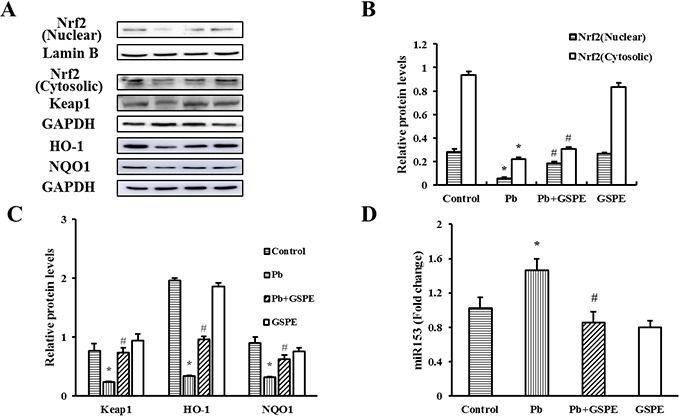
Lead (Pb) is a global environmental health hazard that leads to nephrotoxicity. However, the effective treatment of Pb-induced nephrotoxicity remains elusive. Grape seed procyanidin extract (GSPE) has beneficial properties for multiple biological functions. Therefore, the present study investigated whether GSPE reduced Pb-induced nephrotoxicity as well as the protective mechanism of GSPE in a well-established 35-day Pb induced nephrotoxicity rat model. The results showed that GSPE normalized Pb-induced oxidative stress, histological damage, inflammatory, apoptosis, and changes of miR153 and glycogen synthase kinase 3β (GSK-3β) levels in rat kidney. Moreover, GSPE enhanced the induction of phase II detoxifying enzymes (heme oxygenase-1 and NAD(P)H quinone oxidoreductase 1) by increasing nuclear factor-erythroid-2-related factor 2 (Nrf2) expression. This study identifies for the first time that Pb-induced oxidative stress in rat kidney is attenuated by GSPE treatment via activating Nrf2 signaling pathway and suppressing miR153 and GSK-3β. Nrf2 signaling provides a new therapeutic target for renal injury induced by Pb, and GSPE could be a potential natural agent to protect against Pb-induced nephrotoxicity.
铅(Pb)是一种全球性的环境健康危害因素,可导致肾毒性。然而,铅诱导的肾毒性的有效治疗方法仍不明确。葡萄籽原花青素提取物(GSPE)具有多种有益的生物学功能特性。因此,本研究在一个成熟的35天铅诱导肾毒性大鼠模型中,探究了GSPE是否能减轻铅诱导的肾毒性以及其保护机制。结果显示,GSPE使铅诱导的大鼠肾脏氧化应激、组织学损伤、炎症、细胞凋亡以及miR153和糖原合酶激酶3β(GSK-3β)水平的变化恢复正常。此外,GSPE通过增加核因子红细胞2相关因子2(Nrf2)的表达,增强了II期解毒酶(血红素加氧酶-1和NAD(P)H醌氧化还原酶1)的诱导。本研究首次证实,通过激活Nrf2信号通路并抑制miR153和GSK-3β,GSPE治疗可减轻大鼠肾脏中铅诱导的氧化应激。Nrf2信号通路为铅诱导的肾损伤提供了一个新的治疗靶点,并且GSPE可能是一种预防铅诱导肾毒性的潜在天然药物。