Webster Peter J, Littlejohns Anna T, Gaunt Hannah J, Young Richard S, Rode Baptiste, Ritchie Judith E, Stead Lucy F, Harrison Sally, Droop Alastair, Martin Heather L, Tomlinson Darren C, Hyman Adam J, Appleby Hollie L, Boxall Sally, Bruns Alexander F, Li Jing, Prasad Raj K, Lodge J Peter A, Burke Dermot A, Beech David J
School of Medicine, University of Leeds, Leeds LS2 9JT, UK.
MRC Medical Bioinformatics Centre, University of Leeds, Leeds LS2 9NL, UK.
Oncotarget. 2017 Jun 27;8(26):42288-42299. doi: 10.18632/oncotarget.15039.
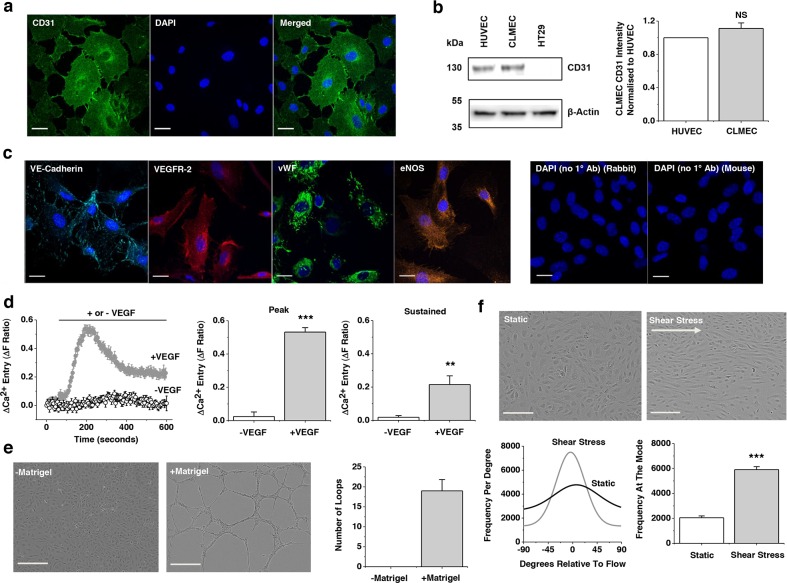
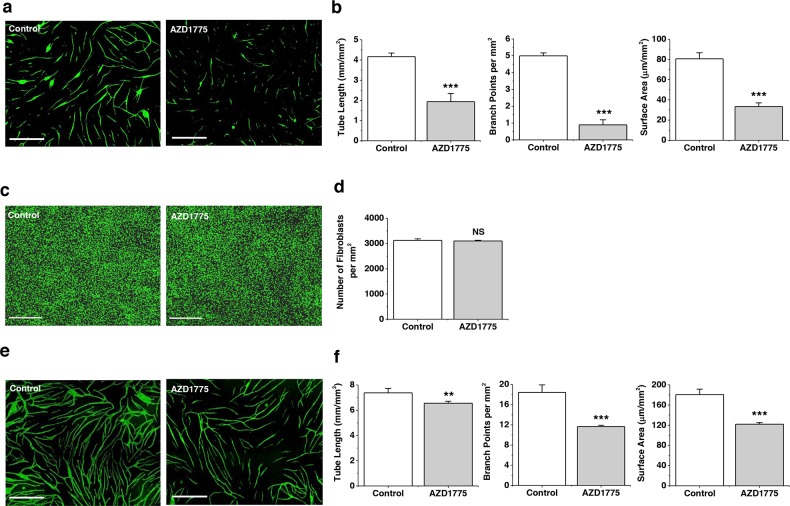
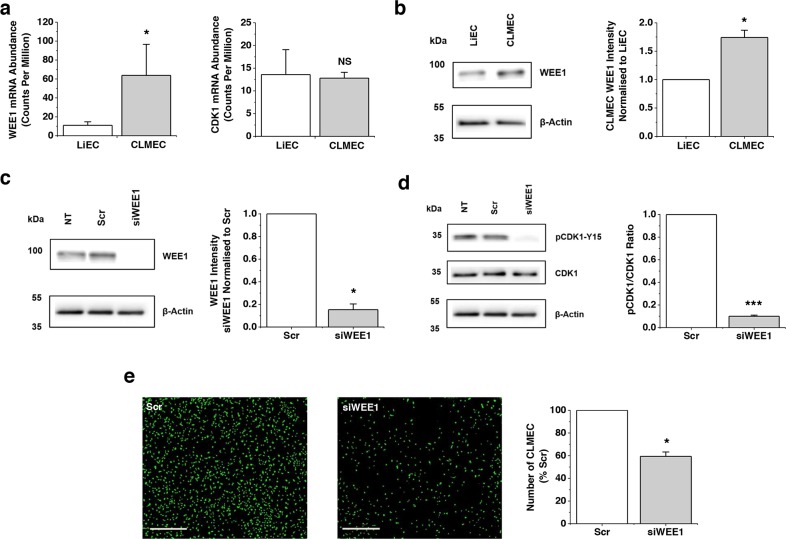
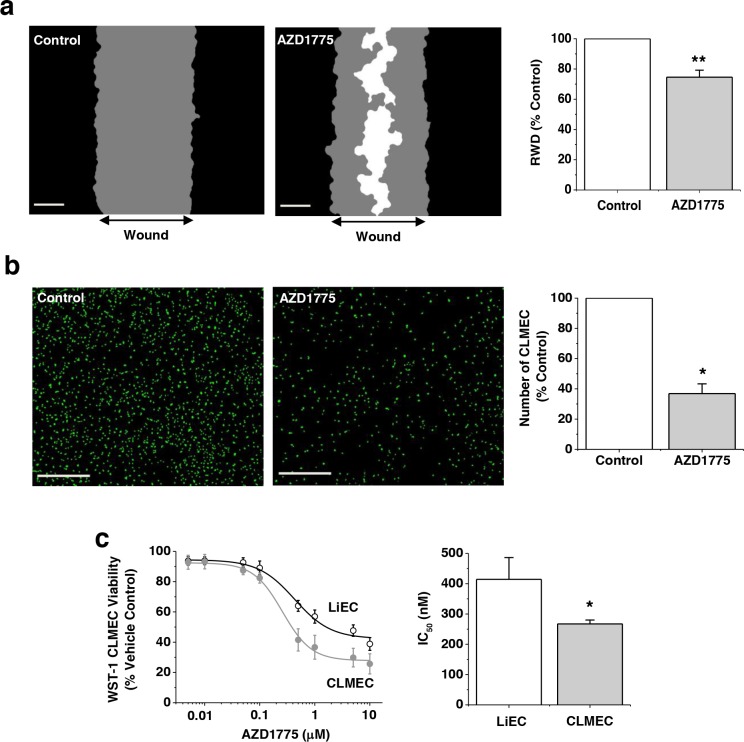
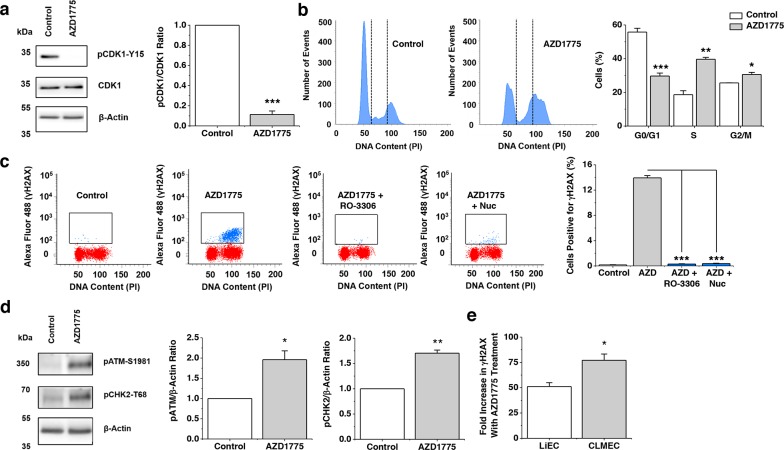
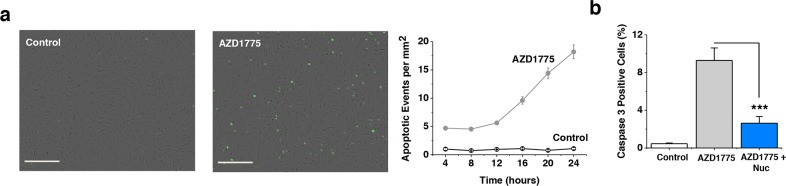
Surgical resection of colorectal cancer liver metastases (CLM) can be curative, yet 80% of patients are unsuitable for this treatment. As angiogenesis is a determinant of CLM progression we isolated endothelial cells from CLM and sought a mechanism which is upregulated, essential for angiogenic properties of these cells and relevant to emerging therapeutic options. Matched CLM endothelial cells (CLMECs) and endothelial cells of normal adjacent liver (LiECs) were superficially similar but transcriptome sequencing revealed molecular differences, one of which was unexpected upregulation and functional significance of the checkpoint kinase WEE1. Western blotting confirmed that WEE1 protein was upregulated in CLMECs. Knockdown of WEE1 by targeted short interfering RNA or the WEE1 inhibitor AZD1775 suppressed proliferation and migration of CLMECs. Investigation of the underlying mechanism suggested induction of double-stranded DNA breaks due to nucleotide shortage which then led to caspase 3-dependent apoptosis. The implication for CLMEC tube formation was striking with AZD1775 inhibiting tube branch points by 83%. WEE1 inhibitors might therefore be a therapeutic option for CLM and could be considered more broadly as anti-angiogenic agents in cancer treatment.
结直肠癌肝转移(CLM)的手术切除可能具有治愈性,但80%的患者不适合这种治疗。由于血管生成是CLM进展的一个决定因素,我们从CLM中分离出内皮细胞,并寻找一种上调的机制,该机制对这些细胞的血管生成特性至关重要且与新兴治疗选择相关。匹配的CLM内皮细胞(CLMECs)和正常相邻肝脏的内皮细胞(LiECs)表面相似,但转录组测序揭示了分子差异,其中之一是检查点激酶WEE1意外上调及其功能意义。蛋白质印迹法证实WEE1蛋白在CLMECs中上调。通过靶向短发夹RNA或WEE1抑制剂AZD1775敲低WEE1可抑制CLMECs的增殖和迁移。对潜在机制的研究表明,由于核苷酸短缺导致双链DNA断裂,进而导致半胱天冬酶3依赖性凋亡。AZD1775对CLMEC管形成的影响显著,抑制管分支点达83%。因此,WEE1抑制剂可能是CLM的一种治疗选择,并且在癌症治疗中作为抗血管生成药物可被更广泛地考虑。