Tapia Mónica, Dominguez Ana, Zhang Wei, Del Puerto Ana, Ciorraga María, Benitez María José, Guaza Carmen, Garrido Juan José
Instituto Cajal, Consejo Superior de Investigaciones Científicas (CSIC) Madrid, Spain.
Instituto Cajal, Consejo Superior de Investigaciones Científicas (CSIC)Madrid, Spain; Department of Quimica Fisica Aplicada, Universidad Autónoma de MadridMadrid, Spain.
Front Cell Neurosci. 2017 Jan 25;11:5. doi: 10.3389/fncel.2017.00005. eCollection 2017.
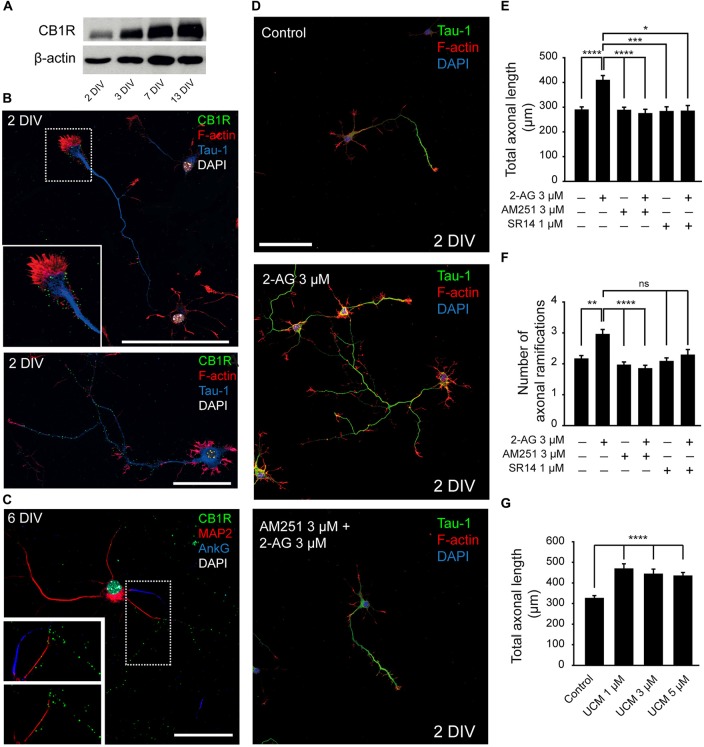
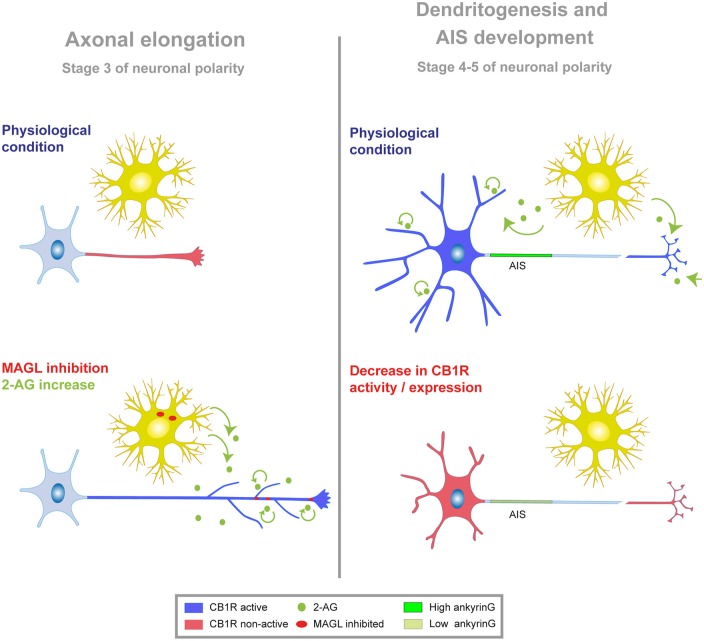
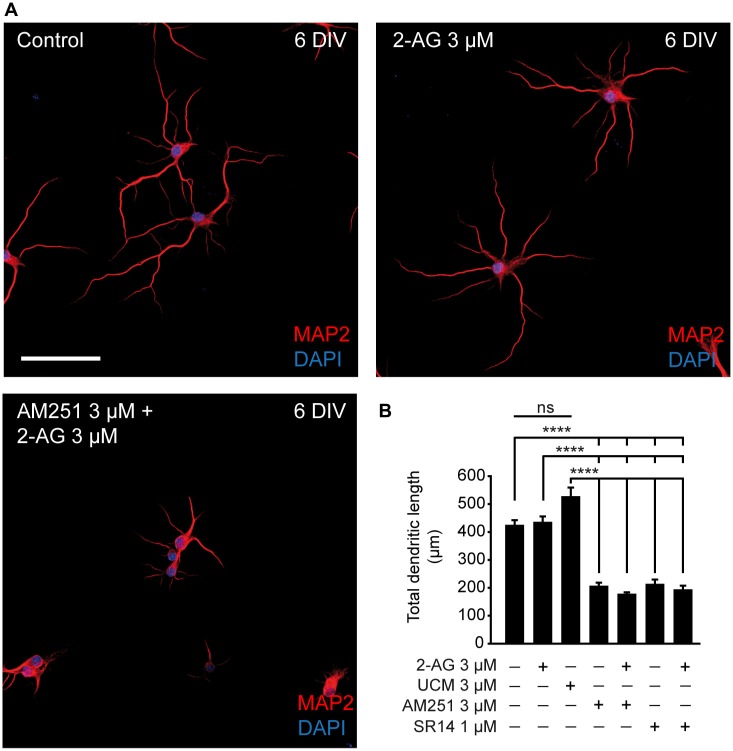
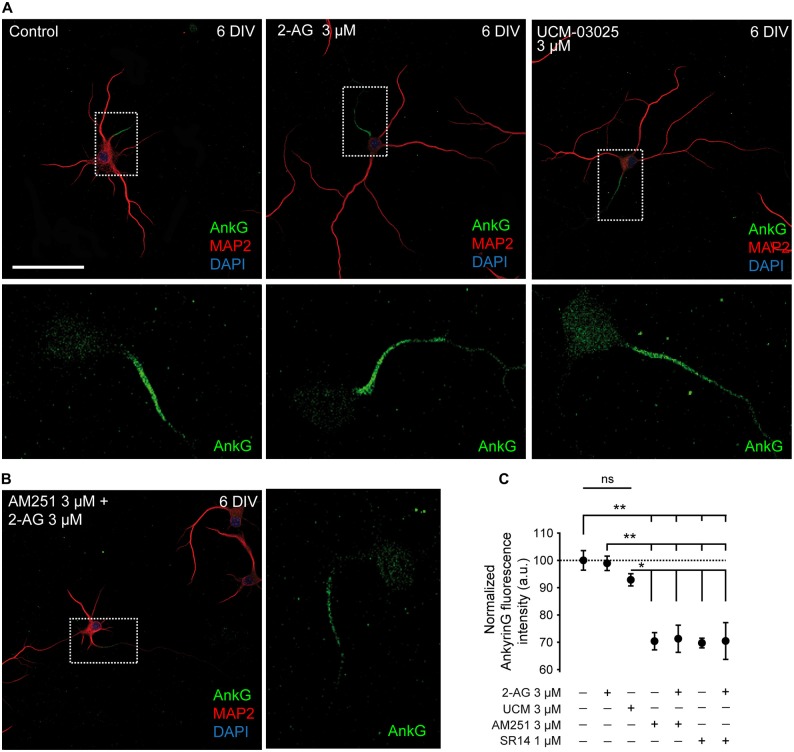
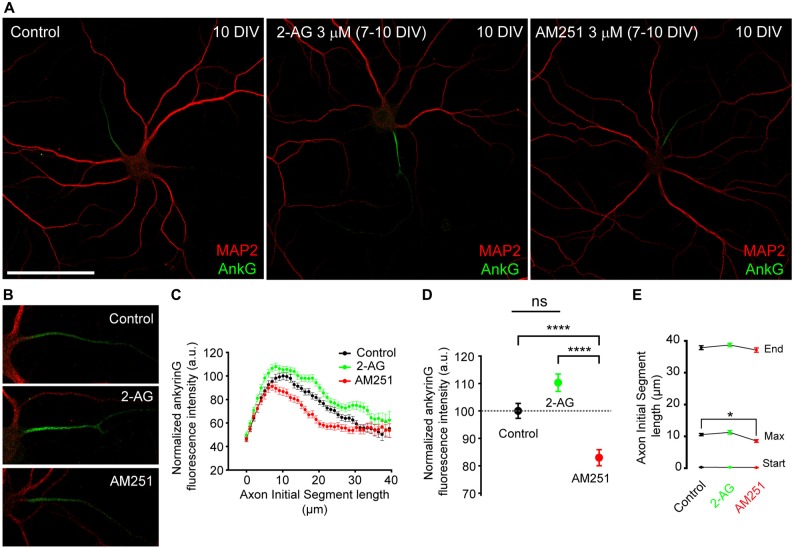
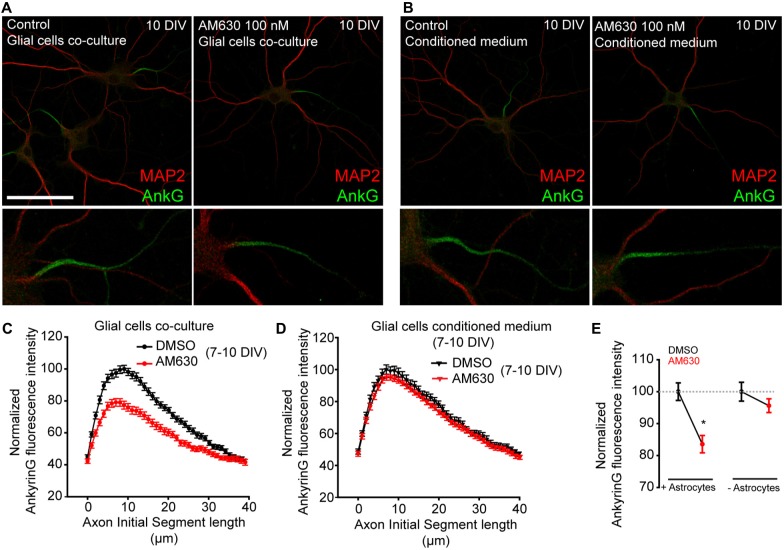
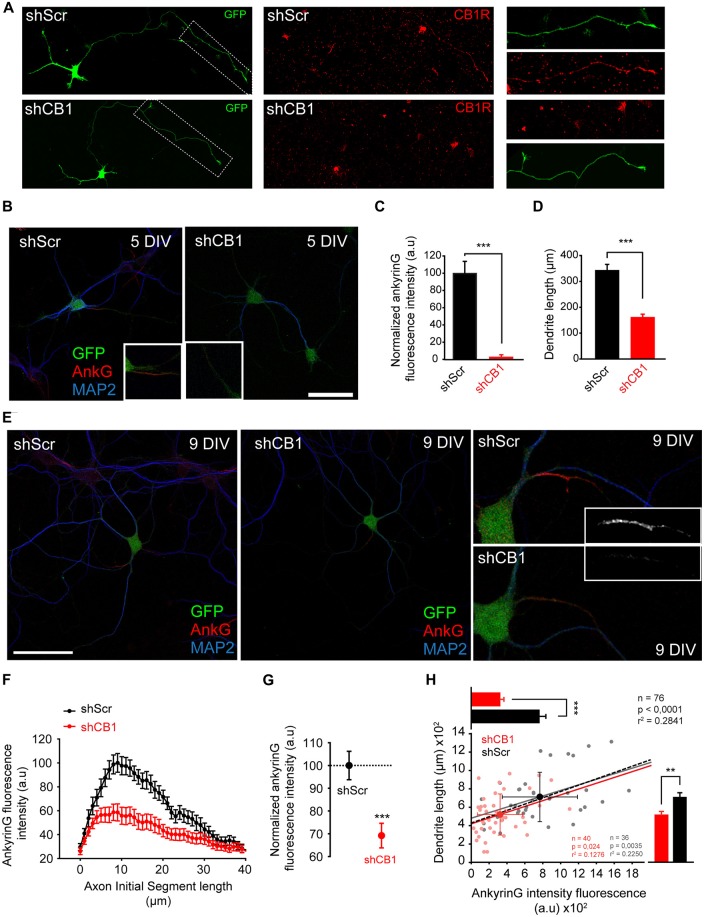
Neuronal polarization underlies the ability of neurons to integrate and transmit information. This process begins early in development with axon outgrowth, followed by dendritic growth and subsequent maturation. In between these two steps, the axon initial segment (AIS), a subcellular domain crucial for generating action potentials (APs) and maintaining the morphological and functional polarization, starts to develop. However, the cellular/molecular mechanisms and receptors involved in AIS initial development and maturation are mostly unknown. In this study, we have focused on the role of the type-1 cannabinoid receptor (CB1R), a highly abundant G-protein coupled receptor (GPCR) in the nervous system largely involved in different phases of neuronal development and differentiation. Although CB1R activity modulation has been related to changes in axons or dendrites, its possible role as a modulator of AIS development has not been yet explored. Here we analyzed the potential role of CB1R on neuronal morphology and AIS development using pharmacological and RNA interference approaches in cultured hippocampal neurons. CB1R inhibition, at a very early developmental stage, has no effect on axonal growth, yet CB1R activation can promote it. By contrast, subsequent dendritic growth is impaired by CB1R inhibition, which also reduces ankyrinG density at the AIS. Moreover, our data show a significant correlation between early dendritic growth and ankyrinG density. However, CB1R inhibition in later developmental stages after dendrites are formed only reduces ankyrinG accumulation at the AIS. In conclusion, our data suggest that neuronal CB1R basal activity plays a role in initial development of dendrites and indirectly in AIS proteins accumulation. Based on the lack of CB1R expression at the AIS, we hypothesize that CB1R mediated modulation of dendritic arbor size during early development indirectly determines the accumulation of ankyrinG and AIS development. Further studies will be necessary to determine which CB1R-dependent mechanisms can coordinate these two domains, and what may be the impact of these early developmental changes once neurons mature and are embedded in a functional brain network.
神经元极化是神经元整合和传递信息能力的基础。这个过程在发育早期就随着轴突生长开始,随后是树突生长和后续成熟。在这两个步骤之间,轴突起始段(AIS)开始发育,它是一个对于产生动作电位(APs)以及维持形态和功能极化至关重要的亚细胞结构域。然而,参与AIS初始发育和成熟的细胞/分子机制以及受体大多仍不清楚。在本研究中,我们聚焦于1型大麻素受体(CB1R)的作用,它是神经系统中一种高度丰富的G蛋白偶联受体(GPCR),在很大程度上参与神经元发育和分化的不同阶段。尽管CB1R活性调节已与轴突或树突的变化相关,但其作为AIS发育调节剂的潜在作用尚未得到探索。在这里,我们使用药理学和RNA干扰方法在培养的海马神经元中分析了CB1R对神经元形态和AIS发育的潜在作用。在发育的非常早期阶段抑制CB1R对轴突生长没有影响,但激活CB1R可以促进轴突生长。相比之下,CB1R抑制会损害随后的树突生长,这也会降低AIS处锚蛋白G的密度。此外,我们的数据显示早期树突生长与锚蛋白G密度之间存在显著相关性。然而,在树突形成后的发育后期抑制CB1R只会减少AIS处锚蛋白G的积累。总之,我们的数据表明神经元CB1R基础活性在树突的初始发育中起作用,并间接影响AIS蛋白的积累。基于AIS处缺乏CB1R表达,我们推测CB1R在早期发育过程中介导的树突分支大小调节间接决定了锚蛋白G的积累和AIS发育。需要进一步研究来确定哪些CB1R依赖性机制可以协调这两个结构域,以及一旦神经元成熟并嵌入功能性脑网络中,这些早期发育变化可能产生什么影响。