Sakamachi Yosuke, Morioka Sho, Mihaly September R, Takaesu Giichi, Foley Julie F, Fessler Michael B, Ninomiya-Tsuji Jun
Department of Biological Sciences, North Carolina State University, Raleigh, NC 27695-7633, USA.
Cellular and Molecular Pathology Branch, National Institute of Environmental Health Sciences, National Institutes of Health, Research Triangle Park, NC 27709, USA.
Cell Death Dis. 2017 Feb 9;8(2):e2598. doi: 10.1038/cddis.2017.23.
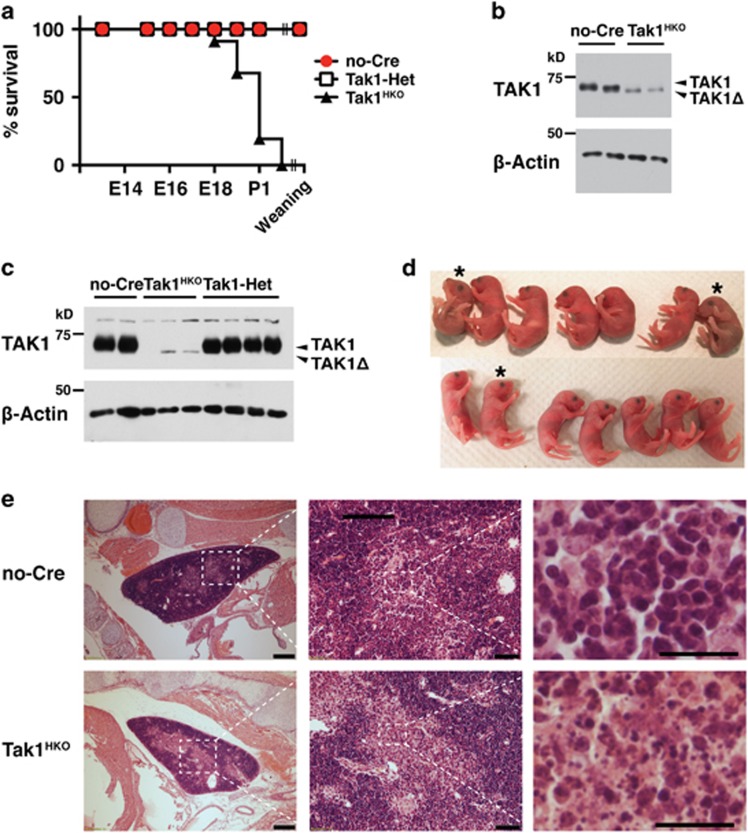
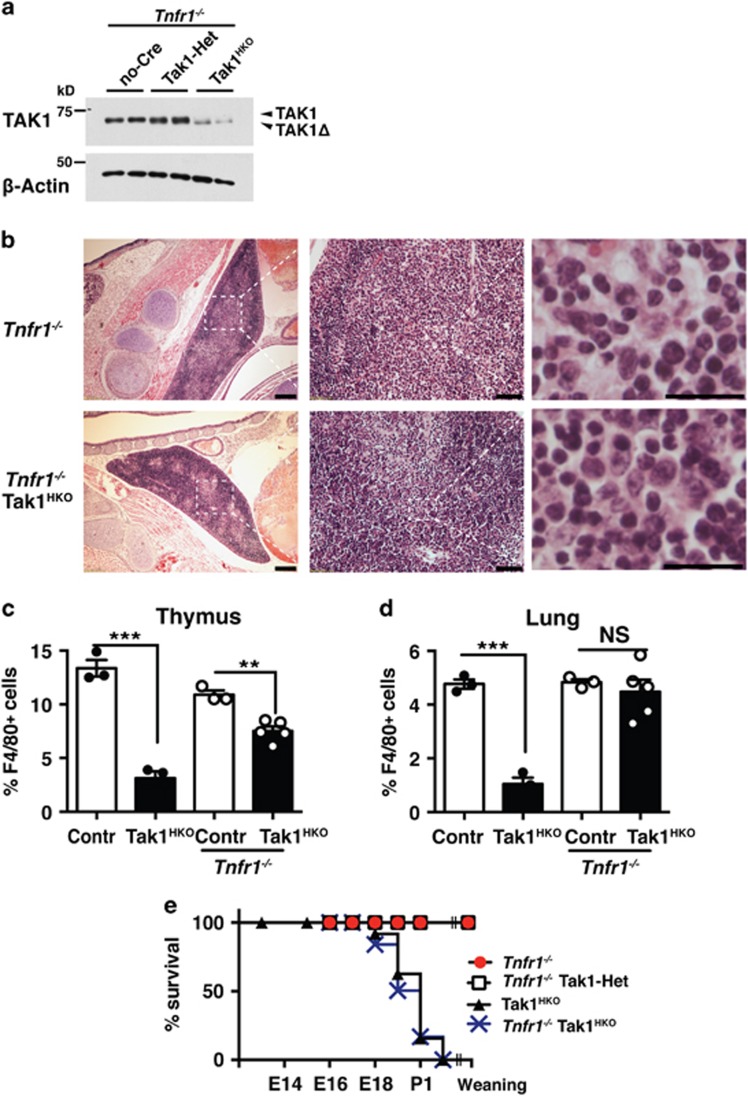
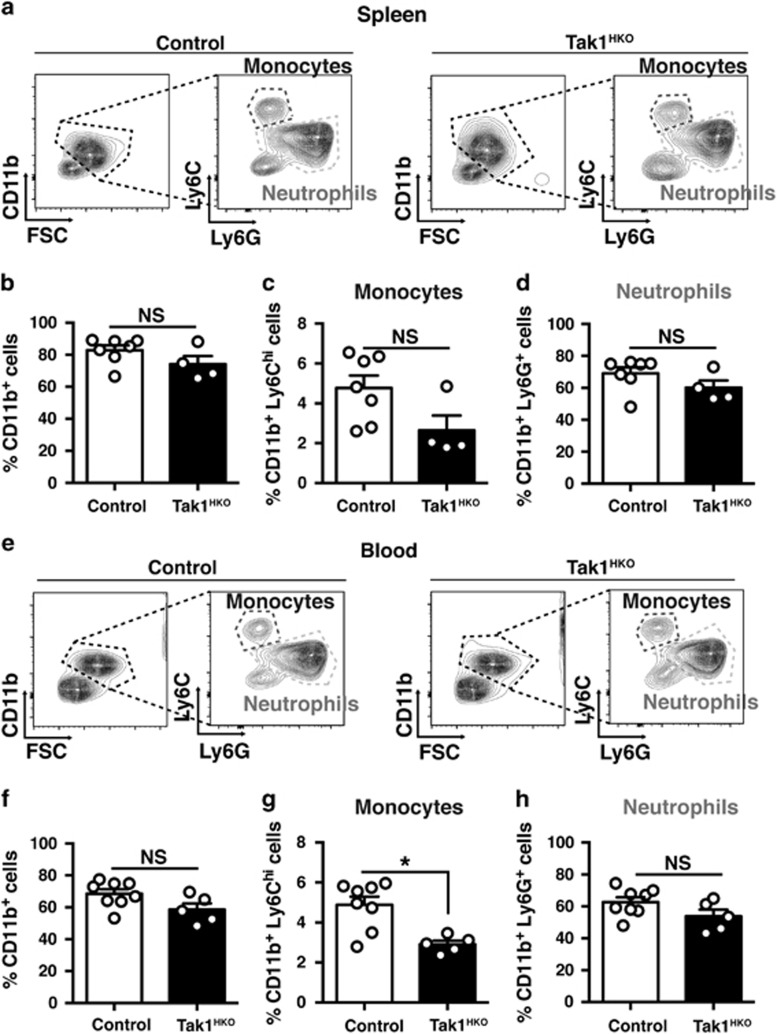
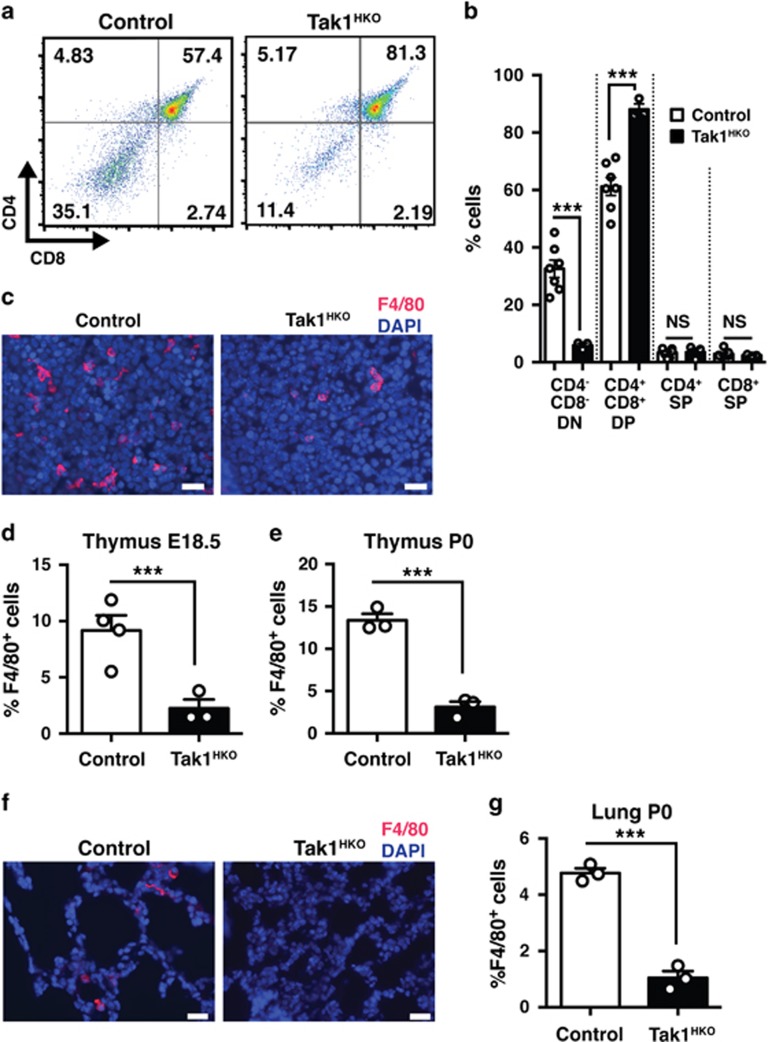
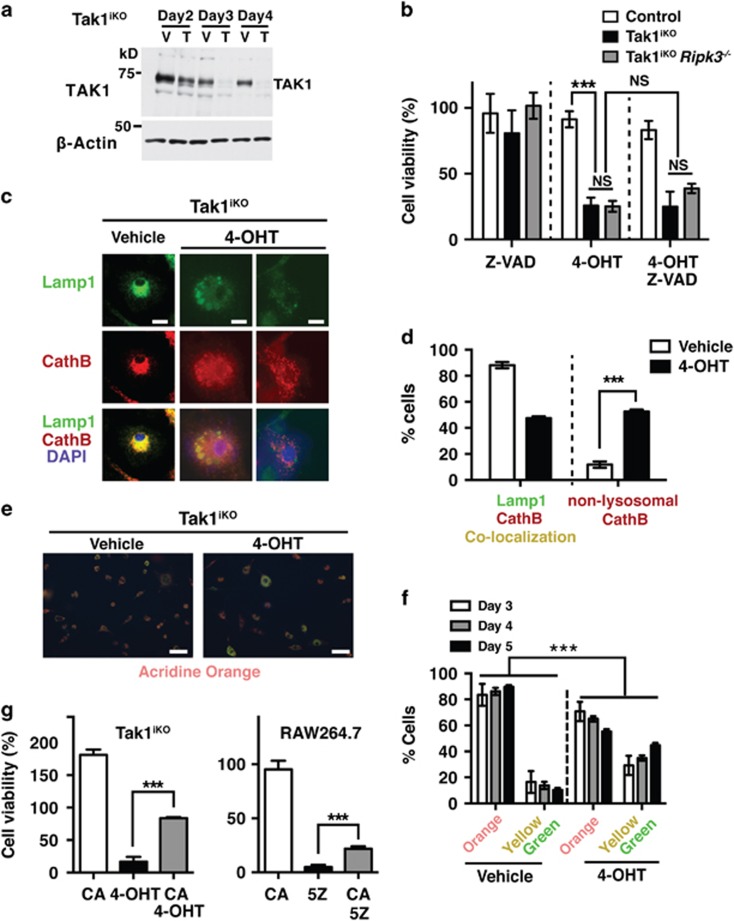
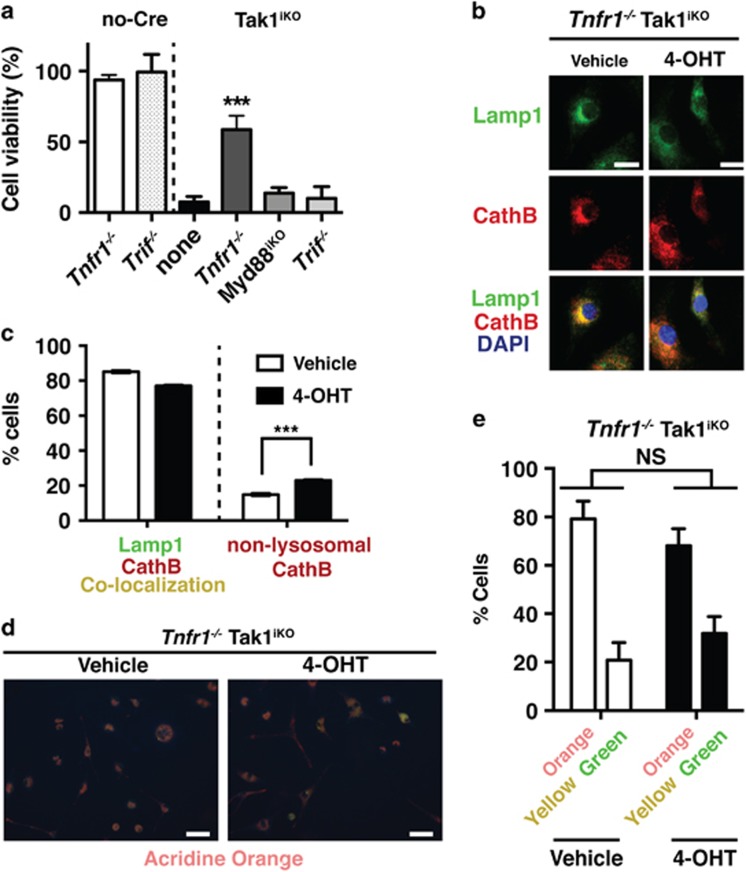
Hematopoietic cell survival and death is critical for development of a functional immune system. Here, we report that a protein kinase, TAK1, is selectively required for resident macrophage integrity during embryogenesis. Hematopoietic lineage-specific deletion of Tak1 gene (Tak1) caused accumulation of cellular debris in the thymus in perinatal mice. Although no overt alteration in thymocytes and blood myeloid populations was observed in Tak1 mice, we found that thymic and lung macrophages were diminished. In the in vitro setting, Tak1 deficiency caused profound disruption of lysosomes and killed bone marrow-derived macrophages (BMDMs) without any exogenous stressors. Inhibition of the lysosomal protease, cathepsin B, partially blocked Tak1-deficient BMDM death, suggesting that leakage of the lysosomal contents is in part the cause of cell death. To identify the trigger of this cell death, we examined involvement of TNF and Toll-like receptor pathways. Among them, we found that deletion of Tnfr1 partially rescued cell death. Finally, we show that Tnfr1 deletion partially restored thymic and lung macrophages in vivo. These results suggest that autocrine and potentially paracrine TNF kills Tak1-deficient macrophages during development. Our results reveal that TAK1 signaling maintains proper macrophage populations through protecting lysosomal integrity.
造血细胞的存活与死亡对于功能性免疫系统的发育至关重要。在此,我们报告一种蛋白激酶TAK1在胚胎发育过程中对驻留巨噬细胞的完整性具有选择性需求。Tak1基因(Tak1)在造血谱系中的特异性缺失导致围产期小鼠胸腺中细胞碎片的积累。尽管在Tak1小鼠中未观察到胸腺细胞和血液髓系细胞群体有明显改变,但我们发现胸腺和肺巨噬细胞数量减少。在体外实验中,Tak1缺陷导致溶酶体严重破坏,并在无任何外源性应激源的情况下杀死骨髓来源的巨噬细胞(BMDM)。抑制溶酶体蛋白酶组织蛋白酶B可部分阻断Tak1缺陷型BMDM的死亡,这表明溶酶体内容物的泄漏部分是细胞死亡的原因。为了确定这种细胞死亡的触发因素,我们研究了TNF和Toll样受体途径的参与情况。其中,我们发现Tnfr1的缺失部分挽救了细胞死亡。最后,我们表明Tnfr1的缺失在体内部分恢复了胸腺和肺巨噬细胞。这些结果表明,自分泌以及可能的旁分泌TNF在发育过程中杀死了Tak1缺陷型巨噬细胞。我们的结果揭示,TAK1信号通过保护溶酶体完整性来维持适当的巨噬细胞群体。