Helmy R, Zullig L L, Dunbar-Jacob J, Hughes D A, Vrijens B, Wilson I B, De Geest S
Institute of Nursing Science, Department of Public Health, Faculty of Medicine, University of Basel, Basel, Switzerland.
Center for Health Services Research in Primary Care, Durham Veterans Affairs Health Care System, Durham, North Carolina, USA.
BMJ Open. 2017 Feb 10;7(2):e013496. doi: 10.1136/bmjopen-2016-013496.
Medication adherence is fundamental to achieving optimal patient outcomes. Reporting research on medication adherence suffers from some issues-including conceptualisation, measurement and data analysis-that thwart its advancement. Using the ABC taxonomy for medication adherence as the conceptual basis, a steering committee of members of the European Society for Patient Adherence, COMpliance, and Persistence (ESPACOMP) launched an initiative to develop ESPACOMP Medication Adherence Reporting Guidelines (EMERGE). This paper is a protocol for a Delphi study that aims to build consensus among a group of topic experts regarding an item list that will support developing EMERGE.
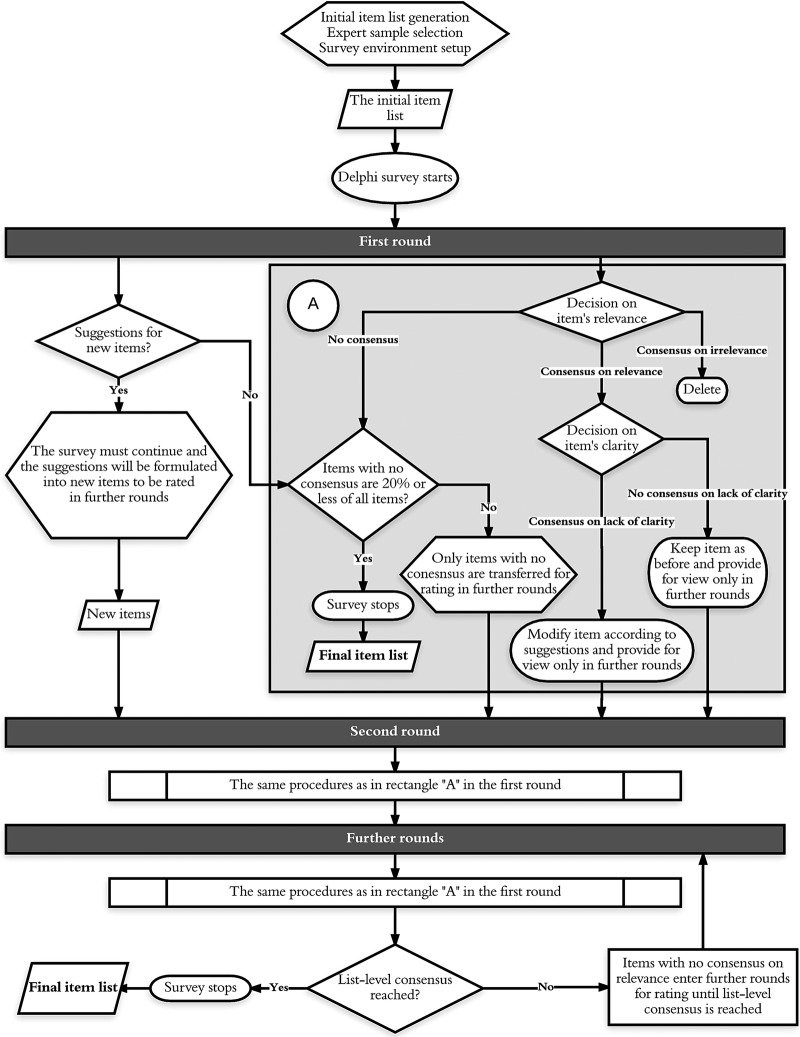
This study uses a reactive-Delphi design where a group of topic experts will be asked to rate the relevance and clarity of an initial list of items, in addition to suggesting further items and/or modifications of the initial items. The initial item list, generated by the EMERGE steering committee through a structured process, consists of 26 items distributed in 2 sections: 4 items representing the taxonomy-based minimum reporting criteria, and 22 items organised according to the common reporting sections. A purposive sample of experts will be selected from relevant disciplines and diverse geographical locations. Consensus will be achieved through predefined decision rules to keep, delete or modify the items. An iterative process of online survey rounds will be carried out until consensus is reached.
An ethics approval was not required for the study according to the Swiss federal act on research involving human beings. The participating experts will be asked to give an informed consent. The results of this Delphi study will feed into EMERGE, which will be disseminated through peer-reviewed publications and presentations at conferences. Additionally, the steering committee will encourage their endorsement by registering the guidelines at the Enhancing the QUAlity and Transparency Of health Research (EQUATOR) network and other relevant organisations.
药物依从性是实现最佳患者治疗效果的基础。关于药物依从性的研究报告存在一些问题,包括概念化、测量和数据分析等,这些问题阻碍了该领域的发展。以药物依从性的ABC分类法为概念基础,欧洲患者依从性、顺应性和持续性学会(ESPACOMP)的成员组成的指导委员会发起了一项倡议,以制定ESPACOMP药物依从性报告指南(EMERGE)。本文是一项德尔菲研究的方案,旨在就一组主题专家之间关于支持制定EMERGE的项目清单达成共识。
本研究采用反应式德尔菲设计,除了建议进一步的项目和/或对初始项目进行修改外,还将要求一组主题专家对初始项目清单的相关性和清晰度进行评分。由EMERGE指导委员会通过结构化过程生成的初始项目清单由26个项目组成,分为2个部分:4个项目代表基于分类法的最低报告标准,22个项目根据常见报告部分进行组织。将从相关学科和不同地理位置选取有目的的专家样本。将通过预定义的决策规则来达成关于保留、删除或修改项目的共识。将进行在线调查轮次的迭代过程,直到达成共识。
根据瑞士关于涉及人类的研究的联邦法案,本研究无需伦理批准。将要求参与的专家给予知情同意。这项德尔菲研究的结果将纳入EMERGE,EMERGE将通过同行评审出版物和会议报告进行传播。此外,指导委员会将通过在提高健康研究质量和透明度(EQUATOR)网络及其他相关组织注册指南来鼓励对其进行认可。