Weiss Susan R B, Howlett Katia D, Baler Ruben D
National Institute on Drug Abuse, National Institutes of Health, United States.
National Institute on Drug Abuse, National Institutes of Health, United States.
Int J Drug Policy. 2017 Apr;42:39-49. doi: 10.1016/j.drugpo.2017.01.007. Epub 2017 Feb 8.
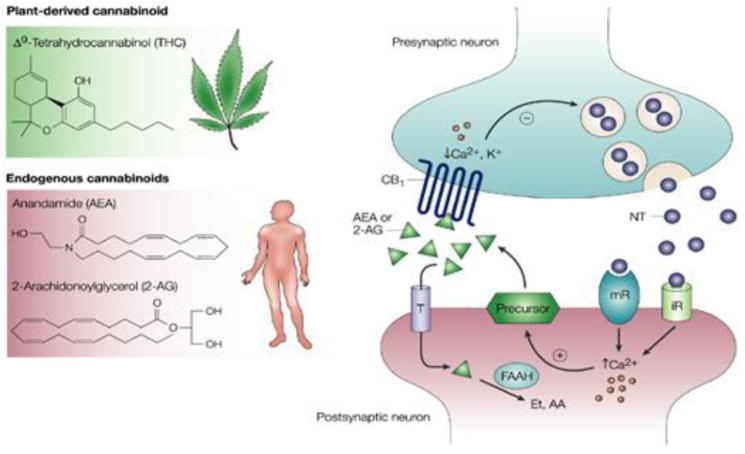
Social attitudes and cultural norms around the issue of substance abuse are shifting rapidly around the world, leading to complex and unpredictable consequences. On the positive side, efforts to more intensely disseminate the scientific evidence for the many connections between chronic substance use and the emergence of measurable and discrete brain dysfunctions, has ushered in an evolving climate of acceptance and a new era of improved access to more effective interventions, at least in the United States. On the negative side, there has been a steady erosion in the public perception of the harms associated with the use of popular drugs, especially cannabis. This worrisome trend has sprouted at the convergence of several forces that have combined, more or less fortuitously, to effectively change long-standing policies away from prohibition and toward decriminalization or legalization. These forces include the outsized popularity of the cannabis plant among recreational users, the unflagging campaign by corporate lobbyists and patient advocates to mainstream its medicinal use, and the honest realization in some quarters of the deleterious impact of the drug war and its draconian cannabis laws, in particular, on society's most vulnerable populations. Updating drug policies is a desirable goal, and significant changes may indeed be warranted. However, there is a real concern when policy changes are hurriedly implemented without the required input from the medical, scientific, or policy research communities. Regardless of how well intentioned, such initiatives are bound to magnify the potential for unintended adverse consequences in the form of far ranging health and social costs. To minimize this risk, science must be front and center in this important policy debate. Here, we review the state of the science on cannabis and cannabinoid health effects, both adverse and therapeutic. We focus on the prevalence of use in different populations, the mechanisms by which cannabis exerts its effects (i.e., via the endocannabinoid system), and the double-edged potential of this system to inspire new medications, on one hand, and to cause short and long term harmful effects on the other. By providing knowledge of cannabis' broad ranging effects, we hope to enable better decision making regarding cannabis legislation and policy implementation.
在全球范围内,围绕药物滥用问题的社会态度和文化规范正在迅速转变,这带来了复杂且不可预测的后果。从积极的方面来看,为更广泛地传播关于长期药物使用与可测量且离散的脑功能障碍之间诸多联系的科学证据所做的努力,至少在美国营造了一种逐渐被接受的氛围,并开启了一个能更容易获得更有效干预措施的新时代。从消极的方面来看,公众对使用流行药物(尤其是大麻)所带来危害的认知在持续下降。这一令人担忧的趋势在多种力量的共同作用下出现,这些力量或多或少偶然地结合在一起,有效地改变了长期以来从禁止转向非刑事化或合法化的政策。这些力量包括大麻在娱乐使用者中极高的受欢迎程度、企业游说者和患者权益倡导者将其药用主流化的不懈运动,以及一些人切实认识到毒品战争及其严厉的大麻法律,尤其是对社会最弱势群体的有害影响。更新毒品政策是一个可取的目标,重大变革或许确实有必要。然而,当政策变革在没有医学、科学或政策研究界必要投入的情况下匆忙实施时,就会引发真正的担忧。无论意图多么良好,此类举措必然会加大以广泛的健康和社会成本形式出现的意外不良后果的可能性。为了将这种风险降至最低,科学必须在这场重要的政策辩论中处于前沿和中心位置。在此,我们回顾关于大麻和大麻素对健康影响(包括不良影响和治疗作用)的科学现状。我们关注不同人群中的使用流行率、大麻发挥作用的机制(即通过内源性大麻素系统),以及该系统一方面激发新药物、另一方面造成短期和长期有害影响的双刃剑潜力。通过提供关于大麻广泛影响的知识,我们希望能在大麻立法和政策实施方面做出更好的决策。