Turner Karly M, Simpson Christopher G, Burne Thomas H J
Queensland Brain Institute, The University of Queensland St Lucia, QLD, Australia.
Queensland Brain Institute, The University of QueenslandSt Lucia, QLD, Australia; Queensland Centre for Mental Health Research, The Park Centre for Mental HealthRichlands, QLD, Australia.
Front Behav Neurosci. 2017 Jan 31;11:16. doi: 10.3389/fnbeh.2017.00016. eCollection 2017.
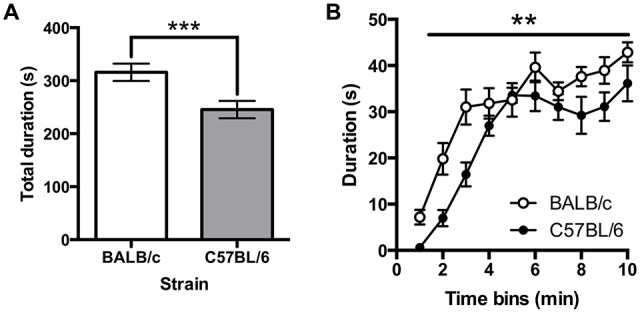
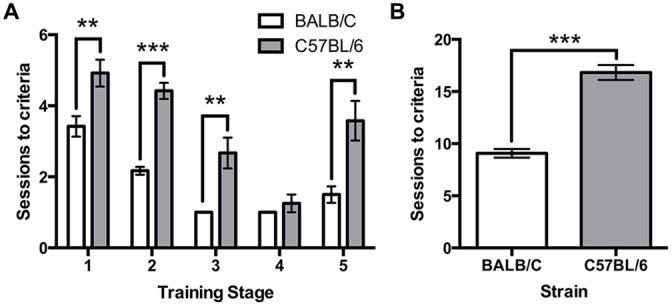
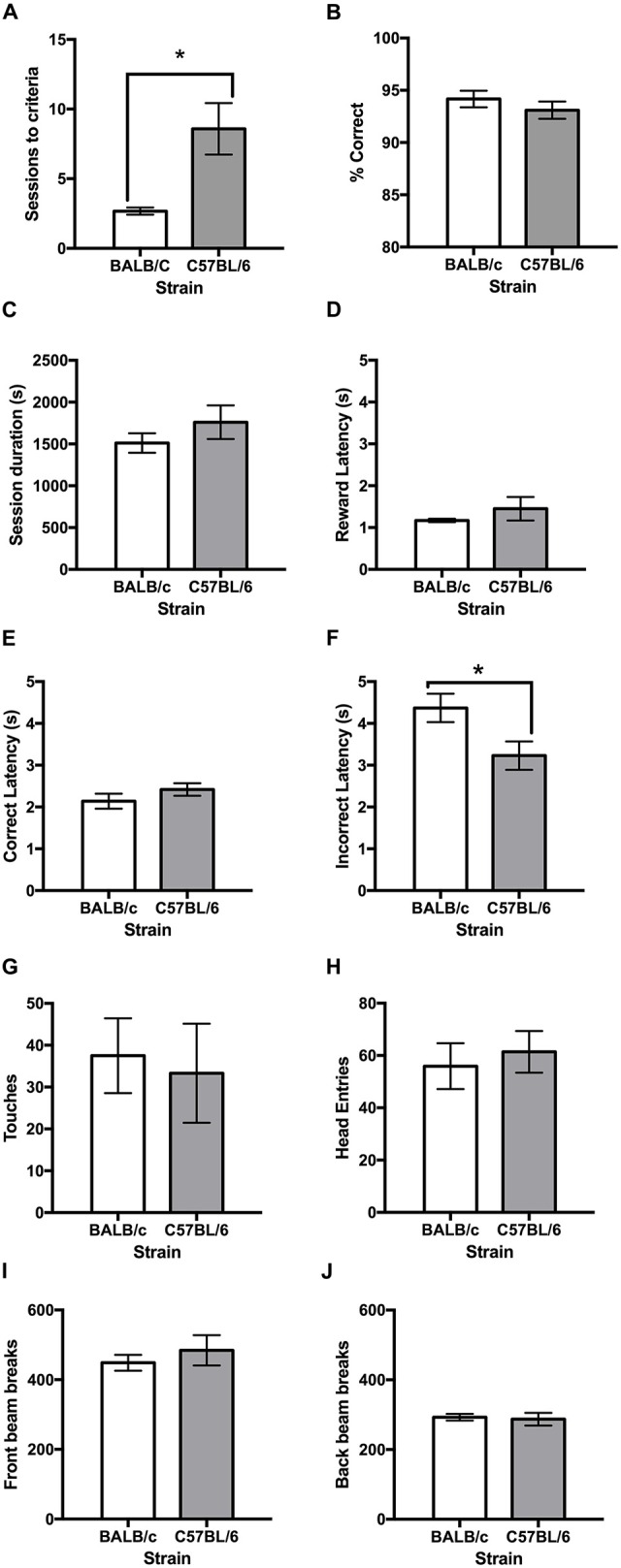
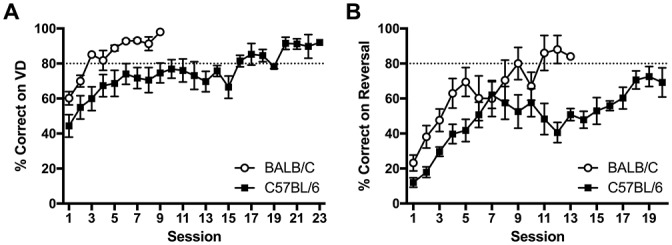
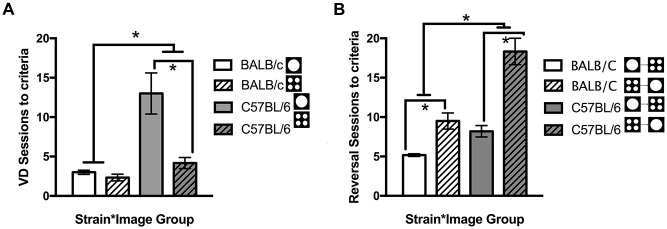
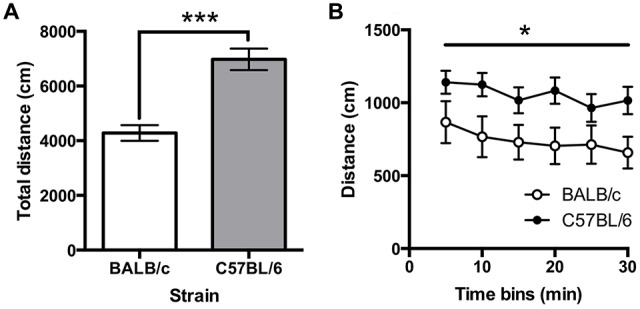
Touchscreen technology is increasingly being used to characterize cognitive performance in rodent models of neuropsychiatric disorders. Researchers are attracted to the automated system and translational potential for touchscreen-based tasks. However, training time is extensive and some mouse strains have struggled to learn touchscreen tasks. Here we compared the performance of commonly used C57BL/6 mice against the BALB/c mice, which are considered a poor performing strain, using a touchscreen task. BALB/c and C57BL/6 mice were trained to operate the touchscreens before learning a visual discrimination (VD) and reversal task. Following touchscreen testing, these strains were assessed for differences in locomotion and learned helplessness. BALB/c mice finished training in nearly half the number of sessions taken by C57BL/6 mice. Following training, mice learned a VD task where BALB/c mice again reached criteria in fewer than half the sessions required for C57BL/6 mice. Once acquired, there were no strain differences in % correct responses, correction trials or response latency. BALB/c mice also learnt the reversal task in significantly fewer sessions than C57BL/6 mice. On the open field test C57BL/6 mice traveled further and spent more time in the center, and spent less time immobile than BALB/c mice on the forced swim test (FST). After touchscreen testing, strains exhibited well-established behavioral traits demonstrating the extensive training and handling from touchscreen testing did not alter their behavioral phenotype. These results suggest that BALB/c mice can be examined using touchscreen tasks and that task adaptations may improve feasibility for researchers using different strains.
触摸屏技术越来越多地被用于表征神经精神疾病啮齿动物模型中的认知表现。研究人员被基于触摸屏任务的自动化系统及其转化潜力所吸引。然而,训练时间很长,一些小鼠品系在学习触摸屏任务时遇到困难。在这里,我们使用触摸屏任务比较了常用的C57BL/6小鼠与被认为表现较差的BALB/c小鼠的表现。在学习视觉辨别(VD)和反转任务之前,对BALB/c和C57BL/6小鼠进行了操作触摸屏的训练。在触摸屏测试之后,评估这些品系在运动和习得性无助方面的差异。BALB/c小鼠完成训练所需的次数几乎是C57BL/6小鼠的一半。训练后,小鼠学习了VD任务,其中BALB/c小鼠达到标准所需的次数再次不到C57BL/6小鼠所需次数的一半。一旦学会,在正确反应百分比(%)、校正试验或反应潜伏期方面没有品系差异。BALB/c小鼠学习反转任务所需的次数也明显少于C57BL/6小鼠。在旷场试验中,C57BL/6小鼠比BALB/c小鼠移动得更远,在中心区域停留的时间更长,在强迫游泳试验(FST)中静止不动的时间更少。在触摸屏测试后,各品系表现出既定的行为特征,表明来自触摸屏测试的广泛训练和处理并没有改变它们的行为表型。这些结果表明,可以使用触摸屏任务对BALB/c小鼠进行检测,并且任务调整可能会提高使用不同品系的研究人员的可行性。