Brodin N Patrik, Velcich Anna, Guha Chandan, Tomé Wolfgang A
Department of Radiation Oncology, Institute for Onco-Physics, Albert Einstein College of Medicine, Bronx, NY, USA; Department of Radiation Oncology, Montefiore Medical Center, Bronx, NY, USA.
Department of Radiation Oncology, Montefiore Medical Center, Bronx, NY, USA.
Dose Response. 2017 Jan 4;15(1):1559325816685798. doi: 10.1177/1559325816685798. eCollection 2017 Jan-Mar.
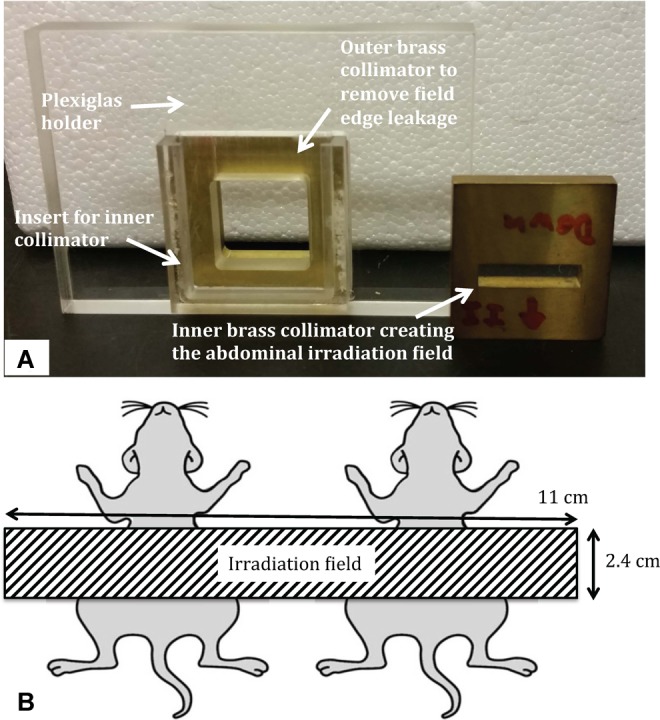
Currently, no readily available mitigators exist for acute abdominal radiation injury. Here, we present an animal model for precise and homogenous limb-sparing abdominal irradiation (LSAIR) to study the radiation-induced gastrointestinal syndrome (RIGS).
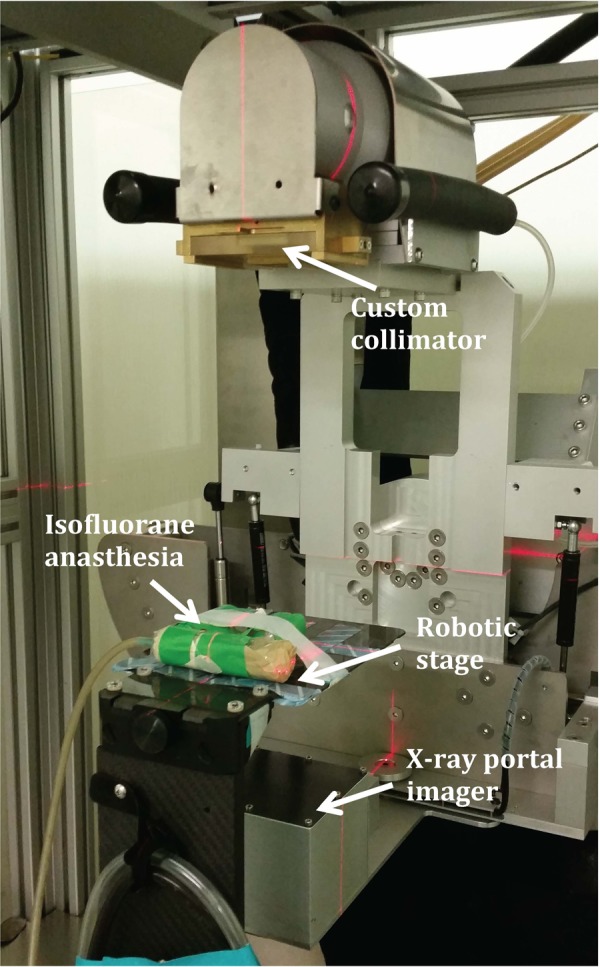
The LSAIR technique was developed using the small animal radiation research platform (SARRP) with image guidance capabilities. We delivered LSAIR at doses between 14 and 18 Gy on 8- to 10-week-old male C57BL/6 mice. Histological analysis was performed to confirm that the observed mortality was due to acute abdominal radiation injury.
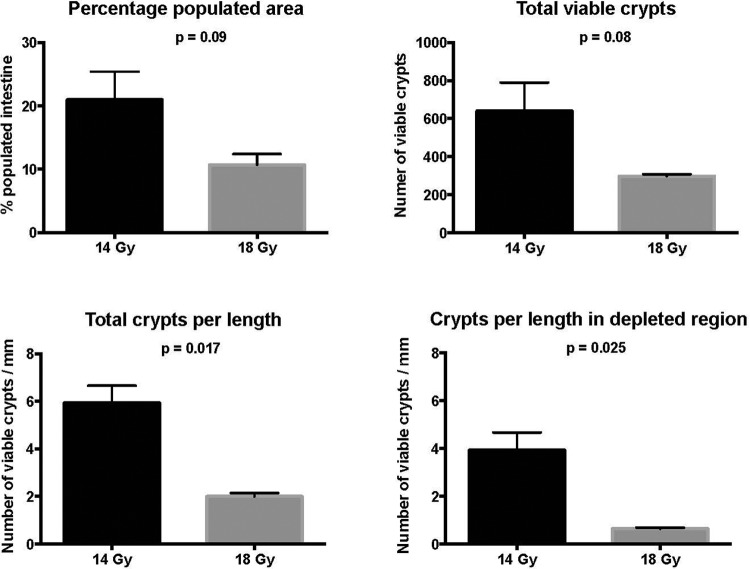
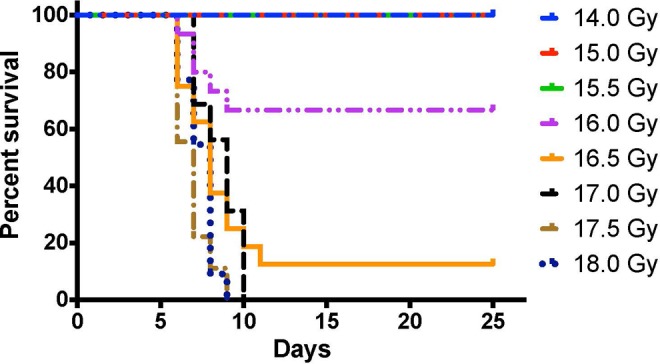
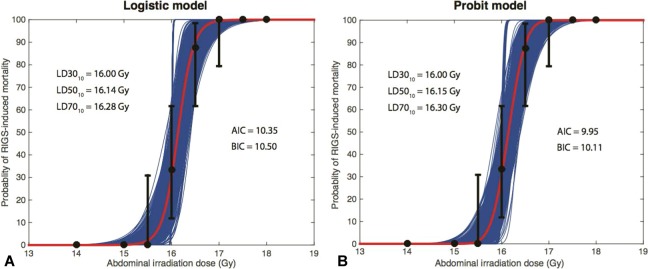
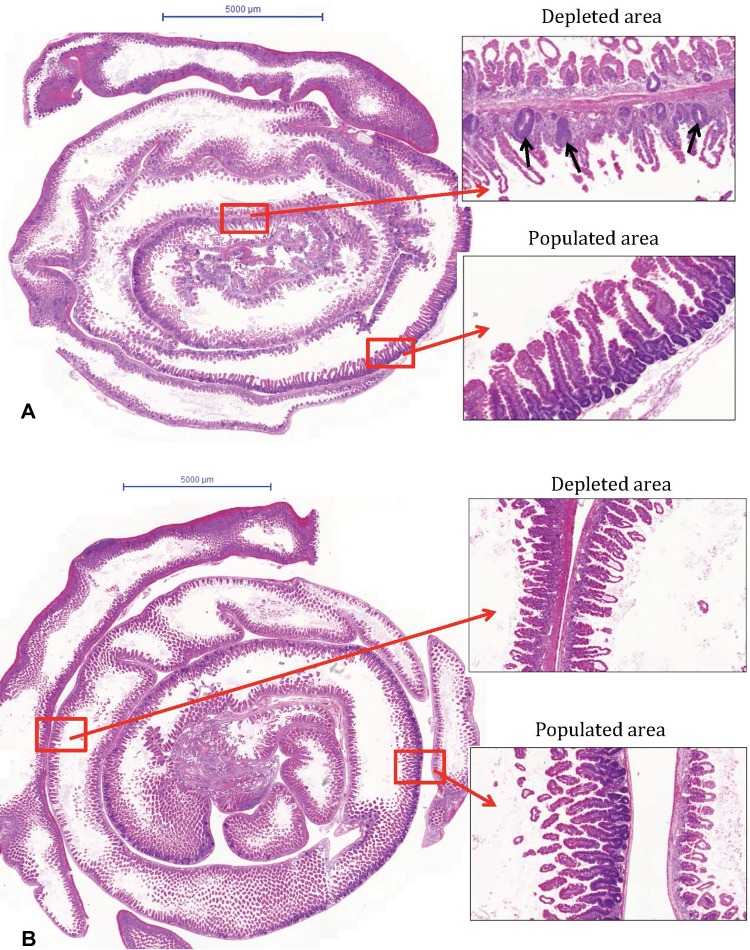
A steep dose-response relationship was found for survival, with no deaths seen at doses below 16 Gy and 100% mortality at above 17 Gy. All deaths occurred between 6 and 10 days after irradiation, consistent with the onset of RIGS. This was further confirmed by histological analysis showing clear differences in the number of regenerative intestinal crypts between animals receiving sublethal (14 Gy) and 100% lethal (18 Gy) radiation.
The developed LSAIR technique provides uniform dose delivery with a clear dose response, consistent with acute abdominal radiation injury on histological examination. This model can provide a useful tool for researchers investigating the development of mitigators for accidental or clinical high-dose abdominal irradiation.
目前,尚无现成的缓解剂可用于治疗急性腹部辐射损伤。在此,我们展示一种用于精确且均匀的保留肢体腹部照射(LSAIR)的动物模型,以研究辐射诱导的胃肠综合征(RIGS)。
利用具有图像引导功能的小动物辐射研究平台(SARRP)开发了LSAIR技术。我们对8至10周龄的雄性C57BL/6小鼠给予14至18 Gy的LSAIR照射。进行组织学分析以确认观察到的死亡是由于急性腹部辐射损伤所致。
发现生存存在陡峭的剂量反应关系,低于16 Gy剂量时无死亡,高于17 Gy剂量时死亡率为100%。所有死亡均发生在照射后6至10天,这与RIGS的发病情况一致。组织学分析进一步证实了这一点,该分析显示接受亚致死剂量(14 Gy)和100%致死剂量(18 Gy)辐射的动物之间,再生肠隐窝数量存在明显差异。
所开发的LSAIR技术提供了均匀的剂量传递,具有明确的剂量反应,在组织学检查中与急性腹部辐射损伤一致。该模型可为研究人员调查意外或临床高剂量腹部照射缓解剂的开发提供有用工具。