Xu Su, Jiang Bin, Wang Hui, Shen Cunsi, Chen Hao, Zeng Li
First Clinical Medical College, Nanjing University of Chinese Medicine, No. 138 Xianlin Avenue, Nanjing 210023, China; Department of Colorectal Surgery, The Yancheng Affiliated Hospital of Nanjing University of Chinese Medicine, No. 53 People's Road, Yancheng 224001, China.
Department of Colorectal Surgery, The Third Affiliated Hospital of Nanjing University of Chinese Medicine, No. 1 Jinling Road, Nanjing 210001, China.
Evid Based Complement Alternat Med. 2017;2017:7876064. doi: 10.1155/2017/7876064. Epub 2017 Jan 22.
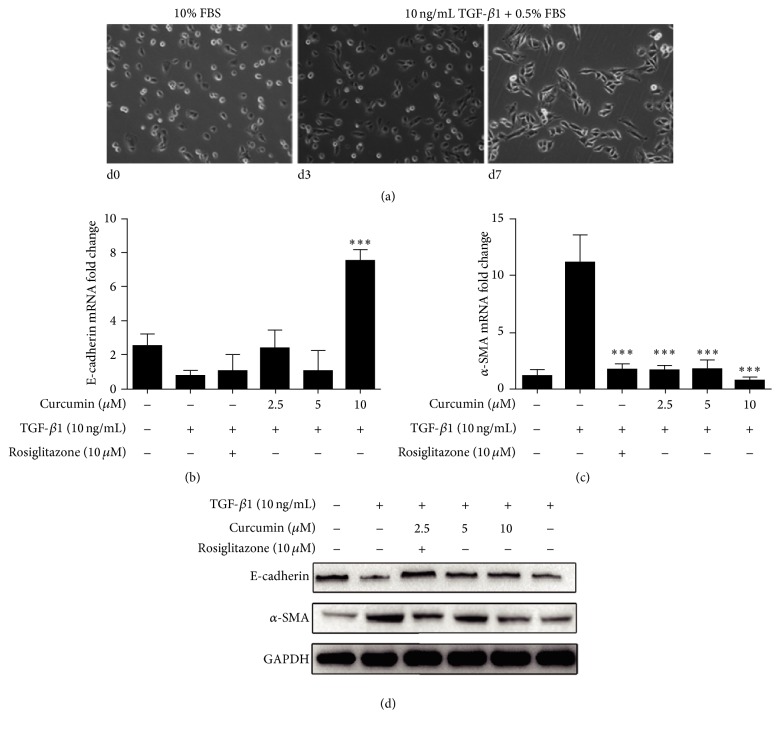
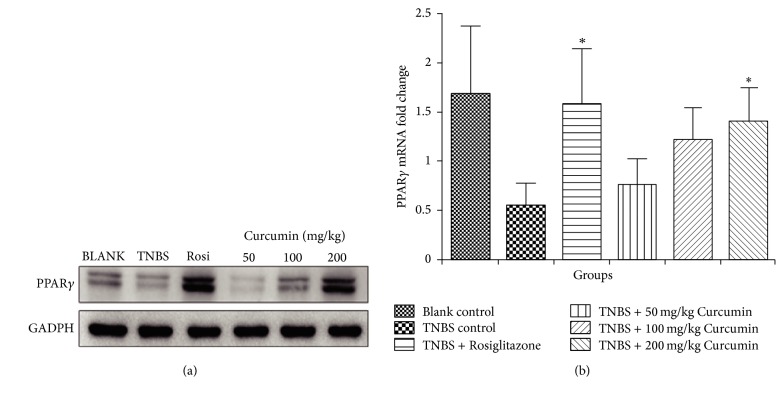
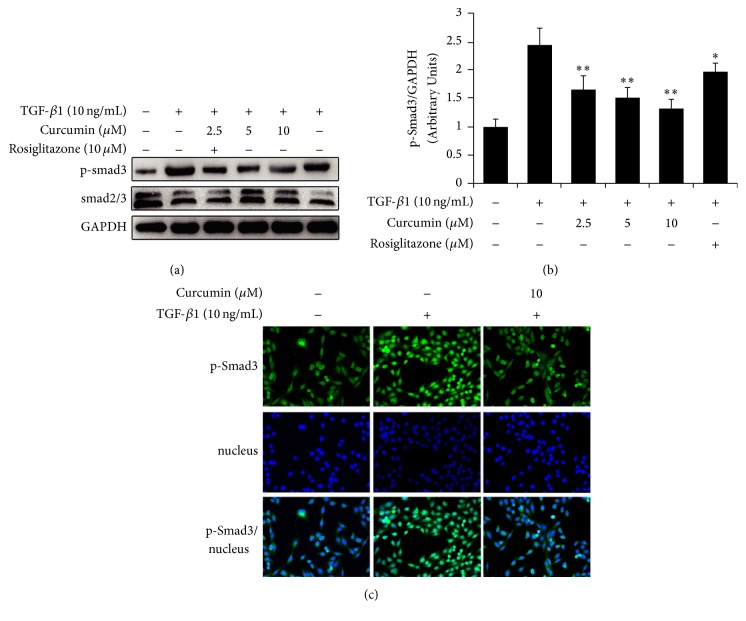
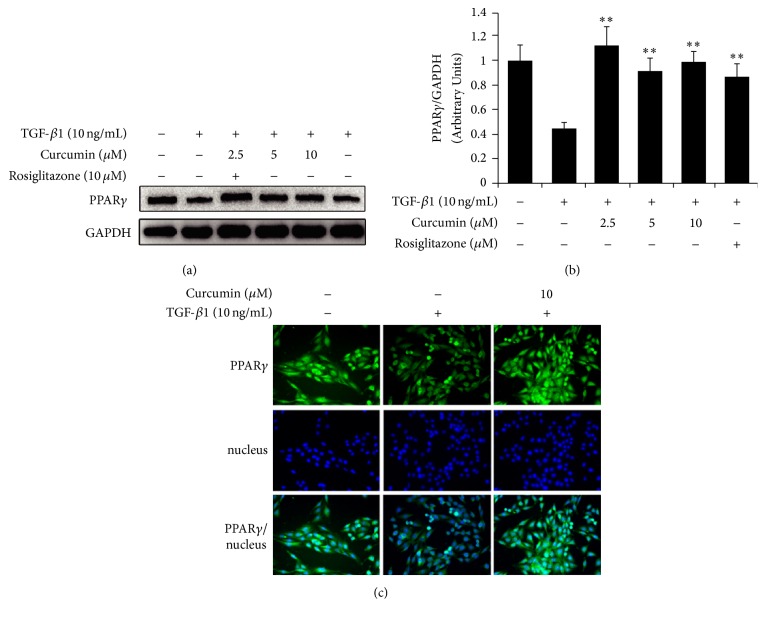
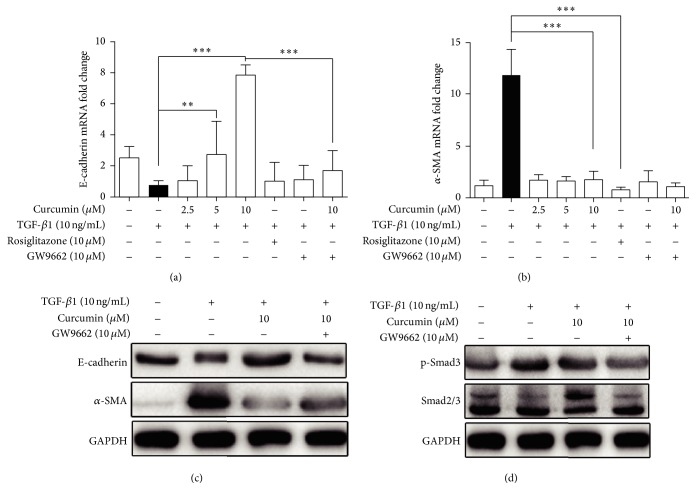
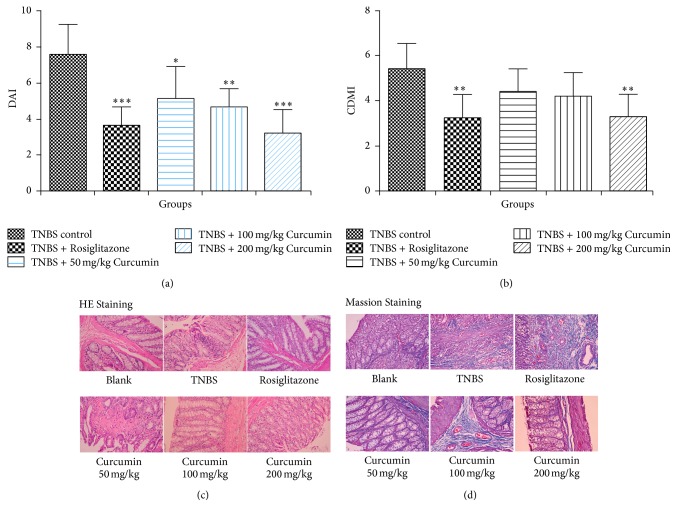
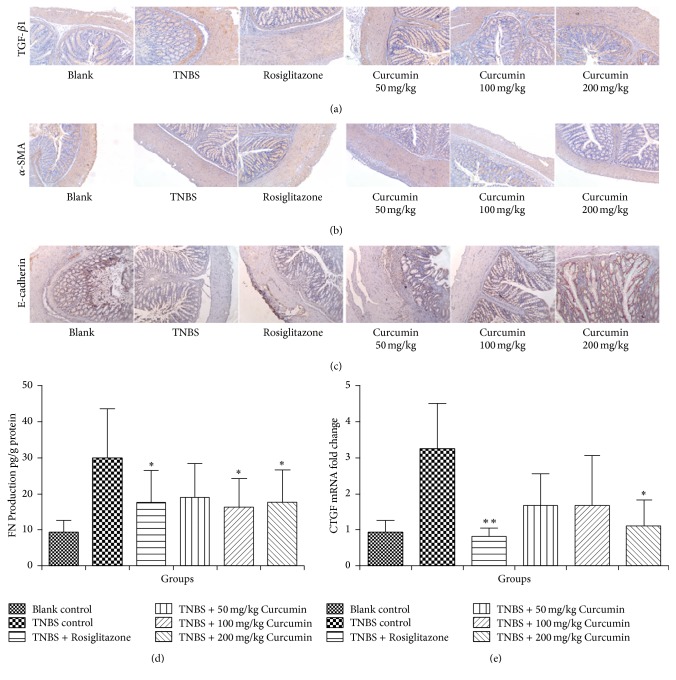
Intestinal fibrotic stricture is a major complication of Crohn's disease (CD) and epithelial-to-mesenchymal transition (EMT) is considered as an important contributor to the formation of intestinal fibrosis by increasing extracellular matrix (ECM) proteins. Curcumin, a compound derived from rhizomes of , has been demonstrated with a potent antifibrotic effect. However, its effect on intestinal fibrosis and the potential mechanism is not completely understood. Here we found that curcumin pretreatment significantly represses TGF-1-induced Smad pathway and decreases its downstream -smooth muscle actin (-SMA) gene expression in intestinal epithelial cells (IEC-6); in contrast, curcumin increases expression of E-cadherin and peroxisome proliferator-activated receptor (PPAR) in IEC-6. Moreover, curcumin promotes nuclear translocation of PPAR and the inhibitory effect of curcumin on EMT could be reversed by PPAR antagonist GW9662. Consistently, in the rat model of intestinal fibrosis induced by 2,4,5-trinitrobenzene sulphonic acid (TNBS), oral curcumin attenuates intestinal fibrosis by increasing the expression of PPAR and E-cadherin and decreasing the expression of -SMA, FN, and CTGF in colon tissue. Collectively, these results indicated that curcumin is able to prevent EMT progress in intestinal fibrosis by PPAR-mediated repression of TGF-1/Smad pathway.
肠道纤维化狭窄是克罗恩病(CD)的主要并发症,上皮-间质转化(EMT)被认为是通过增加细胞外基质(ECM)蛋白促进肠道纤维化形成的一个重要因素。姜黄素是一种从姜黄根茎中提取的化合物,已被证明具有强大的抗纤维化作用。然而,其对肠道纤维化的作用及潜在机制尚未完全明确。在此我们发现,姜黄素预处理可显著抑制转化生长因子-1(TGF-1)诱导的Smad信号通路,并降低其在肠上皮细胞(IEC-6)中下游的α-平滑肌肌动蛋白(α-SMA)基因表达;相反,姜黄素可增加IEC-6细胞中E-钙黏蛋白和过氧化物酶体增殖物激活受体γ(PPARγ)的表达。此外,姜黄素可促进PPARγ的核转位,且PPARγ拮抗剂GW9662可逆转姜黄素对EMT的抑制作用。同样,在2,4,5-三硝基苯磺酸(TNBS)诱导的大鼠肠道纤维化模型中,口服姜黄素可通过增加结肠组织中PPARγ和E-钙黏蛋白的表达以及降低α-SMA、纤连蛋白(FN)和结缔组织生长因子(CTGF)的表达来减轻肠道纤维化。综上所述,这些结果表明姜黄素能够通过PPARγ介导的对TGF-1/Smad信号通路的抑制作用来阻止肠道纤维化中EMT的进展。