Lo Mauro Antonella, Aliverti Andrea
Dipartimento di Elettronica, Informazione e Bioingegneria, Politecnico di Milano, Milan, Italy.
Breathe (Sheff). 2016 Dec;12(4):318-327. doi: 10.1183/20734735.012716.
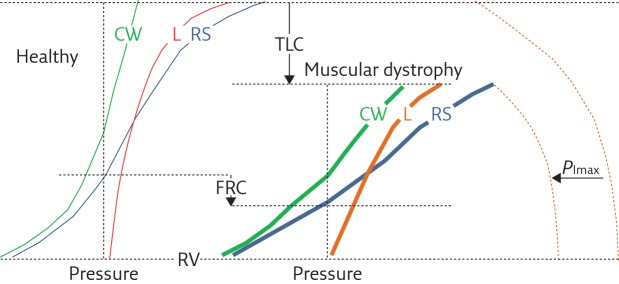
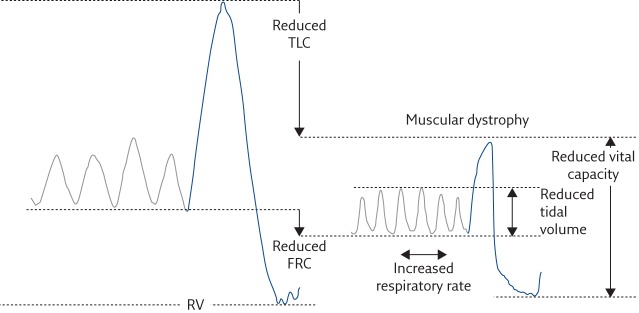
Muscular dystrophy is a group of inherited myopathies characterised by progressive skeletal muscle wasting, including of the respiratory muscles. Respiratory failure, . when the respiratory system fails in its gas exchange functions, is a common feature in muscular dystrophy, being the main cause of death, and it is a consequence of lung failure, pump failure or a combination of the two. The former is due to recurrent aspiration, the latter to progressive weakness of respiratory muscles and an increase in the load against which they must contract. In fact, both the resistive and elastic components of the work of breathing increase due to airway obstruction and chest wall and lung stiffening, respectively. The respiratory disturbances in muscular dystrophy are restrictive pulmonary function, hypoventilation, altered thoracoabdominal pattern, hypercapnia, dyspnoea, impaired regulation of breathing, inefficient cough and sleep disordered breathing. They can be present at different rates according to the type of muscular dystrophy and its progression, leading to different onset of each symptom, prognosis and degree of respiratory involvement.
A common feature of muscular dystrophy is respiratory failure, the inability of the respiratory system to provide proper oxygenation and carbon dioxide elimination.In the lung, respiratory failure is caused by recurrent aspiration, and leads to hypoxaemia and hypercarbia.Ventilatory failure in muscular dystrophy is caused by increased respiratory load and respiratory muscles weakness.Respiratory load increases in muscular dystrophy because scoliosis makes chest wall compliance decrease, atelectasis and fibrosis make lung compliance decrease, and airway obstruction makes airway resistance increase.The consequences of respiratory pump failure are restrictive pulmonary function, hypoventilation, altered thoracoabdominal pattern, hypercapnia, dyspnoea, impaired regulation of breathing, inefficient cough and sleep disordered breathing.
To understand the mechanisms leading to respiratory disturbances in patients with muscular dystrophy.To understand the impact of respiratory disturbances in patients with muscular dystrophy.To provide a brief description of the main forms of muscular dystrophy with their respiratory implications.
肌肉萎缩症是一组遗传性肌病,其特征为进行性骨骼肌萎缩,包括呼吸肌。呼吸衰竭,即呼吸系统的气体交换功能出现故障,是肌肉萎缩症的常见特征,也是主要死因,它是肺衰竭、泵衰竭或两者共同作用的结果。前者是由于反复误吸,后者是由于呼吸肌进行性无力以及呼吸肌收缩时必须对抗的负荷增加。实际上,由于气道阻塞和胸壁及肺部僵硬,呼吸功的阻力和弹性成分均增加。肌肉萎缩症中的呼吸障碍包括限制性肺功能、通气不足、胸腹模式改变、高碳酸血症、呼吸困难、呼吸调节受损、无效咳嗽和睡眠呼吸障碍。根据肌肉萎缩症的类型及其进展情况,这些症状可能以不同的发生率出现,导致每种症状的不同发病时间、预后以及呼吸受累程度。
肌肉萎缩症的一个常见特征是呼吸衰竭,即呼吸系统无法提供适当的氧合和二氧化碳清除。在肺部,呼吸衰竭由反复误吸引起,并导致低氧血症和高碳酸血症。肌肉萎缩症中的通气衰竭由呼吸负荷增加和呼吸肌无力引起。肌肉萎缩症中呼吸负荷增加是因为脊柱侧弯使胸壁顺应性降低,肺不张和纤维化使肺顺应性降低,气道阻塞使气道阻力增加。呼吸泵衰竭的后果是限制性肺功能、通气不足、胸腹模式改变、高碳酸血症、呼吸困难、呼吸调节受损、无效咳嗽和睡眠呼吸障碍。
了解导致肌肉萎缩症患者呼吸障碍的机制。了解呼吸障碍对肌肉萎缩症患者的影响。简要描述主要类型的肌肉萎缩症及其对呼吸的影响。