Sharmila Ramalingam, Sindhu Ganapathy
Department of Biochemistry and Biotechnology, Annamalai University, Tamil Nadu, India.
Pharmacogn Mag. 2017 Jan-Mar;13(49):95-101. doi: 10.4103/0973-1296.197634.
Plant sterols are the major source of micronutrients and have not shown any obvious side effects in human. β-sitosterol is one of the most prevalent phytosterols which have been recorded in ancient medicinal history for its use in the treatment of many chronic diseases, especially cancer. The modulations of mitogen-activated protein kinases' (MAPKs') play a crucial role in the development of human renal cell carcinoma.
The aim of the current study is to evaluate the antigenotoxic and anticancer role of β-sitosterol against renal carcinogen.
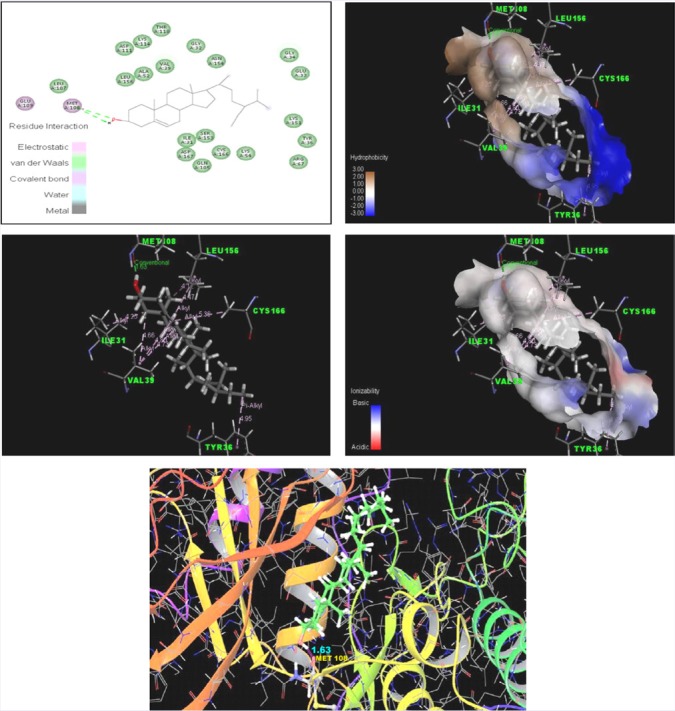
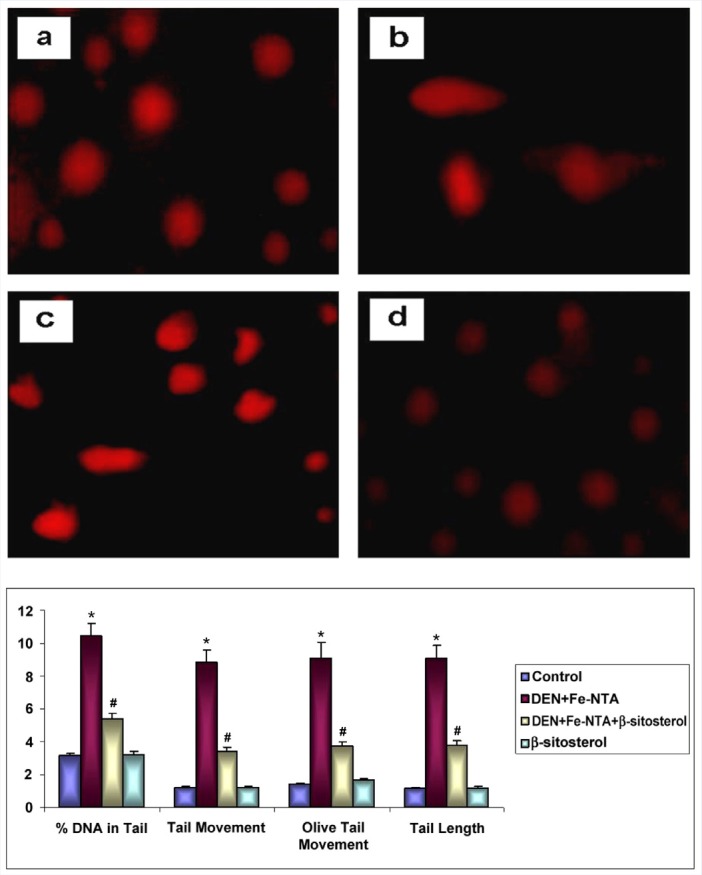
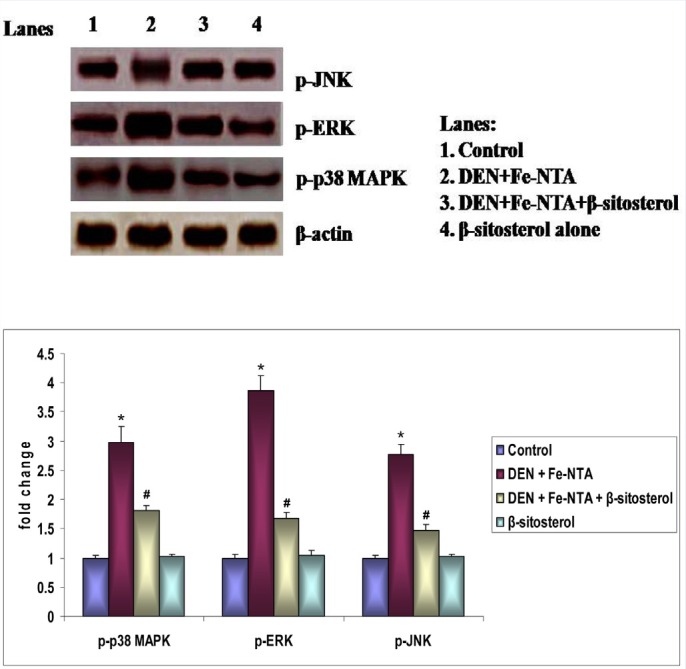
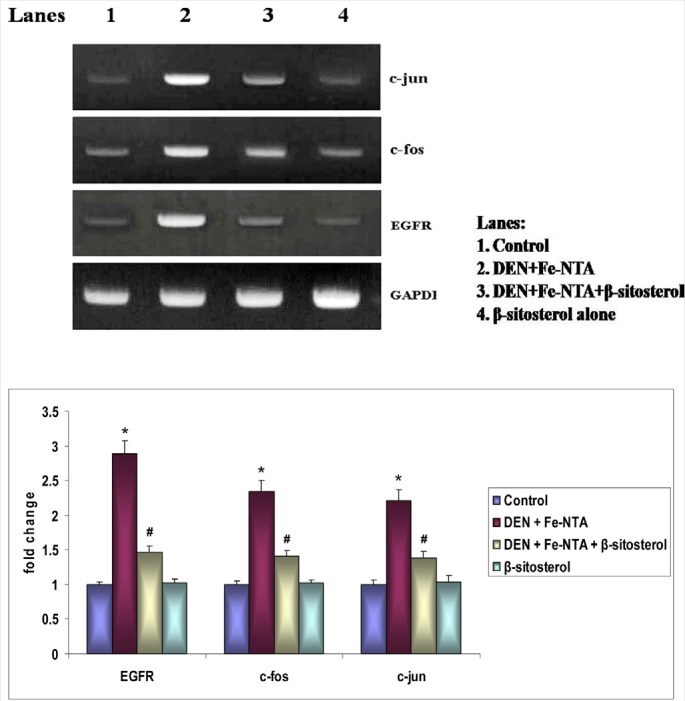
The extent of DNA damage was assessed by the comet assay. The status of p-p38 MAPK, p-c-Jun N-terminal kinase, p-extracellular-signal regulating kinase (ERK), c-fos, c-jun, and endothelial growth factor receptor (EGFR) were analyzed by western blot and polymerase chain reaction techniques. To further confirm the inhibition of ERK-2 by β-sitosterol, molecular docking study was performed.
Extensive DNA damage in acute study and a significant increase in levels of p-MAPKs', c-fos, c-jun, and EGFR was observed in N-diethylnitrosamine (200 mg/kg bw) and ferric nitrilotriacetate (9 mg/kg bw) alone treated rats. Rats which are pretreated with 20 mg/kg bw of β-sitosterol reduced the DNA damage and restored the elevated levels of above-mentioned markers ( < 0.05). The binding free energy obtained for β-sitosterol for ERK-2 was found to be-5.578.
Therefore, it has been concluded that β-sitosterol has a strong potential against genotoxic as well as suppress neoplastic transformation in experimental renal cancer.
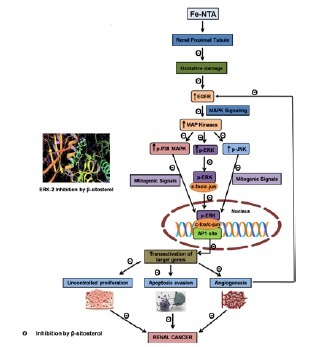
Alterations of EGFR system and MAPKs' play a major role in the development and progression of RCC. In the present study, the blockade of the Fe-NTA promoted EGFR signaling and sustained ERK activity with β-sitosterol leads to impede tumor promotion and maintenance.Rats which are pre-treated with 20 mg/kg bw of β-sitosterol significantly reduced the elevated expression of p-p38 MAPK, p-JNK, p-ERK, c-fos and c-jun in carcinogen induced rats, which suggest that β-sitosterol might protect renal tissue from neoplastic transformation. The interaction of β-sitosterol with the ATP binding site of ERK-2 by molecular docking studies also validates the inhibitory effect of β-sitosterol on ERK-2. The results of the present study reveal that β-sitosterol inhibit oncogenic MAPK signaling, to abrogate hyper cell proliferation, angiogenesis, and to induce apoptosis thereby prevent DEN and Fe-NTA induced renal carcinogenesis. Thus,β-sitosterol that modulates signal transduction pathways and their downstream events may serve as a potential cancer chemopreventive and therapeutic agent. AP-1: Activator protein-1,DEPC: Diethyl pyrocarbonate,EDTA: Ethylenediaminetetraacetic acid,EGFR: Endothelial growth factor receptor,ERK: Extracellular-signal regulating kinase,Fe-NTA: Ferric nitrilotriacetate,GAPDH: Glyceraldehyde-3-phosphate dehydrogenase,HBSS: Hank's balanced salt solution,JNK: c-Jun N-terminal kinase,MAPK: Mitogen-activated protein kinase,DEN: N-diethylnitrosamine,RCC: Renal cell carcinoma,SDS-PAGE: Sodium dodecyl sulfate polyacrylamide gel electrophoresis.
植物甾醇是微量营养素的主要来源,且在人体中未显示出任何明显的副作用。β-谷甾醇是最普遍的植物甾醇之一,在古代医学史上就有记载,可用于治疗多种慢性疾病,尤其是癌症。丝裂原活化蛋白激酶(MAPKs)的调节在人类肾细胞癌的发展中起着关键作用。
本研究旨在评估β-谷甾醇对肾致癌物的抗遗传毒性和抗癌作用。
通过彗星试验评估DNA损伤程度。采用蛋白质印迹法和聚合酶链反应技术分析磷酸化p38 MAPK、磷酸化c-Jun氨基末端激酶、磷酸化细胞外信号调节激酶(ERK)、c-fos、c-jun和内皮生长因子受体(EGFR)的状态。为进一步证实β-谷甾醇对ERK-2的抑制作用,进行了分子对接研究。
在单独用N-二乙基亚硝胺(200 mg/kg体重)和次氮基三乙酸铁(9 mg/kg体重)处理的大鼠中,急性研究出现广泛的DNA损伤,且p-MAPKs、c-fos、c-jun和EGFR水平显著升高。预先用20 mg/kg体重的β-谷甾醇处理的大鼠减少了DNA损伤,并使上述标志物的升高水平恢复正常(P<0.05)。β-谷甾醇与ERK-2的结合自由能为-5.578。
因此,可以得出结论,β-谷甾醇在实验性肾癌中具有强大的抗遗传毒性以及抑制肿瘤转化的潜力。
EGFR系统和MAPKs的改变在肾细胞癌的发生和发展中起主要作用。在本研究中,β-谷甾醇阻断Fe-NTA促进的EGFR信号传导并维持ERK活性,从而阻碍肿瘤的促进和维持。预先用20 mg/kg体重的β-谷甾醇处理的大鼠显著降低了致癌物诱导的大鼠中磷酸化p38 MAPK、磷酸化JNK、磷酸化ERK、c-fos和c-jun的表达升高,这表明β-谷甾醇可能保护肾组织免受肿瘤转化。分子对接研究表明β-谷甾醇与ERK-2的ATP结合位点相互作用,也证实了β-谷甾醇对ERK-2的抑制作用。本研究结果表明,β-谷甾醇抑制致癌性MAPK信号传导,消除细胞过度增殖、血管生成,并诱导凋亡,从而预防DEN和Fe-NTA诱导的肾癌发生。因此,调节信号转导途径及其下游事件的β-谷甾醇可能作为一种潜在的癌症化学预防和治疗剂。AP-1:活化蛋白-1;DEPC:焦碳酸二乙酯;EDTA:乙二胺四乙酸;EGFR:内皮生长因子受体;ERK:细胞外信号调节激酶;Fe-NTA:次氮基三乙酸铁;GAPDH:甘油醛-3-磷酸脱氢酶;HBSS:汉克斯平衡盐溶液;JNK:c-Jun氨基末端激酶;MAPK:丝裂原活化蛋白激酶;DEN:N-二乙基亚硝胺;RCC:肾细胞癌;SDS-PAGE:十二烷基硫酸钠聚丙烯酰胺凝胶电泳