Zeigler Allen Lisa, McCrow John P, Ininbergs Karolina, Dupont Christopher L, Badger Jonathan H, Hoffman Jeffery M, Ekman Martin, Allen Andrew E, Bergman Birgitta, Venter J Craig
Microbial and Environmental Genomics, J. Craig Venter Institute, San Diego, California, USA.
Department of Ecology, Environment and Plant Sciences, Stockholm University/Science for Life Laboratory, Solna, Sweden.
mSystems. 2017 Feb 14;2(1). doi: 10.1128/mSystems.00125-16. eCollection 2017 Jan-Feb.
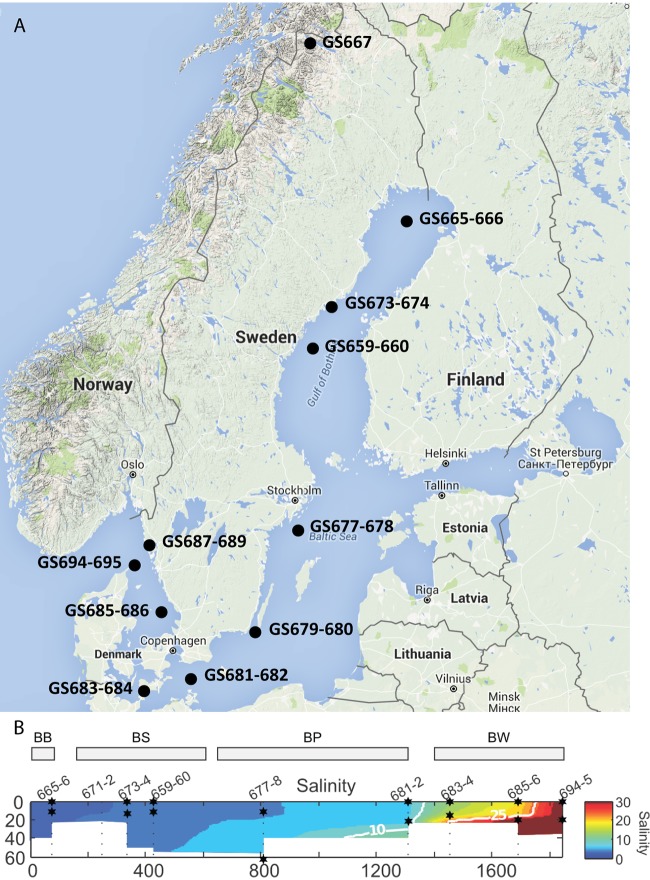
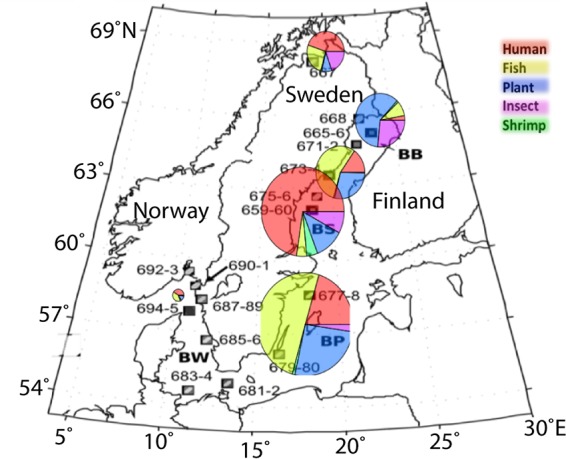
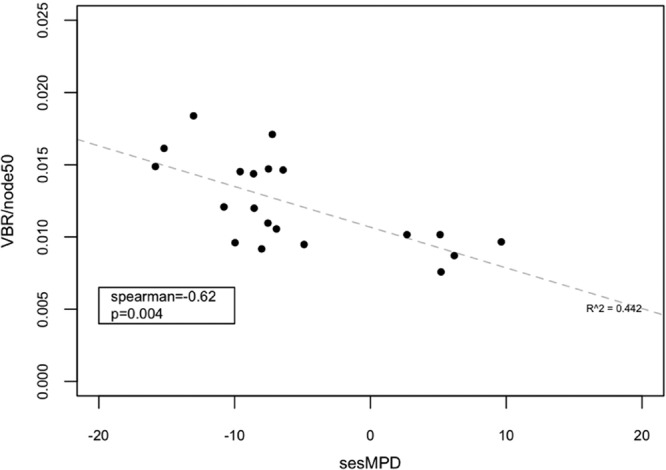
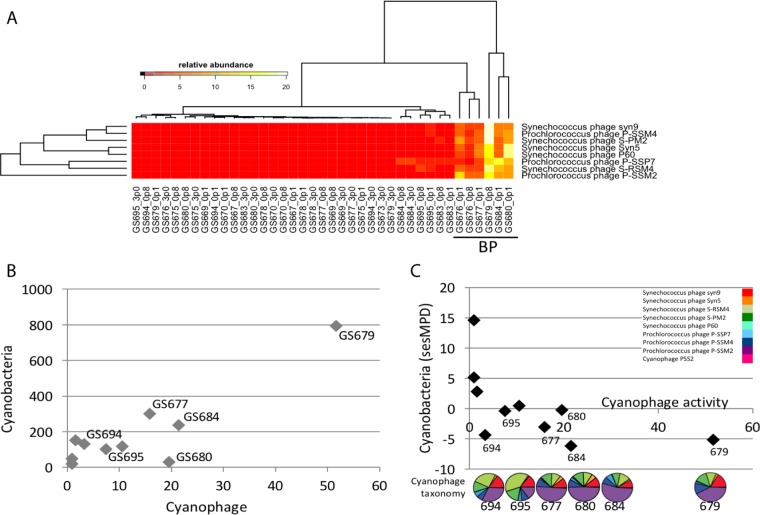
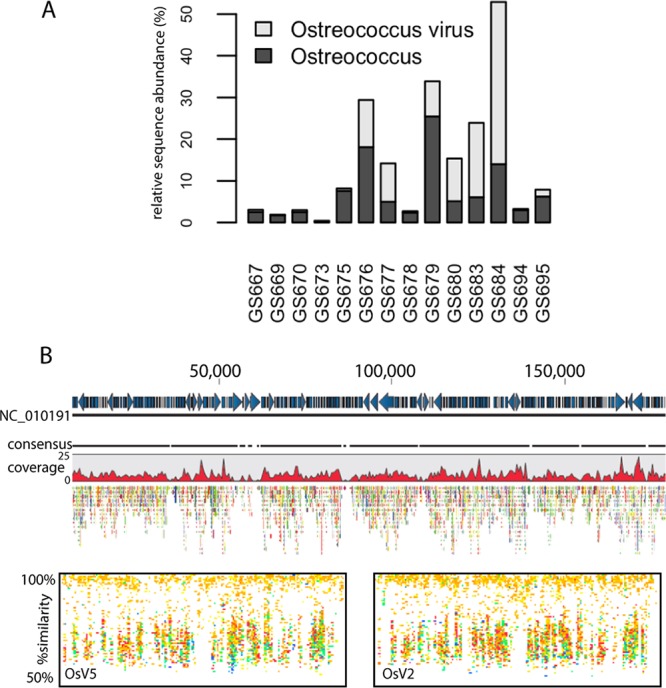
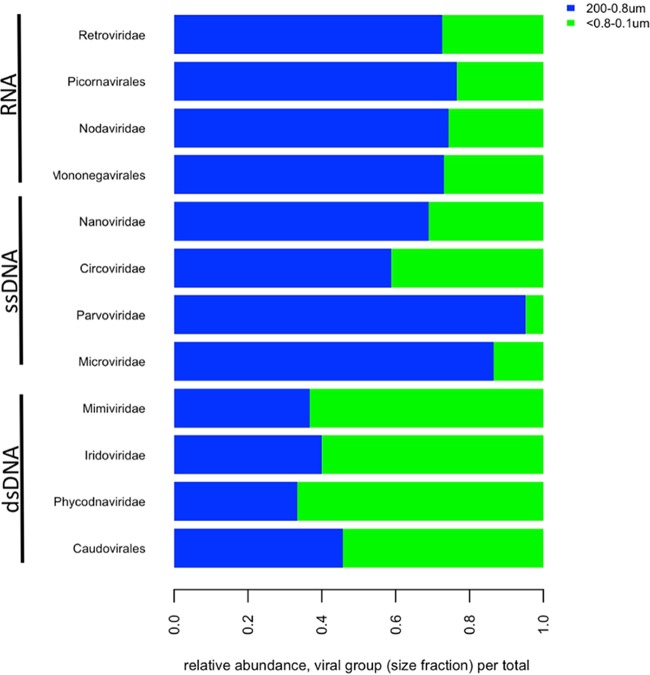
Metagenomic and metatranscriptomic data were generated from size-fractionated samples from 11 sites within the Baltic Sea and adjacent marine waters of Kattegat and freshwater Lake Torneträsk in order to investigate the diversity, distribution, and transcriptional activity of virioplankton. Such a transect, spanning a salinity gradient from freshwater to the open sea, facilitated a broad genome-enabled investigation of natural as well as impacted aspects of Baltic Sea viral communities. Taxonomic signatures representative of phages within the widely distributed order were identified with enrichments in lesser-known families such as and . The distribution of phage reported to infect diverse and ubiquitous heterotrophic bacteria (SAR11 clades) and cyanobacteria ( sp.) displayed population-level shifts in diversity. Samples from higher-salinity conditions (>14 practical salinity units [PSU]) had increased abundances of viruses for picoeukaryotes, i.e., . These data, combined with host diversity estimates, suggest viral modulation of diversity on the whole-community scale, as well as in specific prokaryotic and eukaryotic lineages. RNA libraries revealed single-stranded DNA (ssDNA) and RNA viral populations throughout the Baltic Sea, with ssDNA phage highly represented in Lake Torneträsk. Further, our data suggest relatively high transcriptional activity of fish viruses within diverse families known to have broad host ranges, such as (RNA), (DNA), and predicted zoonotic viruses that can cause ecological and economic damage as well as impact human health. Inferred virus-host relationships, community structures of ubiquitous ecologically relevant groups, and identification of transcriptionally active populations have been achieved with our Baltic Sea study. Further, these data, highlighting the transcriptional activity of viruses, represent one of the more powerful uses of omics concerning ecosystem health. The use of omics-related data to assess ecosystem health holds great promise for rapid and relatively inexpensive determination of perturbations and risk, explicitly with regard to viral assemblages, as no single marker gene is suitable for widespread taxonomic coverage.
为了研究浮游病毒的多样性、分布和转录活性,从波罗的海以及卡特加特海峡相邻海域和淡水的托内特湖的11个站点采集了不同粒径的样本,并生成了宏基因组和宏转录组数据。这样一个跨越从淡水到公海盐度梯度的断面,有助于对波罗的海病毒群落的自然以及受影响方面进行广泛的基于基因组的研究。在广泛分布的目内,代表噬菌体的分类特征在诸如和等鲜为人知的科中得到富集。据报道,感染多样且普遍存在的异养细菌(SAR11分支)和蓝细菌(属)的噬菌体分布在多样性上呈现出种群水平的变化。来自高盐度条件(>14实用盐度单位[PSU])的样本中,微小真核生物的病毒丰度增加,即。这些数据与宿主多样性估计相结合,表明病毒在整个群落尺度以及特定的原核生物和真核生物谱系中对多样性具有调节作用。RNA文库揭示了整个波罗的海的单链DNA(ssDNA)和RNA病毒种群,其中ssDNA噬菌体在托内特湖中占比很高。此外,我们的数据表明,在已知具有广泛宿主范围的不同科中,鱼类病毒具有相对较高的转录活性,例如(RNA)、(DNA),以及预测的人畜共患病毒,这些病毒会造成生态和经济损害以及影响人类健康。通过我们对波罗的海的研究,已经推断出病毒-宿主关系、普遍存在的生态相关群体的群落结构,并确定了转录活跃种群。此外,这些突出病毒转录活性的数据代表了组学在生态系统健康方面更强大的用途之一。利用与组学相关的数据评估生态系统健康,对于快速且相对廉价地确定干扰和风险具有巨大潜力,特别是对于病毒群落而言,因为没有单一的标记基因适合广泛的分类覆盖。