Qiang Jun, Tao Fanyi, He Jie, Sun Lanyi, Xu Pao, Bao Wenjin
Key Laboratory of Freshwater Fisheries and Germplasm Resources Utilization, Ministry of Agriculture, Freshwater Fisheries Research Center, Chinese Academy of Fishery Sciences, 9 Shanshui East Road, Wuxi, Jiangsu, 214081, China.
BMC Genomics. 2017 Feb 20;18(1):190. doi: 10.1186/s12864-017-3591-z.
Genetically improved farmed tilapia (GIFT, Oreochromis niloticus) are susceptible to infection by Streptococcus iniae when maintained in modern intensive culture systems. GIFT are commercially important fishes that are cultured widely in southern China. The role of microRNAs (miRNAs) in the regulatory response of GIFT to S. iniae infection has been underestimated and has not yet been well studied. Head kidney has an important immune function in teleost fishes. The main aim of this study was to determine the possible function of miRNAs in head kidney of S. iniae-infected GIFT. MiRNAs are small, non-coding RNAs that regulate gene expression by binding to the 3'-untranslated regions of their target mRNAs. MiRNAs are known to regulate immune-regulated signaling and inflammatory response pathways.
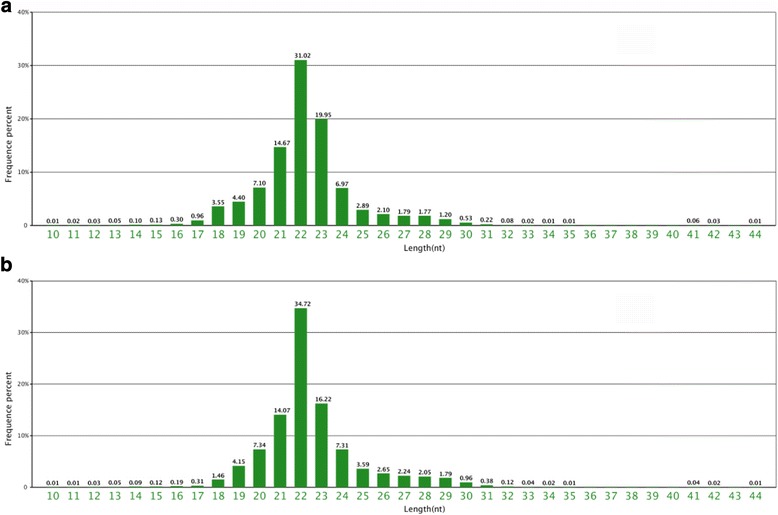
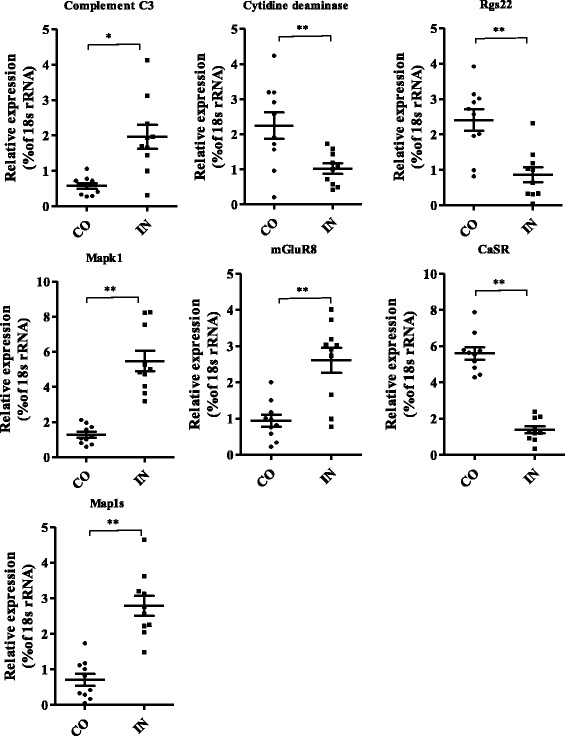
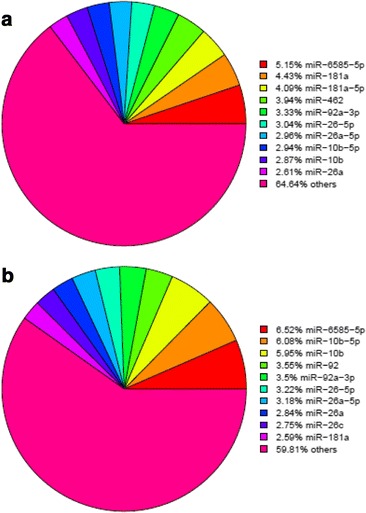
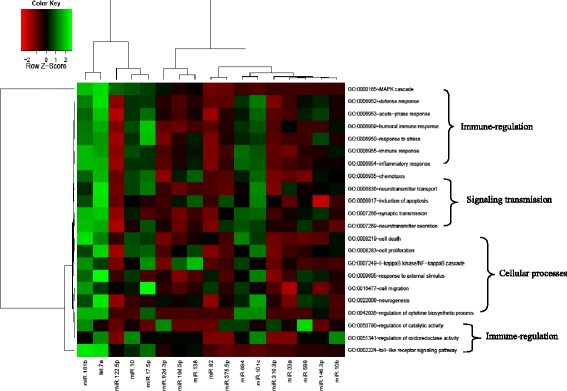
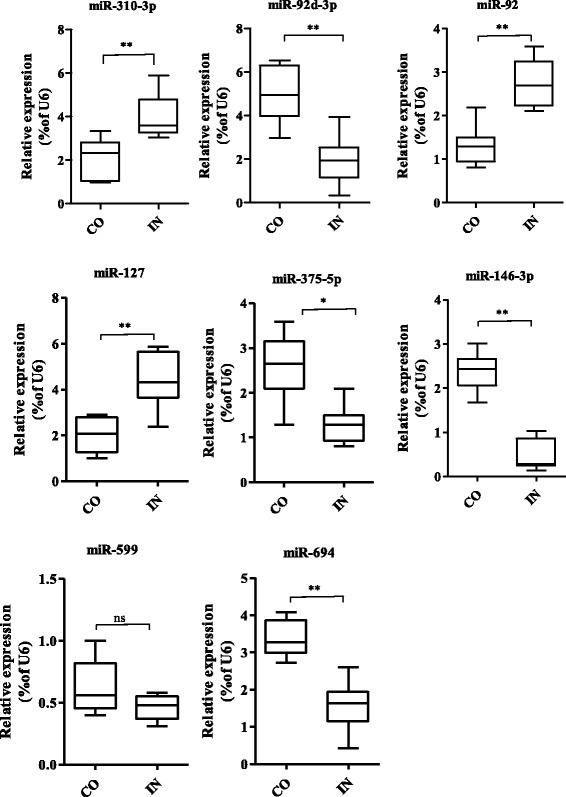
High-throughput deep sequencing of two libraries (control group [CO] and infected group [IN]) of RNA extracted from GIFT head kidney tissues generated 12,089,630 (CO) and 12,624,975 (IN) clean reads. Bioinformatics analysis identified 1736 and 1729 conserved miRNAs and 164 and 165 novel miRNAs in the CO and IN libraries, respectively. Three miRNAs (miR-310-3p, miR-92, and miR-127) were found to be up-regulated and four miRNAs (miR-92d-3p, miR-375-5p, miR-146-3p, and miR-694) were found to be down-regulated in the S. iniae-infected GIFT. The expressions of these miRNAs were verified by quantitative real-time PCR. RNAhybrid and TargetScan were used to identify complementary miRNA and mRNA target sites, and the Gene Ontology and Kyoto Encyclopedia of Genes and Genomes databases were used to annotate and predict potential downstream regulation of biological pathways. Seven target genes, which encode immune-related proteins (complement C3, cytidine deaminase, regulator of G-protein Rgs22, mitogen-activated protein kinase Mapk1, metabotropic glutamate receptorm GluR8, calcium-sensing receptor CaSR, and microtubule-associated protein Map1S) were predicted to play crucial roles in the GIFT response to S. iniae infection.
S. iniae outbreaks have hindered the development of the tilapia industry in China. Understanding the miRNA transcriptome of S. iniae-infected GIFT is important for exploring the immune responses regulated by miRNAs as well as for studying novel regulated networks to prevent and treat S. iniae infections in the future.
在现代集约化养殖系统中饲养时,遗传改良的养殖罗非鱼(GIFT,尼罗罗非鱼)易受海豚链球菌感染。GIFT是具有重要商业价值的鱼类,在中国南方广泛养殖。微小RNA(miRNA)在GIFT对海豚链球菌感染的调节反应中的作用一直被低估,尚未得到充分研究。头肾在硬骨鱼类中具有重要的免疫功能。本研究的主要目的是确定miRNA在感染海豚链球菌的GIFT头肾中的可能功能。miRNA是小的非编码RNA,通过与靶mRNA的3'非翻译区结合来调节基因表达。已知miRNA调节免疫调节信号和炎症反应途径。
从GIFT头肾组织提取的RNA的两个文库(对照组[CO]和感染组[IN])的高通量深度测序分别产生了12,089,630(CO)和12,624,975(IN)条clean reads。生物信息学分析分别在CO和IN文库中鉴定出1736个和1729个保守miRNA以及164个和165个新miRNA。发现三个miRNA(miR-310-3p、miR-92和miR-127)在感染海豚链球菌的GIFT中上调,四个miRNA(miR-92d-3p、miR-375-5p、miR-146-3p和miR-694)下调。通过定量实时PCR验证了这些miRNA的表达。使用RNAhybrid和TargetScan鉴定互补的miRNA和mRNA靶位点,并使用基因本体论和京都基因与基因组百科全书数据库注释和预测生物途径的潜在下游调节。预测七个编码免疫相关蛋白的靶基因(补体C3、胞苷脱氨酶、G蛋白调节剂Rgs22、丝裂原活化蛋白激酶Mapk1、代谢型谷氨酸受体GluR8、钙敏感受体CaSR和微管相关蛋白Map1S)在GIFT对海豚链球菌感染的反应中起关键作用。
海豚链球菌疫情阻碍了中国罗非鱼产业的发展。了解感染海豚链球菌的GIFT的miRNA转录组对于探索miRNA调节的免疫反应以及研究未来预防和治疗海豚链球菌感染的新调节网络非常重要。