Damien Pauline, Cognasse Fabrice, Payrastre Bernard, Spinelli Sherry L, Blumberg Neil, Arthaud Charles-Antoine, Eyraud Marie-Ange, Phipps Richard P, McNicol Archibald, Pozzetto Bruno, Garraud Olivier, Hamzeh-Cognasse Hind
GIMAP-EA3064, Université de Lyon , Saint-Étienne , France.
GIMAP-EA3064, Université de Lyon, Saint-Étienne, France; Etablissement Français du Sang Rhône-Alpes-Auvergne, Saint-Etienne, France.
Front Immunol. 2017 Feb 6;8:85. doi: 10.3389/fimmu.2017.00085. eCollection 2017.
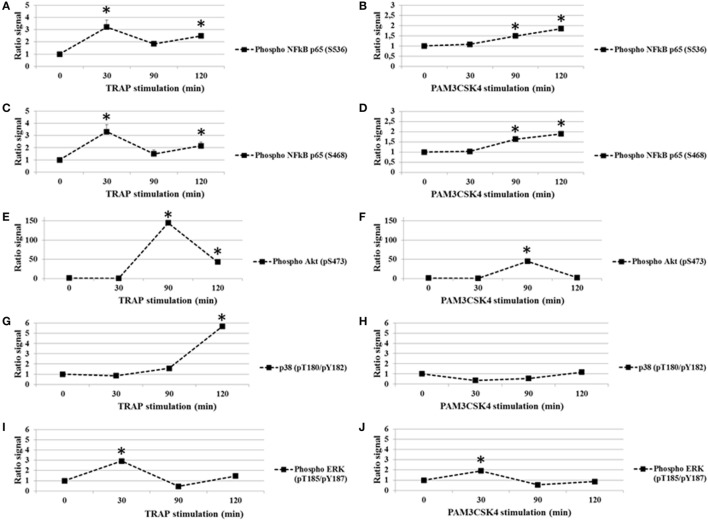
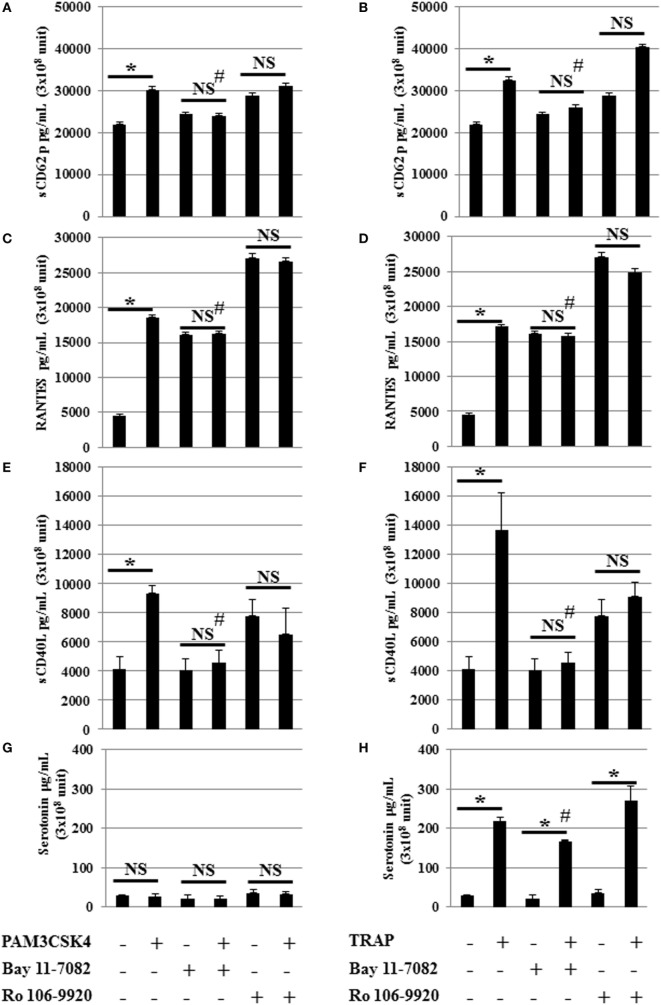
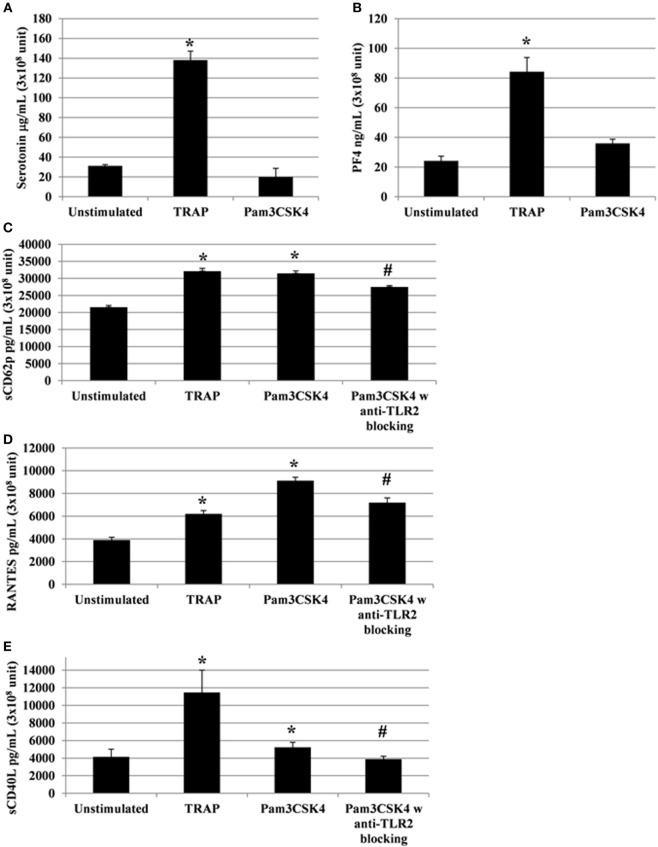
The primary toll-like receptor (TLR)-mediated immune cell response pathway common for all TLRs is MyD88-dependent activation of NF-κB, a seminal transcription factor for many chemokines and cytokines. Remarkably, anucleate platelets express the NF-κB machinery, whose role in platelets remains poorly understood. Here, we investigated the contribution of NF-κB in the release of cytokines and serotonin by human platelets, following selective stimulation of TLR2 and protease activated receptor 1 (PAR1), a classical and non-classical pattern-recognition receptor, respectively, able to participate to the innate immune system. We discovered that platelet PAR1 activation drives the process of NF-κB phosphorylation, in contrast to TLR2 activation, which induces a slower phosphorylation process. Conversely, platelet PAR1 and TLR2 activation induces similar ERK1/2, p38, and AKT phosphorylation. Moreover, we found that engagement of platelet TLR2 with its ligand, Pam3CSK4, significantly increases the release of sCD62P, RANTES, and sCD40L; this effect was attenuated by incubating platelets with a blocking anti-TLR2 antibody. This effect appeared selective since no modulation of serotonin secretion was observed following platelet TLR2 activation. Platelet release of sCD62P, RANTES, and sCD40L following TLR2 or PAR1 triggering was abolished in the presence of the NF-κB inhibitor Bay11-7082, while serotonin release following PAR1 activation was significantly decreased. These new findings support the concept that NF-κB is an important player in platelet immunoregulations and functions.
所有Toll样受体(TLR)介导的免疫细胞反应的主要途径是髓样分化因子88(MyD88)依赖的核因子κB(NF-κB)激活,NF-κB是许多趋化因子和细胞因子的关键转录因子。值得注意的是,无核血小板表达NF-κB机制,但其在血小板中的作用仍知之甚少。在此,我们分别选择性刺激TLR2和蛋白酶激活受体1(PAR1,一种经典和非经典的模式识别受体,能够参与先天免疫系统)后,研究了NF-κB在人血小板释放细胞因子和5-羟色胺中的作用。我们发现,与TLR2激活诱导较慢的磷酸化过程相反,血小板PAR1激活驱动NF-κB磷酸化过程。相反,血小板PAR1和TLR2激活诱导相似的细胞外信号调节激酶1/2(ERK1/2)、p38和蛋白激酶B(AKT)磷酸化。此外,我们发现血小板TLR2与其配体Pam3CSK4结合显著增加可溶性P选择素(sCD62P)、调节激活正常T细胞表达和分泌因子(RANTES)和可溶性CD40配体(sCD40L)的释放;用抗TLR2阻断抗体孵育血小板可减弱这种效应。这种效应似乎具有选择性,因为在血小板TLR2激活后未观察到5-羟色胺分泌的调节。在存在NF-κB抑制剂Bay11-7082的情况下,TLR2或PAR1触发后血小板释放sCD62P、RANTES和sCD40L被消除,而PAR1激活后5-羟色胺释放显著减少。这些新发现支持了NF-κB是血小板免疫调节和功能中的重要参与者这一概念。