Stolzoff Michelle, Burns Jason E, Aslani Arash, Tobin Eric J, Nguyen Congtin, De La Torre Nicholas, Golshan Negar H, Ziemer Katherine S, Webster Thomas J
Department of Bioengineering, Northeastern University, Boston.
N2 Biomedical, Bedford, MA.
Int J Nanomedicine. 2017 Feb 9;12:1161-1169. doi: 10.2147/IJN.S119750. eCollection 2017.
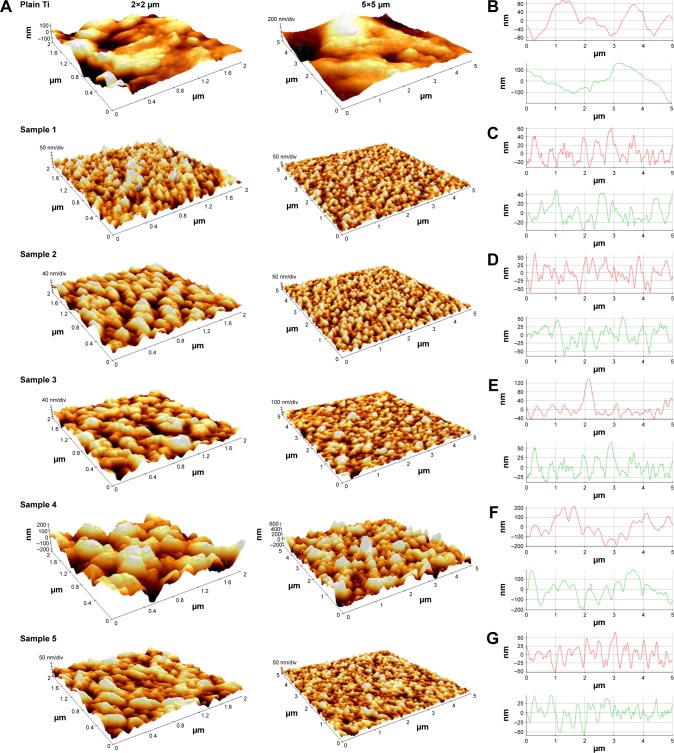
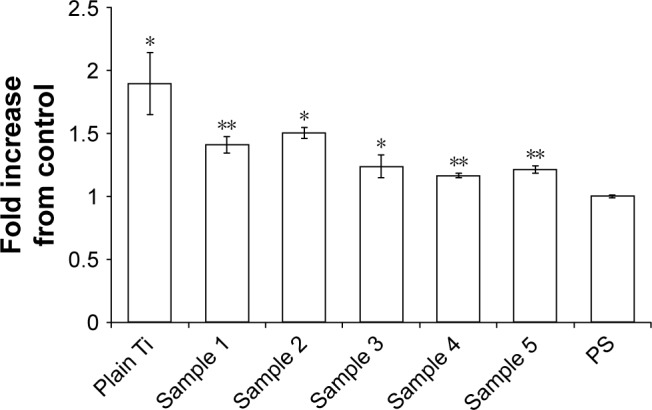
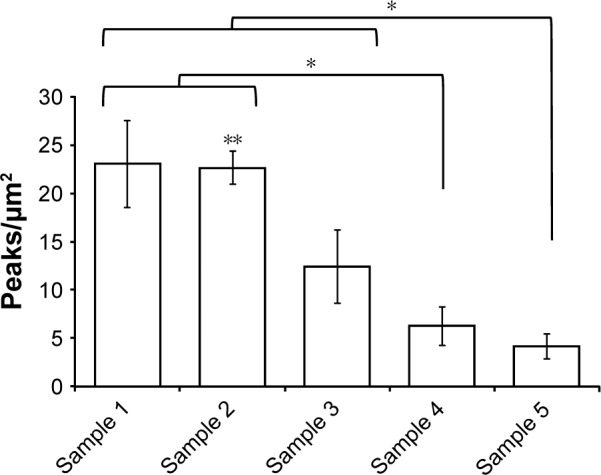
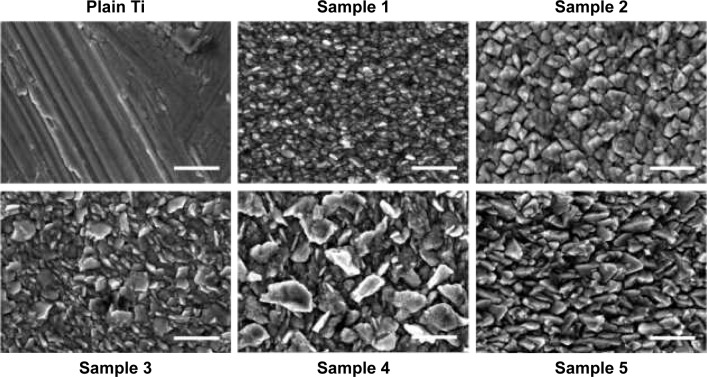
Titanium is one of the most widely used materials for orthopedic implants, yet it has exhibited significant complications in the short and long term, largely resulting from poor cell-material interactions. Among these many modes of failure, bacterial infection at the site of implantation has become a greater concern with the rise of antibiotic-resistant bacteria. Nanostructured surfaces have been found to prevent bacterial colonization on many surfaces, including nanotextured titanium. In many cases, specific nanoscale roughness values and resulting surface energies have been considered to be "bactericidal"; here, we explore the use of ion beam evaporation as a novel technique to create nanoscale topographical features that can reduce bacterial density. Specifically, we investigated the relationship between the roughness and titanium nanofeature shapes and sizes, in which smaller, more regularly spaced nanofeatures (specifically 40-50 nm tall peaks spaced ~0.25 μm apart) were found to have more effect than surfaces with high roughness values alone.
钛是骨科植入物中使用最广泛的材料之一,但它在短期和长期内都出现了严重的并发症,这主要是由于细胞与材料之间的相互作用不佳所致。在这些众多的失效模式中,随着耐抗生素细菌的增加,植入部位的细菌感染已成为一个更大的问题。人们发现纳米结构表面可以防止细菌在许多表面上定植,包括纳米纹理化的钛。在许多情况下,特定的纳米级粗糙度值和由此产生的表面能被认为具有“杀菌”作用;在这里,我们探索使用离子束蒸发作为一种新技术来创建可以降低细菌密度的纳米级地形特征。具体而言,我们研究了粗糙度与钛纳米特征形状和尺寸之间的关系,发现较小、间距更规则的纳米特征(具体为高40 - 50 nm的峰,间距约0.25μm)比仅具有高粗糙度值的表面具有更大的效果。