Department of Oral and Maxillofacial Surgery, Peking University School and Hospital of Stomatology; National Engineering Laboratory for Digital and Material Technology of Stomatology, Beijing Key Laboratory of digital Stomatology, Beijing, China.
Center for Craniofacial Stem Cell Research and Regeneration, Department of Orthodontics, Peking University School and Hospital of Stomatology; National Engineering Laboratory for Digital and Material Technology of Stomatology, Beijing Key Laboratory of digital Stomatology, Beijing, China.
Sci Rep. 2017 Feb 22;7:42385. doi: 10.1038/srep42385.
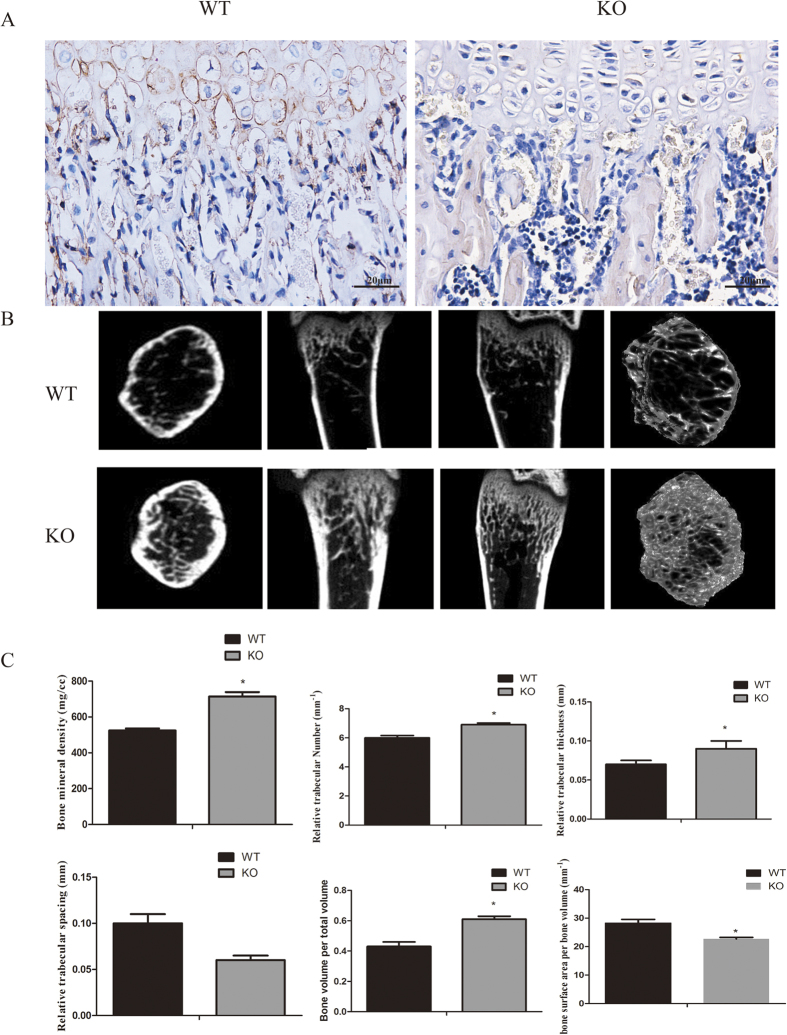
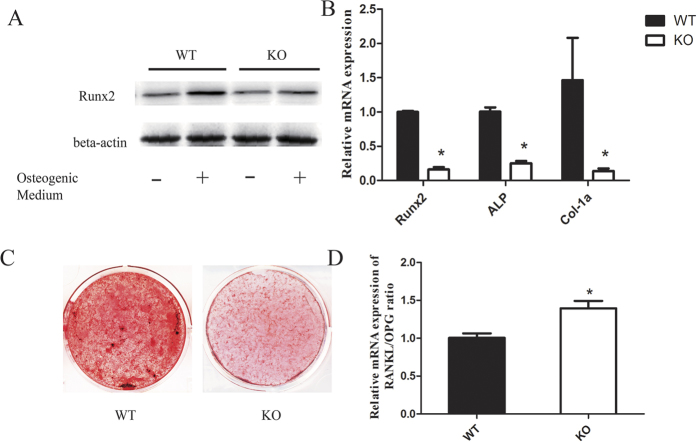
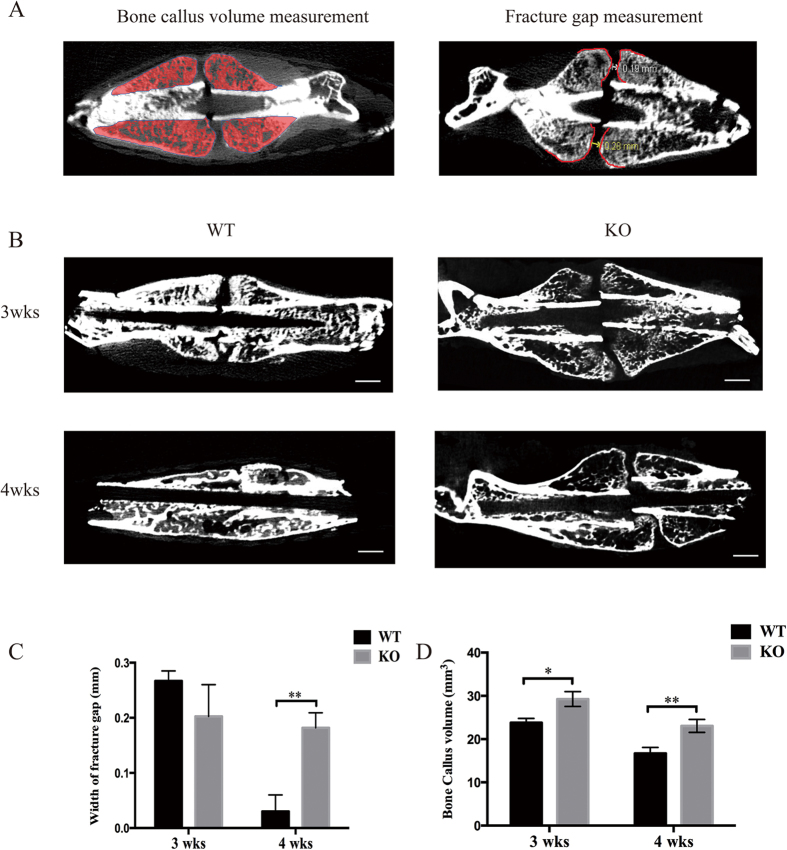
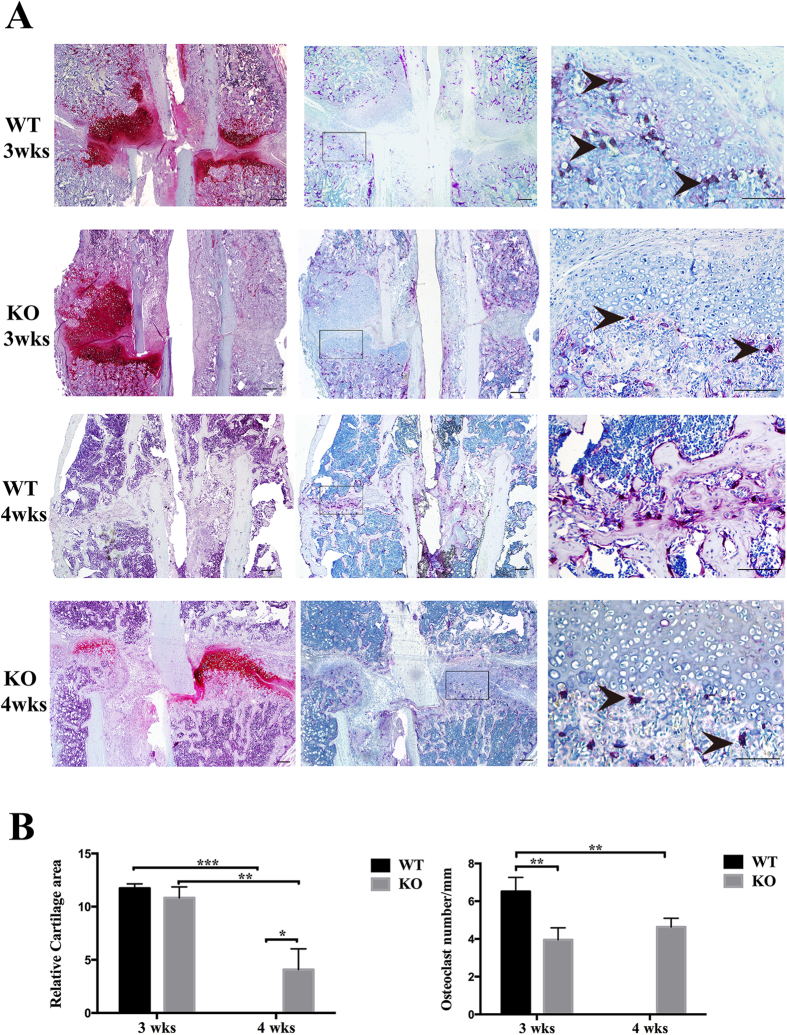
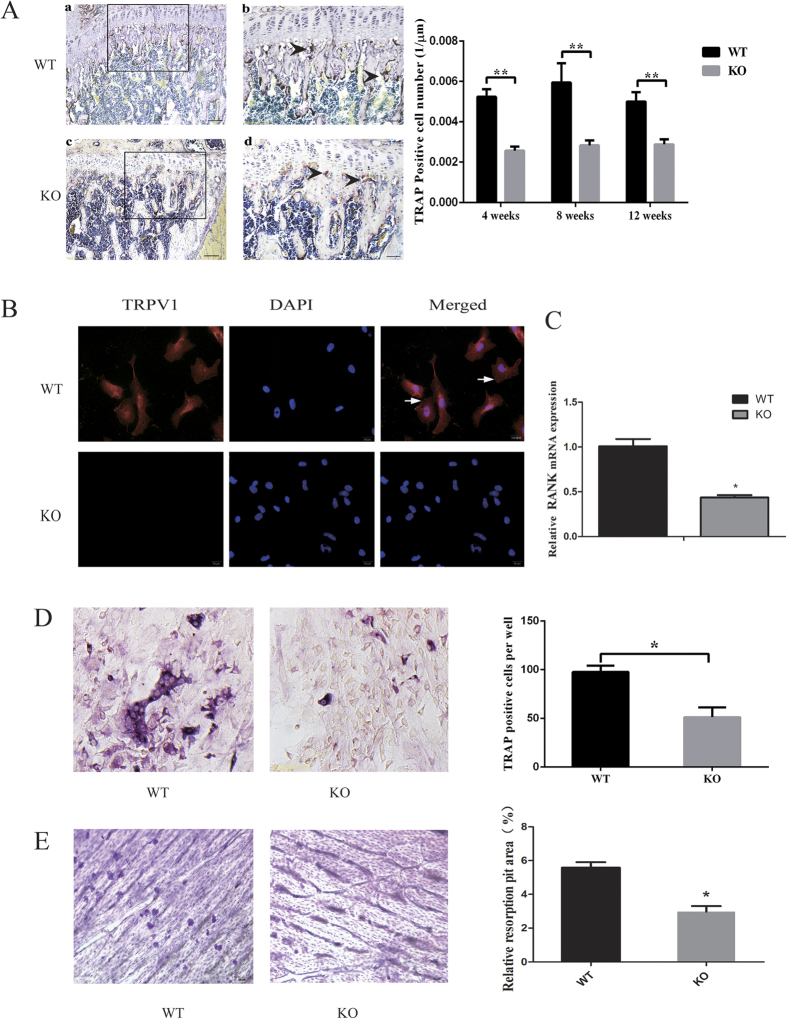
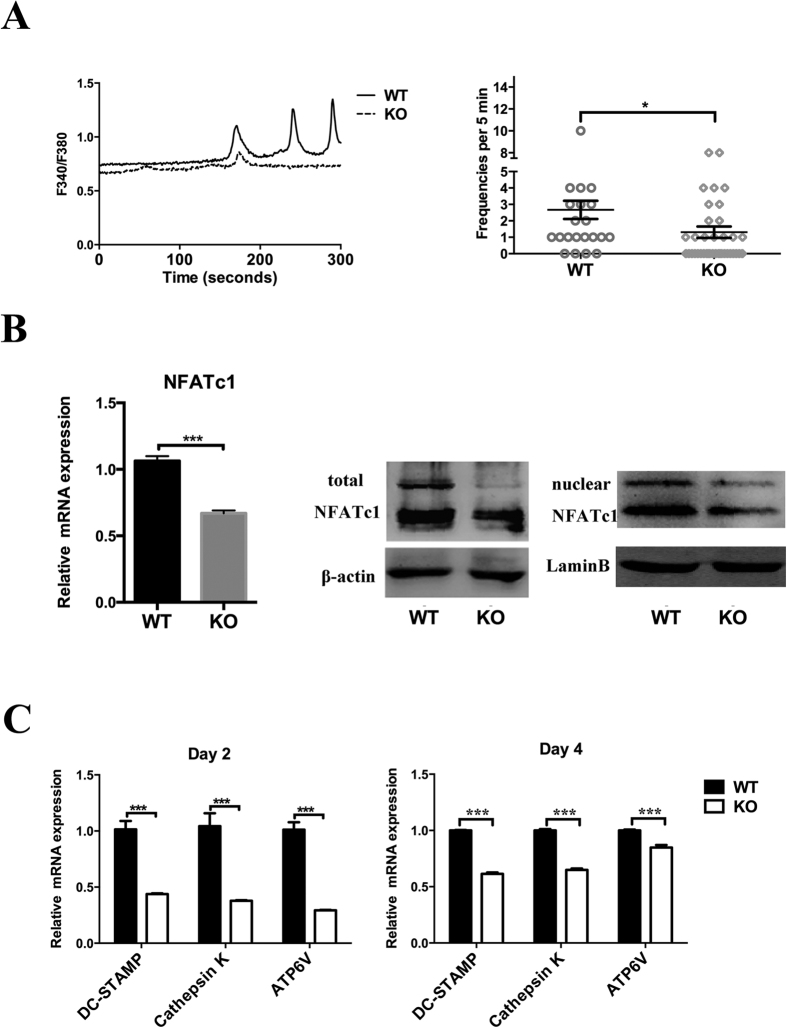
Fracture healing, in which osteoclasts and osteoblasts play important roles, has drawn much clinical attention. Osteoclast deficiency or decreased osteoblast activity will impair fracture healing. TRPV1 is a member of the Ca permeable cation channel subfamily, and pharmacological inhibition of TRPV1 prevents ovariectomy-induced bone loss, which makes TRPV1 a potential target for osteoporosis. However, whether long term TRPV1 inhibition or TRPV1 deletion will affect the fracture healing process is unclear. In this study, we found that the wild-type mice showed a well-remodeled fracture callus, whereas TRPV1 knockout mice still had an obvious fracture gap with unresorbed soft-callus 4 weeks post-fracture. The number of osteoclasts was reduced in the TRPV1 knockout fracture callus, and osteoclast formation and resorption activity were also impaired in vitro. TRPV1 deletion decreased the calcium oscillation frequency and peak cytoplasmic concentration in osteoclast precursors, subsequently reducing the expression and nuclear translocation of NFATc1 and downregulating DC-stamp, cathepsin K, and ATP6V. In addition, TRPV1 deletion caused reduced mRNA and protein expression of Runx2 and ALP in bone marrow stromal cells (BMSCs) and reduced calcium deposition in vitro. Our results suggest that TRPV1 deletion impairs fracture healing, and inhibited osteoclastogenesis and osteogenesis.
骨折愈合过程中,破骨细胞和成骨细胞发挥着重要作用,这引起了临床的广泛关注。破骨细胞缺乏或成骨细胞活性降低会损害骨折愈合。瞬时受体电位香草酸受体 1(TRPV1)是钙通透性阳离子通道亚家族的成员,TRPV1 的药理学抑制可预防去卵巢导致的骨丢失,这使得 TRPV1 成为骨质疏松症的一个潜在靶点。然而,长期抑制 TRPV1 或敲除 TRPV1 是否会影响骨折愈合过程尚不清楚。在本研究中,我们发现野生型小鼠的骨折愈合良好,而 TRPV1 敲除小鼠在骨折后 4 周仍存在明显的骨折间隙和未吸收的软痂。TRPV1 敲除的骨折痂中的破骨细胞数量减少,体外破骨细胞的形成和吸收活性也受损。TRPV1 缺失降低了破骨细胞前体中的钙振荡频率和细胞质峰值浓度,从而减少 NFATc1 的表达和核易位,并下调 DC-stamp、组织蛋白酶 K 和 ATP6V。此外,TRPV1 缺失导致骨髓基质细胞(BMSCs)中 Runx2 和碱性磷酸酶(ALP)的 mRNA 和蛋白表达减少,体外钙沉积减少。我们的研究结果表明,TRPV1 缺失会损害骨折愈合,并抑制破骨细胞生成和成骨作用。