Colchero M Arantxa, Rivera-Dommarco Juan, Popkin Barry M, Ng Shu Wen
M. Arantxa Cochero is an associate professor of health economics at the Center for Health Systems Research, National Institute of Public Health, in Cuernavaca, Mexico.
Juan Rivera-Dommarco is director of the Center for Research on Nutrition and Health, National Institute of Public Health.
Health Aff (Millwood). 2017 Mar 1;36(3):564-571. doi: 10.1377/hlthaff.2016.1231. Epub 2017 Feb 22.
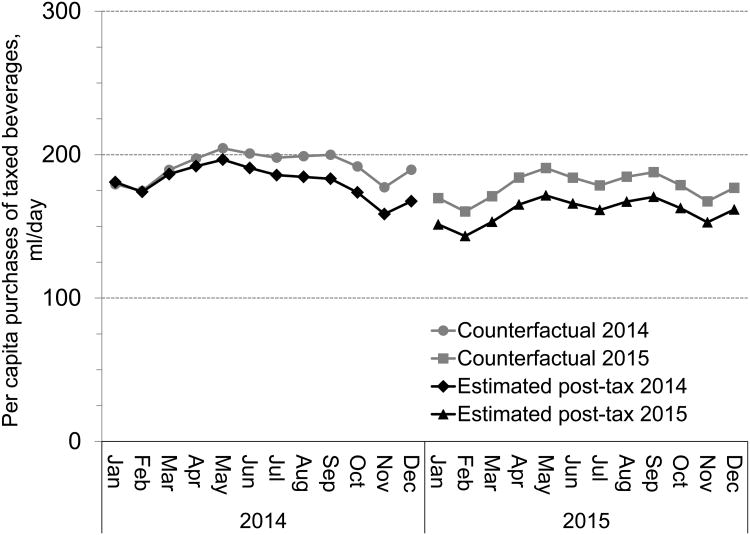
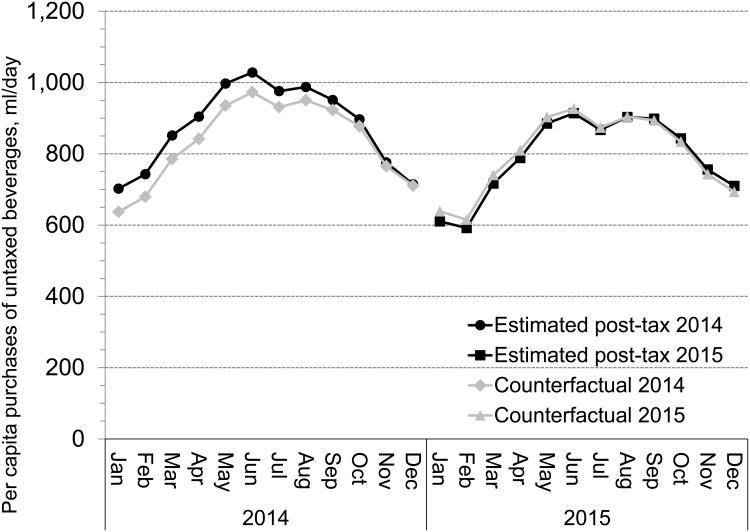
Mexico implemented a 1 peso per liter excise tax on sugar-sweetened beverages on January 1, 2014, and a previous study found a 6 percent reduction in purchases of taxed beverages in 2014. In this study we estimated changes in beverage purchases for 2014 and 2015. We used store purchase data for 6,645 households from January 2012 to December 2015. Changes in purchases of taxed and untaxed beverages in the study period were estimated using two models, which compared 2014 and 2015 purchases with predicted (counterfactual) purchases based on trends in 2012-13. Purchases of taxed beverages decreased 5.5 percent in 2014 and 9.7 percent in 2015, yielding an average reduction of 7.6 percent over the study period. Households at the lowest socioeconomic level had the largest decreases in purchases of taxed beverages in both years. Purchases of untaxed beverage increased 2.1 percent in the study period. Findings from Mexico may encourage other countries to use fiscal policies to reduce consumption of unhealthy beverages along with other interventions to reduce the burden of chronic disease.
墨西哥于2014年1月1日对含糖饮料实施了每升1比索的消费税,此前一项研究发现,2014年征税饮料的购买量减少了6%。在本研究中,我们估算了2014年和2015年饮料购买量的变化。我们使用了2012年1月至2015年12月期间6645户家庭的商店购买数据。研究期间征税饮料和未征税饮料购买量的变化是使用两种模型估算的,这两种模型将2014年和2015年的购买量与基于2012 - 2013年趋势预测的(反事实)购买量进行了比较。征税饮料的购买量在2014年下降了5.5%,在2015年下降了9.7%,在整个研究期间平均下降了7.6%。在这两年中,社会经济水平最低的家庭征税饮料购买量下降幅度最大。在研究期间,未征税饮料的购买量增加了2.1%。墨西哥的研究结果可能会鼓励其他国家利用财政政策来减少不健康饮料的消费,同时采取其他干预措施来减轻慢性病负担。