Hugelius Karin, Adolfsson Annsofie, Gifford Mervyn, Örtenwall Per
School of Health Sciences, Örebro University, Örebro Sweden and Karlskoga Hospital, Orebro County Council, Karlskoga, Sweden.
School of Health Sciences, Örebro University, Örebro, Sweden.
PLoS Curr. 2017 Jan 19;9:ecurrents.dis.f4a444e1f182776bdf567893761f86b8. doi: 10.1371/currents.dis.f4a444e1f182776bdf567893761f86b8.
Disaster research entails several methodological challenges, given the context of a disaster. This article aims to describe and evaluate the use of Facebook as a tool to recruit participants for a self-selected Internet sample using a web-based survey in a post-disaster setting in the Philippines after the Haiyan typhoon hit parts of the country in November 2013.
An invitation to a web-based survey about health was posted on several Facebook pages during a ten-day period.
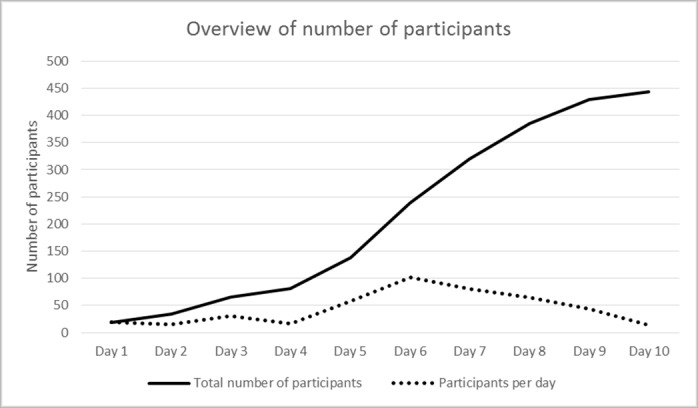
In total, 443 individuals who had survived the Haiyan typhoon participated in the study. The demographics of the study sample were similar to the general demographics in the Philippines, considering gender, age distribution and level of education.
The study showed that the use of social media to recruit participants for disaster research could limit several of the practical and ethical challenges connected to disaster research. However, the method demands access to the Internet and requires several strategic considerations, particularly concerning non-probability sample biases and generalization as well as an active approach from the researcher.
鉴于灾害的背景,灾害研究面临若干方法上的挑战。本文旨在描述和评估在2013年11月海燕台风袭击菲律宾部分地区后的灾后环境中,使用脸书作为一种工具,通过基于网络的调查来招募自我选择的互联网样本参与者的情况。
在十天时间内,在几个脸书页面上发布了一份关于健康的基于网络的调查邀请。
共有443名在海燕台风中幸存的个人参与了该研究。考虑到性别、年龄分布和教育水平,研究样本的人口统计学特征与菲律宾的总体人口统计学特征相似。
该研究表明,利用社交媒体为灾害研究招募参与者可以减少与灾害研究相关的一些实际和伦理挑战。然而,这种方法需要有互联网接入,并且需要一些战略考量,特别是关于非概率样本偏差和推广,以及研究者的积极态度。